

 プレビュー
プレビュー
 プリントを購入
 シェアする
シェアする シェアする
シェアする
 詳細を見る
詳細を見る

 ダウンロード
 似ている作品
 X線調査
X線調査 スライドショー
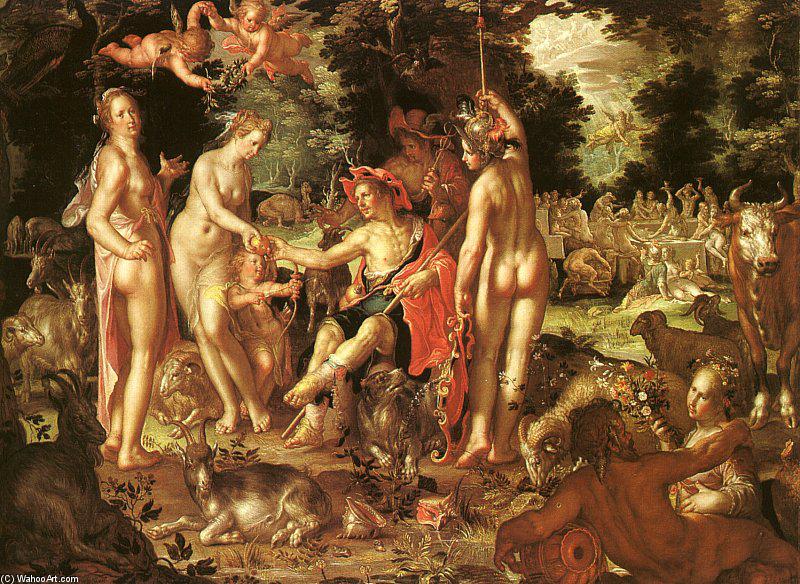
The Judgment of Paris
 Acrylic On Canvas
- WallArt
- Northern Mannerism
 1615
1615 60.0 x 79.0 cm
 ナショナル・ギャラリー
 詳細を見る
詳細を見る




P118B $10

P118H $10

P118W $10

P438Z $10

P508JH $12

P508YH $12

P805H $10

P805Z $10

P919BZ $10

P919G $10

P919XJ $10

P959ZH $10

P968JZ $12

W106C $8

W218G $10

W218JH $8

W218Y $10

W307PJ $10

W316G $10

W316PJ $8

W316Y $10

W398PJ $8

W4111J $10

W500HY $15

W500JH $15

W692G $12

W849H $8

W940BG $15

W953PJ $8




作品のオリジナル比率に合わせた、当店の規定サイズからお選びください。

特定のフレームやスペースに合わせて、ご希望のサイズをご入力いただけます。選択されたサイズが元の画像の比率と異なる場合、アートワークをトリミングするか、手描きで要素を追加して絵画を拡張いたします。デジタルモックアップ を制作し、制作開始前にご確認(承認)をいただきます。
画面上のプレビューは、実際のトリミングや拡張を正確に反映しているものではありません。最終的な構図は、モックアップによってのみ正確にご確認いただけます。
カスタムサイズもご利用いただけますが、元の比率を維持するためには、あらかじめ用意されたリストからサイズを選択することをお勧めいたします。
ご注文後、ArtsDot.com チームより詳細な指示をお送りするとともに、仕上がりイメージ(モックアップ)をご提供いたします。


 ガラスオプションは、110cm未満のサイズでのみご利用いただけます。

The Judgment of Paris
複製技法
複製画のサイズ
-


合計金額
$ 263
作品解説
The Judgment of Paris: A Renaissance Tableau of Divine Discontent
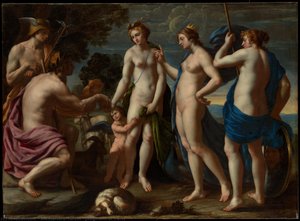
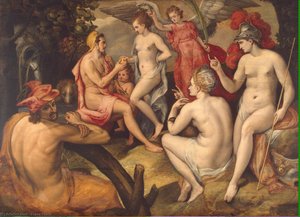
Joachim Anthonisz Wtewael’s “The Judgment of Paris” is not merely a depiction of a pivotal moment in Greek mythology; it's a meticulously crafted tableau of human vanity, divine displeasure, and the unsettling beauty of a world caught between earthly desires and celestial judgment. Painted in 1615 during the height of Mannerist artistry, this remarkable copper-gilt panel offers a glimpse into the opulent courtly culture of the early 17th century while simultaneously grappling with profound philosophical questions about fate, morality, and the consequences of human choices.
Wtewael’s signature style—characterized by an almost unnerving level of polish and a penchant for highly stylized figures—is immediately apparent. The composition is remarkably dense, teeming with nude and partially clothed figures arranged in a complex choreography around a central grouping: Paris, the Trojan prince, presented with golden apples from the judges Hera, Athena, and Aphrodite. Each goddess, rendered with exquisite detail and subtly contrasting expressions, embodies her respective domain – Hera’s regal authority, Athena’s strategic intellect, and Aphrodite’s seductive allure. The figures are not simply posed; they are imbued with a palpable sense of tension, their bodies caught in moments of deliberation, desire, and impending doom. Notice the subtle shifts in expression—the furrowed brows of Paris as he contemplates his prize, the haughty gaze of Athena, the languid grace of Aphrodite – these details elevate the scene beyond a simple narrative illustration.
A Renaissance Courtly Drama
“The Judgment of Paris” was likely commissioned for a wealthy patron—perhaps a member of the nobility or a discerning collector—and reflects the prevailing tastes of the era. Mannerism, with its emphasis on elegance, artificiality, and complex spatial arrangements, dominated artistic circles in Europe during this period. Wtewael’s work exemplifies these trends, showcasing his mastery of technique and his ability to capture the nuances of human emotion within a highly stylized framework. The painting's lavish use of gold leaf—particularly evident in the apples and the garments—underscores its intended grandeur and reflects the wealth and status of its commissioner. Furthermore, the setting itself – a richly decorated interior with columns, arches, and elaborate drapery – speaks to the importance of courtly life and the pursuit of pleasure within aristocratic circles.
Symbolism and Mythological Allusion
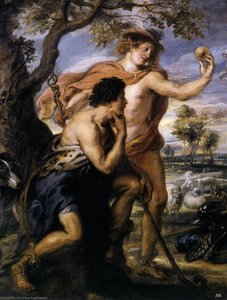
Beyond its surface narrative, “The Judgment of Paris” is laden with symbolic meaning. The golden apples themselves represent not just beauty and desire but also temptation and the corrupting influence of worldly pleasures. Paris’s choice—selecting Aphrodite as the winner—is a direct consequence of his infatuation with the goddess of love, highlighting the dangers of succumbing to fleeting passions. The presence of the three goddesses – representing wisdom, strength, and beauty – underscores the multifaceted nature of judgment and the difficulty of discerning true value from superficial allure. The composition also subtly references classical mythology, drawing parallels between Paris’s actions and the Trojan War itself—a conflict rooted in pride, ambition, and ultimately, divine retribution.
A Timeless Portrait of Human Fallibility
“The Judgment of Paris” remains a powerfully evocative work of art. It's not simply a historical illustration but a profound meditation on human nature – our capacity for vanity, our susceptibility to temptation, and the inevitable consequences of our choices. Wtewael’s masterful technique, combined with his astute understanding of symbolism and mythological themes, creates an image that continues to resonate with viewers centuries later. The painting's unsettling beauty—a blend of elegance and unease—serves as a timeless reminder of the fragility of human judgment and the enduring power of divine intervention. It’s a piece that invites contemplation, prompting us to consider our own choices and their potential repercussions.



アーティストの略歴
The Enduring Polish of a Mannerist Master
Joachim Anthonisz Wtewael, a name whispered among connoisseurs of the Dutch Golden Age, remains a captivating figure whose art defies easy categorization. Born in 1566 and passing away in 1638, his life was as multifaceted as his canvases. While his artistic genius shone brightly, it is equally notable that he was also a successful flax merchant and an active town councillor of Utrecht. This dual existence—the meticulous artisan alongside the pillar of civic society—suggests a man whose life demanded both worldly acumen and profound creative focus. Wtewael’s signature style, however, possessed a remarkable consistency; it remained largely untouched by the sweeping naturalistic currents that were reshaping art across Europe during his lifetime.
A Journey Through Style and Influence
Wtewael's early training rooted him deeply in the sophisticated vocabulary of late 16th-century Haarlem Mannerism. His initial professional life saw him working as a glassmaker and engraver within his father’s workshop, an apprenticeship that undoubtedly honed his hand for intricate detail. A pivotal period arrived when he embarked on travels through Italy and France starting in 1586. These sojourns were crucial, exposing him to the rich artistic currents of the Second School of Fontainebleau. Yet, despite these influences, Wtewael possessed a unique internal compass. His work is characterized by figures that are masterfully drawn, possessing an almost porcelain-like polish, often arranged in poses that feel wonderfully capricious and dramatically charged.
Thematic Depth: Myth Meets Devotion
The body of his surviving work—comprising around one hundred paintings, alongside numerous drawings and stained glass designs—reveals a fascinating thematic duality. He was equally at home depicting profound religious narratives as he was celebrating the lush drama of classical mythology. Consider works such as Adoration of the Shepherds juxtaposed with Venus and Mars Surprised by Vulcan. These pieces showcase his remarkable ability to weave together conventional sacred subjects with pagan lore, often imbuing both realms with a palpable, sometimes strong erotic undercurrent that draws the viewer into its narrative embrace. His attention to detail is breathtaking; in works like Perseus and Andromeda, housed notably at the Mauritshuis museum in Utrecht, one can trace his unparalleled skill.
Historical Significance and Legacy
What makes Wtewael’s contribution so significant is precisely that resistance to change. While naturalism beckoned artists toward greater realism, Wtewael held fast to a polished, idealized aesthetic, creating a body of work that feels both historically situated and eternally vibrant. His cabinet paintings, executed on copper plates, are particularly distinctive and numerous, offering intimate glimpses into his artistic process. Though the final decade of his life saw him retreat from painting—a period possibly marked by personal sorrow following the passing of his wife—the impact of his vision endures. He gifted art history a style that remains both highly polished and wonderfully unpredictable.
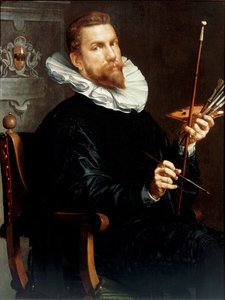
joachim anthonisz wtewael
1566 - 1638
基本情報
- Artistic Movement Or Style: Mannerism
- Artists Who Influenced This Artist: ['Second school of Fontainebleau']
- Date Of Birth: 1566
- Date Of Death: 1638
- Full Name: Joachim Anthonisz Wtewael
- Nationality: Dutch
- Notable Artworks:
- Adoration of the Shepherds
- Venus and Mars surprised by Vulcan
関連記事
Cornelis van Poelenburch: Bridging Mannerism & the Dutch Baroque Landscape
Discover Cornelis van Poelenburch, a pivotal Dutch Baroque landscape painter bridging Mannerism & Italianate styles. Explore his life, key works, and lasting influence on 17th-century art with ArtsDot.

Golden Age Reflections: Dutch Baroque Painting & Cultural Innovation
Explore the Dutch Golden Age of painting! Discover key artists like Vermeer & ter Borch, their innovative techniques, and the rich cultural context behind these Baroque masterpieces. Learn about collecting & appreciating this iconic art period.
Echoes of Olympus: Mythological Narratives in Western Art Through the Ages
Explore the captivating history of mythological narratives in Western art! From ancient Greece to modern masterpieces, discover iconic artworks & symbolism. Expert analysis and high-quality reproductions at ArtsDot.

Illuminating Realism: Exploring the Dutch Golden Age of Painting (1600-1700)
Explore the Dutch Golden Age of painting (1600-1700) with ArtsDot. Discover Rembrandt, Vermeer & other masters. Learn about techniques, history & find museum-quality reproductions.

Illuminating Innovation: Exploring the Dutch Golden Age of Painting
Explore the Dutch Golden Age of painting with ArtsDot. Discover Rembrandt, Vermeer & other Masters. Learn about key characteristics, iconic artworks, and lasting influence. Expert insights for collectors & enthusiasts.

