 プレビュー
プレビュー
 シェアする
シェアする シェアする
シェアする
 詳細を見る
詳細を見る

 ダウンロード
 似ている作品
 X線調査
X線調査 スライドショー
 統計情報
統計情報El color malva de la luna


 詳細を見る
詳細を見る
手描き油彩複製画
当社のアーティストが、お客様のご希望のサイズと額縁に合わせて、キャンバスに手描きで制作する油彩画です。 ( プリント版に切り替え デジタル画像販売へ切り替え)




P118B $10

P118H $10

P118W $10

P438Z $10

P508JH $12

P508YH $12

P805H $10

P805Z $10

P919BZ $10

P919G $10

P919XJ $10

P959ZH $10

P968JZ $12

W106C $8

W218G $10

W218JH $8

W218Y $10

W307PJ $10

W316G $10

W316PJ $8

W316Y $10

W398PJ $8

W4111J $10

W500HY $15

W500JH $15

W692G $12

W849H $8

W940BG $15

W953PJ $8




作品のオリジナル比率に合わせた、当店の規定サイズからお選びください。

特定のフレームやスペースに合わせて、ご希望のサイズをご入力いただけます。選択されたサイズが元の画像の比率と異なる場合、アートワークをトリミングするか、手描きで要素を追加して絵画を拡張いたします。デジタルモックアップ を制作し、制作開始前にご確認(承認)をいただきます。
画面上のプレビューは、実際のトリミングや拡張を正確に反映しているものではありません。最終的な構図は、モックアップによってのみ正確にご確認いただけます。
カスタムサイズもご利用いただけますが、元の比率を維持するためには、あらかじめ用意されたリストからサイズを選択することをお勧めいたします。
ご注文後、ArtsDot.com チームより詳細な指示をお送りするとともに、仕上がりイメージ(モックアップ)をご提供いたします。


 ガラスオプションは、110cm未満のサイズでのみご利用いただけます。

El color malva de la luna
複製技法
複製画のサイズ
-


合計金額
$ 263
A Celestial Dance of Color and Subconscious Wonder
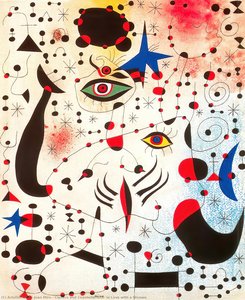
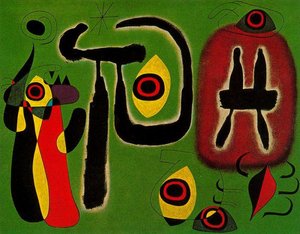
In the vast, swirling cosmos of twentieth-century abstraction, few works capture the ethereal essence of a dream quite like Joan Miró’s "El color malva de la luna." Translating to “The Lavender Moon Color,” this masterpiece serves as a profound invitation into the artist's inner sanctum, where the boundaries between reality and the subconscious dissolve. Created during a prolific period between 1965 and 1970, the painting is far more than a mere arrangement of pigment; it is a rhythmic, visual poem that speaks to the very soul of Catalan heritage and the universal mysteries of existence. As one gazes upon its surface, the eye is immediately swept into a dynamic interplay of vibrant reds, deep blues, verdant greens, and sun-drenched yellows, all dancing against a backdrop of luminous whites and soft, atmospheric tones.
The composition is anchored by a mesmerizing series of circles that drift across the canvas like celestial bodies in motion. These are not static shapes but living entities; some appear as expansive, commanding discs, while others nestle delicately within larger forms, suggesting a fractal-like interconnectedness found in the natural world. A singular, striking star shape positioned toward the upper left corner acts as a beacon of cosmic wonder, grounding the viewer in a sense of mythological scale. Through this organic abstraction, Miró masterfully bridges the gap between the terrestrial and the divine, creating a visual language that feels both ancient and avant-garde.
The Echoes of Catalonia and the Spirit of Gaudí
To truly appreciate the depth of "El color malva de la luna," one must understand the cultural soil from which it grew. Miró’s artistic DNA was inextricably linked to the landscape and architecture of his native Catalonia. There is a palpable resonance between the undulating, fluid lines of this painting and the organic, bone-like structures of Antoni Gaudí’s architectural triumphs, such as the Sagrada Família. Much like Gaudí, Miró sought to bypass literal representation in favor of capturing the vital essence of life—the way a vine curls, the way light breaks through a cloud, or the way memory shifts in the twilight. This connection to organic forms lends the piece an architectural strength, making it a commanding presence in any space.
The painting also serves as a subtle vessel for Catalan identity, weaving together local folklore and a deep-seated reverence for nature. The use of color is not merely decorative but symbolic, representing cycles of regeneration and the eternal pulse of life. For the discerning collector or interior designer, this artwork offers a rare opportunity to possess a piece that carries such profound historical weight. It is a work that does not simply sit upon a wall; it breathes within a room, providing a focal point of intellectual stimulation and emotional warmth.
An Essential Acquisition for the Modern Collector
For those looking to curate an environment of inspiration, "El color malva de la luna" offers unparalleled versatility. Its bold, primary-driven palette makes it a striking companion to contemporary minimalist decor, while its deep, symbolic layers provide enough complexity to satisfy the most rigorous art historian. The emotional impact of the piece is transformative; it possesses the unique ability to evoke a sense of peace and cosmic curiosity, making it an ideal centerpiece for a sophisticated study, a serene living area, or a high-end gallery setting.
Investing in a high-quality reproduction of this Miró treasure allows the magic of his "painting-poetry" to inhabit your personal space. It brings with it the legacy of a visionary who dared to paint the intangible, offering a window into a world where color is emotion and every shape tells a story of the universe. Whether you are drawn to its Surrealist roots or its rhythmic, abstract beauty, this artwork remains a timeless testament to the power of the human imagination.
アーティストの略歴
カタルーニャの visionary: ホアン・ミロの生涯と芸術
ホアン・ミロ・イ・フェラーは、1893年4月20日にバルセロナで生まれ、20世紀美術における最も重要な人物の一人として知られています。彼の芸術的探求は単なる様式変遷ではなく、夢、記憶、そしてカタルーニャのアイデンティティを独自の詩的な視覚言語を通してキャンバスに翻訳する内面の世界の探求でした。幼少期には病気と親からの芸術への取り組みに対する当初の躊躇がありましたが、彼は目に見えないものを表現するという生まれつきの衝動によって推進され、粘り強く努力しました。バルセロナの伝統に浸された彼の初期の人生は、アントニ・ガウディのおかげで建築的な驚異にあふれた都市であり、ミロの後の抽象化に微妙な影響を与えました。父親の金細工職人としての経験は、緻密な職人技への感謝を育み、一方、険しいカタルーニャの風景は彼のキャリアを通して繰り返されるモチーフとインスピレーションの源となりました。アバンギャルドへの目覚めとシュルレアリスムとの出会い
ミロの正式な芸術的訓練はバルセロナのラ・リョットヤで始まり、伝統的な技術を磨きました。しかし、彼を真に創造的に進化させたのは、パリを席巻したアバンギャルド運動への接触でした。 Fauvism の鮮やかな色彩と Cubism の断片化された形態が深く共鳴し、1920 年に彼をパリへと駆り立てました。この時期は画期的であり、彼はパブロ・ピカソに出会い、ますます抽象的な構成で実験を開始しました。しかし、ミロはこれらのスタイルを単に採用したのではなく、独自の独特の美学を築き上げました。彼は形態をその本質にまで蒸留し、表現主義的詳細を放棄して象徴的な形状と喚起する色彩に取って代わりました。この探求は彼を 1924 年にシュルレアリスムグループへと導きました。マックス・エルンストやサルバドール・ダリのような芸術家たちとの連携を通じて、彼は無意識へのシュルレアリストの関心を受け入れました。しかし、ミロは独自の感性を維持し、彼の作品は衝撃的なイメージやフロイト心理学的な象徴主義ではなく、遊び心のある形態と詩的な暗示の世界を創造することに重点を置いていました。象徴の言語:主要な作品と芸術的革新
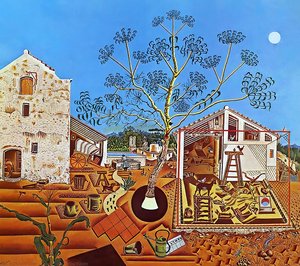
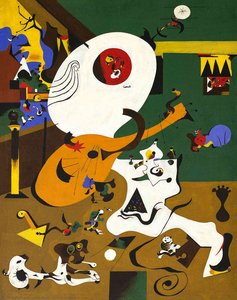
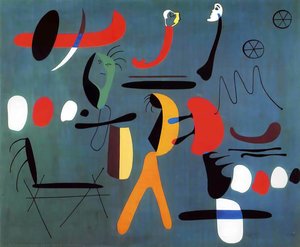
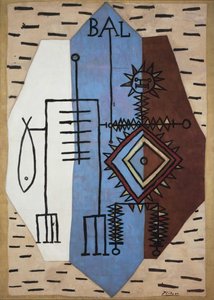
1920 年代から 30 年代にかけて、ミロは鮮やかな色彩と簡略化された形状で特徴づけられる独自の視覚語彙を開発しました。しばしば彼の作品の礎石と考えられている『農場』(1922)は、この移行を体現しており、単なる田園生活の描写ではなく、カタルーニャのアイデンティティの喚起と自然界の象徴的な表現です。彼の協調的な精神は、セルゲイ・ディアギレフのバレエのために考案されたデザインでマックス・エルンストと共に先駆的に行った *グラタージュ* といった革新的な技術につながりました。 オランダのインテリア(1928) シリーズは、彼の現代的なレンズを通して旧様式を再解釈する能力を示し、家庭的なシーンを夢のような抽象化へと変えました。絵画 (1933) は、大胆な色彩と簡略化された形態で、ミロの無意識への探求と従来の芸術的境界線の拒絶を体現しています。絵画以外にも、ミロは陶芸や版画など、さまざまなメディアに果敢に挑戦し、創造的な地平線を広げ、目覚ましい多才さを示しました。遺産と永続的な影響
ホアン・ミロの 20 世紀美術への影響力は否定できません。彼は単なる画家ではなく、芸術的表現そのものを定義に挑戦した先見の明のある人物でした。彼の作品は抽象表現主義への道を開き、現在もさまざまな分野のアーティストにインスピレーションを与え続けています。彼はバルセロナのホアン・ミロ財団(1975 年)とパルマ・デ・マヨルカのピラール・イ・ホアン・ミロ財団(1981 年)という 2 つの財団を設立し、彼の遺産が永続することを保証し、芸術的探求と教育のためのスペースを提供しました。彼の長いキャリアを通して、彼は境界線を押し広げ、慣習に疑問を投げかけ、人間の想像力の深さを探求することへの献身を維持していました。ミロの芸術は抽象化、象徴主義、そして詩的な表現の力に対する証であり、人生、夢、そしてカタルーニャ文化の不朽の精神を祝う鮮やかな賛歌です。彼の作品は今日でも世界中の聴衆に共鳴し、あらゆるものが可能で、現実と幻想の境界線が魅惑的な色彩と形態のダンスの中でぼやけていく世界へと私たちを誘います。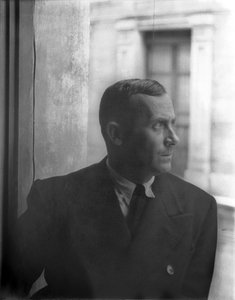
ジョアン・ミロ
1893 - 1983 , スペイン
基本情報
- フルネーム: ジョアン・ミロ・イ・フェラー
- 主な作品:
- ザ・ファーム
- オランダの室内
- 絵画
- 出身地: バルセロナ、スペイン
- 国籍: スペイン
- 影響を与えたアーティストまたは運動:
- シュルレアリスム
- 抽象表現主義
- 影響を受けたアーティスト:
- パブロ・ピカソ
- セザンヌ
- 死亡年月日: 1983年12月25日
- 生年月日: 1893年4月20日
- 芸術運動またはスタイル: シュルレアリスム、抽象芸術
関連記事
抽象表現主義を定義する十大傑作:芸術と装飾の深遠な旅
抽象表現主義を定義する10の傑作。ポロック、ロスコら巨匠たちの情熱と色彩の世界へ。各作品に込められた物語と技法を紐解き、至高のアート体験を。ArtsDot.comで、ミュージアムクオリティの複製画や洗練されたインテリアアイデアを発見してください。
ジョアン・ミロ傑作25選:夢と色彩が織りなす芸術の世界|ArtsDot
ジョアン・ミロの傑作25選🎨 シュルレアリスムを代表する巨匠、ミロの世界へ。色彩と象徴に満ちた絵画の物語を紐解き、インテリアアートのインスピレーションを得ましょう。ArtsDotで高品質なアートプリントをお探しください✨

Kandinsky's Masterpieces: 25 Paintings That Define Abstract Art | ArtsDot
Journey through Wassily Kandinsky's 25 most iconic abstract paintings. Explore his revolutionary use of color, form & spiritual expressionism. Find museum-quality Kandinsky reproductions and elevate your home decor with ArtsDot.com. Discover all masterpieces on ArtsDot.com!

幾何学的抽象絵画を定義した傑作10選|アート、アーティスト、インテリア装飾
モンドリアン、マレーヴィチ…幾何学的抽象絵画を代表する傑作10選。各作品の背景や色彩構成、アーティストの情熱に迫ります。美術館品質の複製画はArtsDot.comで。オンラインでアートコレクションをご覧ください。
パウル・クレー傑作25選:色彩と象徴に満ちた芸術の世界 | ArtsDot
パウル・クレーの傑作25選🎨 色彩と象徴に満ちた抽象絵画の世界を旅。ドイツ表現主義からバウハウスまで、クレーの革新的な技法と感動的な作品群をArtsDotで。高品質な美術品複製やインテリアアートも豊富です。オンラインストアで全コレクションをご覧ください。