

 プレビュー
プレビュー
 シェアする
シェアする シェアする
シェアする
 詳細を見る
詳細を見る

 ダウンロード
 似ている作品
 X線調査
X線調査 スライドショー
 統計情報
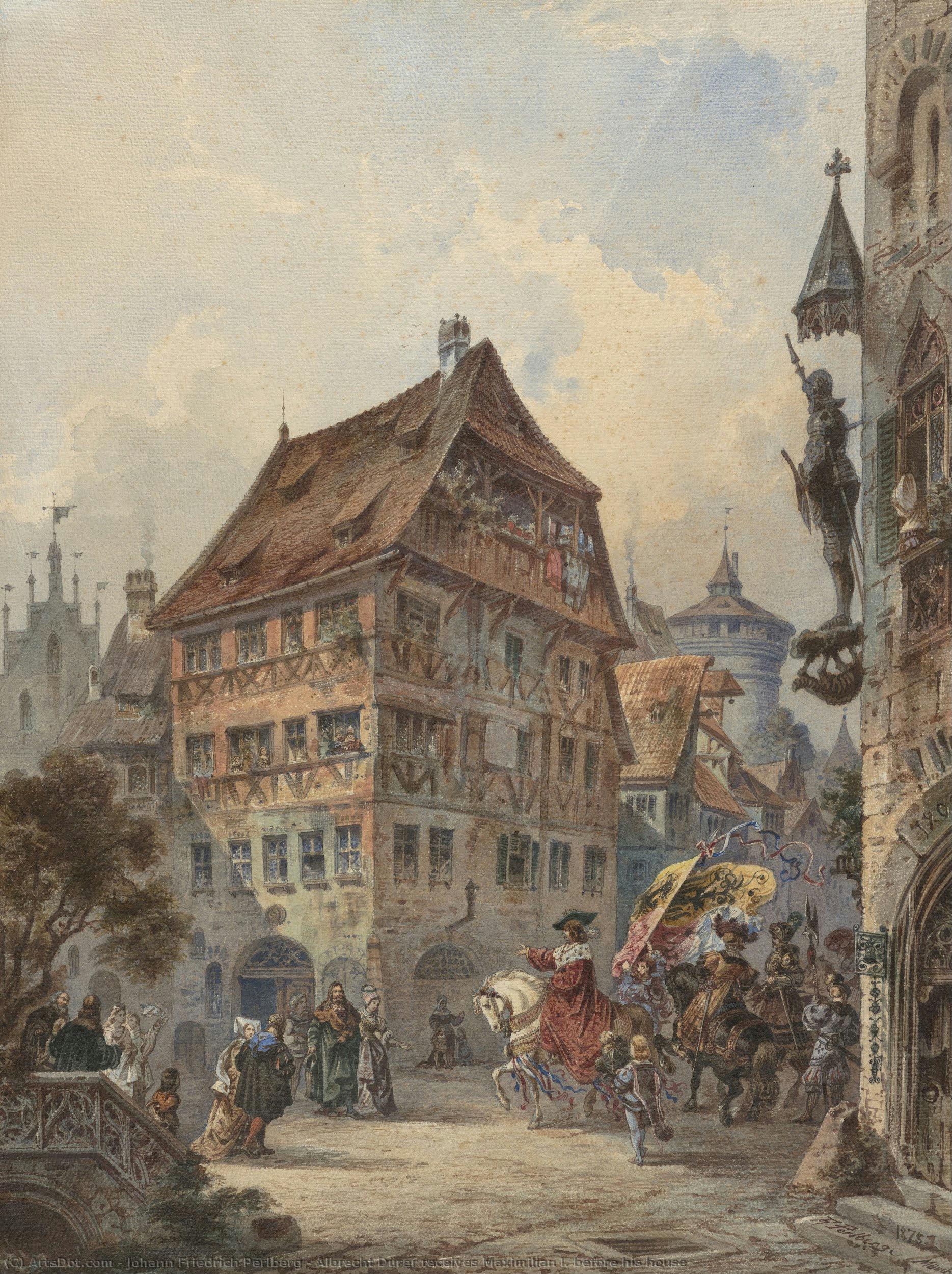
統計情報Albrecht Dürer receives Maximilian I. before his house


 詳細を見る
詳細を見る
手描き油彩複製画
当社のアーティストが、お客様のご希望のサイズと額縁に合わせて、キャンバスに手描きで制作する油彩画です。 ( プリント版に切り替え デジタル画像販売へ切り替え)




































作品のオリジナル比率に合わせた、当店の規定サイズからお選びください。

特定のフレームやスペースに合わせて、ご希望のサイズをご入力いただけます。選択されたサイズが元の画像の比率と異なる場合、アートワークをトリミングするか、手描きで要素を追加して絵画を拡張いたします。デジタルモックアップ を制作し、制作開始前にご確認(承認)をいただきます。
画面上のプレビューは、実際のトリミングや拡張を正確に反映しているものではありません。最終的な構図は、モックアップによってのみ正確にご確認いただけます。
カスタムサイズもご利用いただけますが、元の比率を維持するためには、あらかじめ用意されたリストからサイズを選択することをお勧めいたします。
ご注文後、ArtsDot.com チームより詳細な指示をお送りするとともに、仕上がりイメージ(モックアップ)をご提供いたします。


 ガラスオプションは、110cm未満のサイズでのみご利用いただけます。

Albrecht Dürer receives Maximilian I. before his house
複製技法
複製画のサイズ
-


合計金額
$ 263
関連作品









アーティストの略歴
A Wanderer’s Vision: The Life and Art of Johann Friedrich Perlberg
Johann Friedrich Perlberg, born in the historic city of Nuremberg, Germany, on April 24th, 1848, was an artist whose life embodied a romantic yearning for distant lands and a meticulous dedication to capturing their essence. Though trained as an architect, Perlberg’s true passion lay in painting—specifically, in the delicate art of watercolor and the richer possibilities of oil. He wasn't merely documenting places; he was translating experiences, weaving together observation with imagination to create scenes that resonated with both topographical accuracy and a fantastical sensibility. His journey began within the walls of the Nuremberg School of Arts and Crafts, where he honed foundational skills before venturing to Paris’s prestigious Academy of Arts. This early education provided him with a solid technical base, but it was his subsequent travels that truly ignited his artistic spirit.From Medieval Streets to Oriental Horizons
Perlberg's work is characterized by two distinct yet interwoven threads: the captivating scenes of his native Nuremberg and the exotic allure of the Orient. He became particularly known for his depictions of Nuremberg, not as a straightforward record of its architecture, but as a reimagined city steeped in medieval atmosphere and populated with figures drawn from folklore and fantasy. These weren’t simply paintings *of* Nuremberg; they were evocations of its history, its legends, and the romanticized past that captivated the 19th-century imagination. His watercolors often feature intricate details – bustling marketplaces, imposing churches bathed in atmospheric light, and individuals seemingly plucked from another era. However, it was his extensive travels throughout the Middle East that profoundly shaped his artistic vision. He sought inspiration beyond European borders, venturing into Egypt and other regions of the Orient, where he discovered a wealth of motifs and subjects that would define much of his later work. These journeys weren’t merely for aesthetic purposes; they were immersive experiences that allowed him to absorb the culture, light, and atmosphere of these distant lands.Influences and Artistic Style
Perlberg's artistic development was deeply rooted in the Romantic movement, a sensibility that prioritized emotion, imagination, and the sublime power of nature. This influence is evident in his atmospheric landscapes and his tendency to imbue his scenes with a sense of mystery and wonder. He also aligned himself with the Munich School of painting, known for its emphasis on realistic detail and narrative storytelling. However, Perlberg wasn’t simply replicating these styles; he synthesized them into something uniquely his own. His architectural watercolors demonstrate a precision akin to that of topographical artists, yet they are infused with a romantic sensibility that elevates them beyond mere documentation. The influence of earlier masters like Caspar David Friedrich can be seen in the atmospheric treatment of light and shadow, while the detailed observation of everyday life owes a debt to Realist painters. His work also reveals an affinity for Orientalism—a fascination with Middle Eastern cultures prevalent during the 19th century—but Perlberg’s approach was less about exotic spectacle and more about capturing the nuances of daily life and the beauty of unfamiliar landscapes.Legacy and Historical Significance
Though perhaps not a household name, Johann Friedrich Perlberg occupies an important niche in the history of 19th-century German painting. His work provides valuable insight into the artistic sensibilities of his time—the romantic fascination with the past, the growing interest in distant cultures, and the desire to capture the beauty of both the familiar and the exotic. His paintings of Nuremberg offer a glimpse into a city reimagined through the lens of nostalgia and fantasy, while his Orientalist scenes provide a nuanced perspective on Middle Eastern life during a period of increasing European exploration and influence. Perlberg’s meticulous technique, combined with his evocative use of light and atmosphere, continues to captivate viewers today. He died in Munich on February 14th, 1921, leaving behind a body of work that stands as a testament to the power of observation, imagination, and the enduring allure of distant horizons. His paintings are now sought after by collectors and art enthusiasts who appreciate his unique blend of realism, romanticism, and historical detail.
johann friedrich perlberg
1848 - 1921 , Germany
基本情報
- Artistic Movement Or Style: Romanticism
- Artists Or Movements Influenced By This Artist: ['Munich School']
- Date Of Birth: April 24, 1848
- Date Of Death: February 14, 1921
- Full Name: Johann Friedrich Perlberg
- Nationality: German
- Notable Artworks:
- Nuremberg scenes
- Oriental motifs
- Place Of Birth: Nuremberg, Germany