

 プレビュー
プレビュー
 シェアする
シェアする シェアする
シェアする
 詳細を見る
詳細を見る

 ダウンロード
 似ている作品
 X線調査
X線調査 スライドショー
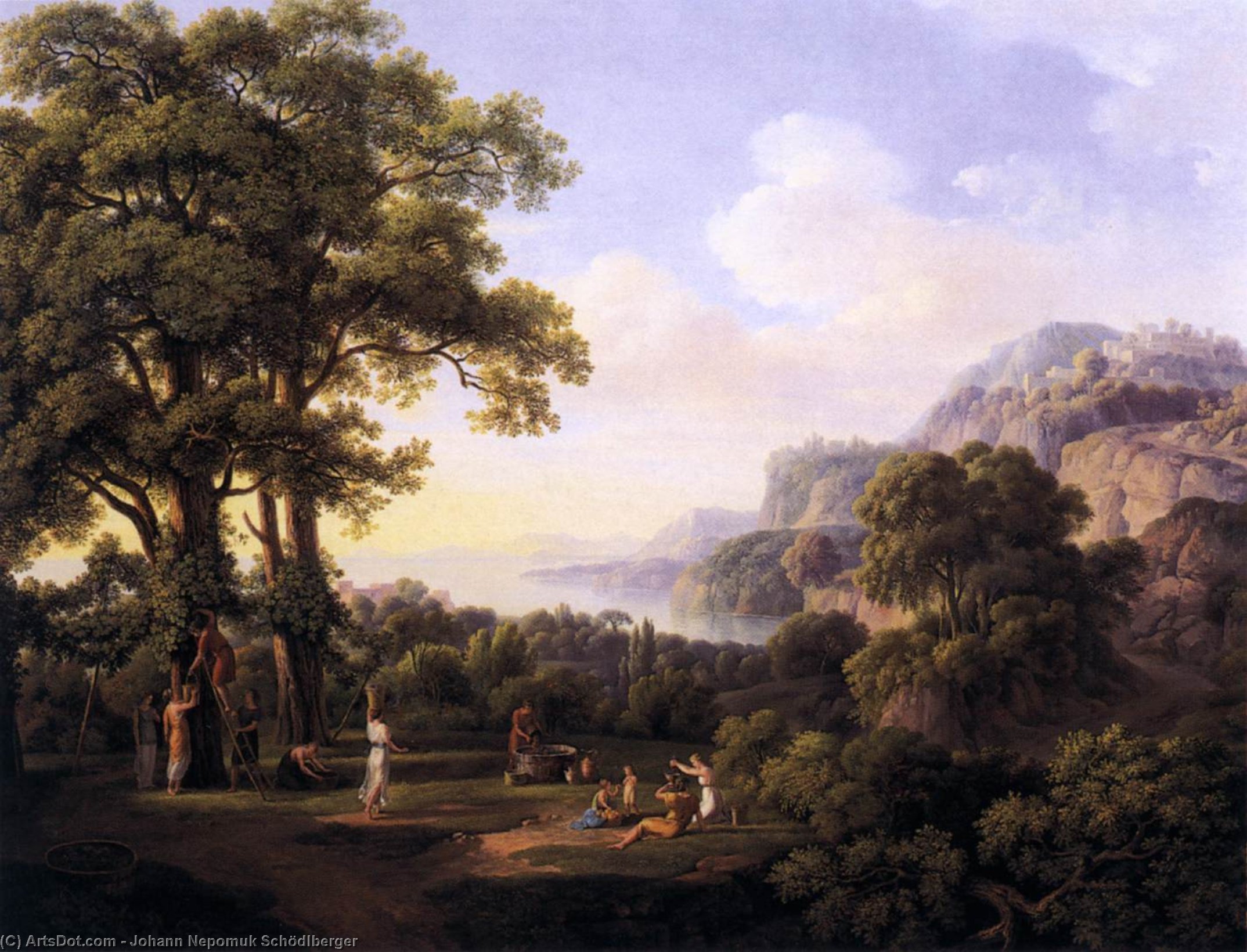
Ideal Landscape: Morning
 1817
1817 131.0 x 171.0 cm
 Academy of Fine Arts Vienna
 詳細を見る
詳細を見る
ジークレー/アートプリント
迅速な制作と多彩な仕上げオプションを備えた、ミュージアムクオリティのジークレーまたはキャンバスプリント。 ( 手描きの絵画を購入 画像を購入)




































作品のオリジナル比率に合わせた、当店の規定サイズからお選びください。

特定のフレームやスペースに合わせて、ご自身でサイズを指定することも可能です。選択されたサイズが元の画像の比率と一致しない場合、作品をトリミングするか、鏡面反射または単色での塗りつぶしによって画像を拡張いたします。制作を開始する前に、ご確認用のデジタルモックアップをお送りいたします。
画面上のプレビューには、実際のトリミングや拡張は反映されませんのでご注意ください。最終的な構図を正確に確認できるのは、モックアップのみとなります。
カスタムサイズも承っておりますが、元の比率を維持するためには、あらかじめ用意されたリストからサイズを選択することをお勧めいたします。


 ガラスオプションは、110cm未満のサイズでのみご利用いただけます。

Ideal Landscape: Morning
ジークレー/アートプリント
複製画のサイズ
-


合計金額
$ 62
関連作品

アーティストの略歴
The Self-Taught Visionary of the Austrian Landscape
In the heart of Vienna, amidst the burgeoning artistic energy of the late eighteenth century, a talent emerged that would eventually define the pastoral soul of the Austrian landscape. Johann Nepomuk Schödlberger was not a product of the rigid, prestigious academies that typically groomed the masters of his era; rather, he was a testament to the profound power of innate, self-directed genius. Born into poverty in 1779, Schöldberger’s relationship with art began even before he mastered the written word. It is said that while other children were learning to write, he was already sketching with such proficiency that he found himself teaching his peers. This early, uninhibited connection to visual expression laid the foundation for a career characterized by an intimate, almost spiritual observation of the natural world.
Though his formal instruction was sparse—beginning only in his twelfth year—his thirst for knowledge was insatiable. His journey from a substitute drawing teacher in local schools to a celebrated figure in the Viennese art scene is a narrative of pure dedication. Schödlberger’s development was fueled by a deep, scholarly devotion to the masters; he famously traveled to Dresden with the sole purpose of studying the Gemäldegalerie Alte Meister, meticulously copying works by Claude Lorrain and Jacob van Ruisdael. These encounters with the giants of landscape painting allowed him to weave classical compositional structures into his own uniquely Romantic sensibility, blending the grandeur of the old masters with a fresh, local intimacy.
A Symphony of Light and Pastoral Serenity
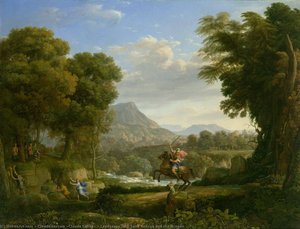
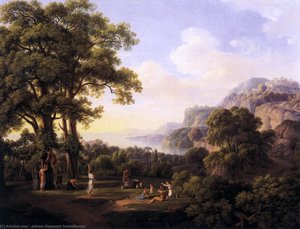
Schödlberger’s mature style is best described as an embrace of Romantic Idealism. His canvases serve as windows into an idyllic, tranquil realm, where the rugged beauty of the Austrian countryside is softened by a luminous, atmospheric glow. He possessed a remarkable ability to utilize a subdued palette—rich with deep greens, ethereal blues, and earthy browns—to evoke the quiet majesty of mountainous vistas and the stillness of lakeside retreats. Through the masterful application of atmospheric perspective, he created an immersive sense of depth, inviting the viewer to wander through misty valleys and sun-drenched ruins as if they were part of the landscape itself.
What truly distinguishes his work, however, is the seamless integration of human life within these vast settings. Schödlberger did not merely paint scenery; he painted stories. His landscapes are frequently populated by small, delicate figures—shepherds, families on a journey, or travelers resting near ancient structures—that provide a sense of scale and narrative warmth. This technique transformed his paintings from mere topographical records into emotive compositions that celebrate the harmony between humanity and nature. Whether capturing the golden light of an evening descent or the crisp clarity of a morning sun, his brushwork remained deliberate and expressive, imbuing every leaf and stone with a palpable, living atmosphere.
Legacy and the Height of Artistic Recognition
The ascent of Schödlberger’s reputation was nothing short of meteoric. His ability to capture the sublime beauty of the Austrian landscape caught the eyes of the highest echelons of European society. The patronage of Count Lambert provided him with much-needed visibility, but it was the profound admiration of Emperor Francis II that cemented his historical significance. The Emperor was so moved by the quality of Schödlberger’s vision that he arranged for several of the artist's earlier works to be housed in the prestigious Belvedere, ensuring his place in the permanent canon of Austrian art.
As his fame grew, so did his influence on the next generation of painters. His election to the Academy of Fine Arts in 1815 and his subsequent role as a teacher allowed him to pass on his observational techniques to students such as the renowned Ferdinand Georg Waldmüller. Even as he undertook grand painting excursions through Italy—visiting the historic centers of Rome, Naples, and Florence—his heart remained tethered to the pastoral charm of his homeland. Today, Schödlberger is remembered not just as a painter of landscapes, but as a master of mood, whose works continue to evoke a sense of peace, nostalgia, and the enduring splendor of the natural world.
johann nepomuk schödlberger
1779 - 1853 , Austria
基本情報
- Artistic Movement Or Style: Romantic Landscape Painting
- Date Of Birth: May 22, 1779
- Full Name: Johann Nepomuk Schödlberger
- Nationality: Austrian
- Notable Artworks:
- Ideal Landscape: Morning
- Arkadische Landschaft
- Arkadische Landschaft Mit Schloss, Ruine Und Brücken
- Place Of Birth: Vienna, Austria

