

 プレビュー
プレビュー
 プリントを購入
 シェアする
シェアする シェアする
シェアする
 詳細を見る
詳細を見る

 ダウンロード
 似ている作品
 X線調査
X線調査 スライドショー
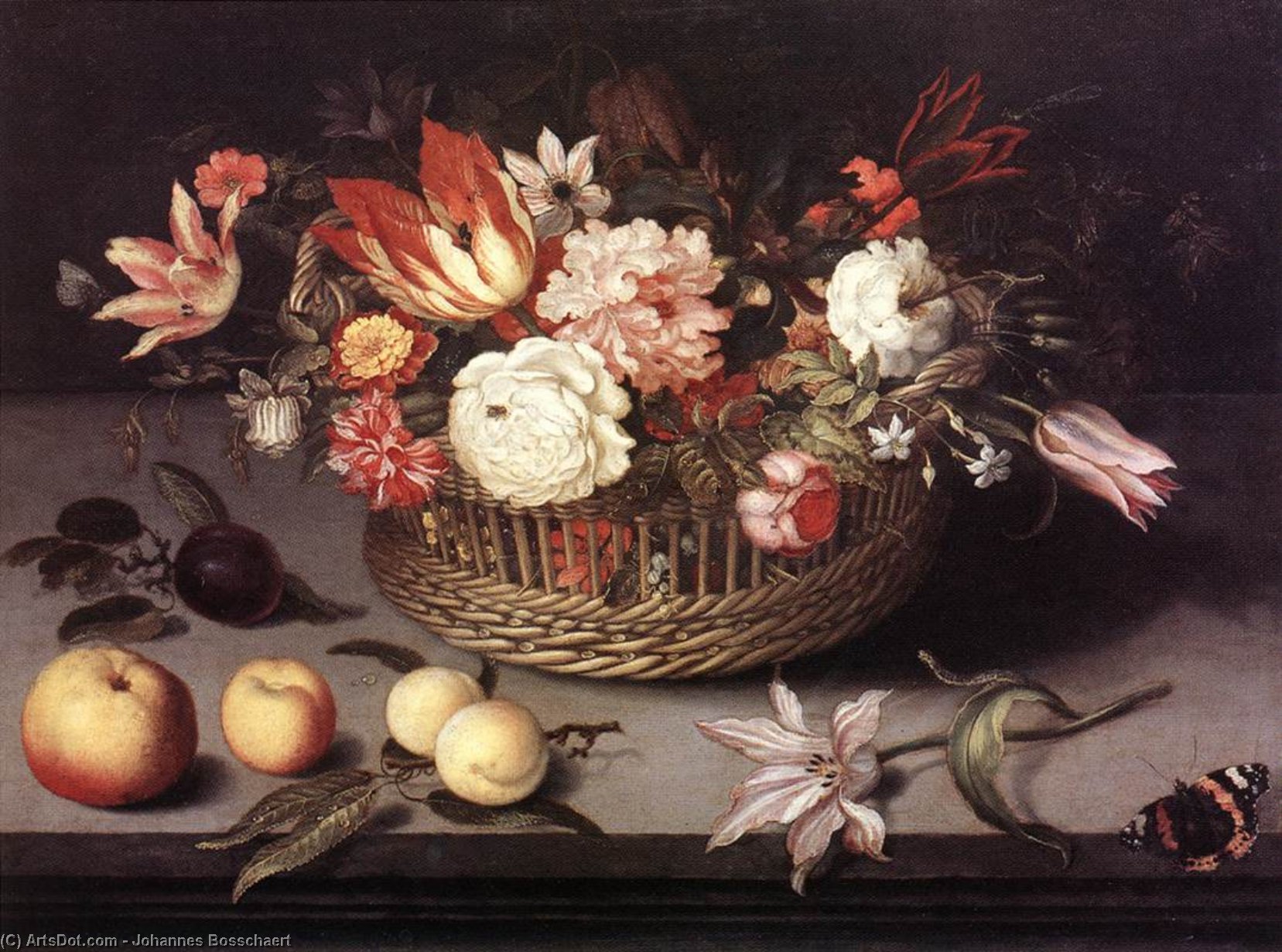
Basket of Flowers
 Oil On Canvas
- WallArt
- Baroque Still Life
 34.0 x 45.0 cm
 ルーブル美術館
 詳細を見る
詳細を見る




P118B $10

P118H $10

P118W $10

P438Z $10

P508JH $12

P508YH $12

P805H $10

P805Z $10

P919BZ $10

P919G $10

P919XJ $10

P959ZH $10

P968JZ $12

W106C $8

W218G $10

W218JH $8

W218Y $10

W307PJ $10

W316G $10

W316PJ $8

W316Y $10

W398PJ $8

W4111J $10

W500HY $15

W500JH $15

W692G $12

W849H $8

W940BG $15

W953PJ $8




作品のオリジナル比率に合わせた、当店の規定サイズからお選びください。

特定のフレームやスペースに合わせて、ご希望のサイズをご入力いただけます。選択されたサイズが元の画像の比率と異なる場合、アートワークをトリミングするか、手描きで要素を追加して絵画を拡張いたします。デジタルモックアップ を制作し、制作開始前にご確認(承認)をいただきます。
画面上のプレビューは、実際のトリミングや拡張を正確に反映しているものではありません。最終的な構図は、モックアップによってのみ正確にご確認いただけます。
カスタムサイズもご利用いただけますが、元の比率を維持するためには、あらかじめ用意されたリストからサイズを選択することをお勧めいたします。
ご注文後、ArtsDot.com チームより詳細な指示をお送りするとともに、仕上がりイメージ(モックアップ)をご提供いたします。


 ガラスオプションは、110cm未満のサイズでのみご利用いただけます。

Basket of Flowers
複製技法
複製画のサイズ
-


合計金額
$ 263
Johannes Bosschaert’s “Basket of Flowers”: A Delicate Dance Between Observation and Illusion
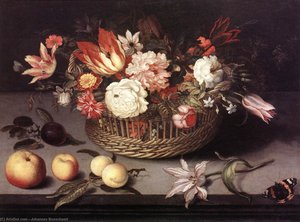
Johannes Bosschaert (1608–1629) stands as one of the most celebrated figures within the burgeoning Dutch flower painting tradition, inheriting and expanding upon the artistic legacy established by his father, Ambrosius Bosschaert the Elder. Born around 1607 in Middelburg, Netherlands—one of three sons—he belonged to a family deeply rooted in the art of depicting botanical subjects, mirroring the stylistic approach of his brother Abraham and uncle Balthasar van der Ast. This familial influence profoundly shaped his artistic trajectory and contributed to the distinctive aesthetic that characterizes his oeuvre. Moving with his family to Bergen op Zoom in 1615 solidified their connection to a vibrant artistic milieu. Subsequently, they relocated again to Utrecht in 1619, though Ambrosius Bosschaert’s untimely death in 1621 necessitated Johannes's entry into the Haarlem Guild of St. Luke in 1623—a crucial step towards establishing his professional career and securing recognition within the artistic community. “Basket of Flowers,” painted circa 1620s, exemplifies Bosschaert’s mastery of chiaroscuro – a technique pioneered during the Baroque era – where light and shadow are skillfully manipulated to create dramatic depth and heighten visual impact. The painting isn't merely a depiction of flowers; it’s an exercise in illusionistic artistry, meticulously crafted to convey not just what is seen but also how it feels. Bosschaert’s meticulous attention to detail—evident in the individual petals rendered with astonishing realism—demonstrates his profound understanding of botanical anatomy and his unwavering commitment to capturing the essence of nature. The artist's use of color is equally noteworthy, employing muted hues that harmonize beautifully against the dark gray background, drawing the viewer’s eye towards the luminous blossoms at the heart of the composition. The artwork itself resides within the Musée du Louvre in Paris, France—a testament to Bosschaert’s enduring influence on European art history. Its placement amongst other masterpieces underscores its significance as a cornerstone of Baroque still life painting. The arrangement of objects – the basket brimming with pink and white flowers interspersed with scarlet accents, alongside strategically positioned apples and delicate leaves – isn't arbitrary; it adheres to established compositional principles designed to create balance and visual interest. Bosschaert’s intention was not simply to represent beauty but to evoke a sense of tranquility and contemplation—a hallmark of Baroque aesthetics that sought to inspire awe and elevate the viewer’s spirit. Further research into Johannes Bosschaert reveals his familial connection to other prominent artists, highlighting the importance of patronage and artistic lineage within 17th-century Holland. His brother Abraham and uncle Balthasar van der Ast were equally accomplished botanists and painters, fostering a collaborative environment that nurtured innovation and stylistic consistency. This shared heritage undoubtedly contributed to Bosschaert’s distinctive approach to depicting floral subjects—characterized by its unwavering fidelity to observation and its masterful manipulation of artistic conventions. The painting's enduring appeal lies in its ability to transport the viewer back to a time when art served as a conduit for intellectual curiosity and spiritual reflection. “Basket of Flowers” remains an exquisite example of Baroque artistry, demonstrating Bosschaert’s unparalleled skill in capturing the sublime beauty of the natural world through meticulous technique and profound artistic vision. Its presence within the Louvre ensures that this timeless masterpiece continues to inspire generations of art lovers worldwide.- Artist: Johannes Bosschaert
- Birth Year: 1608
- Death Year: 1629
- Birth City: Middelburg
- Birth Country: Netherlands
Additional Resources:
Explore the exquisite still lifes of Johannes Bosschaert (1608-1629), a Dutch master of flower painting. Inspired by his family, his works showcase delicate blooms & rich detail.
Visit Basket of Flowers for a detailed examination of the artwork and its historical context.
Discover Jacques Linard’s ‘Basket of Flowers,’ a stunning 17th-century oil painting capturing the beauty of nature’s bounty. A Louvre masterpiece, it showcases delicate brushwork and vibrant colors.
Explore Johannes Bosschaert's legacy on Google Arts & Culture.
関連作品


アーティストの略歴
Johannes Bosschaert: A Legacy of Delicate Blooms
The history of the Dutch Golden Age is often told through grand landscapes and sweeping maritime scenes, yet some of its most profound beauty resides in the quiet, meticulous observation of a single petal or a dewdrop clinging to a stem. Johannes Bosschaert (1608–1629) was a vital, though tragically short-lived, participant in this intimate tradition. Born into a dynasty of botanical masters in Middelburg, Netherlands, his life was inextricably linked to the flourishing art of flower painting. As one of the sons of the renowned Ambrosius Bosschaert the Elder, Johannes did not merely learn a craft; he inherited a visual language of precision and splendor that would define the Dutch floral aesthetic for generations.
The trajectory of his early life was marked by movement and the pursuit of artistic excellence within a family of immense talent. Following his family to Bergen op Zoom in 1615, and later to Utrecht in 1619, Johannes was immersed in an environment where botanical accuracy met Baroque drama. The death of his father in 1621 served as a pivotal moment, thrusting the young artist into professional maturity. By 1623, he had secured membership in the Haarlem Guild of St. Luke, and later joined the Dordrecht Guild of St. Luke, demonstrating a precocious commitment to the formal structures of the art world. This period of his life was characterized by a deep connection to his kin, including his brother Abraham and his uncle Balth::r van der Ast, whose shared stylistic lineage created a cohesive school of still-life painting.
Mastery of Light and Botanical Detail
To gaze upon a work by Johannes Bosschaert is to witness a delicate dance between observation and illusion. His technique was rooted in the mastery of chiaroscuro, utilizing the dramatic interplay of light and shadow to breathe life into his compositions. He possessed an extraordinary ability to manipulate muted tones against dark, atmospheric backgrounds, a method that forced the viewer’s eye toward the luminous, vibrant centers of his floral arrangements. Every element of his work—from the velvety texture of a rose petal to the translucent wings of a wandering butterfly—was rendered with a scientific precision that mirrored the humanist curiosity of the seventeenth century.
His artistic development was characterized by several key technical hallmarks:
- Meticulous Realism: An unwavering commitment to botanical anatomy, ensuring each species was identifiable and lifelike.
- Monogrammed Identity: The use of the "jb." monogram, a subtle nod to his familial roots and a mark of professional pride.
- Compositional Depth: The skillful use of depth and shadow to transform a flat canvas into a three-dimensional garden.
- Harmonious Color Palettes: A sophisticated use of color that balanced brilliance with the somber elegance of the Baroque era.
A Lasting Impression on Dutch Still Life
Though his career was cut short by his untimely death in 1629, the impact of Johannes Bosschaert remains etched in the annals of Dutch art history. He was not merely a follower of his father’s style but a contributor to its evolution. His influence can be seen in the works of his brother Abraham and even in the broader movement of Dordrecht painters like Jacob Gerritsz Cuyp, who drew inspiration from the Bosschaert vision. His ability to capture the ephemeral beauty of nature—the fleeting moment before a bloom withers—resonated with the cultural zeitgeist of an era fascinated by both scientific discovery and the concept of vanitas.
Ultimately, Johannes Bosschaert represents the pinnacle of the specialized still-life tradition. His works serve as enduring windows into a period where art and nature were inextricably entwined. Through his brush, the ephemeral became eternal, leaving behind a legacy of blossoms that continue to captivate the modern imagination with their quiet, luminous grace.
Johannes Bosschaert
1608 - 1629 , Netherlands
基本情報
- Artistic Movement Or Style: Baroque floral art
- Artists Or Movements Influenced By This Artist: ['Abraham Bosschaert']
- Artists Who Influenced This Artist:
- Ambrosius Bosschaert the Elder
- Balthasar van der Ast
- Jacob Gerritsz Cuyp
- Date Of Birth: ca. 1608
- Date Of Death: ca. 1629
- Full Name: Johannes Bosschaert
- Nationality: Dutch
- Notable Artworks:
- Vase de fleurs dans une niche
- Still Life
- Basket of Flowers
- Place Of Birth: Middelburg, Netherlands
関連記事

黄金世紀の巨匠たち:バロック絵画が彩る10選|ArtsDot
オランダ黄金時代の10大傑作を紐解く!レンブラント、フェルメール…バロック絵画の魅力と時代背景を深く探求。ArtsDotで、至高のアートコレクションと空間演出のヒントを見つけよう。高品質なアートプリントで、お部屋を華やかに。

Golden Age Reflections: Dutch Baroque Painting & Cultural Innovation
Explore the Dutch Golden Age of painting! Discover key artists like Vermeer & ter Borch, their innovative techniques, and the rich cultural context behind these Baroque masterpieces. Learn about collecting & appreciating this iconic art period.

Illuminating Innovation: Exploring the Dutch Golden Age of Painting
Explore the Dutch Golden Age of painting with ArtsDot. Discover Rembrandt, Vermeer & other Masters. Learn about key characteristics, iconic artworks, and lasting influence. Expert insights for collectors & enthusiasts.
Johannes Vermeer: Light, Intimacy & the Dutch Golden Age – A Comprehensive Exploration
Explore the life, techniques & enduring legacy of Johannes Vermeer, a master of Dutch Golden Age painting. Discover symbolism in his iconic works like 'The Milkmaid' and learn about his revolutionary use of light.

Illuminating Realism: Exploring the Dutch Golden Age of Painting (1600-1700)
Explore the Dutch Golden Age of painting (1600-1700) with ArtsDot. Discover Rembrandt, Vermeer & other masters. Learn about techniques, history & find museum-quality reproductions.