 プレビュー
プレビュー
 プリントを購入
 シェアする
シェアする シェアする
シェアする
 詳細を見る
詳細を見る

 ダウンロード
 似ている作品
 X線調査
X線調査 スライドショー
Woman holding a balance ngw

 詳細を見る
詳細を見る




P118B $10

P118H $10

P118W $10

P438Z $10

P508JH $12

P508YH $12

P805H $10

P805Z $10

P919BZ $10

P919G $10

P919XJ $10

P959ZH $10

P968JZ $12

W106C $8

W218G $10

W218JH $8

W218Y $10

W307PJ $10

W316G $10

W316PJ $8

W316Y $10

W398PJ $8

W4111J $10

W500HY $15

W500JH $15

W692G $12

W849H $8

W940BG $15

W953PJ $8




作品のオリジナル比率に合わせた、当店の規定サイズからお選びください。

特定のフレームやスペースに合わせて、ご希望のサイズをご入力いただけます。選択されたサイズが元の画像の比率と異なる場合、アートワークをトリミングするか、手描きで要素を追加して絵画を拡張いたします。デジタルモックアップ を制作し、制作開始前にご確認(承認)をいただきます。
画面上のプレビューは、実際のトリミングや拡張を正確に反映しているものではありません。最終的な構図は、モックアップによってのみ正確にご確認いただけます。
カスタムサイズもご利用いただけますが、元の比率を維持するためには、あらかじめ用意されたリストからサイズを選択することをお勧めいたします。
ご注文後、ArtsDot.com チームより詳細な指示をお送りするとともに、仕上がりイメージ(モックアップ)をご提供いたします。


 ガラスオプションは、110cm未満のサイズでのみご利用いただけます。

Woman holding a balance ngw
複製技法
複製画のサイズ
-


合計金額
$ 263
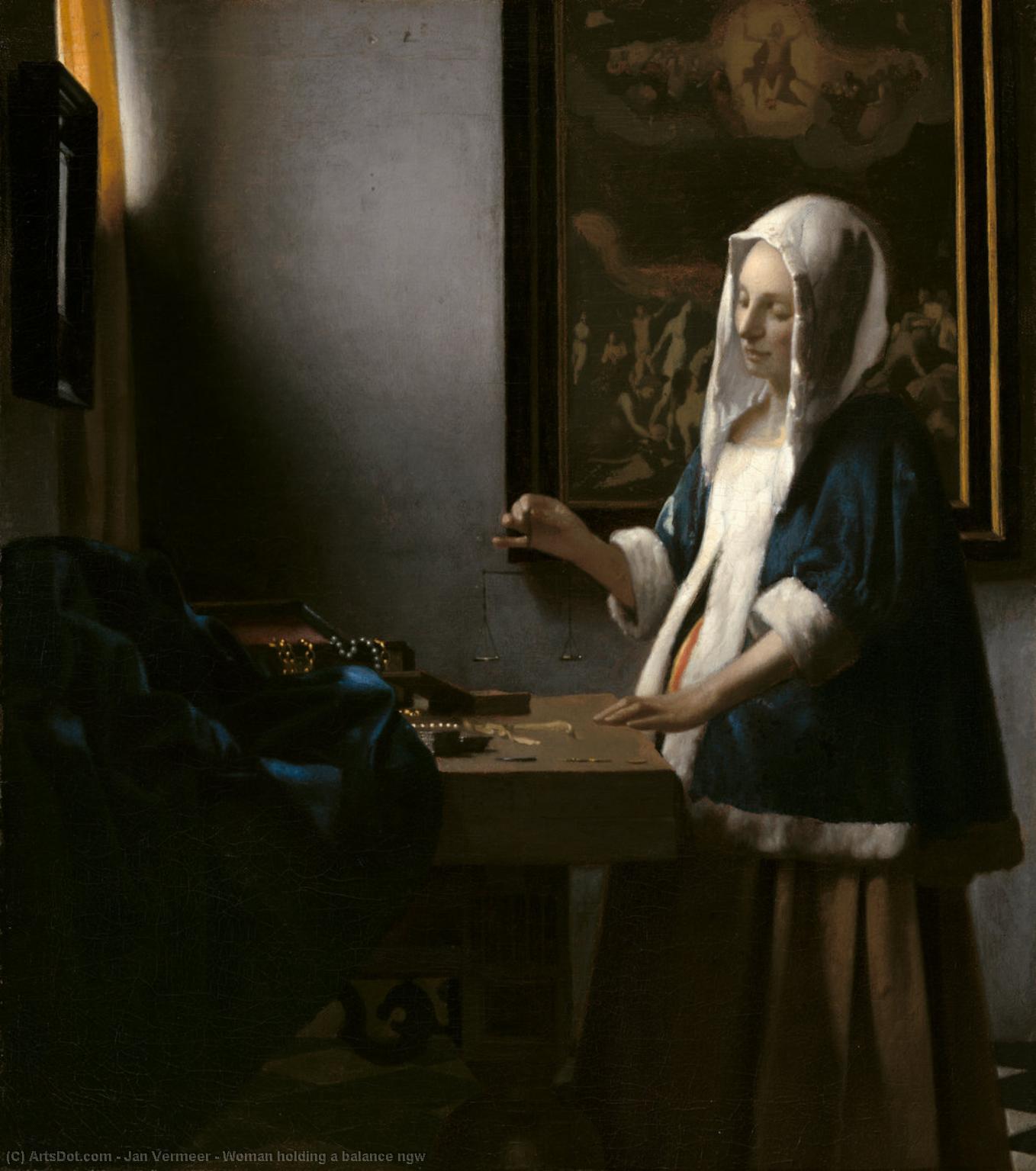
Johannes Vermeer’s Quiet Reflection: Decoding “Woman Holding a Balance”
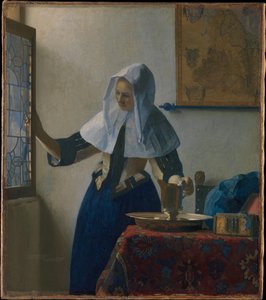
Johannes Vermeer, a name synonymous with the serene stillness of Delft in the 17th century, continues to fascinate art historians and captivate audiences alike. Born in October 1632, his life unfolded amidst the vibrant tapestry of the Dutch Golden Age—a period defined by unprecedented economic prosperity, artistic fervor, and a burgeoning sense of civic identity. Unlike many artists of his time who pursued grand commissions or celebrated heroic narratives, Vermeer’s output was remarkably modest, consisting primarily of intimate portraits and genre scenes that offer glimpses into domestic life with unparalleled subtlety. His father, Reijnier Janszoon, was a silk weaver and art dealer—a profession that instilled in young Johannes not only practical skills but also an acute awareness of visual aesthetics and the importance of discerning craftsmanship. This formative experience would profoundly influence his artistic sensibilities, shaping him into a master of capturing fleeting moments of everyday existence with breathtaking precision.- Subject Matter: The painting centers around a woman seated at a table, her gaze directed towards a balance scale held delicately in her hands. Alongside her are objects indicative of domestic life—a book resting on the tabletop and a clock subtly positioned in the background—creating a carefully constructed tableau that speaks to themes of contemplation, measurement, and perhaps even judgment.
- Style: Vermeer’s distinctive style is characterized by its masterful use of light—particularly diffused natural illumination—which imbues the scene with an ethereal glow. This technique, honed through years of experimentation, elevates the commonplace into something extraordinary, capturing not just what is seen but also conveying a palpable sense of atmosphere.
Technique and Composition: Vermeer’s Delicate Brushstrokes
Vermeer employed a meticulous approach to painting, utilizing thin layers of oil paint—a technique known as glazing—to build up color gradually. This painstaking process allowed him to achieve remarkable tonal nuances and luminous effects that are hallmarks of his oeuvre. The composition is remarkably balanced, mirroring the visual metaphor presented by the balance scale itself. Vermeer’s careful placement of objects and figures contributes to a sense of harmonious equilibrium, inviting viewers to linger on the details and absorb the quiet beauty of the scene. Notably, he utilized aerial perspective—a technique that simulates atmospheric haze—to create depth and realism, subtly blurring distant elements while maintaining sharp focus on the woman and her immediate surroundings.Historical Context: Delft’s Domestic Ideal
“Woman Holding a Balance” reflects the prevailing cultural values of Delft during Vermeer's lifetime—a city renowned for its artistic excellence and its aspiration to embody the ideals of republican virtue. The painting embodies the Dutch obsession with order, rationality, and moral contemplation—values championed by thinkers like René Descartes and reflected in the decorative arts of the period. Furthermore, it speaks to a broader fascination with domestic interiors and the portrayal of women as symbols of piety, intellect, and feminine grace.Symbolism: Measuring Virtue and Inner Reflection
The balance scale itself serves as a potent symbol—representing not merely physical measurement but also moral judgment. It suggests that the woman is weighing something intangible—perhaps her own virtues or contemplating the consequences of her actions. The inclusion of the book symbolizes knowledge and contemplation, while the clock reinforces the passage of time and underscores the importance of mindful living. Vermeer’s masterful depiction captures a moment of profound introspection, inviting viewers to consider questions of morality, responsibility, and the pursuit of inner harmony.Emotional Impact: A Window into Quiet Beauty
Ultimately, “Woman Holding a Balance” transcends mere visual representation; it evokes a powerful emotional response. The painting’s serene stillness, combined with Vermeer’s luminous palette and meticulous attention to detail, creates an atmosphere of contemplative tranquility. It speaks to the human desire for beauty, simplicity, and connection—values that continue to resonate across centuries.関連作品
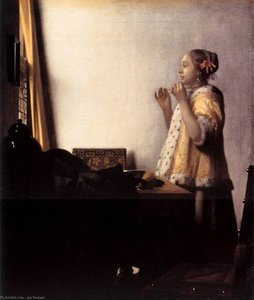
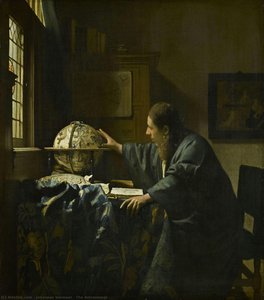

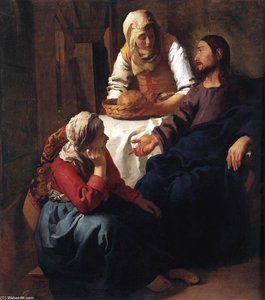


アーティストの略歴
光と静寂の画家:ヨハネス・フェルメールの世界
17世紀オランダ、デルフトが生んだヨハネス・フェルメール。彼の名は、静謐な日常の美しさを捉えた絵画を通して、時代を超えて人々の心を魅了し続けています。1632年10月、デルフトで生まれ、その生涯は、目覚ましい繁栄と芸術的革新が交錯するオランダ黄金時代の背景の中で繰り広げられました。父ラインイエル・ヤンソンの紡績業と美術品販売という二つの側面は、若きヨハネスに素材への理解と市場の機微を教え、その後の彼の独自の芸術的ビジョンを育む基盤となりました。裕福とは言えない環境で育ちながらも、彼は日常の中に潜む美しさを発見する鋭い眼光を持ち続けました。1653年、カトリナ・ボルネズとの結婚は、彼の人生に個人的な充足感をもたらすと同時に、プロテスタントが主流のデルフトにおいて、微妙な複雑さをもたらしました。日常を芸術に変える:フェルメールの芸術的探求
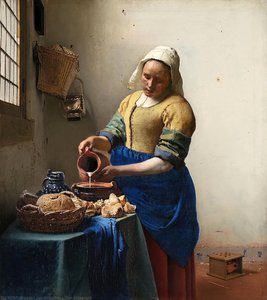
フェルメールの芸術的な旅路は、当初は歴史画や神話画から始まりましたが、すぐに彼の名を不動のものとする室内風景画へとシフトしました。彼は壮大な物語や英雄譚に興味を持つことなく、むしろ窓辺で手紙を読む女性、牛乳を注ぐ乳娘、丹念にレースを作る女職人といった、ありふれた日常の中に美と意味を見出しました。これらの絵画は単なる生活の描写ではなく、光、色彩、そして人間の存在が織りなす緻密な研究でした。彼の技法は、まるで科学的なアプローチのように、慎重かつゆっくりとしたものでした。下絵をほとんど用いず、同じ構図の複数のバリエーションも生み出しませんでした。それぞれの作品は、薄い顔料の glazings を重ねて構築された、熟考された結晶であり、それによって他に類を見ない輝きが生まれていました。光と色彩の魔術師:フェルメールの技法
フェルメールを真に際立たせているのは、彼の比類なき光の扱い方です。彼は単に場面を照らすだけでなく、光そのものを作品の定義要素として用いました。それは過酷で劇的な光ではなく、むしろ柔らかく拡散された輝きであり、まるで絵画内部から発せられているかのような印象を与えます。この効果は、様々な表面における光の反射に対する深い観察と、それを驚くべき精度でキャンバスに再現する能力によって達成されました。彼は *camera obscura* と呼ばれる装置を用いていた可能性があり、これは像を表面に投影するもので、正確な遠近法や細部の描写に役立ったと考えられています。しかし、フェルメールは単に見たものを写し取っていたわけではありません。彼は自身の芸術的感性を通してそれを解釈し、それぞれの場面に感情的な共鳴と心理的な深みを与えました。彼の室内空間は単なる場所ではなく、微妙なニュアンスと隠された意味に満ちた、独自の世界なのです。物の配置、光の角度、被写体の表情—これらはすべて、鑑賞者に長く見つめ、熟考を促すように注意深く構成された構図に貢献しています。忘れ去られた天才:フェルメールの遺産と再評価
しかしながら、彼の才能にもかかわらず、フェルメールは生前には限られた評価しか得られませんでした。彼は家族の負債や1670年代の経済不況によって財政的に苦しみましたが、その結果、わずか43歳という若さで亡くなりました。死後、彼の名はほとんど忘れ去られ、より多作で著名な芸術家たちに影を潜めました。19世紀になって、グスタフ・フリードリヒ・ワーゲンやテオフィル・トレ=ビュルガーといった美術史家によって再発見され、彼らの才能が称賛されるようになり、彼の作品はより広い聴衆の目に触れるようになりました。この再評価は関心の急増を招き、それ以来、フェルメールの名声は高まり続けています。今日、彼はオランダ黄金時代の最も偉大な画家の一人として尊敬されており、光、色彩、構成の達人であり、彼の作品は世界中の観客に魅了し、刺激を与え続けています。主要な作品
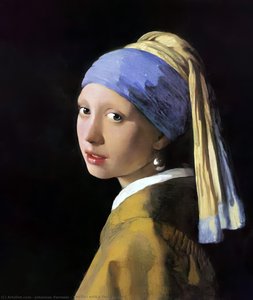
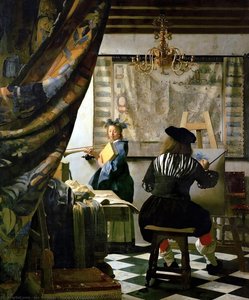
- 代表作: *牛乳を注ぐ女*, *デルフトの眺望*, *真珠の耳飾りの少女*, *絵を描く技師*, *手紙を読む女性*.
- 彼の作品に描かれるテーマには、日常生活、光と影、遠近法、そして日常の静かな美しさがあります。
ヨハネス・フェルメール
1632 - 1675 , オランダ
基本情報
- フルネーム: ヨハネス・フェルメール
- 主な作品:
- 牛乳を注ぐ女
- 真珠の耳飾りの少女
- デルフトの眺望
- 絵を描く技師
- 出生地: デルフト、オランダ
- 国籍: オランダ人
- 影響を与えた芸術家: 後世の多くの画家
- 影響を受けた芸術家: ['カレル・ファブリティウス']
- 死亡日: 1675年12月
- 生年月日: 1632年10月
- 芸術運動: オランダ黄金時代
関連記事

黄金世紀の巨匠たち:バロック絵画が彩る10選|ArtsDot
オランダ黄金時代の10大傑作を紐解く!レンブラント、フェルメール…バロック絵画の魅力と時代背景を深く探求。ArtsDotで、至高のアートコレクションと空間演出のヒントを見つけよう。高品質なアートプリントで、お部屋を華やかに。
Johannes Vermeer: Light, Intimacy & the Dutch Golden Age – A Comprehensive Exploration
Explore the life, techniques & enduring legacy of Johannes Vermeer, a master of Dutch Golden Age painting. Discover symbolism in his iconic works like 'The Milkmaid' and learn about his revolutionary use of light.

Dutch Baroque Masters: 10 Paintings That Shaped an Era | ArtsDot
Journey through the Golden Age with our guide to the Top 10 Dutch Baroque masterpieces! Explore iconic paintings by Rembrandt, Vermeer & Frans Hals. Find museum-quality art reproductions and elevate your home decor at ArtsDot.com.

Golden Age Reflections: Dutch Baroque Painting & Cultural Innovation
Explore the Dutch Golden Age of painting! Discover key artists like Vermeer & ter Borch, their innovative techniques, and the rich cultural context behind these Baroque masterpieces. Learn about collecting & appreciating this iconic art period.

Illuminating Innovation: Exploring the Dutch Golden Age of Painting
Explore the Dutch Golden Age of painting with ArtsDot. Discover Rembrandt, Vermeer & other Masters. Learn about key characteristics, iconic artworks, and lasting influence. Expert insights for collectors & enthusiasts.