

 プレビュー
プレビュー
 シェアする
シェアする シェアする
シェアする
 詳細を見る
詳細を見る

 ダウンロード
 似ている作品
 X線調査
X線調査 スライドショー
 Stats
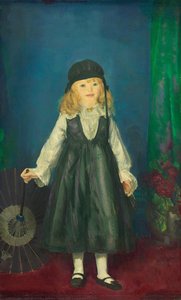
StatsLittle Girl in Lavender
 1840
1840 98.0 x 83.0 cm
 詳細を見る
詳細を見る
手描き油彩複製画
当社のアーティストが、お客様のご希望のサイズと額縁に合わせて、キャンバスに手描きで制作する油彩画です。 ( Switch to Print Switch to Digital Image)




































標準サイズ
オーダーメイド
CM
INCH
作品のオリジナル比率に合わせた、当店の規定サイズからお選びください。
Loading sizes...

幅
高さ
特定のフレームやスペースに合わせて、ご希望のサイズをご入力いただけます。選択されたサイズが元の画像の比率と異なる場合、アートワークをトリミングするか、手描きで要素を追加して絵画を拡張いたします。デジタルモックアップ を制作し、制作開始前にご確認(承認)をいただきます。
画面上のプレビューは、実際のトリミングや拡張を正確に反映しているものではありません。最終的な構図は、モックアップによってのみ正確にご確認いただけます。
カスタムサイズもご利用いただけますが、元の比率を維持するためには、あらかじめ用意されたリストからサイズを選択することをお勧めいたします。
カスタマイズの例:顔をお客様の写真に置き換える、ペットを追加する(例:猫を犬に変更)、背景に隠れたメッセージを入れる、背景の風景や要素を変更するなど。
ご注文後、ArtsDot.com チームより詳細な指示をお送りするとともに、仕上がりイメージ(モックアップ)をご提供いたします。
ご注文後、ArtsDot.com チームより詳細な指示をお送りするとともに、仕上がりイメージ(モックアップ)をご提供いたします。


 ガラスオプションは、110cm未満のサイズでのみご利用いただけます。

Little Girl in Lavender
複製技法
複製画のサイズ
-


合計金額
$ 263
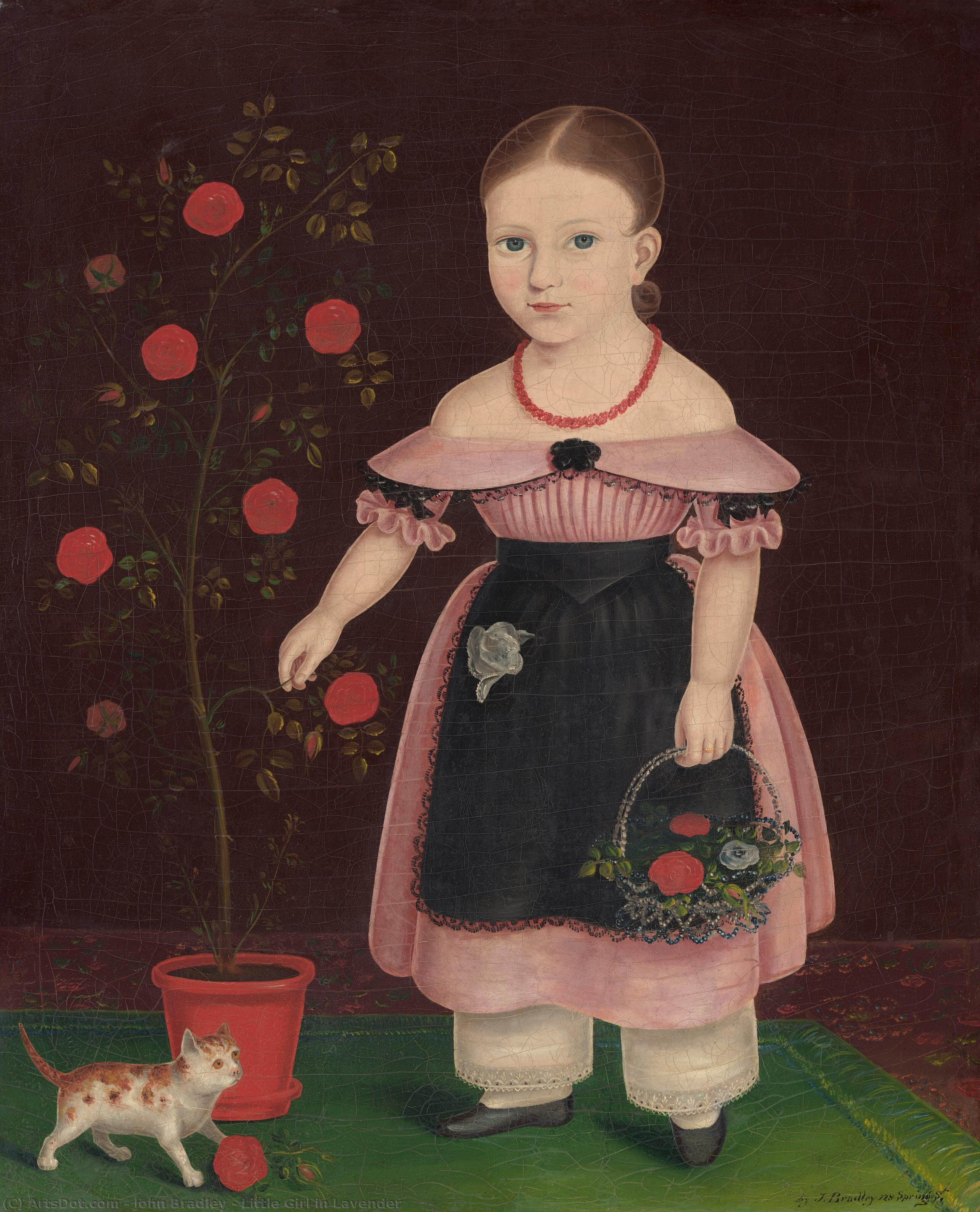
A young girl stands facing us next to a tall, stylized plant, perhaps a rose bush, in this vertical portrait painting. Looking at us with blue eyes, she has light, peachy skin, and her brown hair is parted down the middle and pulled back. Her shoulders are bare, and she wears a coral-red bead necklace. The dress flares out where it encircles her upper arms above short ruffled sleeves. A black apron is tied around her waist and falls to about her knees. The skirt of the dress is longer, falling to midcalf, and wide, white petticoats extend like pant legs below to white stockinged feet in black shoes. A white, lace-trimmed handkerchief is tucked into her apron, and she wears a black brooch at her chest. She holds a gray glass basket in her left hand, our right, filled with two red roses, a blue flower, and green leaves. With one hand, she touches a stem on the rose bush, which is planted in a red pot. One flower has fallen to the floor next to a brown and white cat, perhaps a kitten, in the lower left corner of the painting. The girl and cat stand on an emerald-green carpet, the edge of which runs from the lower right corner of the canvas toward the back of the darkened room.
関連作品






アーティストの略歴
A Glimpse into the Lives of Ordinary Americans: The World of John Bradley
John Bradley remains a fascinating, yet somewhat enigmatic figure in the landscape of 19th-century American art. While biographical details are scarce – his birthdate is currently unknown, and he continues to live – his legacy rests powerfully within the intimate portraits he created, offering a unique window into the lives of everyday people during a period of significant social change. Bradley wasn’t painting grand historical narratives or idealized landscapes; instead, he focused on capturing the essence of individuals from diverse backgrounds, primarily in and around Staten Island, New York. This dedication to portraying a broad spectrum of society sets him apart and contributes significantly to his enduring appeal.The Rise of a Self-Taught Portraitist
Bradley’s artistic journey was largely self-directed. He wasn't formally trained at an academy, which lends a distinctive quality to his work – a raw honesty and directness often absent in more polished academic paintings. His style is frequently categorized as American Folk Art or Naive art, though these labels only partially capture the nuance of his skill. Bradley possessed a remarkable ability to observe and translate likeness onto canvas with meticulous detail. He built his reputation through word-of-mouth, traveling amongst communities and offering affordable portraiture services to those who might not otherwise have had their image preserved for posterity. This accessibility was key to his success; he democratized the art of portraiture, extending it beyond the wealthy elite. His subjects weren’t just landowners or merchants but farmers, laborers, children, and members of various ethnic groups – a truly representative cross-section of American life.Technique and Aesthetic: Realism with a Personal Touch
Bradley's paintings are characterized by their straightforward realism, yet they aren’t devoid of personality. He employed a limited palette, favoring earthy tones that contribute to the somber, dignified atmosphere present in many of his works. His brushwork is precise, particularly evident in the rendering of facial features and clothing details. However, there's also a certain looseness, especially in backgrounds, which prevents the portraits from feeling overly stiff or contrived. He often depicted his subjects against simple, neutral backdrops, drawing all attention to their faces and expressions. This focus on the individual is paramount. He wasn’t interested in embellishment or dramatic composition; he wanted to present his sitters as they were – with their unique characteristics, vulnerabilities, and quiet dignity. The scale of his portraits is typically modest, further emphasizing intimacy and a personal connection between artist and subject.Influences and Historical Context
Pinpointing specific artistic influences on Bradley proves challenging given his self-taught nature. However, the broader context of 19th-century American art provides some clues. The rise of portraiture as a means of establishing social status and commemorating individuals was widespread during this period. The work of itinerant artists who traveled throughout the country offering similar services likely played a role in shaping Bradley’s approach. Furthermore, the growing interest in realism and depicting everyday life – themes explored by artists like Winslow Homer and Eastman Johnson – resonates within his oeuvre. His paintings also offer valuable insight into the social dynamics of Victorian America, reflecting the increasing diversity of the population and the evolving concept of identity. The portraits serve as a visual record of a nation grappling with change, immigration, and industrialization.Legacy and Enduring Significance
John Bradley’s work has experienced a resurgence in recent years, captivating collectors and art enthusiasts alike. His paintings are not merely historical artifacts; they are deeply human documents that speak to universal themes of identity, memory, and belonging.- His dedication to portraying diverse figures challenges traditional notions of who deserves artistic representation.
- The intimate scale and directness of his portraits foster a powerful connection between viewer and subject.
- Bradley’s work provides invaluable insight into the social fabric of 19th-century America, offering a glimpse into the lives of ordinary people often overlooked by mainstream historical narratives.

基本情報
- Artistic Movement Or Style: Naive American Painting
- Artists Or Movements Influenced By This Artist: ['American Folk Art']
- Artists Who Influenced This Artist: ['Edward Hopper']
- Date Of Birth: 1988-09-15
- Full Name: John Bradley
- Nationality: English
- Notable Artworks: ['The Old Vicarage Garden']
- Place Of Birth: Manchester, England