

 プレビュー
プレビュー
 プリントを購入
 シェアする
シェアする シェアする
シェアする
 詳細を見る
詳細を見る

 ダウンロード
 似ている作品
 X線調査
X線調査 スライドショー
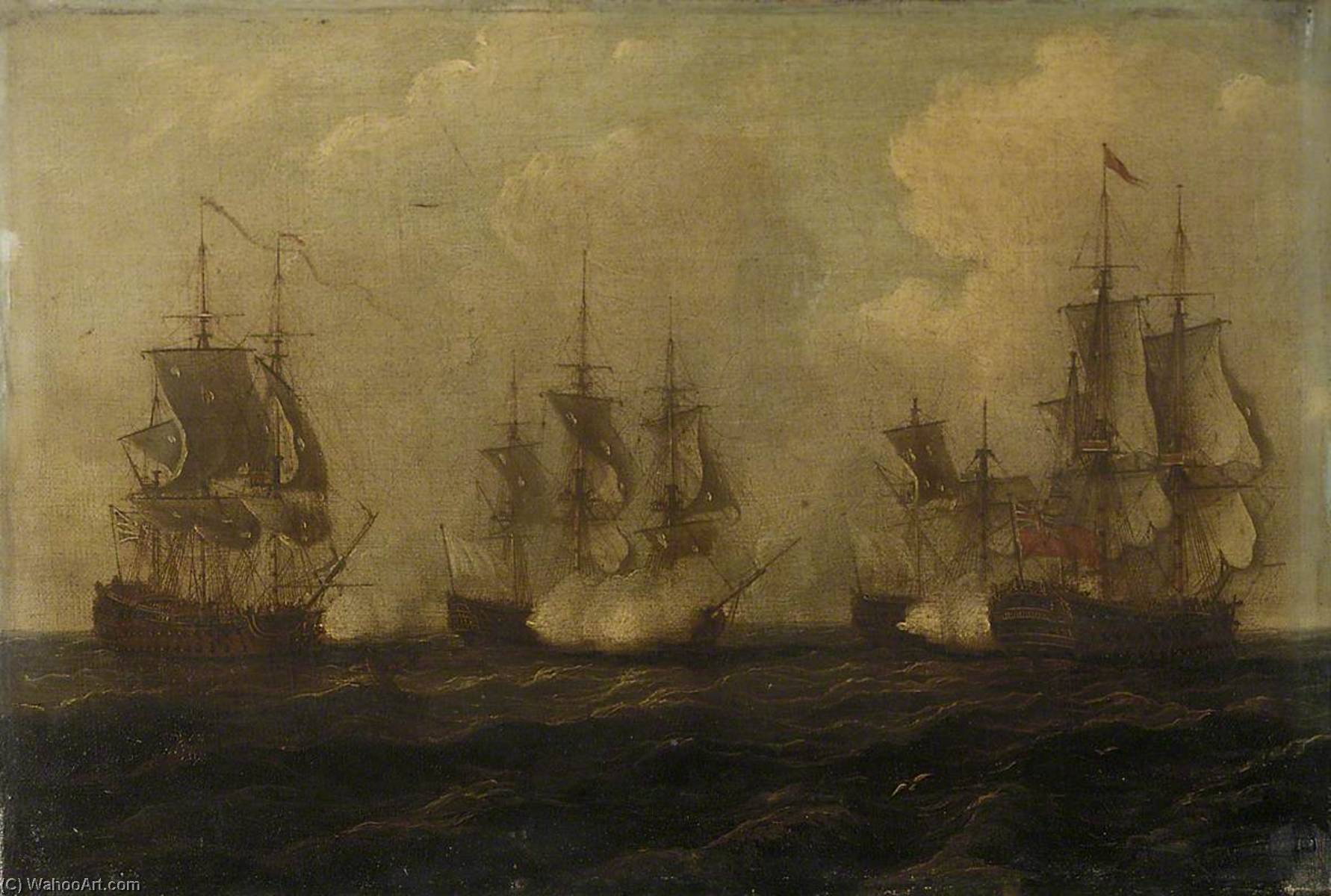
Action off Cape Francois, 21 October 1757
 33.0 x 49.0 cm
 詳細を見る
詳細を見る




































作品のオリジナル比率に合わせた、当店の規定サイズからお選びください。

特定のフレームやスペースに合わせて、ご希望のサイズをご入力いただけます。選択されたサイズが元の画像の比率と異なる場合、アートワークをトリミングするか、手描きで要素を追加して絵画を拡張いたします。デジタルモックアップ を制作し、制作開始前にご確認(承認)をいただきます。
画面上のプレビューは、実際のトリミングや拡張を正確に反映しているものではありません。最終的な構図は、モックアップによってのみ正確にご確認いただけます。
カスタムサイズもご利用いただけますが、元の比率を維持するためには、あらかじめ用意されたリストからサイズを選択することをお勧めいたします。
ご注文後、ArtsDot.com チームより詳細な指示をお送りするとともに、仕上がりイメージ(モックアップ)をご提供いたします。


 ガラスオプションは、110cm未満のサイズでのみご利用いただけます。

Action off Cape Francois, 21 October 1757
複製技法
複製画のサイズ
-


合計金額
$ 263
関連作品










アーティストの略歴
The Shipwright of the Canvas: The Life of John Cleveley the Elder
In the heart of eighteenth-century London, amidst the rhythmic sounds of hammers and the scent of fresh timber at the Deptford Dockyard, a unique artistic vision was being forged. John Cleveley the Elder (c. 1712 – 1777) did not emerge from the polished studios of fine art academies, but rather from the practical, gritty reality of a shipwright’s workshop. Born in Southwark, his early life was defined by the tactile mastery of wood and iron. As a carpenter belonging to His Majesty’s Navy, Cleveley possessed an intimate, structural understanding of the vessels that dominated the seas of his era. This foundational knowledge would later become the very soul of his artistry, allowing him to transcend mere illustration and achieve a profound level of maritime realism that few of his contemporaries could replicate.
Cleveley’s journey is a testament to the power of observation. Without formal academic training, he relied on an innate ability to translate the technical complexities of naval architecture into evocative oil paintings. His dual vocation—working as a carpenter while developing his painterly hand—meant that every line of a hull and every tension in a mast was informed by firsthand experience. When one gazes upon his depictions of ships under construction, such as the celebrated Sixth-Rate on the Stocks, one does not merely see a painting; one witnesses the meticulous precision of a man who understood the weight, the grain, and the engineering of the maritime world.
A Mastery of Light, Sea, and Motion
The brilliance of Cleveley’s work lies in his ability to marry technical accuracy with an atmospheric sensitivity. While his compositions are anchored by the rigid geometry of naval construction, they are brought to life through a masterful use of light and shadow. He possessed a rare talent for capturing the mercurial nature of the sea—the way sunlight dances upon a cresting wave or how a heavy mist might shroud a distant frigate. In works like The Royal Caroline, painted in 1750, Cleveley demonstrates an extraordinary command over movement; the sails are not static objects but living entities, caught in a moment of energetic propulsion across the canvas.
His stylistic development allowed him to navigate various maritime themes, from the serene majesty of royal yachts to the visceral drama of naval engagements. He could pivot from the quiet, industrious atmosphere of the dockyards to the chaotic, salt-sprayed intensity of a storm. This versatility ensured his relevance among a wide range of patrons, including naval officers who sought accurate records of their vessels and collectors enamored by the romanticism of the high seas. His brushwork often balanced the fine detail required for ship portraits with a broader, more expressive touch when rendering the elements, creating a sense of depth and dimensionality that pulls the viewer into the very heart of the ocean.
Legacy and Historical Significance
The historical significance of John Cleveley the Elder extends far beyond his individual canvases. He was a pioneer of a genre that would come to define British visual identity during an age of naval supremacy. By documenting the evolution of shipbuilding and the grandeur of the Royal Navy, he provided a vital visual record of Britain's maritime ascendancy. His influence also echoed through his family; his son, John Cleveley the Younger, and his nephew, Robert Cleveley, continued this tradition of marine excellence, further cementing the Cleveley name as a cornerstone of British maritime art.
Today, the works of Cleveley the Elder serve as much more than historical artifacts. They are emotive windows into a vanished era of sail and timber. His ability to blend the technical precision of a craftsman with the poetic vision of an artist ensures that his legacy remains vibrant. Through his eyes, we do not just observe the ships of the eighteenth century; we feel the spray of the Atlantic, sense the tension of the rigging, and respect the enduring majesty of the sea.
john cleveley the elder
1712 - 1777
基本情報
- Artistic Movement Or Style: Marine Art
- Artists Or Movements Influenced By This Artist: ['Romanticism']
- Artists Who Influenced This Artist: ['Paul Sandby']
- Date Of Death: 1777
- Full Name: John Cleveley the Elder
- Nationality: English
- Notable Artworks:
- Sixth-Rate on the Stocks
- The Royal Yacht Caroline
- HMS Brune
- Cambridge
- Place Of Birth: Southwark, England

