

 プレビュー
プレビュー
 シェアする
シェアする シェアする
シェアする
 詳細を見る
詳細を見る

 ダウンロード
 似ている作品
 X線調査
X線調査 スライドショー
 統計情報
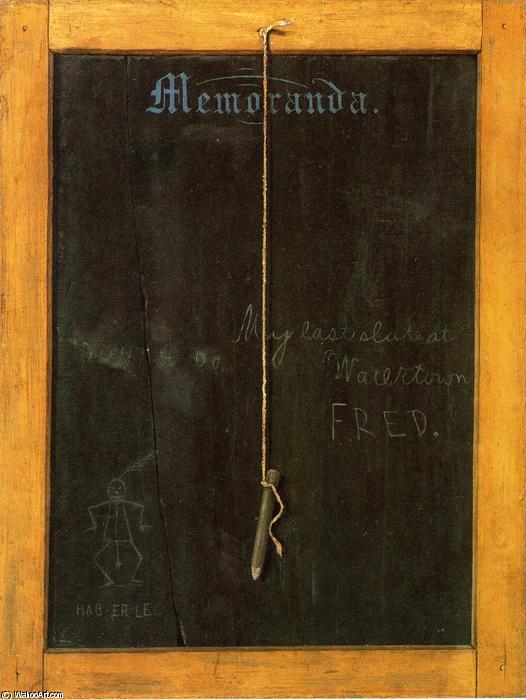
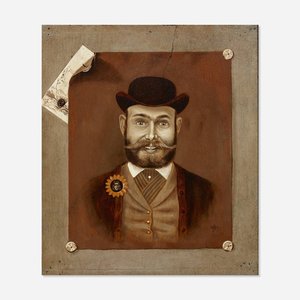
統計情報The Slate: Memoranda


 詳細を見る
詳細を見る
オンラインプレビューをはるかに凌ぐ、高解像度で鮮明なデジタル画像をご購入いただけます。
各ファイルは、社内の専門家が高度なツールと熟練した手作業によるレタッチを用いて、細心の注意を払って準備されています。すべての画像において、卓越した鮮明度、正確な色彩再現性、そして繊細なディテールを保証いたします。
最終ファイルは、プロフェッショナルな編集・印刷環境ですぐにご利用いただけるよう最適化された状態で、72時間以内にメールにてお届けいたします。これは、一流のデザインスタジオ、出版社、ギャラリーから信頼されているものと同等の品質です。
デジタルアート
個人での鑑賞、印刷、クリエイティブなプロジェクト用に、高解像度ファイルをダウンロードできます。 ( プリント版に切り替え 手描きの絵画を購入)
デジタル画像のご注文に付随する特典
高品質なデジタル画像配信を、確かな品質で。
ArtsDot.com を選ぶことは、単に画像を手に入れることではありません。それは、プロの手によって精密に仕上げられ、満足保証が付いた高品質なデジタルアートワークを受け取ることを意味します。ご注文いただいた際に自動的に付随する内容は、以下の通りです:

メールですぐにお届け
ご注文から72時間以内に、高解像度のデジタル画像ファイルがメールでお手元に届きます。すぐにそのままご利用いただけます。

AI技術で最適化されたデジタルファイル
お客様の作品は、高度なAIツールと専門家による手作業の編集を組み合わせてプロフェッショナルに最適化されており、細部のディテール、鮮明さ、そして正確な色再現性を最大限に引き出しています。

一生涯無料の再送サービス
ファイルを誤って削除したり、紛失してしまったりしましたか?ご安心ください。いつでも無料で再送いたします。

輸入手数料は一切かかりません
関税や手数料、配送料を気にすることなく、お気に入りのアートワークをすぐにお楽しみいただけます。デジタルダウンロードは常に免税です。

色彩再現の保証
プロ仕様のツールとカラーマネジメント技術を用いることで、デジタル画像が元の色を最大限に忠実に再現することを保証いたします。

100日間満足保証
ご購入いただいたデジタル画像にご満足いただけない場合は、100日以内であれば、理由を問わず修正または100%の返金対応をさせていただきます。

100% 返金保証
ご満足いただけない場合は、デジタルファイルを受け取ってから100日以内であれば、理由を問わず全額返金いたします。

まとめ買い割引
3枚購入で10%OFF - 5枚購入で15%OFF - 10枚以上購入で20%OFF。クリエイティブなプロジェクト、ギャラリー、エージェンシーに最適です。
The Slate: Memoranda – A Snapshot of American Still Life
John Haberle’s “The Slate: Memoranda” isn't merely a depiction of an everyday object; it’s a masterful exercise in trompe l'œil—a technique that deliberately tricks the eye into perceiving illusion rather than reality—solidifying his place as one of the three leading practitioners of this style in the United States during the late 1890s. Unlike many artists of his era preoccupied with grand narratives and dramatic expressions, Haberle possessed a singular vision: to transform commonplace items into mesmerizing visual puzzles that captured the quiet beauty inherent within their simplest forms. This unassuming chalkboard, framed in warm brown wood, exemplifies this dedication to meticulous observation and artistic ingenuity.A Technique Rooted in Illusion
Haberle’s technique is deceptively straightforward—a painting capturing a tangible reality—yet it achieves extraordinary results through careful manipulation of light and perspective. The artist skillfully employs shading to create the illusion of depth, making the chalkboard surface appear textured and aged as if weathered by time itself. This masterful use of chiaroscuro draws attention to the subtle nuances of materiality, mirroring Haberle’s broader fascination with capturing the essence of ordinary subjects. The rough surface of the chalkboard contrasts beautifully with the smooth grain of the wooden frame, further enhancing the visual impact of the piece.The Language of Symbolism: Memory and Farewell
Beyond its technical brilliance lies a rich tapestry of symbolism. The slate itself serves as a poignant reminder of childhood memories—a “last salute at Watertown FRED,” as inscribed in handwritten text. This simple phrase encapsulates a moment of reflection, hinting at youthful aspirations and perhaps a bittersweet farewell to formative experiences. Accompanying the inscription is a crudely drawn stick figure with outstretched arms, adding an element of informality and humor that underscores Haberle’s ability to infuse even the most mundane subjects with emotional resonance. The drawing's childlike simplicity juxtaposes against the artist’s sophisticated skill—a deliberate contrast that elevates the artwork beyond mere representation.Historical Context: Embracing Domestic Still Life
“The Slate: Memoranda” emerged during a period of artistic experimentation in America, where artists like Haberle were actively challenging conventions and exploring new avenues for visual expression. While Impressionism dominated the art world at the time, Haberle championed a distinct aesthetic—domestic still life—focusing on capturing the beauty found within domestic interiors and everyday objects. This approach reflected a broader cultural shift toward valuing craftsmanship and appreciating the subtle details of daily life. The painting’s placement in the Fine Arts Museums of San Francisco underscores its enduring appeal to collectors who recognize Haberle's contribution to American art history.A Legacy of Quiet Mastery
John Haberle’s legacy rests not in monumental canvases but in a series of exquisitely crafted still lifes that continue to captivate art historians and enthusiasts alike. “The Slate: Memoranda” stands as a testament to his unwavering commitment to illusionistic painting—a technique that transformed ordinary objects into extraordinary visual experiences. Its enduring fascination speaks volumes about Haberle’s ability to distill the essence of human experience into deceptively simple forms, securing his place among the most influential artists of his time.関連作品







作家の略歴
The Illusionist of Everyday Life
John Haberle (1856 – 1933) stands as a singular figure in American painting, renowned for his masterful execution of trompe l'oeil—a technique that deliberately deceard the eye into perceiving illusion rather than reality. Unlike many of his contemporaries who sought grandeur and dramatic expression, Haberle focused on capturing the quiet beauty and subtle complexities found within commonplace objects, transforming them into mesmerizing visual puzzles. His legacy rests not in monumental canvases but in a series of exquisitely crafted still lifes that continue to fascinate art historians and collectors alike.
Born in New Haven, Connecticut, Haberle’s early life was shaped by his German immigrant parents who instilled in him a strong work ethic and an appreciation for craftsmanship. Rejecting the conventional path of higher education, he apprenticed as an engraver at a young age—a skill that would prove invaluable to his later career as illustrator and exhibit preparator for Yale University’s Peabody Museum of Natural History under the guidance of paleontologist Othniel Charles Marsh. This formative experience fostered meticulous observation and attention to detail, qualities that would become hallmarks of Haberle's artistic style.
Mastery of the Material World
His foray into painting began in 1884 at the National Academy of Design in New York City where he encountered trompe l’oeil firsthand—a technique championed by artists like William Harnett and John F. Peto. Haberle quickly embraced this innovative approach, recognizing its potential to elevate seemingly mundane subjects into objects of profound artistic contemplation. He eschewed the opulent styles favored by his peers, opting instead for a deliberately restrained palette and a focus on capturing the precise textures and contours of his chosen materials—primarily paper.
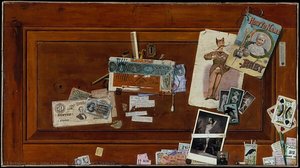
Haberle’s distinctive style is characterized by an unwavering commitment to illusionistic realism. His work often centers on the tactile qualities of ephemeral items: currency, postage stamps, envelopes, and scraps of newsprint. By meticulously rendering the slight curl of a paper edge or the subtle indentation of a stamp, he created a tension between the flat surface of the canvas and the perceived depth of the objects depicted. This mastery allowed him to turn the act of viewing into an interactive experience, where the viewer is constantly challenged to distinguish between the painted image and the physical object.
Legacy and Artistic Significance
The historical significance of John Haberle lies in his ability to find profound meaning within the trivial. While other artists of the late 19th century were preoccupied with the sweeping landscapes of American Impressionism or the heavy drama of Realism, Haberle turned inward toward the intimate and the overlooked. His work serves as a bridge between the precision of scientific illustration and the poetic ambiguity of fine art.
Through his dedication to the trompe l'oeil tradition, Haberle achieved several lasting contributions to American art:
- Elevation of the Mundane: He proved that even the most disposable elements of modern life, such as scraps of paper and old coins, possess inherent aesthetic value.
- Technical Precision: His background in engraving allowed him to push the boundaries of texture and light, setting a high standard for illusionistic painting in America.
- Psychological Engagement: His paintings invite a unique form of cognitive play, forcing the spectator to engage deeply with the mechanics of sight and perception.
Today, Haberle is remembered not merely as a skilled technician, but as an artist who mastered the art of deception to reveal a deeper truth about the beauty hidden within our everyday surroundings.
John Haberle
1856 - 1933 , United States of America
プロフィール概要
- Artistic Movement Or Style: Trompe l'oeil
- Artists Or Movements Influenced By This Artist: ['Alfred Frankenstein']
- Artists Who Influenced This Artist: ['Othniel Charles Marsh']
- Date Of Birth: 1856
- Date Of Death: 1933
- Full Name: John Haberle
- Nationality: American
- Notable Artworks:
- A Misunderstanding
- The Slate: Memoranda
- Grapes on a Ledge
- Place Of Birth: New Haven, United States