

 プレビュー
プレビュー
 シェアする
シェアする シェアする
シェアする
 詳細を見る
詳細を見る

 ダウンロード
 似ている作品
 X線調査
X線調査 スライドショー
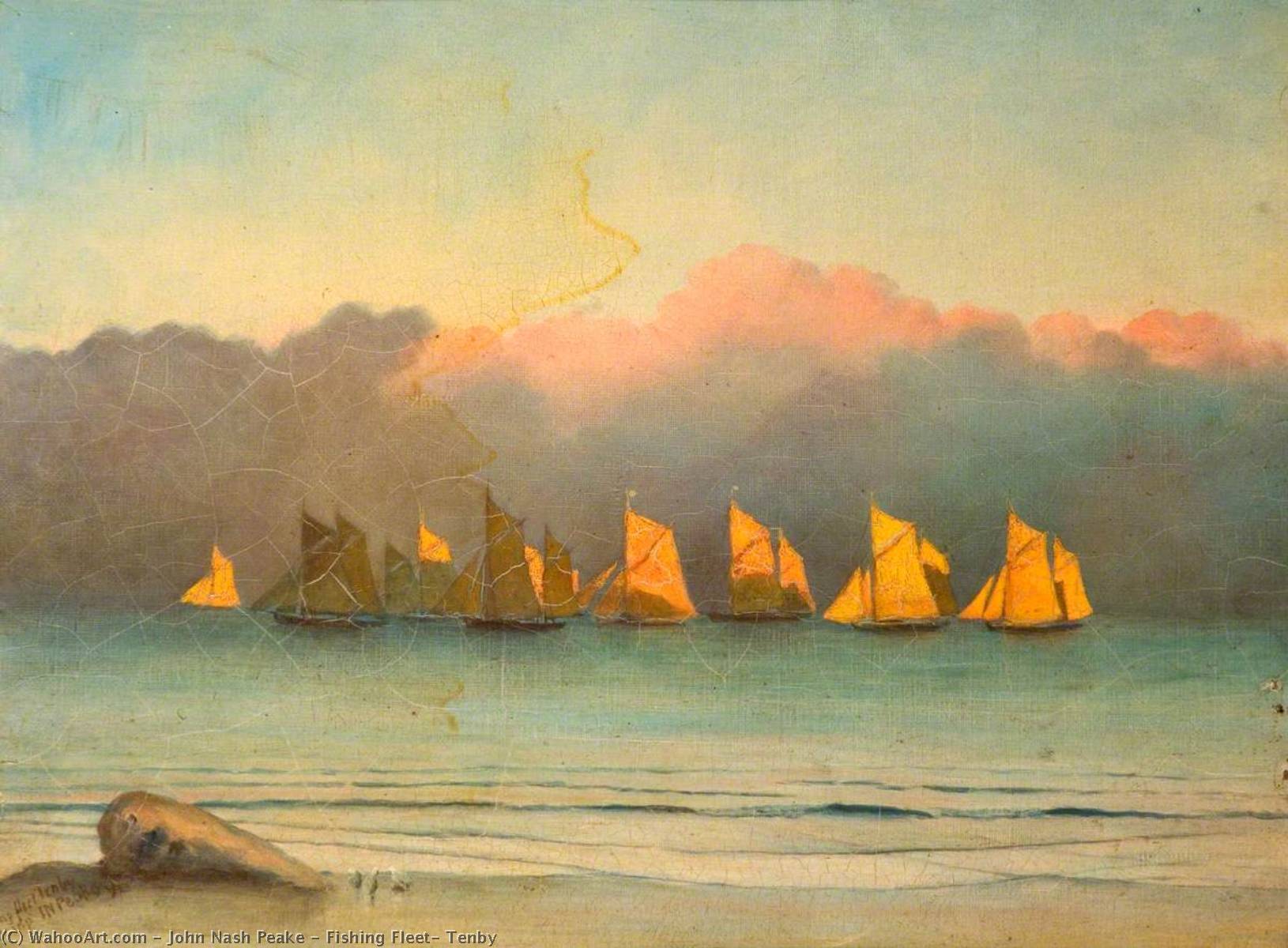
Fishing Fleet, Tenby
 Romanticism
 1896
1896 29.0 x 38.0 cm
 詳細を見る
詳細を見る
ジークレー/アートプリント
迅速な制作と多彩な仕上げオプションを備えた、ミュージアムクオリティのジークレーまたはキャンバスプリント。 ( 手描きの絵画を購入 画像を購入)




































作品のオリジナル比率に合わせた、当店の規定サイズからお選びください。

特定のフレームやスペースに合わせて、ご自身でサイズを指定することも可能です。選択されたサイズが元の画像の比率と一致しない場合、作品をトリミングするか、鏡面反射または単色での塗りつぶしによって画像を拡張いたします。制作を開始する前に、ご確認用のデジタルモックアップをお送りいたします。
画面上のプレビューには、実際のトリミングや拡張は反映されませんのでご注意ください。最終的な構図を正確に確認できるのは、モックアップのみとなります。
カスタムサイズも承っておりますが、元の比率を維持するためには、あらかじめ用意されたリストからサイズを選択することをお勧めいたします。


 ガラスオプションは、110cm未満のサイズでのみご利用いただけます。

Fishing Fleet, Tenby
ジークレー/アートプリント
複製画のサイズ
-


合計金額
$ 62
関連作品

アーティストの略歴
The Soul of the English Landscape: The Life and Legacy of John Nash Peake
In the annals of British Modernism, few artists possess the ability to bridge the gap between the serene romanticism of the countryside and the visceral, psychological shadows of war as profoundly as John Nash Peake. Born in London in 1896 into a lineage of creative distinction—his father being a noted sculptor—Peake was immersed in the language of form and visual storytelling from his earliest years. This foundational connection to the arts led him to the prestigious Slade School of Art, where he refined a technique that would eventually allow him to capture not just the physical world, but the very atmosphere of existence itself. His early training was deeply colored by the Impressionist masters; the light-drenched canvases of Claude Monet and the structural color explorations of Paul Cézanne became the pillars upon which he built his stylistic identity, instilling in him a lifelong devotion to capturing fleeting, atmospheric sensations with remarkable precision.
Peake’s artistic journey is often viewed through two distinct lenses: the sublime beauty of nature and the harrowing reality of human conflict. In his landscape works, he functioned as a romantic visionary, seeking to portray the majesty of the natural world while simultaneously acknowledging its fragility in an age of rapid industrialization. His ability to render grand, sweeping vistas—such as the breathtakingly detailed The Matterhorn—demonstrates a mastery of oil painting that utilizes bold, expressive brushstrokes to evoke a sense of awe and contemplation. In these works, the viewer is not merely looking at a mountain or a lake, but is invited into a space where the textures of rock and water feel palpably alive, reflecting a humanist concern for preserving the untouched beauty of the earth.
The Shadow of the Great War
However, the trajectory of Peake’s career was irrevocably altered by the onset of World War I. The transition from the tranquil landscapes of his youth to the grim, mud-soaked reality of the Western Front introduced a new, darker dimension to his palette and purpose. Witnessing the horrors of trench warfare firsthand, Peake moved beyond mere topographical representation to explore the profound psychological toll of combat. His wartime paintings serve as haunting chronicles of anxiety and disillusionment, where the landscape itself becomes a participant in the tragedy.
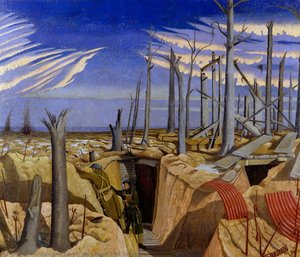
In masterpieces such as Oppy Wood, 1917. Evening, Peake captures a moment of heavy, palpable tension. The scene is not one of peace, but of a world suspended in the terrifying anticipation of violence. Through his skilled use of muted tones and the soft, hazy quality of twilight, he renders the rugged confines of the trenches with a grit that feels almost tactile. The inclusion of an airplane drifting through the dusk serves as a poignant symbol of the evolving nature of modern warfare, bridging the gap between the earthbound struggle of the infantry and the terrifying new dimension of aerial combat. In these works, the trees and woods are no longer just elements of nature; they become silent, somber witnesses to the unfolding human drama.
Artistic Significance and Enduring Influence
The historical significance of John Nash Peake lies in his ability to synthesize these opposing forces—the beautiful and the brutal. He did not merely document history; he translated the emotional landscape of a generation into a visual language that remains deeply moving today. His career, which spanned several decades as a painter, illustrator, and teacher, left an indelible mark on the British artistic landscape by proving that modernism could encompass both the delicate nuances of light and the heavy weight of human suffering.
To reflect upon Peake's contributions is to recognize a legacy defined by:
- Technical Mastery: A sophisticated application of Impressionist-inspired light and texture that brought landscapes to life.
- Emotional Depth: The courage to move from the romanticized view of nature into the psychological complexities of war.
- Historical Witness: Providing a visual record of the transition from 19th-century romanticism to the stark realities of 20th-century conflict.
Through his evocative canvases, Peake remains a pivotal figure for those seeking to understand the dual nature of the human experience—the capacity to find sublime beauty even amidst the encroaching shadows of history.
基本情報
- Artistic Movement Or Style: British Modernism
- Artists Or Movements Influenced By This Artist: ['Romantic Landscape Painting']
- Artists Who Influenced This Artist: ['Paul Nash']
- Date Of Birth: 1896
- Date Of Death: 1970
- Full Name: John Nash Peake
- Nationality: British
- Notable Artworks:
- The Matterhorn
- Fishing Fleet, Tenby
- Oppy Wood, 1917. Evening
- Place Of Birth: London, England
関連記事

ジョン・コンスタブルの傑作25選:英国風景画の巨匠が描く自然と光の詩 | ArtsDot
ジョン・コンスタブルの傑作25選。英国風景画の巨匠が描く自然と光の詩の世界へ。ロマン主義を代表する絵画、デダム・ヴェールやヘイ・ウェインなど、ArtsDotで高品質なアートプリントをお楽しみください。インテリアに深みと感動を。コレクションはこちら。

ジョン・シンガー・サージェント:至高の25選 - 美と光の肖像画の世界 | ArtsDot
ジョン・シンガー・サージェントの至高の25選。肖像画、写実主義、光と影の表現が美しい作品群を紐解きます。マダムXや少女の肖像など、時代を超えて愛される名作をArtsDotで鑑賞。高品質なアート複製で、お部屋に美術館のような空間を。今すぐコレクションをご覧ください。
Paul Nash: Modernism, Myth & the British Landscape – A Visionary Artist
Explore the evocative landscapes & poignant war art of Paul Nash (1889-1946), a key figure in British Modernism. Discover his unique style and lasting impact on art history with ArtsDot.
John Hoppner: Portraiture, Patronage & British Identity in the Late Georgian Era
Explore the life & work of John Hoppner, a leading Georgian portraitist. Discover his vibrant style, influential patrons, and lasting impact on British art history. Expert insights for collectors.
John Piper: A Spiritual Vision of British Landscape & Modernism's Embrace
Explore the captivating world of John Piper, a celebrated British painter whose evocative landscapes & iconic church art captured the spirit of his time. Discover his legacy and find high-quality reproductions at ArtsDot.

