

 プレビュー
プレビュー
 シェアする
シェアする シェアする
シェアする
 詳細を見る
詳細を見る

 ダウンロード
 似ている作品
 X線調査
X線調査 スライドショー
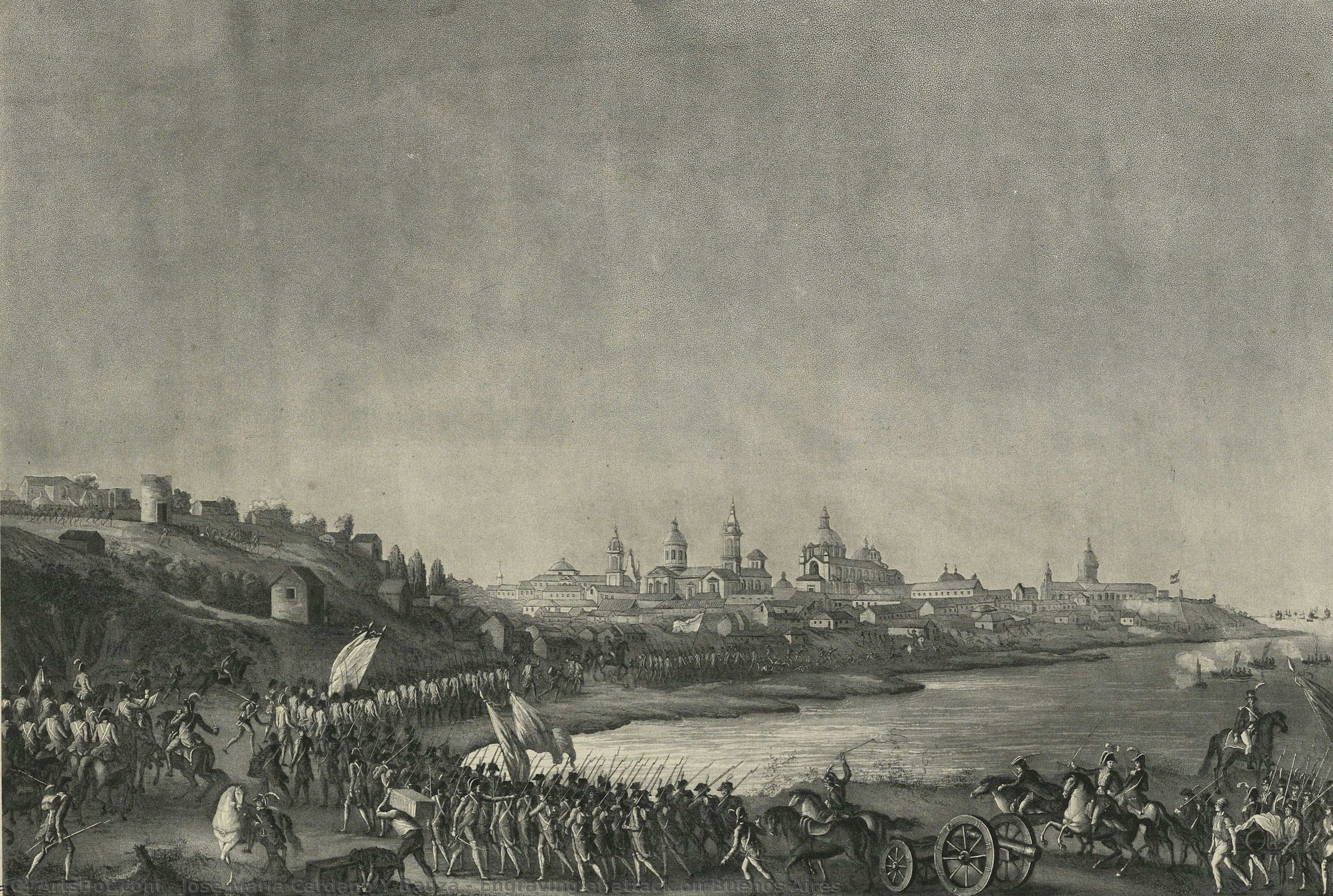
Engraving of attack on Buenos Aires

 詳細を見る
詳細を見る
ジークレー/アートプリント
迅速な制作と多彩な仕上げオプションを備えた、ミュージアムクオリティのジークレーまたはキャンバスプリント。 ( 手描きの絵画を購入 画像を購入)




































作品のオリジナル比率に合わせた、当店の規定サイズからお選びください。

特定のフレームやスペースに合わせて、ご自身でサイズを指定することも可能です。選択されたサイズが元の画像の比率と一致しない場合、作品をトリミングするか、鏡面反射または単色での塗りつぶしによって画像を拡張いたします。制作を開始する前に、ご確認用のデジタルモックアップをお送りいたします。
画面上のプレビューには、実際のトリミングや拡張は反映されませんのでご注意ください。最終的な構図を正確に確認できるのは、モックアップのみとなります。
カスタムサイズも承っておりますが、元の比率を維持するためには、あらかじめ用意されたリストからサイズを選択することをお勧めいたします。


 ガラスオプションは、110cm未満のサイズでのみご利用いただけます。

Engraving of attack on Buenos Aires
ジークレー/アートプリント
複製画のサイズ
-


合計金額
$ 62
関連作品








アーティストの略歴
A Legacy of Stone and Ink: The Life of José María Cardano y Bauzá
In the vibrant, transformative landscape of late 18th and early 19th-century Spain, few figures bridged the gap between scientific precision and artistic expression as effectively as José María Cardano y Bauzá. Born in the coastal city of Cartagena in 1781, Cardano was a man shaped by an extraordinary intellectual heritage. He descended from a lineage deeply rooted in the pursuit of mathematical truth, most notably influenced by the spirit of Gerolamento Cardano, the famed mathematician whose work on algebraic formulas and philosophical inquiry set a standard for rigorous observation. This ancestral connection to the sciences likely instilled in him a lifelong fascination with the mechanics of reproduction and the transformative power of new technologies.
Cardano’s early artistic formation took place within the prestigious Escuela de Cartagena, where he mastered the intricate and demanding craft of engraving. This period of his life was defined by the heavy, dramatic aesthetics of the Baroque tradition, a style that required immense technical discipline to capture light, shadow, and texture through fine lines on metal. However, his horizons were not limited to the studio; his time spent as a grumete—a cabin boy aboard naval vessels—offered him a window into the wider world. The salt spray of the sea and the diverse cultures he encountered during his maritime travels infused his work with a unique sense of global perspective and an eye for topographical detail that would later become essential to his professional identity.
The Dawn of Spanish Lithography
The true turning point in Cardano’s career, and indeed in the history of Spanish printmaking, arrived with his pioneering introduction of lithography. While engraving relied on the physical incision of plates, lithography utilized the chemical properties of stone to allow for a more fluid and accurate method of reproduction. Recognizing that this new medium held unparalleled potential for disseminating scientific knowledge and hydrographic data, Cardano became the driving force behind the modernization of Spanish print culture. He spearheaded the creation of the Depósito Hidrográfico de Madrid, an institution that served as the cradle for Spain’s burgeoning lithographic industry.
This endeavor was far more than a technical achievement; it was a mission of Enlightenment ideals. By establishing the first lithographic workshop in the country, Cardano sought to align Spanish artistic production with the rapid technological advancements occurring across Europe. His work allowed for the mass production of highly detailed maps and scientific illustrations, which were vital for the nation's maritime and geographical progress. Through his leadership, the stone became a canvas for both art and science, democratizing access to visual information that had previously been difficult and expensive to replicate.
Historical Turbulence and Artistic Endurance
The life of Cardano was not without its profound challenges, as his career was inextricably linked to the volatile political climate of Spain. During the Trienio Liberal (1820-1823), a period of intense political upheaval, Cardano’s liberal sympathies led him into exile in London. This period of displacement, while difficult, allowed him to further engage with the international art scene and observe the cutting edge of European printing techniques firsthand. Even as political tides shifted and forced him away from his homeland, his dedication to the progress of lithography remained unshakable.
His most celebrated works often captured significant historical moments with a striking sense of drama and accuracy. One notable example is his engraving depicting the Attack on Buenos Aires, a piece that showcases his ability to translate complex, chaotic events into a structured and compelling visual narrative. Though much of his later life remains shrouded in the historical shadows of the mid-1830s, his impact is undeniable. He left behind a legacy where the precision of the scientist met the soul of the artist, ensuring that the art of the stone would forever be etched into the cultural fabric of Spain.
josé maría cardano y bauzá
1781 - 1834 , Spain
基本情報
- Artistic Movement Or Style: Lithography
- Artists Or Movements Influenced By This Artist: ['Romanticism']
- Artists Who Influenced This Artist: ['Gerolamo Cardano']
- Date Of Birth: Cartagena, Spain (1781)
- Full Name: José María Cardano y Bauzá
- Nationality: Spanish
- Notable Artworks: ['Buenos Aires Attack']
- Place Of Birth: Cartagena

