

 プレビュー
プレビュー
 シェアする
シェアする シェアする
シェアする
 詳細を見る
詳細を見る

 ダウンロード
 似ている作品
 X線調査
X線調査 スライドショー
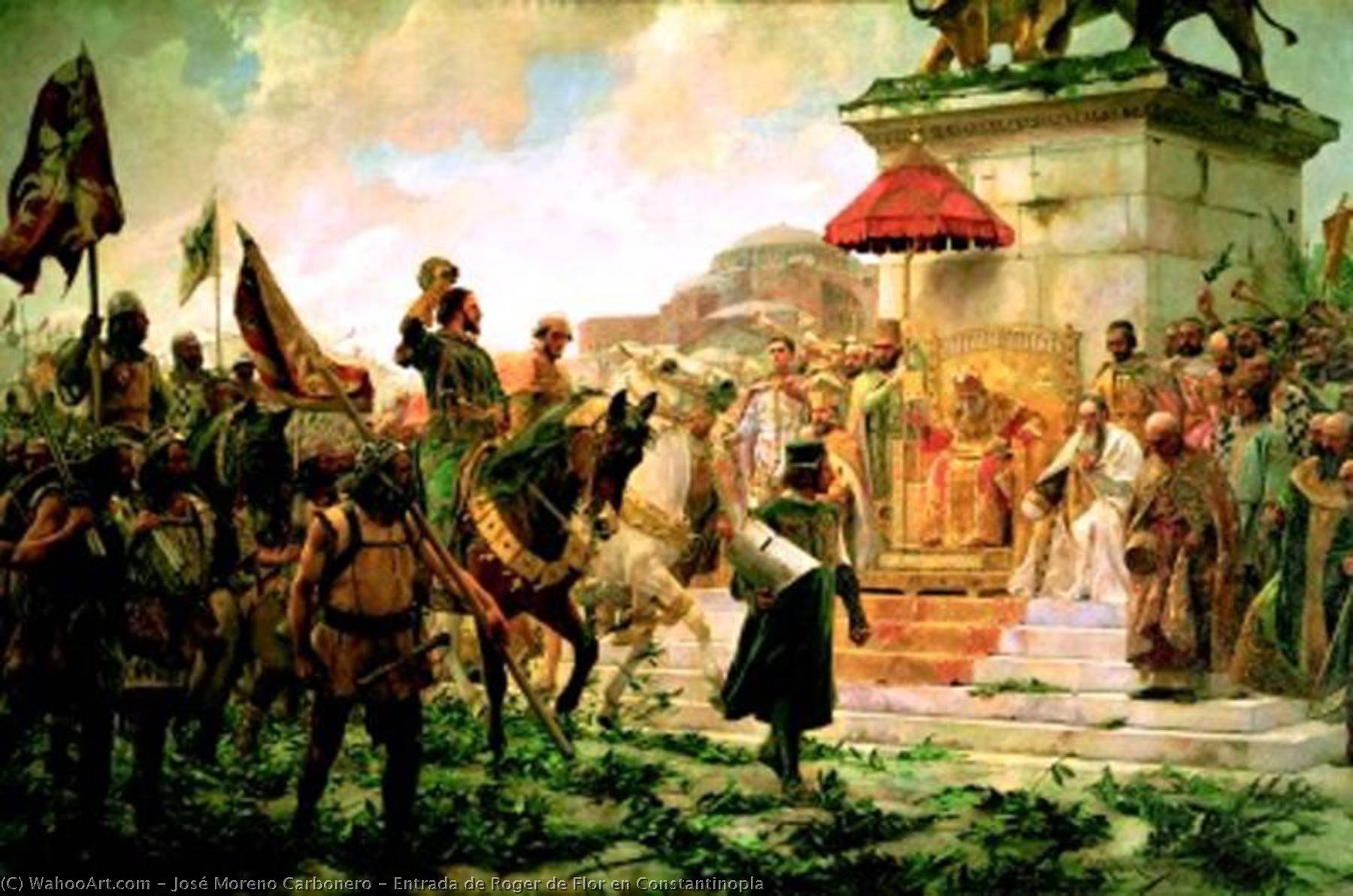
Entrada de Roger de Flor en Constantinopla
 詳細を見る
詳細を見る
ジークレー/アートプリント
迅速な制作と多彩な仕上げオプションを備えた、ミュージアムクオリティのジークレーまたはキャンバスプリント。 ( 手描きの絵画を購入 画像を購入)




































作品のオリジナル比率に合わせた、当店の規定サイズからお選びください。

特定のフレームやスペースに合わせて、ご自身でサイズを指定することも可能です。選択されたサイズが元の画像の比率と一致しない場合、作品をトリミングするか、鏡面反射または単色での塗りつぶしによって画像を拡張いたします。制作を開始する前に、ご確認用のデジタルモックアップをお送りいたします。
画面上のプレビューには、実際のトリミングや拡張は反映されませんのでご注意ください。最終的な構図を正確に確認できるのは、モックアップのみとなります。
カスタムサイズも承っておりますが、元の比率を維持するためには、あらかじめ用意されたリストからサイズを選択することをお勧めいたします。


 ガラスオプションは、110cm未満のサイズでのみご利用いただけます。

Entrada de Roger de Flor en Constantinopla
ジークレー/アートプリント
複製画のサイズ
-


合計金額
$ 62
関連作品



アーティストの略歴
José Moreno Carbonero: A Lasting Legacy of Spanish History Painting
José Moreno Carbonero (1860-1942) stands as a significant figure in 19th-century Spanish art, often recognized as one of the final great proponents of historical painting within that era. While celebrated for his elegant portraiture and patronage from Madrid's elite, his artistic output extended to genre scenes, landscapes (vedutas), and still lifes, showcasing an eclectic talent shaped by diverse influences.
Early Life and Training: Foundations in Málaga
- Birth and Origins: Born in the Perchel quarter of Málaga, Spain.
- Formal Education: In 1868, he enrolled at the School of Fine Arts in Málaga, demonstrating early artistic promise.
- Mentorship of Bernardo Ferrándiz: A crucial influence was his apprenticeship under Bernardo Ferrándiz, a leading artist in Málaga. Ferrándiz introduced Moreno Carbonero to history painting and instilled revolutionary views emphasizing independence, freedom, and nonconformity – themes that would permeate his historical works.
- Early Recognition: He achieved early success, earning the gold medal at the Exhibition of the Lyceum of Málaga in 1872.
- North African Inspiration: A trip to Morocco in 1873 sparked a series of paintings inspired by Mariano Fortuny’s style, focusing on African themes.
Parisian Studies and the Rise of a Virtuoso Style
- Scholarship to Paris (1875): A scholarship from the local government of Málaga enabled him to study in Paris under Jean-Léon Gérôme, known for his academic and Orientalist works.
- Adolphe Goupil's Influence: Introduction to art dealer Adolphe Goupil exposed Moreno Carbonero to the market for small genre paintings ("tableautins").
- Fortuny’s Shadow & Developing Virtuosity: He developed a virtuoso style closely resembling that of Mariano Fortuny, achieving early successes in the "tableautin" format.
- Roman Studies (1881): Further studies in Rome on a stipend honed his skills and contributed to his later historical works.
Major Achievements and Official Recognition
- National Exhibition Successes: Won gold medals at the National Exhibitions of 1881 ("The Prince Don Carlos de Viana") and 1884 ("The Conversion of the Duke of Gandía").
- Royal Commissions: Received significant commissions from official institutions, including a painting "The Entry of Roger de Flor in Constantinople" commissioned by the Spanish Senate in 1888.
- International Acclaim: Garnered numerous awards at international exhibitions, including honors at the Vatican Exposition (1888), Munich and Vienna Exhibitions, Exposition Universelle in Paris (1889 - second medal), Budapest International Exhibition (1890 – great gold medal), Berlin Universal Exhibition (1891 – honorary diploma), and the World's Columbian Exposition in Chicago (1893 – only medal).
- The Founding of Buenos Aires: Commissioned by the Argentine government to paint "The Founding of Buenos Aires" for the 100th anniversary of the Argentine Revolution. King Alfonso XIII gifted the work to Buenos Aires, and Moreno Carbonero later reworked it based on further historical research, demonstrating his commitment to accuracy.
- Academic Career: Served as a professor of live drawing at the Real Academia de Bellas Artes de San Fernando from 1892.
Artistic Style and Historical Significance
Moreno Carbonero’s artistic style was eclectic, heavily influenced by Mariano Fortuny's work. His portraits were characterized by a realistic approach and sophisticated treatment of subjects. As a history painter, he excelled in clear drawing and clean brushstrokes, often drawing inspiration from his early genre painting experience. He distinguished himself by focusing on the emotions and reactions of individuals within historical events rather than grand narratives, prioritizing historical accuracy through meticulous research.
His legacy lies in being one of the last significant Spanish history painters of the 19th century, bridging traditional academic techniques with a growing interest in realism and psychological depth. His dedication to detail and his ability to capture human emotion within historical contexts cemented his place as an important figure in Spanish art.
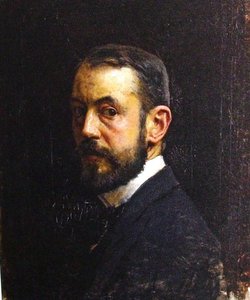
José Moreno Carbonero
1860 - 1942
基本情報
- Artistic Movement Or Style: History painting, Realism
- Artists Who Influenced This Artist:
- Mariano Fortuny
- Jean-Léon Gérôme
- Date Of Birth: 1860
- Date Of Death: 1942
- Full Name: José Moreno Carbonero
- Nationality: Spanish
- Notable Artworks:
- Entrada de Roger de Flor...
- Drinking from the Fountain
- The Founding of Buenos Aires

