

 プレビュー
プレビュー
 プリントを購入
 シェアする
シェアする シェアする
シェアする
 詳細を見る
詳細を見る

 ダウンロード
 似ている作品
 X線調査
X線調査 スライドショー
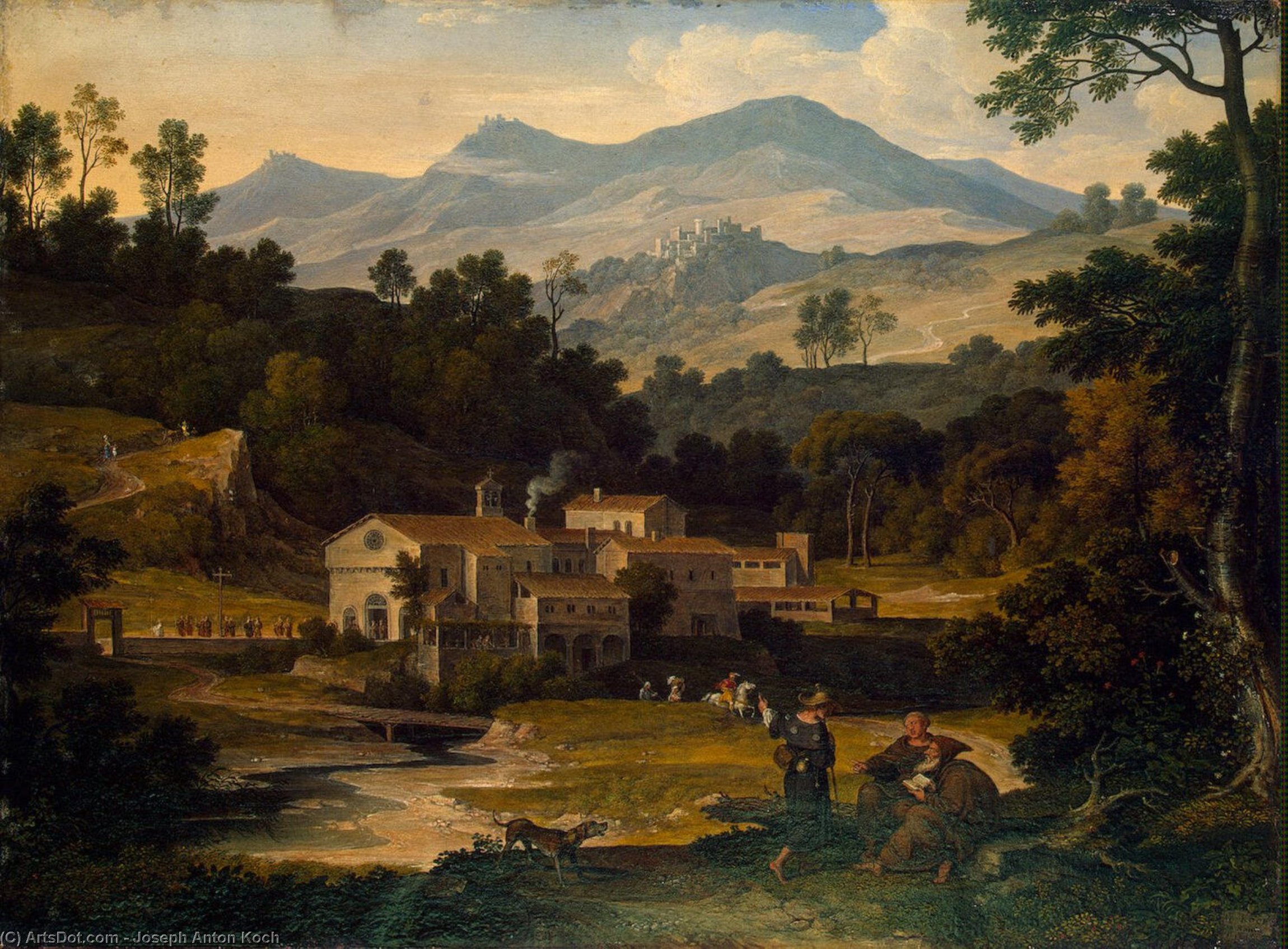
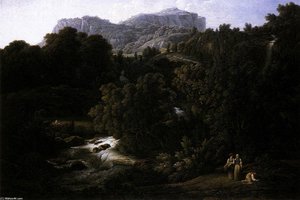
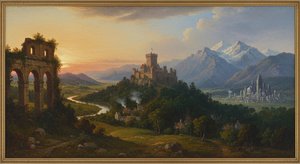
Monastery of San Francesco di Civitella in the Sabine Mountains
 Oil On Canvas
- WallArt
- Neoclassicism/Romanticism
 1812
1812 34.0 x 46.0 cm
 エルミタージュ美術館
 詳細を見る
詳細を見る




P118B $10

P118H $10

P118W $10

P438Z $10

P508JH $12

P508YH $12

P805H $10

P805Z $10

P919BZ $10

P919G $10

P919XJ $10

P959ZH $10

P968JZ $12

W106C $8

W218G $10

W218JH $8

W218Y $10

W307PJ $10

W316G $10

W316PJ $8

W316Y $10

W398PJ $8

W4111J $10

W500HY $15

W500JH $15

W692G $12

W849H $8

W940BG $15

W953PJ $8




作品のオリジナル比率に合わせた、当店の規定サイズからお選びください。

特定のフレームやスペースに合わせて、ご希望のサイズをご入力いただけます。選択されたサイズが元の画像の比率と異なる場合、アートワークをトリミングするか、手描きで要素を追加して絵画を拡張いたします。デジタルモックアップ を制作し、制作開始前にご確認(承認)をいただきます。
画面上のプレビューは、実際のトリミングや拡張を正確に反映しているものではありません。最終的な構図は、モックアップによってのみ正確にご確認いただけます。
カスタムサイズもご利用いただけますが、元の比率を維持するためには、あらかじめ用意されたリストからサイズを選択することをお勧めいたします。
ご注文後、ArtsDot.com チームより詳細な指示をお送りするとともに、仕上がりイメージ(モックアップ)をご提供いたします。


 ガラスオプションは、110cm未満のサイズでのみご利用いただけます。

Monastery of San Francesco di Civitella in the Sabine Mountains
複製技法
複製画のサイズ
-


合計金額
$ 263
The Serene Majesty of Civitella: Joseph Anton Koch’s Mountain Sanctuary
Joseph Anton Koch's "Monastery of San Francesco di Civitella in the Sabine Mountains," painted in 1812, is more than just a landscape; it’s a carefully constructed tableau of tranquility and spiritual contemplation. Nestled within the rugged folds of the Sabine Mountains – a region steeped in Roman history and mythology – this oil on canvas transports the viewer to a world where nature and faith converge. Koch, a pivotal figure bridging the Neoclassical and Romantic movements, masterfully captures not merely the visual beauty of the scene but also an underlying sense of peace and timelessness.
Koch’s artistic journey is particularly fascinating. Born in the Austrian Alps, his early life instilled within him a deep appreciation for the natural world – a connection that would profoundly shape his later work. Initially trained in the strict discipline of the Karlsschule military academy in Stuttgart, Koch's youthful spirit eventually led him to wander through France and Switzerland before finding his true calling in Rome. It was here, amidst the echoes of the Roman Baroque, that he began to develop a distinctive style, one characterized by a harmonious blend of classical composition and burgeoning Romantic sensibilities. The painting reflects this evolution – a careful adherence to established artistic principles tempered with an increasingly expressive use of light, color, and atmospheric perspective.
A Symphony of Light and Shadow: Technique and Composition
The painting’s power lies largely in Koch's masterful handling of light and shadow. He employs a subtle yet effective chiaroscuro – the dramatic contrast between light and dark – to sculpt the mountainous landscape, creating a sense of depth and volume that draws the eye into the scene. The muted palette, dominated by earthy browns, greens, and blues, evokes the feeling of a misty morning or late afternoon, lending an air of quiet solemnity to the composition. Notice how Koch uses atmospheric perspective; distant peaks are rendered in softer hues and less detail, subtly suggesting their immense scale while maintaining a harmonious unity within the scene.
The composition itself is carefully balanced, guiding the viewer’s gaze across the canvas. The small monastery, perched on a gentle slope, acts as a focal point, anchoring the eye and providing a sense of human presence amidst the vastness of nature. Scattered figures – monks tending to their duties or simply pausing for contemplation – subtly reinforce the painting's theme of spiritual devotion. Koch’s meticulous attention to detail extends beyond the main subjects; observe the careful rendering of individual trees, rocks, and even the textures of the monastery walls.
Symbolism and Historical Context
The setting itself is rich in symbolic meaning. The Sabine Mountains, a region with ancient Roman roots, evoke a sense of history and tradition. The presence of the monastery – a symbol of faith, community, and spiritual retreat – underscores the painting’s underlying message of seeking solace and connection within nature. Koch's choice to depict a monastic setting during a period of significant social and political upheaval (the Napoleonic Wars) adds another layer of complexity to the work. It can be interpreted as an expression of longing for stability and spiritual refuge in a world consumed by conflict.
Furthermore, Koch’s artistic development is crucial to understanding this piece. Following his time with Asmus Jacob Carstens, he moved towards a “heroic” landscape style, incorporating historical elements into the natural scenery. This shift reflects the growing influence of Romanticism, which emphasized emotion, imagination, and the sublime power of nature. “Monastery of San Francesco di Civitella in the Sabine Mountains” represents a sophisticated synthesis of these influences – a testament to Koch’s artistic versatility and his ability to capture both the beauty and the spiritual significance of the Italian landscape.
A Timeless Vision: Emotional Impact and Reproduction
Ultimately, “Monastery of San Francesco di Civitella in the Sabine Mountains” is an invitation to pause, reflect, and connect with the natural world. The painting’s serene atmosphere and carefully constructed composition evoke a sense of tranquility and spiritual contemplation – qualities that continue to resonate with viewers today. Reproductions of this remarkable work offer a wonderful opportunity to bring this timeless vision into your own home or office, creating a space filled with beauty, peace, and a subtle reminder of the enduring power of faith and nature.
関連作品
アーティストの略歴
The Architect of the Heroic Landscape
Joseph Anton Koch stands as a singular figure in Austrian art history—a painter who deftly navigated the shifting currents of Neoclassicism into the burgeoning fervor of German Romanticism. Born in 1768 in Elbigenalp, Austria, his early life was marked by a pastoral simplicity that would profoundly shape his artistic vision; tending cattle in his youth instilled in him an intimate appreciation for the natural world, a connection that later manifested in his monumental depictions of earth and sky. A fortuitous recommendation from Bishop Umgelder secured him a prestigious academic education at Stuttgart’s Karlsschule, a rigorous military academy where discipline and intellectual pursuit converged. However, Koch's youthful spirit rebelled against such constraints, leading to a brief but formative wanderlust through France and Switzerland before he finally established himself in the artistic crucible of Rome in 1795.
In the heart of Italy, Koch found kinship with fellow painter Asmus Jacob Carstens, adopting a style often referred to as the heroic aesthetic. This approach initially mirrored Carstens’ literal interpretations of mythological narratives, characterized by a certain sculptural clarity and formal rigor. Koch demonstrated his technical prowess not only through paint but also through the meticulous art of printmaking, notably etching the pages of Carrend's Les Argonautes. This period of his life was defined by a mastery of detail and a command over line that would serve as the foundation for his later, more expansive compositions.
A Visionary Evolution: From Myth to Mountain
As his career progressed, Koch underwent a profound artistic evolution, transitioning from the structured narratives of Neoclassicism toward the sweeping grandeur of landscape painting. He began to reimagine classical ideals through the lens of the Austrian Alps and the Italian countryside, producing works that felt both timeless and intensely visceral. Influenced by the monumental compositions of masters like Nicolas Poussin and Claude Lorrain, Koch developed a unique way of organizing space, where dramatic lighting and vast, rugged terrains created a sense of awe. His landscapes were never merely topographical records; they were emotional journeys through heroic scenery.
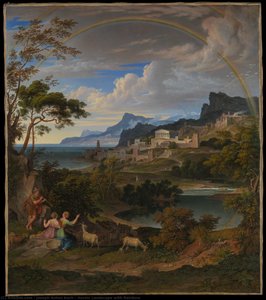
His ability to blend the classical with the romantic is perhaps best seen in his treatment of light and atmosphere. In works such as Heroic Landscape with Rainbow, he utilizes a Baroque sensibility to introduce dramatic weather elements that punctuate the stillness of the mountains. This technique allowed him to bridge two eras: the ordered, rational world of the Enlightenment and the emotive, untamed spirit of Romanticism. Even when depicting serene scenes, such as the Monastery of San Francesco di Civitella in the Sabine Mountains, there remains an underlying sense of the sublime—a realization of nature's immense power and scale.
Legacy and Historical Significance
The later years of Koch's life were marked by both movement and resilience. Facing financial hardships exacerbated by Napoleon’s invasions, he relocated to Vienna in 1812. In this new setting, he flourished under the patronage of influential intellectuals like Friedrich Schlegel and became a central figure in the Germanic artistic tradition. His work during this period began to reflect a shift toward harsher, more dramatic elements, further cementing his role as a pioneer of the landscape genre.
The historical significance of Joseph Anton Koch lies in his ability to transform the landscape from a secondary, decorative element into a primary vehicle for philosophical and emotional expression. His contributions can be summarized through several key artistic pillars:
- Synthesis of Styles: He successfully merged the formal discipline of Neoclassicism with the emotional depth of German Romanticism.
- The Heroic Aesthetic: He redefined landscape painting by introducing a sense of monumental scale and dramatic, "heroic" compositions.
- Technical Mastery: His skill spanned from the delicate precision of etching to the sweeping, atmospheric brushwork required for vast mountain vistas.
- Cultural Bridge: He acted as a vital link between the classical traditions of Rome and the emerging nationalistic landscape movements in Austria and Germany.
Today, Koch is remembered not just as an Austrian painter, but as a visionary who taught viewers to look upon the mountains and see within them the very soul of the sublime.
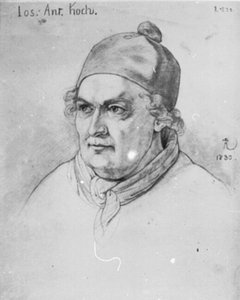
Joseph Anton Koch
1768 - 1839 , Austria
基本情報
- Artistic Movement Or Style: Neoclassicism & Romanticism
- Artists Or Movements Influenced By This Artist: ['Romantic painting']
- Artists Who Influenced This Artist: ['Asmus Jacob Carstens']
- Date Of Birth: 1768
- Date Of Death: 1839
- Full Name: Joseph Anton Koch
- Nationality: Austrian
- Notable Artworks:
- The Upland near Bern
- Landscape with Abraham and the Three Angels in the Valley of Mambre
- Heroic Landscape with Rainbow
- Place Of Birth: Elbigenalp, Austria
関連記事

ロマン派ランドスケープ:時代を彩る巨匠の10選|アートとインテリアの世界
ロマン派絵画の時代を彩る10選。巨匠たちの風景が織りなす感動の世界へ。ターナー、ルーベンスなど、名作の裏話と高精細複製でアートをお部屋に。ArtsDot.comで至福のアート体験を。

Evocations of Place: A Historical Journey Through Landscape Art
Explore the rich history of landscape art with ArtsDot. Discover renowned artists, movements like Impressionism & Romanticism, and expert guidance for collecting timeless pieces. Find your perfect serene escape today!

ジョン・コンスタブルの傑作25選:英国風景画の巨匠が描く自然と光の詩 | ArtsDot
ジョン・コンスタブルの傑作25選。英国風景画の巨匠が描く自然と光の詩の世界へ。ロマン主義を代表する絵画、デダム・ヴェールやヘイ・ウェインなど、ArtsDotで高品質なアートプリントをお楽しみください。インテリアに深みと感動を。コレクションはこちら。

Evoking Atmosphere & Identity: A Journey Through Landscape Painting's History
Explore the rich history of landscape painting! Discover renowned artists, movements like Romanticism, & techniques such as atmospheric perspective. Find inspiration and quality reproductions at ArtsDot.
Evocations of Place: A Historical Journey Through Landscape Art
Explore the rich history of landscape art with ArtsDot. Discover renowned artists, movements like Impressionism & tonalism, and expert guidance for collecting timeless pieces. Find your perfect serene escape today!

