

 プレビュー
プレビュー
 プリントを購入
 シェアする
シェアする シェアする
シェアする
 詳細を見る
詳細を見る

 ダウンロード
 似ている作品
 X線調査
X線調査 スライドショー
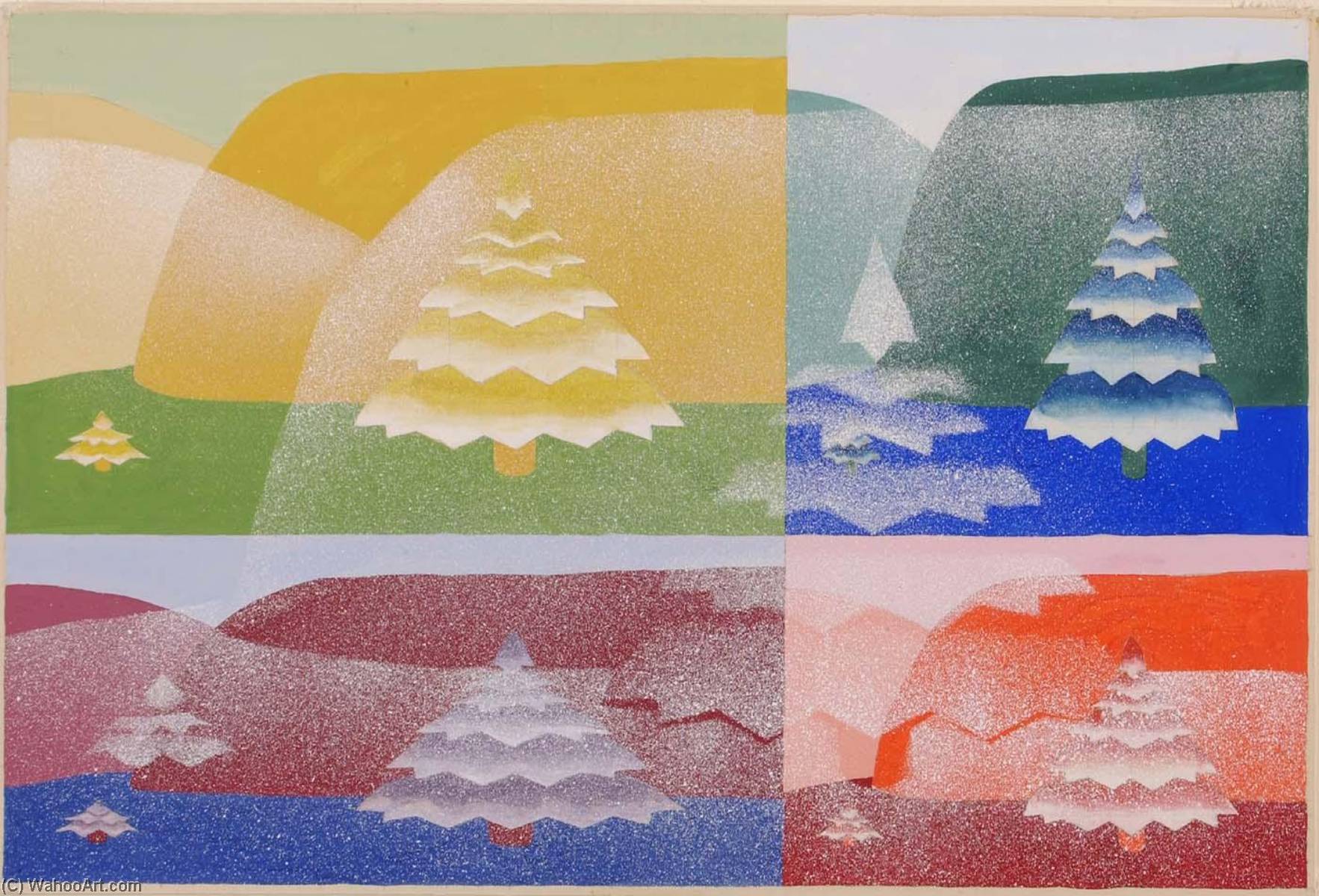
Trees (from series, the Mathematical Basis of the Arts)
 1934
1934 29.0 x 20.0 cm
 詳細を見る
詳細を見る




































作品のオリジナル比率に合わせた、当店の規定サイズからお選びください。

特定のフレームやスペースに合わせて、ご希望のサイズをご入力いただけます。選択されたサイズが元の画像の比率と異なる場合、アートワークをトリミングするか、手描きで要素を追加して絵画を拡張いたします。デジタルモックアップ を制作し、制作開始前にご確認(承認)をいただきます。
画面上のプレビューは、実際のトリミングや拡張を正確に反映しているものではありません。最終的な構図は、モックアップによってのみ正確にご確認いただけます。
カスタムサイズもご利用いただけますが、元の比率を維持するためには、あらかじめ用意されたリストからサイズを選択することをお勧めいたします。
ご注文後、ArtsDot.com チームより詳細な指示をお送りするとともに、仕上がりイメージ(モックアップ)をご提供いたします。


 ガラスオプションは、110cm未満のサイズでのみご利用いただけます。

Trees (from series, the Mathematical Basis of the Arts)
複製技法
複製画のサイズ
-


合計金額
$ 263
関連作品



アーティストの略歴
The Architect of Harmonic Geometry
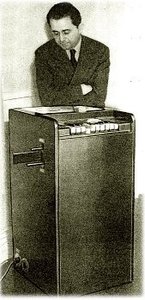
Joseph Schillinger was far more than a mere painter or a composer; he was a visionary polymath who sought to decode the very language of the universe. To look upon his work is to witness a profound attempt to bridge the seemingly disparate worlds of mathematical precision and creative intuition. Born in 1895 in Kharkov, within the Russian Empire, Schillinger’s early life was steeped in the intellectual rigor that would later define his "Schillinger System." He possessed a rare, dual-natured intellect—a fascination with the physical laws governing the cosmos paired with an innate sensitivity to the rhythmic soul of music. This unique duality allowed him to view art not as a subjective outburst of emotion, but as a structured manifestation of fundamental truths.
His journey through the twentieth century was marked by a significant migration of culture and knowledge from East to West. As he moved toward the vibrant intellectual hubs of Europe and eventually New York City, Schillinger’s philosophy began to crystallize. He did not merely observe the world; he sought to calculate its beauty. His theoretical framework, often referred to as Musical Geometry, proposed that the principles governing a musical scale could be translated into the visual rhythms of a canvas. Through this lens, color, shape, and space were no longer arbitrary choices but were instead components of a larger, mathematical symphony.
A Symphony of Color and Form
The evolution of Schillinger’s aesthetic can be traced through his mastery of geometric abstraction and his revolutionary use of color. During his time in the influential Bauhaus era, he absorbed the principles of functionalism, yet he pushed these ideas toward a more complex, rhythmic dimension. His canvases often serve as visual embodiments of mathematical processes, where every line and hue is placed with the deliberate intent of a composer writing a score. This is perhaps most strikingly evident in his celebrated works from the series The Mathematical Basis of the Arts.
In masterpieces such as 'Key Blue', Schillinger achieved a monumental sense of depth and resonance. The painting utilizes a vibrant expanse of ultramarine, punctuated by subtle shifts in violet and gray, to evoke the harmonic relationships found in musical intervals. His work Blue Gray Violet Wheel further demonstrates this obsession with balance, using cool tones and precise geometric forms to create a mesmerizing equilibrium. Whether exploring the rhythmic energy in 'Study in Rhythm Red and Gold' or the structured simplicity of 'Green Squares', Schillinger’s technique always remained anchored in his belief that true aesthetic beauty is a derivative of mathematical order.
Legacy of the Mathematical Muse
The historical significance of Joseph Schillinger extends far beyond the borders of the art gallery. While he is remembered by art historians for his striking, rhythmic compositions, his influence on the world of music theory was equally transformative. By developing a systematic approach to composition based on mathematical processes—covering everything from melody and harmony to counterpoint and form—he provided a new grammar for creators. His methods left an indelible mark on prominent figures such as George Gershwin, whose work echoed the rhythmic complexities Schillinger championed.
Though his life was cut short in 1943, the legacy of his "Schillinger System" remains a testament to the power of interdisciplinary thought. He challenged the boundaries between the sciences and the humanities, proving that the logic of a formula and the passion of a melody are but two sides of the same coin. Today, Schillinger stands as a singular figure in the history of modernism—a philosopher-artist who dared to believe that through the rigorous application of mathematics, one might finally capture the eternal rhythm of existence.
基本情報
- Artistic Movement Or Style: Mathematical Art
- Artists Or Movements Influenced By This Artist: ['Constructivism']
- Artists Who Influenced This Artist:
- Paul Cezanne
- Johannes Kepler
- Date Of Birth: Living
- Full Name: Joseph Schillinger
- Nationality: American
- Notable Artworks:
- Blue Gray Violet Wheel
- The Spiral
- Place Of Birth: New York City, USA

