

 プレビュー
プレビュー
 プリントを購入
 シェアする
シェアする シェアする
シェアする
 詳細を見る
詳細を見る

 ダウンロード
 似ている作品
 X線調査
X線調査 スライドショー
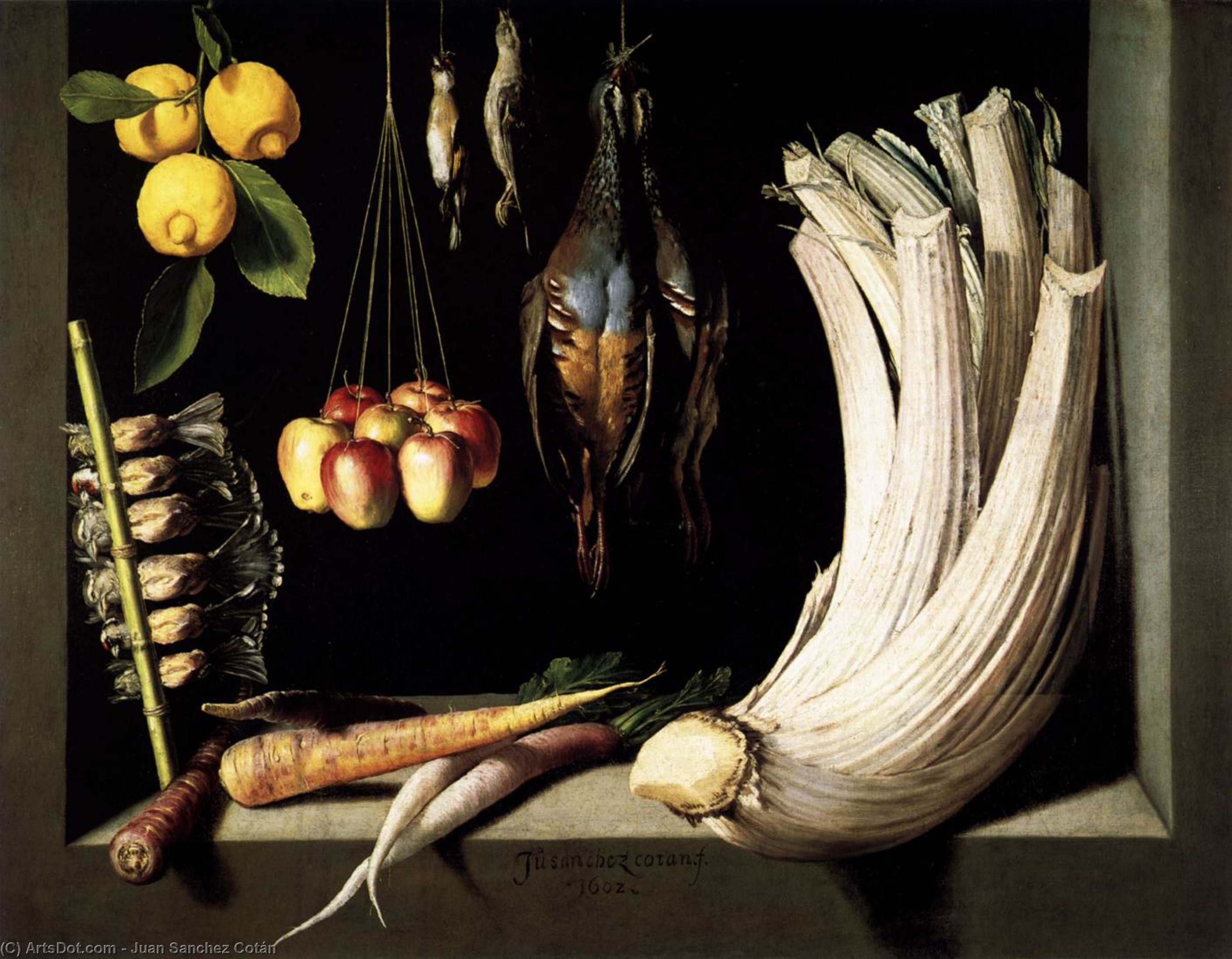
Still-Life with Game, Vegetable and Fruit
 Oil On Canvas
- WallArt
- Baroque
 1602
1602- Early Modern
 68.0 x 89.0 cm
 プラド美術館
 詳細を見る
詳細を見る




P118B $10

P118H $10

P118W $10

P438Z $10

P508JH $12

P508YH $12

P805H $10

P805Z $10

P919BZ $10

P919G $10

P919XJ $10

P959ZH $10

P968JZ $12

W106C $8

W218G $10

W218JH $8

W218Y $10

W307PJ $10

W316G $10

W316PJ $8

W316Y $10

W398PJ $8

W4111J $10

W500HY $15

W500JH $15

W692G $12

W849H $8

W940BG $15

W953PJ $8




作品のオリジナル比率に合わせた、当店の規定サイズからお選びください。

特定のフレームやスペースに合わせて、ご希望のサイズをご入力いただけます。選択されたサイズが元の画像の比率と異なる場合、アートワークをトリミングするか、手描きで要素を追加して絵画を拡張いたします。デジタルモックアップ を制作し、制作開始前にご確認(承認)をいただきます。
画面上のプレビューは、実際のトリミングや拡張を正確に反映しているものではありません。最終的な構図は、モックアップによってのみ正確にご確認いただけます。
カスタムサイズもご利用いただけますが、元の比率を維持するためには、あらかじめ用意されたリストからサイズを選択することをお勧めいたします。
ご注文後、ArtsDot.com チームより詳細な指示をお送りするとともに、仕上がりイメージ(モックアップ)をご提供いたします。


 ガラスオプションは、110cm未満のサイズでのみご利用いただけます。

Still-Life with Game, Vegetable and Fruit
複製技法
複製画のサイズ
-


合計金額
$ 263
作品解説
The Profound Stillness of Spanish Baroque
To stand before Juan Sánchez Cotán’s "Still-Life with Game, Vegetable and Fruit" is to step into a moment suspended outside the rush of time. This painting is not merely an arrangement of objects; it is a meditation rendered in oil paint, a profound dialogue between light, shadow, and the ephemeral nature of existence. Executed in 1602, this work exemplifies the zenith of Spanish Golden Age painting, capturing the meticulous realism that defined Cotán’s singular genius. The composition immediately draws the eye into its dark, richly textured embrace, where every piece—from the plump apples to the delicate feathers of the quail—seems imbued with a quiet, enduring life force.
Mastery of Light and Shadow: Technique and Texture
The technical brilliance at play here is nothing short of breathtaking. Cotán employs an almost theatrical use of chiaroscuro; the background dissolves into an impenetrable black void, serving only to intensify the luminosity bathing the foreground subjects. This dramatic contrast forces the viewer’s attention onto the illuminated bounty. Observe the rendering: the scales on the fish catch a spectral gleam, contrasting sharply with the matte roughness of the carrots and the waxy sheen of the lemons. The artist achieved this hyper-realism through painstaking layering and glazing techniques, allowing the paint itself to suggest palpable texture—the taut skin of an onion, the delicate curve of a bamboo shoot. It is a testament to oil on canvas mastery.
A Still Life as Spiritual Allegory
Beyond its stunning visual appeal, this piece resonates with deep symbolic weight. In the tradition of bodegones, Cotán elevates humble foodstuffs into subjects worthy of high art. The inclusion of game birds and fish often carries connotations of mortality or the cycle of life, while the abundant fruits and vegetables speak to nature's generous bounty. It invites contemplation on themes of abundance juxtaposed with transience—a quiet acknowledgment of earthly pleasures set against an eternal, shadowed backdrop. This symbolic richness ensures that the painting engages not just the eye, but the soul.
Bringing the Atmosphere Home
For those who seek to integrate such profound artistry into a modern space, this reproduction offers more than mere decoration; it offers an atmosphere. The somber elegance of the dark palette—deep browns, muted yellows, and velvety blacks—lends an immediate sense of gravitas and historical depth to any room. It pairs exquisitely with rich woods, antique furnishings, or minimalist interiors that appreciate texture over clutter. Owning a piece echoing Cotán’s vision means curating a space steeped in contemplation, where the drama of light can transform the mundane into the magnificent.
関連作品


アーティストの略歴
The Silent Majesty of the Spanish Baroque
In the quiet, sun-drenched landscapes of 16th-century Spain, a singular vision began to emerge that would forever alter the course of European still life painting. Juan Sánchez Cotán, born in the historic town of Orgaz near Toledo around 1560, was not merely a painter of objects, but a poet of the profound. While his contemporaries often sought the grand drama of sweeping religious narratives or the ornate complexities of Mannerism, Cotán turned his gaze inward, finding the infinite within the infinitesimal. His work serves as a bridge between the fading echoes of the Renaissance and the burgeoning, shadow-drenched intensity of the Baroque era.
The foundations of his artistry were laid in the intellectual and spiritual crucible of Toledo. As a student of Blas de Prado, Cotán inherited a certain Mannerist elegance, yet he possessed an innate drive to strip away artifice. His early years were spent navigating the religious and aristocratic circles of Toledo, where he mastered the art of the altarpiece and the portrait. However, it was his transition toward the bodegón—the Spanish still life—that would secure his immortality. In these works, he achieved a level of realism that felt less like mere imitation and more like a spiritual encounter with the physical world.
The Geometry of Devotion
To look upon a Sánchez Cotán masterpiece is to enter a space of monastic stillness. His most celebrated period, roughly between 1602 and 1617, is defined by an almost mathematical precision. He frequently utilized a compositional device known as the shallow niche, where objects are arranged within a dark, recessed space that seems to push forward toward the viewer. Within these architectural confines, a cabbage, a melon, or a quince is suspended in a state of eternal grace. There is no clutter here; there is only the essential.
The technique employed by Cotán was nothing short of revolutionary for his time. He utilized tenebrism—the dramatic contrast between deep, impenetrable shadows and piercing highlights—to sculpt his subjects out of the darkness. This use of light does more than just define form; it imbues humble foodstuffs with a divine presence. A single drop of moisture on a cucumber or the textured skin of a lemon becomes a subject of intense contemplation. Through this meticulous attention to detail, Cotán transformed the mundane into the monumental, suggesting that the divine could be found in the simplest elements of creation.
His compositions are characterized by several defining elements:
- Mathematical Harmony: An arrangement of objects that feels balanced yet organic, often following a strict geometric logic.
- Austere Realism: A rejection of the ostentatious pronkstilleven style found in the Netherlands in favor of a stark, humble beauty.
- Spiritual Depth: The use of light to evoke a sense of mystery and religious meditation.
A Legacy Carved in Shadow
As his life progressed, Cotán’s path took a turn toward even deeper asceticism. In 1612, he moved to Granada, eventually dedicating himself to the Carthusian monastery. This period of intense religious devotion mirrored the austerity of his paintings, as he moved away from the complex still lifes of his Toledo years toward a life of quiet contemplation. Though his output changed, the spiritual essence that defined his earlier work remained a permanent fixture of his soul.
The historical significance of Juan Sánchez Cotán cannot be overstated. He was a pioneer who paved the way for the great masters of the Spanish Golden Age. Without his foundational realism and his mastery of light, the works of Francisco de Zurbarán might never have achieved their characteristic spiritual weight. He taught future generations that the smallest object, when viewed with enough reverence, can contain the entire universe. Today, his paintings remain much more than historical artifacts; they are windows into a world where silence speaks and where every shadow holds a secret.
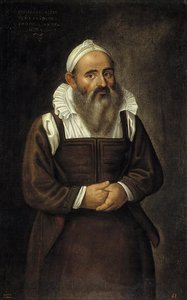
juan sanchez cotan
1560 - 1627 , Spain
基本情報
- Artistic Movement Or Style: Baroque Realism
- Artists Or Movements Influenced By This Artist: ['Zurbarán']
- Artists Who Influenced This Artist: ['Blas de Prado']
- Date Of Birth: 1560
- Full Name: Juan Sánchez Cotán
- Nationality: Spanish
- Notable Artworks:
- Quince, cabbage, melon and cucumber
- Virgin waking the boy
- Place Of Birth: Orgaz, Spain
関連記事
The Golden Age Reforged: Dramatic Realism & Religious Zeal in Spanish Baroque Art
Explore the dramatic world of Spanish Baroque art! Discover masters like Zurbarán & the powerful influence of religious zeal on painting techniques – a guide for collectors and enthusiasts.

黄金世紀の巨匠たち:バロック絵画が彩る10選|ArtsDot
オランダ黄金時代の10大傑作を紐解く!レンブラント、フェルメール…バロック絵画の魅力と時代背景を深く探求。ArtsDotで、至高のアートコレクションと空間演出のヒントを見つけよう。高品質なアートプリントで、お部屋を華やかに。

Golden Age Reflections: Dutch Baroque Painting & Cultural Innovation
Explore the Dutch Golden Age of painting! Discover key artists like Vermeer & ter Borch, their innovative techniques, and the rich cultural context behind these Baroque masterpieces. Learn about collecting & appreciating this iconic art period.
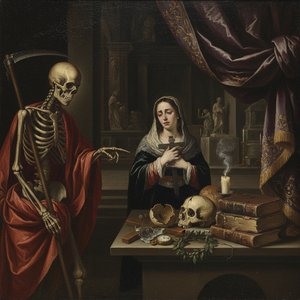
Juan de Valdés Leal: Baroque Realism, Memento Mori & Theatricality of Spanish Grief
Explore the powerful Baroque realism of Juan de Valdés Leal (1622-1690). Discover his somber masterpieces, iconic 'In Ictu Oculi', and profound explorations of mortality. Museum-quality reproductions available at ArtsDot.
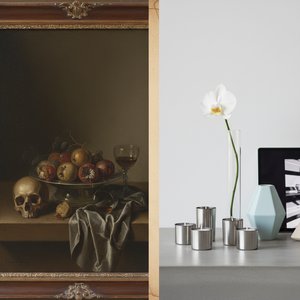
The Enduring Appeal of Still Life: A Historical & Contemporary Exploration
Explore the rich history & symbolism of still life painting with ArtsDot. Discover masterpieces from the Dutch Golden Age, learn about vanitas art, and find expert guidance for collecting timeless artworks.

