

 プレビュー
プレビュー
 プリントを購入
 シェアする
シェアする シェアする
シェアする
 詳細を見る
詳細を見る

 ダウンロード
 似ている作品
 X線調査
X線調査 スライドショー
St. George's Church


 詳細を見る
詳細を見る




P118B $10

P118H $10

P118W $10

P438Z $10

P508JH $12

P508YH $12

P805H $10

P805Z $10

P919BZ $10

P919G $10

P919XJ $10

P959ZH $10

P968JZ $12

W106C $8

W218G $10

W218JH $8

W218Y $10

W307PJ $10

W316G $10

W316PJ $8

W316Y $10

W398PJ $8

W4111J $10

W500HY $15

W500JH $15

W692G $12

W849H $8

W940BG $15

W953PJ $8




作品のオリジナル比率に合わせた、当店の規定サイズからお選びください。

特定のフレームやスペースに合わせて、ご希望のサイズをご入力いただけます。選択されたサイズが元の画像の比率と異なる場合、アートワークをトリミングするか、手描きで要素を追加して絵画を拡張いたします。デジタルモックアップ を制作し、制作開始前にご確認(承認)をいただきます。
画面上のプレビューは、実際のトリミングや拡張を正確に反映しているものではありません。最終的な構図は、モックアップによってのみ正確にご確認いただけます。
カスタムサイズもご利用いただけますが、元の比率を維持するためには、あらかじめ用意されたリストからサイズを選択することをお勧めいたします。
ご注文後、ArtsDot.com チームより詳細な指示をお送りするとともに、仕上がりイメージ(モックアップ)をご提供いたします。


 ガラスオプションは、110cm未満のサイズでのみご利用いただけます。

St. George's Church
複製技法
複製画のサイズ
-


合計金額
$ 263
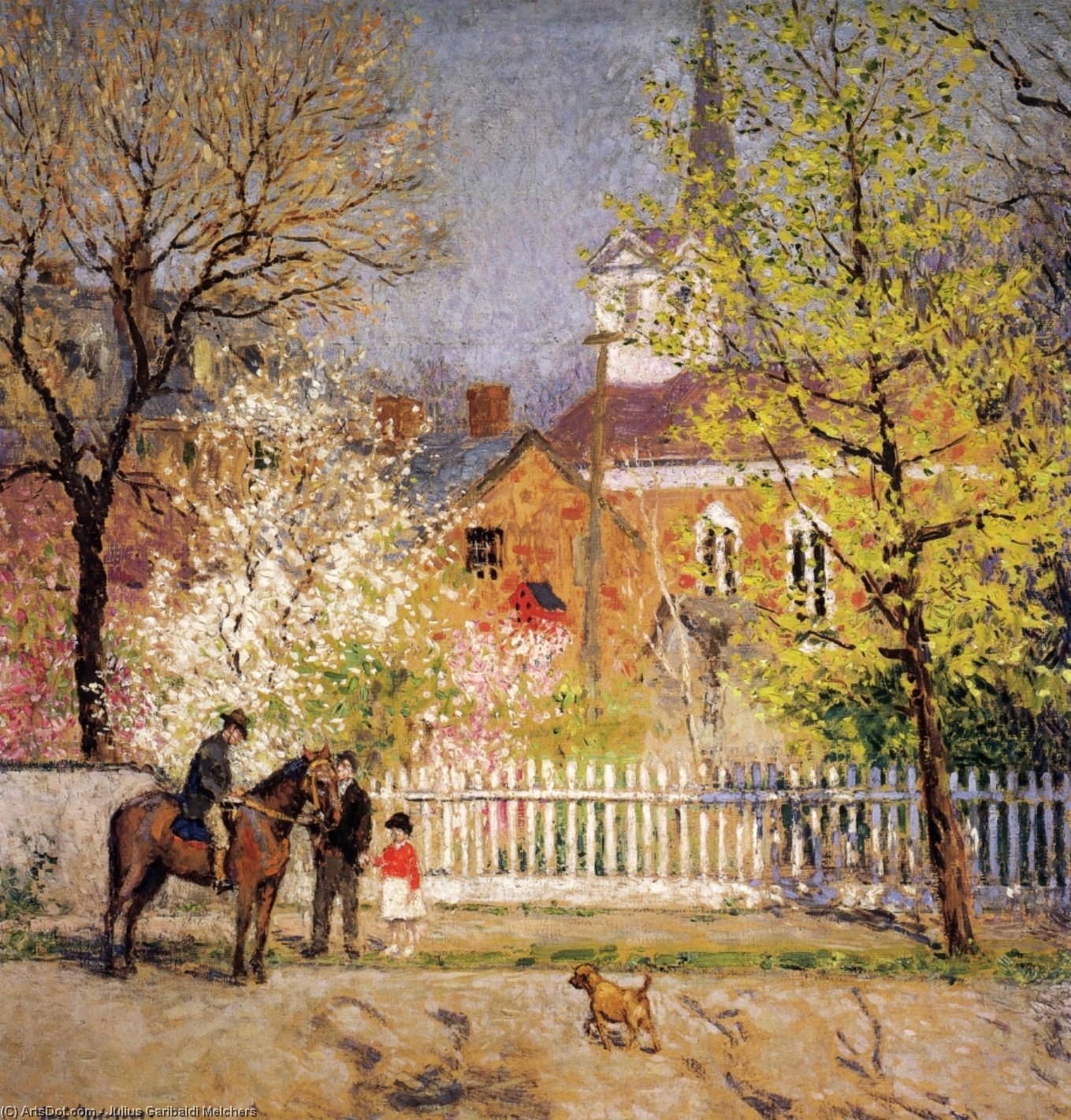
A Serene Encounter with History: St. George's Church
In the quietude of 1920, Julius Garibaldi Melchers captured a moment of profound stillness in his evocative oil painting, St. George's Church. This masterpiece serves as more than just a landscape; it is a window into a bygone era of tranquility and communal grace. At the heart of the composition stands the imposing clock tower of the church, acting as a silent sentinel over a scene brimming with life yet anchored in peace. The artist’s ability to weave together the architectural grandeur of the church with the humble, everyday movements of people and animals creates a narrative that feels both intimate and timeless. As the eye wanders across the canvas, one encounters a horse and carriage positioned before the church, accompanied by figures that suggest a slow-paced, rhythmic way of life where time is measured not by the frantic ticking of a clock, but by the gentle passage of light and shadow.
The technique employed by Melchers reveals his deep-seated roots in naturalist painting. His brushwork, while possessing an Impressionistic softness that captures the atmospheric quality of the day, maintains a meticulous attention to detail inherited from his scientific upbringing. One can almost feel the texture of the stone in the church tower and the sturdy presence of the horse. The placement of the figures—two men standing in quiet conversation near the carriage and a solitary dog resting to the right—adds layers of anecdotal depth to the work. This careful arrangement of subjects creates a balanced composition that guides the viewer through a landscape of soft colors and gentle transitions, making the painting an ideal centerpiece for those looking to introduce a sense of calm and historical elegance into a curated interior space.
Beyond its visual beauty, St. George's Church resonates with a deep emotional symbolism. The church represents a sanctuary of stability and spiritual continuity, standing tall amidst the transient movements of the travelers passing below. There is a poignant sense of nostalgia embedded in the work, evoking a longing for a world where nature and human endeavor existed in harmonious equilibrium. For collectors and interior designers, this piece offers an unparalleled opportunity to anchor a room with a sense of heritage and peace. Whether displayed in a sunlit gallery or a sophisticated study, a high-quality reproduction of this Melchers classic brings with it the soul of the American naturalist tradition, inviting all who gaze upon it to pause, breathe, and reflect on the enduring beauty of the quiet moments.
関連作品




アーティストの略歴
The Visionary Eye of Julius Garibaldi Melchers
Born in the industrial heart of Detroit in 1860, Julius Garibaldi Melchers—often affectionately known as Gari—emerged as a luminous figure in the late nineteenth-century art world. His life was a profound tapestry woven from threads of scientific precision and poetic impressionism. Raised by a father who was an ophthalmologist, Melchers developed an early, almost clinical fascination with the mechanics of sight, botany, and zoology. This foundational interest in the natural sciences did not merely supplement his art; it became the very soul of his technique. To look at a Melchers canvas is to witness a man attempting to decode the world through light and texture, translating the delicate anatomy of a flower or the fleeting shimmer of a Dutch canal into a permanent, tactile reality.
His artistic evolution was shaped by the prestigious halls of the École Supérieure des Beaux-Arts in Paris. Under the rigorous guidance of Gustave Boulanger, Melchers mastered the classical foundations of composition and form, yet he remained perpetually enchanted by the burgeoning movements of his time. He possessed a rare ability to bridge the gap between the disciplined academic tradition and the atmospheric freedom of Impressionism. This duality allowed him to capture the structural dignity of his subjects while bathing them in the ephemeral, shifting light that defines the natural world. His training provided him with the technical vocabulary to render skin, fabric, and landscape with an almost miraculous realism, yet his spirit always sought the emotional resonance found in the subtle nuances of atmosphere.
A Journey Through Dutch Light and American Spirit
Perhaps the most enchanting chapter of Melchers’ career was his deep, enduring connection to the Netherlands. Settling for significant periods in Haarlem, he became a master chronicler of the Dutch landscape and its traditional way of life. His works from this period are far more than mere topographical records; they are nostalgic evocations of a vanishing era. Through his brush, the quietude of the Dutch countryside comes alive, characterized by:
- The mastery of atmosphere: Capturing the heavy, moisture-laden air of the Low Countries and the way it softens distant horizons.
- Genre scenes: Meticulous depictions of daily life, where peasants and townspeople are rendered with a profound sense of dignity and quiet purpose.
- Luminous landscapes: The use of light to create depth, particularly during the "blue hour" or twilight, which imbues his scenes with a sense of peace and introspection.
As his career progressed, Melchers’ reach expanded far beyond the borders of Europe. His later years were marked by a deep connection to the landscapes of Virginia, where he found a new muse in the rolling hills and serene vistas of the American South. This transition demonstrated the versatility of his naturalist approach; whether painting the damp, lowlands of Haarlem or the lush, verdant expanses of Virginia, his fundamental mission remained unchanged: to honor the quiet beauty of the earth through an observant and empathetic lens.
Legacy of a Naturalist Master
The historical significance of Julius Garibaldi Melchers lies in his ability to harmonize the objective with the subjective. In an era where art was often divided between strict Realism and experimental Impressionism, Melchers carved out a unique space for Naturalism. He did not merely paint what he saw; he painted how it felt to witness the world’s quietest moments. His portraits are celebrated not just for their likeness, but for their ability to reveal the inner character and quiet dignity of his sitters, making them feel present and breathing even a century later.
Today, Melchers is remembered as an artist who bridged continents and styles. His legacy is found in the way he taught viewers to slow down and appreciate the intricate details of the natural world—the way light hits a petal or how shadows lengthen across a field. Through his meticulous brushwork and emotional depth, he remains a cornerstone of American and international art history, a painter who captured the very essence of tranquility for generations to come.
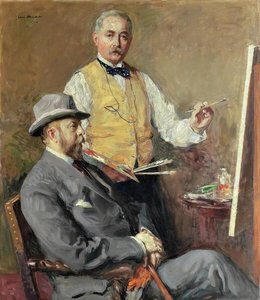
julius garibaldi melchers
1860 - 1932 , United States of America
基本情報
- Artistic Movement Or Style: Naturalism painting
- Artists Or Movements Influenced By This Artist: ['Realism']
- Artists Who Influenced This Artist: ['Impressionists']
- Date Of Birth: August 11, 1860
- Date Of Death: November 30, 1932
- Full Name: Julius Garibaldi Melchers
- Nationality: American
- Notable Artworks:
- Vespers
- General Alger
- Place Of Birth: Detroit, United States
関連記事

ジョルジュ・ブラック傑作25選:革新的なキュビスムの世界と装飾への誘い
ジョルジュ・ブラックの傑作25選。キュビスムを代表する画家、その革新的な色彩と技法に迫ります。名画から知られざる逸品まで、美術史に残る作品群をArtsDot.comで鑑賞。お部屋を彩るアートプリントも多数ご用意。今すぐオンラインでコレクションをご覧ください。

ジョルジュ・スーラ傑作25選:光と色彩の科学が織りなす芸術の世界|ArtsDot
ジョルジュ・スーラの傑作25選。点描画の光と色彩、印象派から新印象派へ—ArtsDotで美術史を紐解き、リビングやダイニングを彩る高品質なアートプリントを見つけましょう。セーラ作品集をオンラインで鑑賞ください。
The Noble Steed on Canvas: A Historical & Artistic Exploration of Horse Painting Across Cultures
Explore the rich history of horse painting! Discover masterpieces from Stubbs to Munnings & learn about symbolism, techniques & artists. Find museum-quality reproductions at ArtsDot.
The Noble Steed: A Historical and Artistic Exploration of Horses in Fine Art
Explore the rich history of horses in fine art! From ancient depictions to Renaissance masterpieces & beyond, discover iconic artworks and artists. Learn about symbolism, techniques, and find museum-quality reproductions at ArtsDot.
The Equine Muse: A Historical & Artistic Exploration of Horses in Painting
Explore the captivating history of horses in painting! Discover Renaissance masterpieces, Baroque grandeur & expert insights for collecting equestrian art. Learn about symbolism, techniques & lasting value with ArtsDot.

