

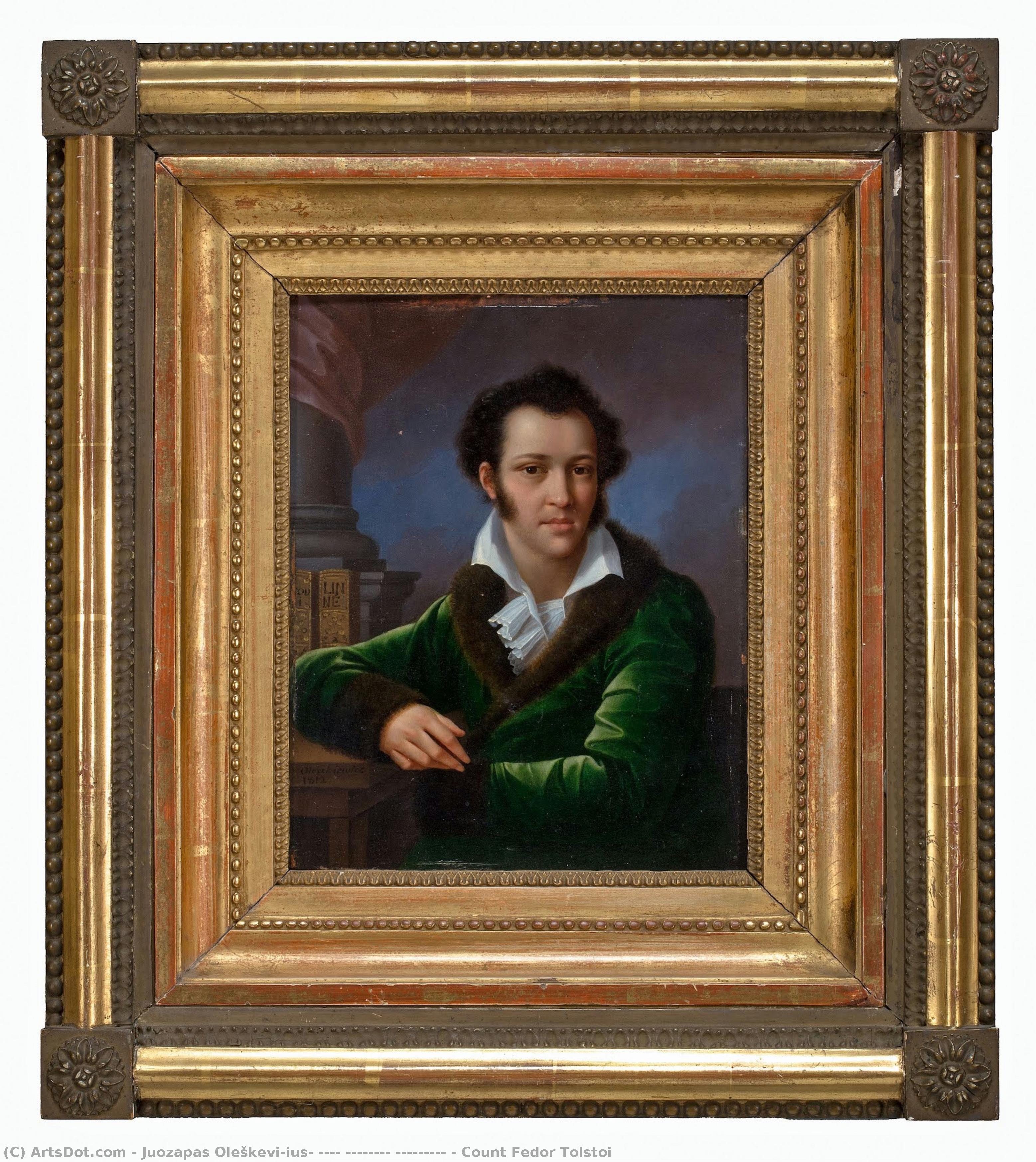
 プレビュー
プレビュー
 シェアする
シェアする シェアする
シェアする
 詳細を見る
詳細を見る

 ダウンロード
 似ている作品
 X線調査
X線調査 スライドショー
Count Fedor Tolstoi


 詳細を見る
詳細を見る
ジークレー/アートプリント
迅速な制作と多彩な仕上げオプションを備えた、ミュージアムクオリティのジークレーまたはキャンバスプリント。 ( 手描きの絵画を購入 画像を購入)




































作品のオリジナル比率に合わせた、当店の規定サイズからお選びください。

特定のフレームやスペースに合わせて、ご自身でサイズを指定することも可能です。選択されたサイズが元の画像の比率と一致しない場合、作品をトリミングするか、鏡面反射または単色での塗りつぶしによって画像を拡張いたします。制作を開始する前に、ご確認用のデジタルモックアップをお送りいたします。
画面上のプレビューには、実際のトリミングや拡張は反映されませんのでご注意ください。最終的な構図を正確に確認できるのは、モックアップのみとなります。
カスタムサイズも承っておりますが、元の比率を維持するためには、あらかじめ用意されたリストからサイズを選択することをお勧めいたします。


 ガラスオプションは、110cm未満のサイズでのみご利用いただけます。

Count Fedor Tolstoi
ジークレー/アートプリント
複製画のサイズ
-


合計金額
$ 62
関連作品










アーティストの略歴
The Soul of Lithuanian Romanticism
Juozapas Oleškevičius, a name etched into the foundational layers of Lithuanian art history, was a painter who possessed the rare ability to breathe life into both the silent majesty of nature and the thunderous echoes of the past. Born around 1777 in the serene surroundings of Šiluva, Lithuania, his early years were steeped in an atmosphere where melody and visual beauty intertwined; as the son of a violinist, he grew up with a profound sensitivity to rhythm and harmony, qualities that would later manifest in the balanced compositions of his canvases. His artistic journey was not merely one of talent, but of rigorous intellectual pursuit, as he sought to master the very mechanics of life by studying anatomy and physiology alongside the delicate art of drawing.
The trajectory of Oleškevičius’s development was shaped by the prestigious halls of Vilnius University, where he refined his technique under the guidance of masters such as Franciszek Smuglewicz and Jan Rustem. However, it was his pilgrimage to Paris in 1803 that truly ignited his creative spirit. Immersed in the epicenter of European art at the École des Beaux-Arts, he encountered the formidable influence of Jacques-Louis David. From David, Oleškevi vičius inherited a command over dramatic composition and the use of idealized figures to convey profound emotional truths. This Parisian period infused his work with a Neoclassical precision that he would later soften with the burgeoning sensibilities of Romanticism, creating a unique stylistic bridge between structured discipline and emotive freedom.
Historical Grandeur and Natural Serenity
Upon his return to Vilnius in 1806, Oleškevičius emerged not just as a skilled painter, but as a monumental storyteller for his nation. He possessed a remarkable gift for capturing historical narratives that resonated with the collective memory of the Lithuanian people. His most celebrated achievement, the sweeping and powerful The Battle of Grunwald, stands as a testament to his ability to transform historical events into epic visual poetry, commemorating the legendary victory against the Teutonic Knights with a sense of scale and gravity that solidified his reputation among the artistic elite.
Yet, beyond the grand theater of war and history, there existed another side to his genius—a quiet, contemplative mastery of the landscape. Oleškevičius had an uncanny ability to render the Lithuanian wilderness with a profound, almost spiritual intimacy. His depictions of pine forests and woodland scenes are characterized by a serene realism that anticipates the great landscape traditions of the 19th century. In these works, the play of light through dense canopies and the subtle textures of the forest floor reveal a painter deeply in love with the quiet rhythms of the natural world, offering a sense of peace that contrasts beautifully with his more turbulent historical compositions.
Legacy and Imperial Recognition
The reach of Oleškevičius’s talent eventually extended far beyond the borders of Lithuania, drawing the gaze of the highest echelons of European society. His move to Saint Petersburg in 1806 marked a significant chapter in his career, as he found himself under the generous patronage of Count Aleksander Chodkiewicz and later secured the attention of Tsar Alexander I. This period of imperial recognition culminated in his prestigious appointment as an Academician, a distinction that placed him among the most respected artists of his era.
Though history sometimes places him in the shadow of later landscape giants like Ivan Shishkin, the significance of Juozapas Oleškevičius cannot be overstated. He was a pioneer who navigated the transition from the structured ideals of Neoclassicism to the emotive depths of Romanticism. His legacy remains preserved in the way he captured the dual essence of his homeland: the heroic struggle of its history and the enduring, tranquil beauty of its earth. Through his brush, the landscapes of Lithuania became more than mere scenery; they became vessels for national identity and timeless emotion.
juozapas oleškevičius, юзеф иванович олешкевич
1830 , Lithuania
基本情報
- Artistic Movement Or Style: Russian Realism
- Artists Or Movements Influenced By This Artist: ['Ivanovich Shishkin']
- Artists Who Influenced This Artist:
- Jean-Simon Berthélemy
- Jacques-Louis David
- Date Of Birth: c.1777
- Date Of Death: 1830
- Full Name: Juozapas Oleškevičius
- Nationality: Lithuanian
- Notable Artworks: ['Antiochus and Stratonice']
- Place Of Birth: Šiauliai, Lithuania

