

 プレビュー
プレビュー
 シェアする
シェアする シェアする
シェアする
 詳細を見る
詳細を見る

 ダウンロード
 似ている作品
 X線調査
X線調査 スライドショー
 Stats
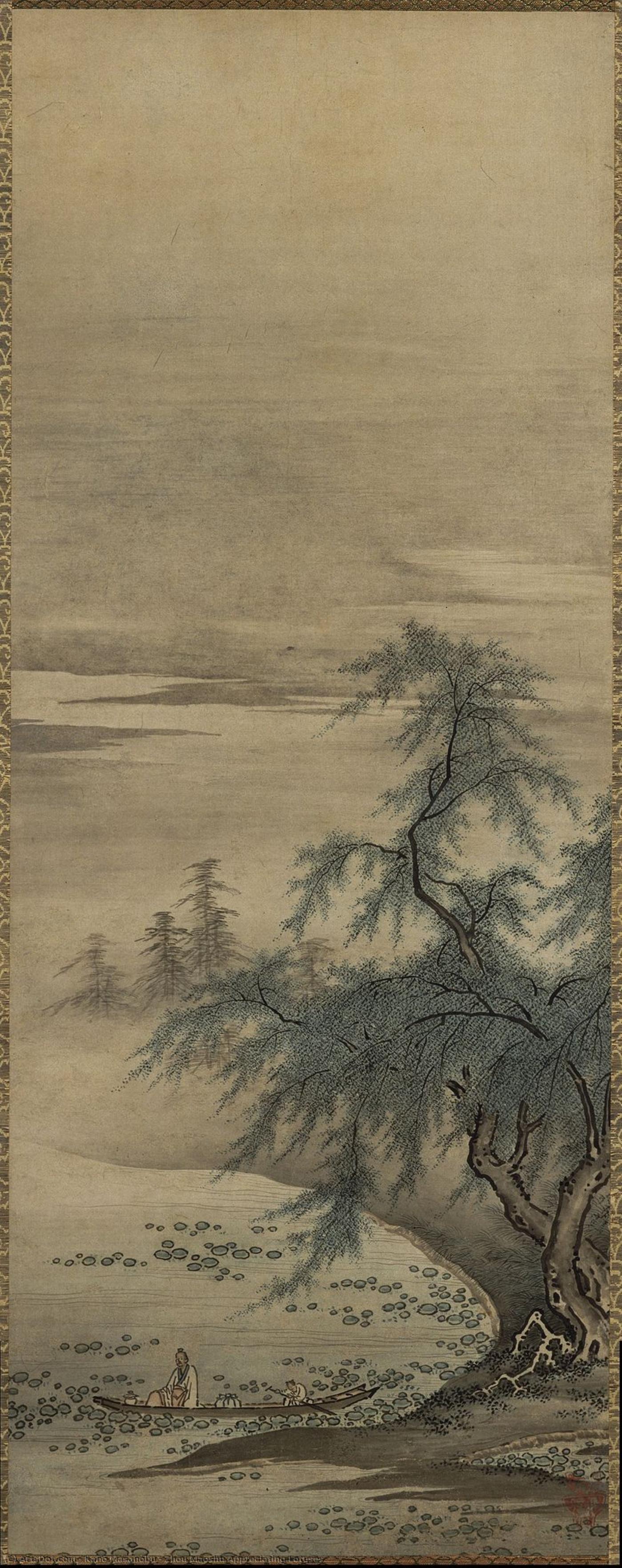
StatsZhou Maoshu Appreciating Lotuses
 Japanese Sumi-e
 1450
1450 85.0 x 33.0 cm
 詳細を見る
詳細を見る
手描き油彩複製画
当社のアーティストが、お客様のご希望のサイズと額縁に合わせて、キャンバスに手描きで制作する油彩画です。 ( Switch to Print Switch to Digital Image)




































作品のオリジナル比率に合わせた、当店の規定サイズからお選びください。

特定のフレームやスペースに合わせて、ご希望のサイズをご入力いただけます。選択されたサイズが元の画像の比率と異なる場合、アートワークをトリミングするか、手描きで要素を追加して絵画を拡張いたします。デジタルモックアップ を制作し、制作開始前にご確認(承認)をいただきます。
画面上のプレビューは、実際のトリミングや拡張を正確に反映しているものではありません。最終的な構図は、モックアップによってのみ正確にご確認いただけます。
カスタムサイズもご利用いただけますが、元の比率を維持するためには、あらかじめ用意されたリストからサイズを選択することをお勧めいたします。
ご注文後、ArtsDot.com チームより詳細な指示をお送りするとともに、仕上がりイメージ(モックアップ)をご提供いたします。


 ガラスオプションは、110cm未満のサイズでのみご利用いただけます。

Zhou Maoshu Appreciating Lotuses
複製技法
複製画のサイズ
-


合計金額
$ 263
関連作品
アーティストの略歴
Kanō Masanobu: The Architect of Japanese Art
Kanō Masanobu (1434? – August 2, 1530, Kyoto) stands as a monumental figure in the history of Japanese art, not merely for his prolific output but fundamentally for establishing the Kanō school—a lineage that would dominate Japanese painting for over three centuries. Often considered the founder of this prestigious institution, Masanobu’s influence extends far beyond his own creations, shaping artistic conventions and profoundly impacting the visual landscape of Japan. His life coincided with a period of immense political and cultural transition – the waning years of the Ashikaga shogunate – and he skillfully navigated these turbulent times to forge a new path for painting, one deeply rooted in Chinese traditions yet distinctly Japanese in its sensibility.
Born into a family with roots stretching back to the Kamakura period, Masanobu’s early life remains somewhat shrouded in mystery. He was the son of Kanō Kagenobu, a samurai and amateur artist who had developed a reputation for his landscape paintings. This lineage provided Masanobu with an initial foundation in artistic practice, though he quickly surpassed his father's skills and established himself as a leading painter in his own right. Unlike many artists of his time, Masanobu did not receive formal training within the imperial court; instead, he honed his craft through observation, apprenticeship, and direct engagement with the evolving artistic landscape.
The Rise to Prominence: Service to the Shogunate
Masanobu’s career gained significant momentum when he was appointed as the chief painter (御用絵師, *goyō eshi*) to the Ashikaga shogunate in 1481. This appointment marked a pivotal moment, elevating him to a position of immense prestige and influence within the political hierarchy. Serving the shogunate provided Masanobu with access to vast resources, commissions, and opportunities for artistic experimentation. It also solidified his role as a central figure in the development of a distinctly Japanese style of painting – one that drew heavily on Chinese models but adapted them to reflect local aesthetics and sensibilities.
His work during this period is characterized by a remarkable synthesis of Eastern and Western influences. Masanobu was deeply influenced by the priest-painter Tenshō Shūbun, whose innovative approach to landscape painting—characterized by subtle gradations of ink, atmospheric perspective, and a focus on capturing the essence of nature—served as a crucial model for Masanobu’s own artistic development. However, unlike Shūbun, who remained within the confines of Buddhist temples, Masanobu embraced a broader range of subjects, including depictions of Buddhist deities, bodhisattvas, and portraits of prominent figures.
A Distinctive Style: Suiboku-ga and Beyond
Masanobu’s artistic style is most notably defined by his mastery of *suiboku-ga* (水墨画), a monochrome ink painting technique derived from Chinese models. This method emphasized the expressive qualities of ink—its ability to create subtle variations in tone, texture, and luminosity—to convey a sense of atmosphere, mood, and spiritual depth. Unlike earlier Japanese artists who often relied on vibrant colors, Masanobu skillfully employed a restrained palette of black ink, white paper, and occasional washes of color to achieve his desired effects.
However, Masanobu’s style was not simply a replication of Chinese techniques; he infused it with distinctly Japanese elements. His landscapes often featured simplified forms, flattened perspectives, and an emphasis on capturing the essence of nature rather than meticulously rendering every detail. Furthermore, Masanobu's depictions of Buddhist figures—particularly his iconic “Zhou Maoshu Appreciating Lotuses”—demonstrated a remarkable ability to imbue these subjects with a sense of serenity, contemplation, and spiritual awareness.
Legacy and the Kanō School
Kanō Masanobu’s influence extended far beyond his own lifetime. Following his death in 1530, his son, Kanō Motonobu, continued to develop and refine the artistic principles established by his father, ultimately laying the foundation for the Kanō school—a lineage that would dominate Japanese painting for over three centuries. The school’s distinctive style—characterized by its refined technique, meticulous attention to detail, and emphasis on portraying Buddhist deities and bodhisattvas—became synonymous with high art in Japan.
The legacy of Kanō Masanobu is therefore inextricably linked to the enduring success of the Kanō school. His pioneering efforts in synthesizing Eastern and Western artistic traditions, coupled with his profound understanding of Japanese aesthetics, established a framework for generations of artists who would follow in his footsteps. Works like “Zhou Maoshu Appreciating Lotuses” stand as testaments to his genius, offering a glimpse into the serene beauty and spiritual depth that defined his artistic vision.
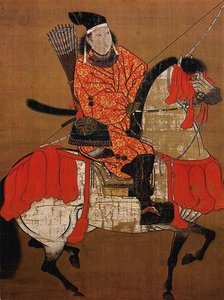
kanō masanobu
1434 - 1530 , Japan
基本情報
- Artistic Movement Or Style: Kanō school, Suiboku-ga
- Artists Or Movements Influenced By This Artist: ['Kanō Motonobu']
- Artists Who Influenced This Artist: ['Tenshō Shūbun']
- Date Of Birth: 1434, Kyoto, Japan
- Date Of Death: 1530, Kyoto, Japan
- Full Name: Kanō Masanobu
- Nationality: Japanese
- Notable Artworks:
- Zhou Maoshu Appreciating Lotuses
- The Sage Chou Mao-shu in a Lotus Pond
- Place Of Birth: Kyoto, Japan
関連記事
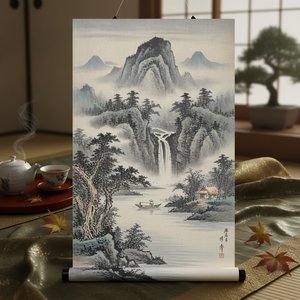
Serenity on Canvas: A Guide to the Timeless Beauty of Japanese Landscape Painting
Discover the serene beauty of Japanese landscape painting. From Hokusai's iconic woodblock prints to meditative sumi-e ink washes, explore a visual journey through the 'floating world' and learn how to bring this timeless Zen aesthetic into your modern home decor.
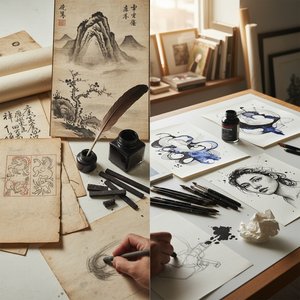
Ephemeral Expressions: Exploring the Nuances of Ink on Paper Through History & Contemporary Art
Explore the captivating world of ink wash painting – from its ancient origins to contemporary masters. Discover techniques, symbolism & conservation insights with ArtsDot.com.

ロマン派ランドスケープ:時代を彩る巨匠の10選|アートとインテリアの世界
ロマン派絵画の時代を彩る10選。巨匠たちの風景が織りなす感動の世界へ。ターナー、ルーベンスなど、名作の裏話と高精細複製でアートをお部屋に。ArtsDot.comで至福のアート体験を。

葛飾北斎:25の傑作が語る浮世絵の世界 - ArtsDot
葛飾北斎の25選:『神奈川沖浪裏』や『富嶽三十六景』など、浮世絵の世界を深く探求。木版画の技法と日本美術の美をArtsDotで。高品質なアートプリントで空間に感動を。コレクションはこちら。
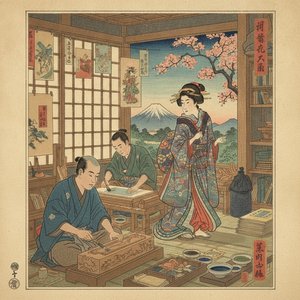
Floating World: The Captivating Art and Legacy of Japanese Ukiyo-e
Explore the profound beauty of Japanese Ukiyo-e. Discover the history, masters like Hokusai, and the enduring legacy of the 'Floating World' through an expert art-historical lens.