

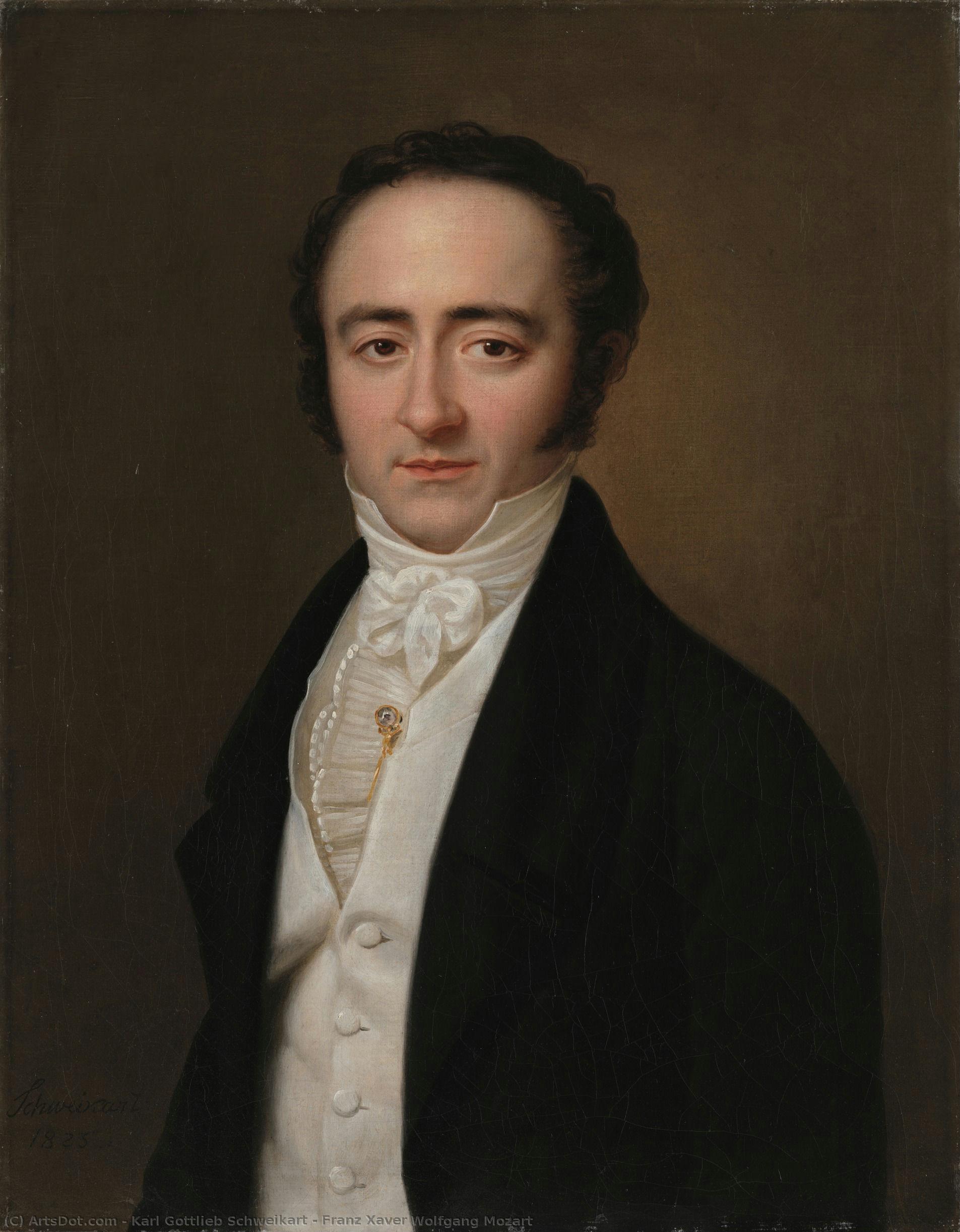
 プレビュー
プレビュー
 シェアする
シェアする シェアする
シェアする
 詳細を見る
詳細を見る

 ダウンロード
 似ている作品
 X線調査
X線調査 スライドショー
 統計情報
統計情報Franz Xaver Wolfgang Mozart


 詳細を見る
詳細を見る
手描き油彩複製画
当社のアーティストが、お客様のご希望のサイズと額縁に合わせて、キャンバスに手描きで制作する油彩画です。 ( プリント版に切り替え デジタル画像販売へ切り替え)




































作品のオリジナル比率に合わせた、当店の規定サイズからお選びください。

特定のフレームやスペースに合わせて、ご希望のサイズをご入力いただけます。選択されたサイズが元の画像の比率と異なる場合、アートワークをトリミングするか、手描きで要素を追加して絵画を拡張いたします。デジタルモックアップ を制作し、制作開始前にご確認(承認)をいただきます。
画面上のプレビューは、実際のトリミングや拡張を正確に反映しているものではありません。最終的な構図は、モックアップによってのみ正確にご確認いただけます。
カスタムサイズもご利用いただけますが、元の比率を維持するためには、あらかじめ用意されたリストからサイズを選択することをお勧めいたします。
ご注文後、ArtsDot.com チームより詳細な指示をお送りするとともに、仕上がりイメージ(モックアップ)をご提供いたします。


 ガラスオプションは、110cm未満のサイズでのみご利用いただけます。

Franz Xaver Wolfgang Mozart
複製技法
複製画のサイズ
-


合計金額
$ 263
関連作品







アーティストの略歴
Karl Gottlieb Schweikart: A Portraitist of Polish Society and Viennese Elegance
Karl Gottlieb Schweikart, born in Ludwigshafen, Germany in 1772, was a remarkably prolific Austrian portrait painter who spent much of his career establishing himself as a leading figure in the artistic circles of Galicia. His life spanned nearly eight decades, witnessing significant shifts in European art and society, and he skillfully adapted his style to reflect these changes while maintaining a distinct, elegant aesthetic. Initially trained at the Academy of Fine Arts in Vienna, Schweikart’s early work demonstrated a classical influence, but it was his relocation to Lemberg (now Львів, Ukraine) that truly defined his artistic trajectory and established him as a prominent portraitist within Polish nobility and Viennese bourgeois circles alike. Schweikart's career unfolded during a period of considerable political and social upheaval in Central Europe. The partitions of Poland significantly impacted the region, creating a complex landscape of shifting allegiances and cultural identities. This context profoundly shaped Schweikart’s subject matter. He became particularly renowned for his captivating depictions of Polish nobles – a group undergoing significant transformation as they navigated the complexities of their diminished nation. These portraits weren't merely representations of outward appearance; they aimed to capture the character, dignity, and social standing of the individuals he portrayed. He meticulously studied aristocratic attire, hairstyles, and mannerisms, reflecting a deep understanding of the Polish elite’s cultural nuances. Beyond nobility, Schweikart also produced numerous portraits of Austrian military officers – a testament to his ability to render strength, authority, and even vulnerability within his subjects. He was equally adept at capturing the refined elegance of Viennese society, creating miniatures on ivory that became highly sought after by wealthy patrons. The artist’s artistic development can be traced through several key periods. His early work in Vienna showcased a strong adherence to Neoclassical principles, characterized by precise lines and idealized forms. However, his time in Galicia marked a significant shift towards a more relaxed, almost painterly style – a move influenced by the local artistic traditions and the changing tastes of his clientele. He developed a distinctive technique involving subtle gradations of tone and delicate brushwork, creating portraits that possessed both realism and an undeniable sense of atmosphere. His use of light and shadow was particularly masterful, lending depth and emotion to his subjects’ faces. Notably, Schweikart's students, including Antoni Laub and Korneli Szlegel, absorbed and carried forward elements of his style, ensuring the continuation of his artistic legacy. Between 1810 and 1830, Schweikart enjoyed a period of unparalleled success in Galicia, becoming one of the region’s most celebrated portrait painters. This prominence was underscored by the numerous commissions he received from prominent families and institutions. His portraits were not simply decorative; they served as important documents of social status and familial history. The collection of his works held at museums like the Polish National Museum in Kraków and Warsaw provides a valuable insight into the artistic tastes and cultural values of the era. These paintings offer a glimpse into the lives of individuals who shaped the political, economic, and social landscape of Central Europe during a time of profound change. Schweikart’s legacy extends beyond his individual portraits. He played a crucial role in fostering artistic exchange between Vienna and Galicia, contributing to the development of portraiture as a respected art form within the region. His meticulous attention to detail, combined with his ability to capture both the outward appearance and inner character of his subjects, cemented his place as one of the most significant portrait painters of 18th and 19th-century Austria. His works continue to be studied and admired for their elegance, technical skill, and evocative portrayal of a bygone era.Notable Works & Techniques
Schweikart’s oeuvre is characterized by several recurring themes and techniques that define his unique artistic voice. He frequently employed a three-quarter pose, allowing him to capture the full range of expression on his subjects' faces. His portraits often featured elaborate costumes and accessories, reflecting the social status and personal tastes of the individuals he depicted. A particular hallmark of his work is his skillful use of ivory miniatures – small, delicate paintings executed on thin sheets of ivory. These miniature portraits were highly prized by wealthy patrons as treasured keepsakes.- Key Subjects: Polish nobles, Austrian military officers, members of the Viennese bourgeoisie.
- Techniques:
- Precise line work and classical composition (early Vienna period)
- Subtle gradations of tone and delicate brushwork (Galician period)
- Masterful use of light and shadow to create depth and emotion
- Expert miniature painting on ivory
Historical Context & Influences
Schweikart’s artistic development was deeply intertwined with the political and social realities of his time. The partitions of Poland significantly impacted his career, leading him to establish a base in Lemberg, where he found fertile ground for his artistic practice. His work reflects both the classical traditions inherited from his Viennese training and the evolving artistic sensibilities of Galicia. He was influenced by the Neoclassical style prevalent in Vienna but also absorbed elements of local artistic traditions, resulting in a distinctive hybrid aesthetic. The rise of Romanticism, with its emphasis on emotion and individualism, is subtly present in some of his later portraits, particularly those depicting Polish nobles grappling with the challenges of their diminished nation.Legacy & Collections
Schweikart’s portraits are held in prestigious collections across Europe, including the Polish National Museum in Kraków and Warsaw. These works offer invaluable insights into the social history and artistic tastes of 18th and 19th-century Central Europe. His influence can be seen in the work of his students, who continued to develop and refine his distinctive style. Today, Karl Gottlieb Schweikart remains a respected figure in the history of Austrian portraiture, celebrated for his technical skill, artistic sensitivity, and ability to capture the essence of his subjects.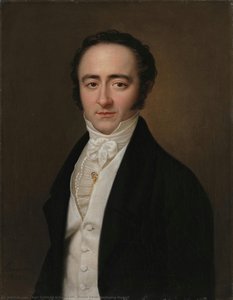
Karl Gottlieb Schweikart
1772 - 1855 , Germany
基本情報
- Artistic Movement Or Style: Portraiture
- Artists Who Influenced This Artist: ['None],\n "Artists or movements influenced by this artist": [None']
- Date Of Birth: February 28, 1772
- Date Of Death: July 29, 1855
- Full Name: Karl Gottlieb Schweikart
- Nationality: Austrian
- Notable Artworks:
- Portret bankowca Violanda 1814
- Portret Teodora Laskiewicza
- Portret dziewczynki z ptaszkiem 1820
- Portret kobiety siedzącej w czerwonym fotelu 1826
- Place Of Birth: Ludwigshafen, Germany