

 プリントを購入
 シェアする
シェアする シェアする
シェアする
 詳細を見る
詳細を見る

 ダウンロード
 似ている作品
 スライドショー
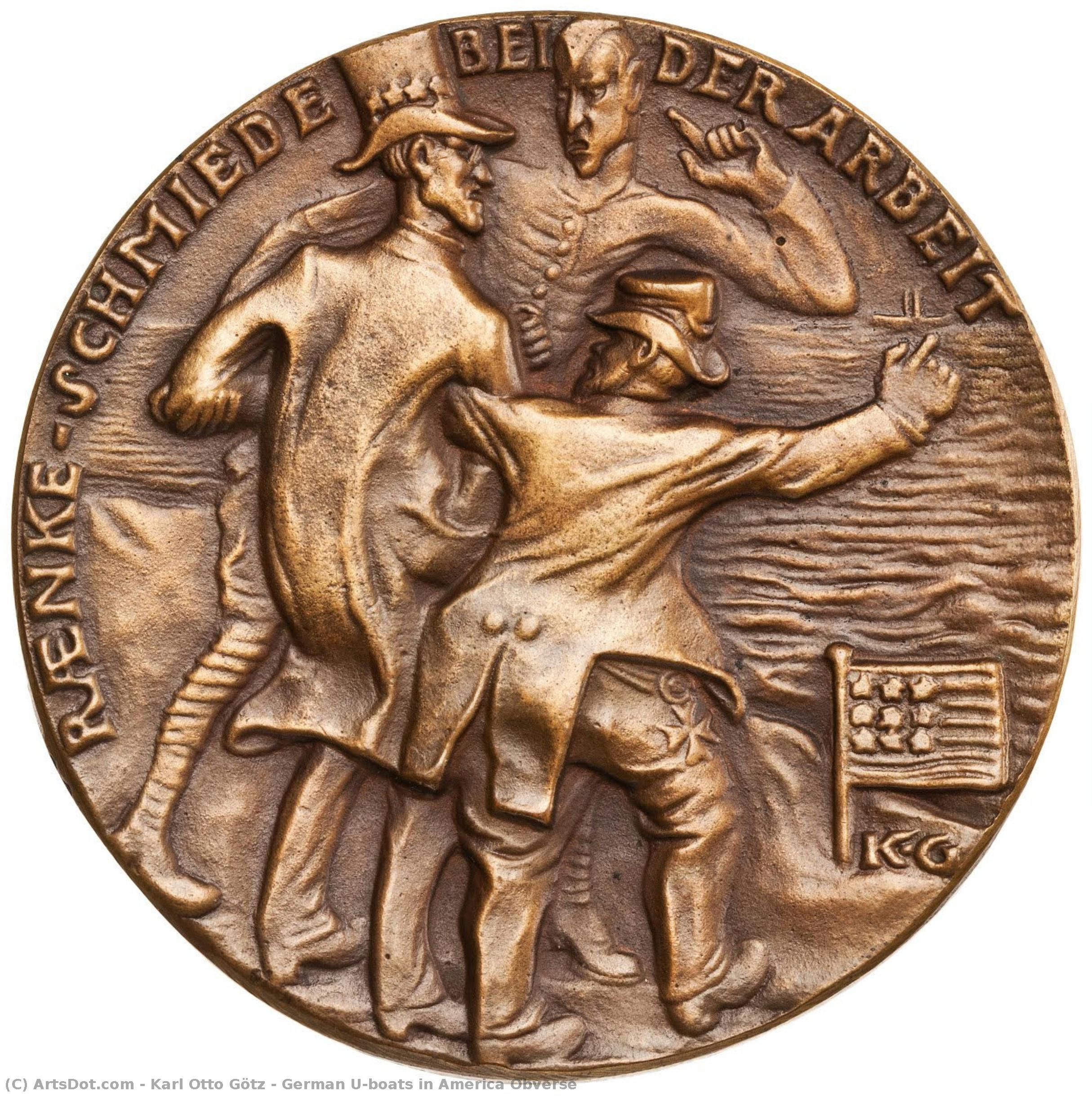
German U-boats in America Obverse


 詳細を見る
詳細を見る
オンラインプレビューをはるかに凌ぐ、高解像度で鮮明なデジタル画像をご購入いただけます。
各ファイルは、社内の専門家が高度なツールと熟練した手作業によるレタッチを用いて、細心の注意を払って準備されています。すべての画像において、卓越した鮮明度、正確な色彩再現性、そして繊細なディテールを保証いたします。
最終ファイルは、プロフェッショナルな編集・印刷環境ですぐにご利用いただけるよう最適化された状態で、72時間以内にメールにてお届けいたします。これは、一流のデザインスタジオ、出版社、ギャラリーから信頼されているものと同等の品質です。
デジタル画像のご注文に付随する特典
高品質なデジタル画像配信を、確かな品質で。
ArtsDot.com を選ぶことは、単に画像を手に入れることではありません。それは、プロの手によって精密に仕上げられ、満足保証が付いた高品質なデジタルアートワークを受け取ることを意味します。ご注文いただいた際に自動的に付随する内容は、以下の通りです:

メールですぐにお届け
ご注文から72時間以内に、高解像度のデジタル画像ファイルがメールでお手元に届きます。すぐにそのままご利用いただけます。

AI技術で最適化されたデジタルファイル
お客様の作品は、高度なAIツールと専門家による手作業の編集を組み合わせてプロフェッショナルに最適化されており、細部のディテール、鮮明さ、そして正確な色再現性を最大限に引き出しています。

一生涯無料の再送サービス
ファイルを誤って削除したり、紛失してしまったりしましたか?ご安心ください。いつでも無料で再送いたします。

輸入手数料は一切かかりません
関税や手数料、配送料を気にすることなく、お気に入りのアートワークをすぐにお楽しみいただけます。デジタルダウンロードは常に免税です。

色彩再現の保証
プロ仕様のツールとカラーマネジメント技術を用いることで、デジタル画像が元の色を最大限に忠実に再現することを保証いたします。

60日間満足保証
ご購入いただいたデジタル画像にご満足いただけない場合は、60日以内であれば、修正または100%の返金(理由を問う必要はありません)をさせていただきます。

100% 返金保証
ご満足いただけない場合は、デジタルファイルを受け取ってから60日以内であれば、理由を問わず全額返金いたします。

まとめ買い割引
3枚購入で10%OFF - 5枚購入で15%OFF - 10枚以上購入で20%OFF。クリエイティブなプロジェクト、ギャラリー、エージェンシーに最適です。
A Glimpse into Tense Global Crossroads
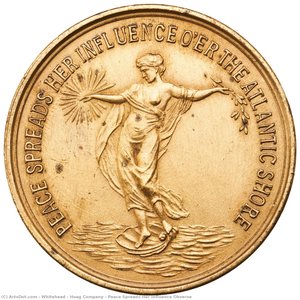
This remarkable piece, evocative of early twentieth-century commemorative art, transports us to a moment thick with geopolitical tension. While the specific context relates to the dramatic events surrounding German U-boats in American waters during 1916, the artwork itself speaks to universal themes of national sovereignty, international conflict, and the precarious balance of power. The visual language—that of an embossed bronze medal—lends it an immediate air of historical gravitas, suggesting that what we are viewing is not merely decoration, but a tangible record of momentous decisions made on the high seas.
Symbolism of the Maritime Stage
The composition is dominated by maritime symbolism. The depiction of water, with its suggested waves and vast expanse, serves as both the setting and a metaphor for the unpredictable nature of international relations. Central to the narrative are the figures: men positioned against this backdrop, one pointing decisively while another stands resolute near an American flag. This gesture—the pointing finger directed toward the symbol of national identity—is inherently charged with meaning. It suggests urgency, warning, and the necessity of vigilance. The repetition of geographical or thematic markers, such as "ARABIEN," anchors the piece in a specific historical dialogue, inviting contemplation on how distant events ripple into immediate concerns.
Technique and Material Resonance
The medium itself—a representation of bronze work—is crucial to its emotional impact. Bronze inherently carries associations with permanence, commemoration, and monumental history. The rich, golden hue captured in the reproduction suggests a material that has weathered time yet retains its luster. The embossed technique allows for a fascinating interplay between high relief and recessed background, giving depth to what is fundamentally a circular narrative object. This careful craftsmanship elevates the piece beyond mere illustration; it becomes an artifact of artistic metallurgy.
Historical Echoes and Emotional Depth
To own a reproduction inspired by this medal is to invite a complex dialogue with history into your living space or collection. It speaks to periods when neutrality was tested, when national interests clashed violently against the backdrop of global conflict. The emotional resonance is one of profound tension—a mixture of patriotic pride symbolized by the flag, and the underlying anxiety suggested by the lurking threat on the horizon. For the collector or designer, this piece offers a sophisticated narrative anchor, perfect for spaces that appreciate deep historical context, maritime themes, or powerful allegorical statements.
関連作品

作家の略歴
The Explosive Legacy of Karl Otto Götz
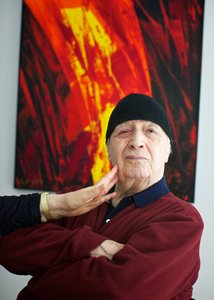
Karl Otto Götz (1914 – 2017) stands as an unparalleled figure in the annals of twentieth-century art, a creator whose remarkable longevity—reaching over a century—was matched only by the sheer intensity and complexity of his artistic vision. Born in Aachen, Germany, Götz was far more than a mere painter; he was a filmmaker, draughtsman, printmaker, writer, and professor who profoundly shaped the artistic landscape of his era. His career was defined by explosive abstract forms that earned him international acclaim, most notably during his appearance at Documenta II in 1959, which cemented his place as one of the most vital members of the German Art Informel movement.
His journey began amidst the avant-garde currents of his youth, where he cultivated a deep fascination with Surrealism and Expressionism. The works of masters such as Max Ernst, Juan Gris, Wassily Kandinsky, and Paul Klee served as crucial early inspirations, shaping his initial stylistic explorations. While attending the School of Applied Arts in Aachen between 1932 and 1933, he honed the technical skills that would later serve his more radical experiments. However, the looming shadow of Nazism cast a profound darkness over his early trajectory; because the regime viewed abstract art with intense disapproval, Götz was banned from exhibiting. Yet, in an act of quiet defiance, he persevered, secretly continuing to create works that challenged the ideological constraints of the time.
The Spirit of Art Informel and Spontaneous Gesture
The post-war era brought a resurgence of artistic experimentation in Germany, fueled by a widespread disillusionment with traditional aesthetics and a desperate yearning for new forms of expression. It was within this fertile ground that Götz emerged as a pivotal champion of Deutsches Informel, or German Informal Art. This movement prioritized the raw power of gesture and spontaneity over the meticulous, controlled representation of the past. Götz’s work became a vessel for this energy, characterized by a rhythmic, almost frenetic application of paint that captured the psychological turbulence of the post-war period.
His mastery extended beyond the canvas into diverse mediums, where he explored the intersection of movement and image. His contributions to television art and his ability to translate the kinetic energy of painting into other formats demonstrated a relentless pursuit of innovation. This period of his life was marked by a refusal to be tethered to a single style, as he moved fluidly between:
- Abstract Expressionism: Utilizing rapid, gestural strokes to convey emotion.
- Printmaking and Medallion Work: Creating symbolic bronze pieces that reflected historical tensions and political symbolism.
- Experimental Film: Exploring the temporal dimension of visual abstraction.
Historical Significance and Lasting Influence
The significance of Karl Otto Götz lies not only in his individual achievements but in his role as a bridge between the early twentieth-century avant-garde and the contemporary era. His work provided a vital link for subsequent generations of artists, influencing titans of German art such as Sigmar Polke and Gerhard Richter. By championing an aesthetic that embraced the unpredictable and the unrefined, he helped redefine the boundaries of what painting could achieve in a modern, fractured world.
Even when working in more structured mediums, such as his striking bronze medallions, Götz infused his subjects with the bold, symbolic language of Art Informel. Whether depicting historical figures or commemorating naval incidents through powerful, symbolic imagery, his hand remained unmistakably his own—dynamic, authoritative, and deeply connected to the pulse of history. His legacy remains a testament to the power of artistic resilience, proving that even under the most restrictive regimes, the impulse toward abstract freedom can never be truly extinguished.
karl otto götz
1914 - 2017 , Germany
プロフィール概要
- Artistic Movement Or Style: Art Informel
- Artists Or Movements Influenced By This Artist:
- Sigmar Polke
- Nam June Paik
- Gerhard Richter
- Artists Who Influenced This Artist:
- Max Ernst
- Juan Gris
- Wassily Kandinsky
- Paul Klee
- Date Of Birth: February 22nd, 1914
- Date Of Death: August 19th, 2017
- Full Name: Karl Otto Götz
- Nationality: German
- Notable Artworks:
- The King Stephen Incident Obverse
- The Sinking of the Lusitania Obverse
- German U-boats in America
- Place Of Birth: Aachen, Germany

