


 プレビュー
プレビュー
 プリントを購入
 シェアする
シェアする シェアする
シェアする
 詳細を見る
詳細を見る

 ダウンロード
 似ている作品
 X線調査
X線調査 スライドショー
A simple act (detail)


 詳細を見る
詳細を見る




P118B $10

P118H $10

P118W $10

P438Z $10

P508JH $12

P508YH $12

P805H $10

P805Z $10

P919BZ $10

P919G $10

P919XJ $10

P959ZH $10

P968JZ $12

W106C $8

W218G $10

W218JH $8

W218Y $10

W307PJ $10

W316G $10

W316PJ $8

W316Y $10

W398PJ $8

W4111J $10

W500HY $15

W500JH $15

W692G $12

W849H $8

W940BG $15

W953PJ $8




作品のオリジナル比率に合わせた、当店の規定サイズからお選びください。

特定のフレームやスペースに合わせて、ご希望のサイズをご入力いただけます。選択されたサイズが元の画像の比率と異なる場合、アートワークをトリミングするか、手描きで要素を追加して絵画を拡張いたします。デジタルモックアップ を制作し、制作開始前にご確認(承認)をいただきます。
画面上のプレビューは、実際のトリミングや拡張を正確に反映しているものではありません。最終的な構図は、モックアップによってのみ正確にご確認いただけます。
カスタムサイズもご利用いただけますが、元の比率を維持するためには、あらかじめ用意されたリストからサイズを選択することをお勧めいたします。
ご注文後、ArtsDot.com チームより詳細な指示をお送りするとともに、仕上がりイメージ(モックアップ)をご提供いたします。


 ガラスオプションは、110cm未満のサイズでのみご利用いただけます。

A simple act (detail)
複製技法
複製画のサイズ
-


合計金額
$ 263
関連作品






アーティストの略歴
A Tapestry of Memory and Space: The Life of Kate Elizabeth Daw
The trajectory of Kate Elizabeth Daw (1965–2020) was one of profound intellectual depth and an unyielding commitment to the power of visual storytelling. Born in the coastal serenity of Esperance, Western Australia, her early connection to the natural world provided a foundational sensitivity that would later manifest in her complex, layered explorations of identity and place. Though she briefly stepped away from formal education at eighteen to pursue an independent path of discovery, this period of wandering proved essential to her development. It allowed her to cultivate a singular, uncompromising vision long before she entered the rigorous academic environments of Melbourne and Glasgow. When she eventually moved to Melbourne in 1989, her arrival marked the beginning of a prolific era characterized by a seamless fusion of painting, ceramics, and installation art.
Daw’s artistic evolution was deeply intertwined with her academic pursuits, which lent an extraordinary intellectual rigor to her creative output. After earning her Bachelor’s degree in Painting from the Victoria College of Arts (VCA), she traveled to the Glasgow School of Art as a recipient of the prestigious Anne and Gordon Samstag International Visual Arts Scholarship. This international exposure expanded her horizons, leading her back to Melbourne to complete a Master’s degree and eventually a doctorate at RMIT University. Her work became increasingly sophisticated, moving beyond simple representation into what critics often termed spatial narrative—a method of using physical space and material texture to tell stories that exist between the seen and the unseen.
The Interplay of Medium and Message
What distinguished Daw from her contemporaries was her refusal to be confined by a single medium. She navigated the boundaries between the tactile world of ceramics and the expansive possibilities of large-scale installation with remarkable fluidity. Her later paintings were particularly evocative, often acting as vessels for memory; she would interweave snapshots of personal recollections with modernist designs and cultural motifs. In some of her most intimate works, she utilized typewritten text, incorporating excerpts from her own writings alongside the prose of literary giants like Jean Rhys and Marcel Proust. This layering of text and image created a palimpsest effect, where history, literature, and personal experience collided on the canvas.
Her collaborative spirit also played a vital role in her artistic legacy. Working alongside artists such as Stewart Russell, she explored themes that resonated with the Australian social fabric. Their project “Two Homes” at the Melbourne Cricket Ground (MCG) investigated the complexities of identity and place, while other works delved into the intersection of sport and human rights, specifically honoring the courage of Olympian Peter Norman. Through these collaborations, Daw demonstrated that art could serve as a powerful vehicle for social commentary and feminist advocacy, using her platform to illuminate the female experience and broader societal struggles.
Liminality and the Light of Discovery
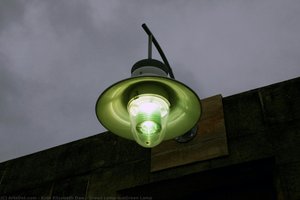
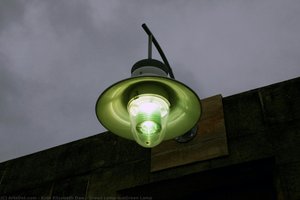
One of the most hauntingly beautiful aspects of Daw’s practice was her fascination with the liminal—the threshold between states of being. This is perhaps best exemplified in her site-specific installation, Green Lamp (2013–14), created for the 19th Biennale of Sydney. Situated on Cockatoo Island, the work consisted of a single green light shining from an old military guardhouse, visible only to those passing by on ferries or gazing from the distant shoreline. The installation evoked a sense of longing and mystery, drawing comparisons to the beckoning green light in F. Scott Fitzgerald’s The Great Gatsby. It was a work that existed as much in the mind’s eye as it did in physical reality, embodying the very essence of her artistic philosophy: that true meaning often resides in what is glimpsed but not fully grasped.
As a painter, sculptor, educator, and curator, Kate Elizabeth Daw left an indelible mark on the Australian contemporary art landscape. Her ability to weave together the disparate threads of personal memory, historical truth, and sculptural form created a body of work that was both deeply intimate and expansively social. Even after her passing in 2020, her influence persists through the many layers of narrative she left behind—reminding us that art is not merely an object to be viewed, but a space to be inhabited and a story to be felt.
kate elizabeth daw
1965 - 2020 , Australia
基本情報
- Artistic Movement Or Style: Contemporary Painting
- Date Of Birth: 1965
- Full Name: Kate Elizabeth Daw
- Nationality: Australian
- Notable Artworks:
- A Simple Act (Detail)
- Green Lamp
- Place Of Birth: Esperance, Australia
関連記事
ミュンヘン・アルテ・ピナコテークの至宝25選:名画と芸術の物語 | ArtsDot
ミュンヘン・アルテ・ピナコテークの至宝25選。ドゥーラー、ラファエロ、レンブラントの名画を紐解き、ルネサンス美術とバロック美術の輝きをご堪能ください。ArtsDotで高品質なアートプリントや複製画を見つけ、お部屋に芸術の彩りを。今すぐコレクションをご覧ください。

ジョルジュ・ブラック傑作25選:革新的なキュビスムの世界と装飾への誘い
ジョルジュ・ブラックの傑作25選。キュビスムを代表する画家、その革新的な色彩と技法に迫ります。名画から知られざる逸品まで、美術史に残る作品群をArtsDot.comで鑑賞。お部屋を彩るアートプリントも多数ご用意。今すぐオンラインでコレクションをご覧ください。
ルノワール傑作25選:光と色彩が織りなす印象派の華麗なる世界 | ArtsDot
ルノワールの傑作25選🎨 印象派の光と色彩が輝く世界へ。絵画の背景、技法、そして時代を超えて愛される理由を紐解きます。ArtsDotで高品質な複製画やインテリアアートを見つけ、お部屋に芸術的な彩りを✨ Explore the full collection online!
John Frederick Herring Sr.: Equestrian Mastery & the Rise of Sporting Art in Victorian England
Explore the life & work of John Frederick Herring Sr., a leading Victorian equestrian artist. Discover his masterpieces, patronage, techniques & investment potential. Expert insights for collectors.

著作権と創造性の交錯:芸術的誠実性をもって依頼制作された絵画をナビゲートする
依頼制作された絵画の著作権に関する法的側面と芸術的誠実性の確保。ArtsDotが、高額美術品コレクションのリスク管理から契約条項まで、専門的な知識と品質保証でサポートします。