

 プレビュー
プレビュー
 シェアする
シェアする シェアする
シェアする
 詳細を見る
詳細を見る

 ダウンロード
 似ている作品
 X線調査
X線調査 スライドショー
 統計情報
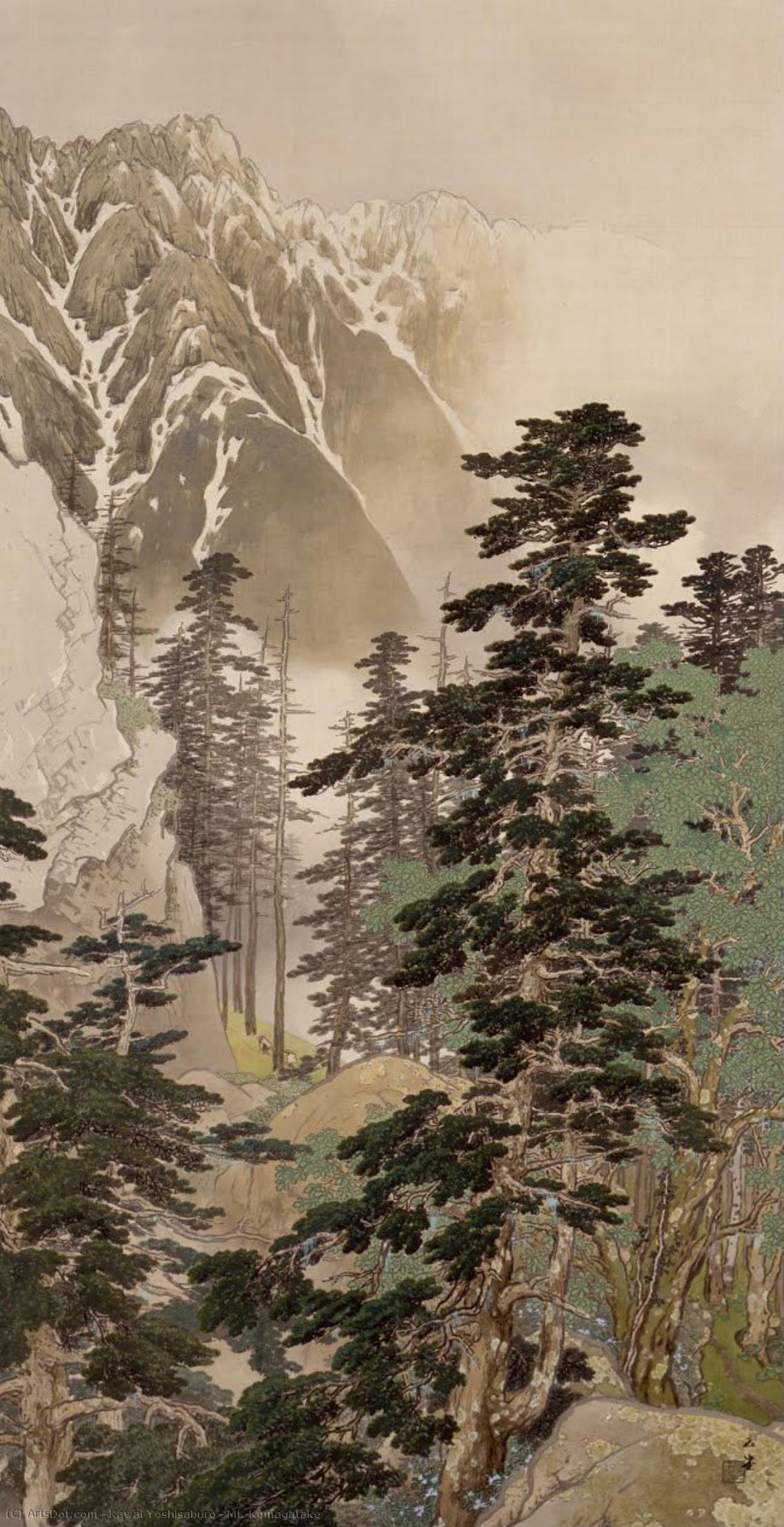
統計情報Mt. Komagatake
 1914
1914 163.0 x 85.0 cm
 詳細を見る
詳細を見る
ジークレー/アートプリント
迅速な制作と多彩な仕上げオプションを備えた、ミュージアムクオリティのジークレーまたはキャンバスプリント。 ( 手描きの絵画を購入 デジタル画像販売へ切り替え)




































作品のオリジナル比率に合わせた、当店の規定サイズからお選びください。

特定のフレームやスペースに合わせて、ご自身でサイズを指定することも可能です。選択されたサイズが元の画像の比率と一致しない場合、作品をトリミングするか、鏡面反射または単色での塗りつぶしによって画像を拡張いたします。制作を開始する前に、ご確認用のデジタルモックアップをお送りいたします。
画面上のプレビューには、実際のトリミングや拡張は反映されませんのでご注意ください。最終的な構図を正確に確認できるのは、モックアップのみとなります。
カスタムサイズも承っておりますが、元の比率を維持するためには、あらかじめ用意されたリストからサイズを選択することをお勧めいたします。


 ガラスオプションは、110cm未満のサイズでのみご利用いただけます。

Mt. Komagatake
ジークレー/アートプリント
複製画のサイズ
-


合計金額
$ 62
関連作品








アーティストの略歴
The Genesis of a Master
Born into the fragrant atmosphere of a family dedicated to the craft of papermaking and ink production, Kawai Yoshisaburō’s destiny was etched in the very materials of his future art. In the heart of Ichinomiya, Aichi Prefecture, the young artist grew up surrounded by the tactile essence of tradition. This early immersion in the physical components of nihonga—the brushes, the pigments, and the delicate papers—provided a foundation far deeper than mere technical skill; it was an elemental connection to the medium itself. As he journeyed from his childhood home to the vibrant artistic hubs of Kyoto, his identity began to transform, eventually adopting the evocative pseudonym Kawai Gyokudō, a name that would become synonymous with the seasonal soul of Japan.A Tapestry of Influences
The evolution of Gyokudō’s style was a deliberate dance between the ancient and the emerging. Under the tutelage of masters like Mochizuki Gyokusen and Kōno Bairei, he absorbed the meticulous realism of the Maruyama-shijo school, learning to observe the natural world with an almost scientific precision. Yet, his spirit was not bound by the past alone. By integrating the disciplined brushwork of the Kanō school from Hashimoto Gahō and the luminous, atmospheric perspectives of Western Impressionism, he achieved a breathtaking synthesis. His canvases became more than mere depictions; they were windows into a world where:- Traditional Nihonga techniques met the vibrant, light-filled palettes of modern Europe.
- The mogu technique brought a powerful, textured life to the trunks of ancient pines.
- Compositional principles from Chinese traditions provided a structural elegance to his landscapes.
Capturing the Eternal Seasons
Gyokudō’s true mastery lay in his ability to arrest time, capturing the fleeting transitions of the Japanese landscape with profound emotional resonance. His oeuvre serves as a seasonal chronicle, where the arrival of spring and the descent of winter are felt through every brushstroke. In works such as “Futsuka zuki” (The New Moon), one finds a serene, moonlit winter stillness, while “Yuku haru” (The Departing Spring) evokes the bittersweet melancholy of falling blossoms. Whether portraying the dramatic silhouette of a hawk perched upon an old pine or the rhythmic dance of cormorant fishing against the dark rocks of Kinka-zan mountain, his art celebrates a harmonious existence between humanity and the wild. Through his eyes, the mountains and rivers are not merely scenery, but living, breathing entities that pulse with the rhythm of the earth.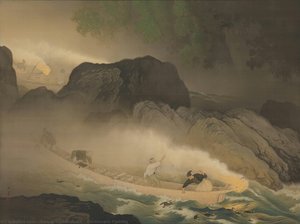
kawai yoshisaburō
1873 - 1957 , Japan
基本情報
- Artistic Movement Or Style: Nihonga
- Artists Who Influenced This Artist:
- Kōno Bairei
- Hashimoto Gahō
- Date Of Birth: November 24, 1873
- Date Of Death: June 30, 1957
- Full Name: Kawai Yoshisaburō
- Nationality: Japanese
- Notable Artworks:
- Futsuka zuki
- Yuku haru
- Mine-no-yu
- Bosetsu
- Place Of Birth: Ichinomiya City, Aichi Prefecture