

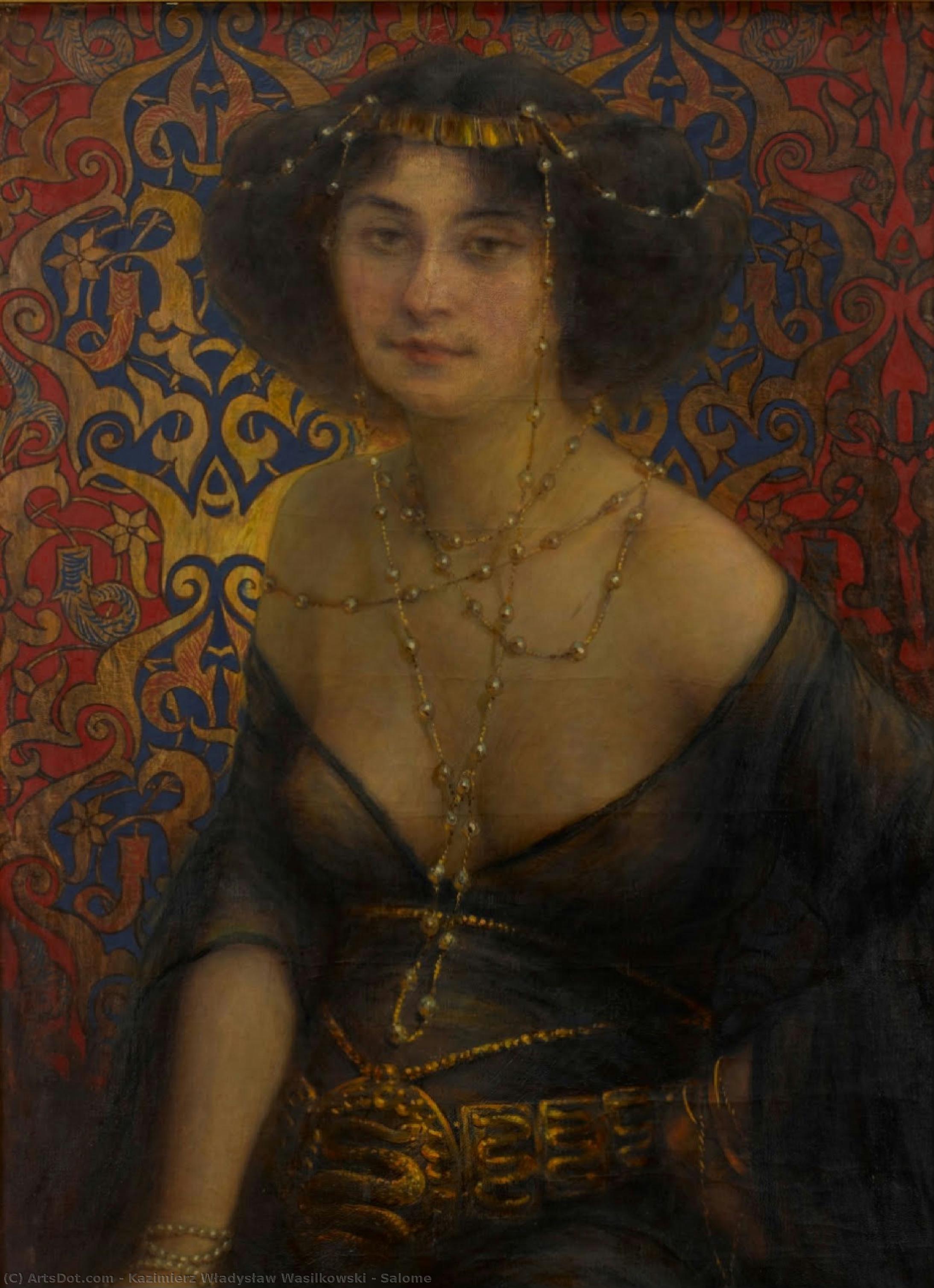
 プレビュー
プレビュー
 シェアする
シェアする シェアする
シェアする
 詳細を見る
詳細を見る

 ダウンロード
 似ている作品
 X線調査
X線調査 スライドショー
 Stats
StatsSalome

 詳細を見る
詳細を見る
ジークレー/アートプリント
迅速な制作と多彩な仕上げオプションを備えた、ミュージアムクオリティのジークレーまたはキャンバスプリント。 ( 手描きの絵画を購入 Switch to Digital Image)




































作品のオリジナル比率に合わせた、当店の規定サイズからお選びください。

特定のフレームやスペースに合わせて、ご自身でサイズを指定することも可能です。選択されたサイズが元の画像の比率と一致しない場合、作品をトリミングするか、鏡面反射または単色での塗りつぶしによって画像を拡張いたします。制作を開始する前に、ご確認用のデジタルモックアップをお送りいたします。
画面上のプレビューには、実際のトリミングや拡張は反映されませんのでご注意ください。最終的な構図を正確に確認できるのは、モックアップのみとなります。
カスタムサイズも承っておりますが、元の比率を維持するためには、あらかじめ用意されたリストからサイズを選択することをお勧めいたします。


 ガラスオプションは、110cm未満のサイズでのみご利用いただけます。

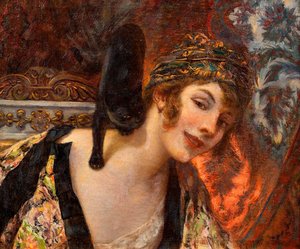
Salome
ジークレー/アートプリント
複製画のサイズ
-


合計金額
$ 62
関連作品







アーティストの略歴
Kazimierz Wasilkowski: A Polish Master of Female Portraiture
Born in Warsaw, Poland, in 1861, Kazimierz Wasilkowski emerged as a significant figure in late 19th and early 20th-century Polish art. His legacy rests primarily on his captivating portrayals of women – figures imbued with both vulnerability and strength, often rendered with a delicate realism that belies the emotional depth he conveyed. Wasilkowski’s artistic journey was intertwined with personal connections; he was the brother of the renowned sculptor Leopold Wasilkowski and later married the painter Maria Nostitz-Jackowska, creating a creative circle rich in artistic exchange.
His early training took place at the Warsaw School of Drawing, providing him with a solid foundation in classical techniques. However, it was his independent exploration that truly defined his style. Wasilkowski’s work demonstrates a clear influence from the academic tradition, particularly evident in his meticulous attention to detail and skillful use of light and shadow. Yet, he moved beyond mere imitation, imbuing his subjects with an individual character rarely found in purely representational art. He wasn't simply depicting women; he was capturing their essence, their inner lives – a feat achieved through subtle shifts in expression, posture, and gaze.
The Allure of ‘Salome’ and the Female Form
Perhaps Wasilkowski’s most celebrated work is “Salome,” a painting that solidified his reputation for portraying powerful female figures. The subject, taken from the biblical story, isn't presented as a passive victim but rather as a woman of considerable will and perhaps even unsettling beauty. The composition itself—the dramatic lighting, the carefully arranged folds of her garments, the directness of her gaze—all contribute to an atmosphere of intense psychological drama. It’s a painting that invites contemplation, prompting viewers to consider the complexities of power, desire, and judgment.
Beyond “Salome,” Wasilkowski produced a substantial body of work featuring women from various walks of life – mothers, daughters, friends, and even anonymous figures glimpsed in fleeting moments. He frequently depicted them in intimate settings, often bathed in soft light, suggesting a quiet contemplation or a private moment of reflection. His ability to capture the nuances of human emotion through subtle gestures and facial expressions is truly remarkable.
Technique and Artistic Development
Wasilkowski’s artistic development can be traced through his evolving use of color and brushwork. Initially, his palette leaned towards a more muted range, reflecting the somber tones often associated with academic portraiture. However, as he matured, he embraced bolder colors and looser brushstrokes, injecting a greater sense of vitality into his paintings. He skillfully employed glazing techniques to create depth and luminosity, enhancing the richness of his surfaces.
His work reflects a deep understanding of anatomy and perspective, honed through years of diligent study. Yet, it’s not merely technical proficiency that distinguishes Wasilkowski's art; it is his ability to infuse his paintings with an emotional resonance that transcends mere representation. He possessed a rare gift for capturing the spirit of his subjects, transforming them into enduring symbols of beauty and complexity.
Legacy and Historical Context
Kazimierz Wasilkowski’s career spanned several decades, during which he contributed significantly to the development of Polish portraiture. His work aligns with the broader artistic trends of the late 19th century – a period marked by both a renewed interest in classical ideals and a growing desire to explore the complexities of modern life. His paintings offer valuable insights into the social and cultural landscape of Poland during this time, reflecting the evolving role of women in society.
Today, Wasilkowski’s art continues to be appreciated for its technical skill, emotional depth, and enduring beauty. His portraits serve as a poignant reminder of the power of art to capture the essence of human experience. His work is preserved and exhibited at institutions like the Vistula River Museum in Kazimierz Dolny, Poland, ensuring that his legacy will continue to inspire future generations of artists.
kazimierz władysław wasilkowski
1861 - 1934 , Poland
基本情報
- Artistic Movement Or Style: Portraiture
- Date Of Birth: 1861
- Date Of Death: 1934
- Full Name: Kazimierz Władysław Wasilkowski
- Nationality: Polish
- Notable Artworks: ['Salome']
- Place Of Birth: Warsaw, Poland