 プレビュー
プレビュー
 プリントを購入
 シェアする
シェアする シェアする
シェアする
 詳細を見る
詳細を見る

 ダウンロード
 似ている作品
 X線調査
X線調査 スライドショー
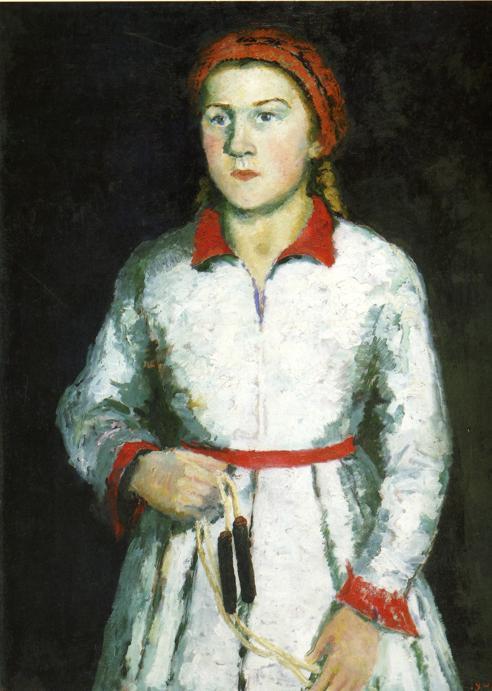
Portrait of Artist s Daughter
 Oil On Canvas
- WallArt
- Post-Impressionism
 1934
1934- Modern
 85.0 x 61.0 cm
 詳細を見る
詳細を見る




































作品のオリジナル比率に合わせた、当店の規定サイズからお選びください。

特定のフレームやスペースに合わせて、ご希望のサイズをご入力いただけます。選択されたサイズが元の画像の比率と異なる場合、アートワークをトリミングするか、手描きで要素を追加して絵画を拡張いたします。デジタルモックアップ を制作し、制作開始前にご確認(承認)をいただきます。
画面上のプレビューは、実際のトリミングや拡張を正確に反映しているものではありません。最終的な構図は、モックアップによってのみ正確にご確認いただけます。
カスタムサイズもご利用いただけますが、元の比率を維持するためには、あらかじめ用意されたリストからサイズを選択することをお勧めいたします。
ご注文後、ArtsDot.com チームより詳細な指示をお送りするとともに、仕上がりイメージ(モックアップ)をご提供いたします。


 ガラスオプションは、110cm未満のサイズでのみご利用いただけます。

Portrait of Artist s Daughter
複製技法
複製画のサイズ
-


合計金額
$ 263
Kazimir Malevich’s Portrait of Artist s Daughter: A Synthesis of Realism and Suprematism
The artwork “Portrait of Artist s Daughter,” created in 1934 by Kazimir Malevich, stands as a fascinating intersection between the stylistic conventions of early modernism and the groundbreaking principles of Suprematism. Measuring 85 x 61 cm and executed on canvas using oil paints, this piece transcends mere representation, delving into an exploration of emotion and form that aligns with Malevich’s broader artistic vision. It's a portrait not just of a young woman—his daughter—but also of a pivotal moment in the artist’s oeuvre, demonstrating his ability to adapt established techniques while simultaneously pushing boundaries toward pure abstraction.Composition and Color Palette: Contrasting Elements
The painting’s composition prioritizes stillness and directness. Centrally positioned against a dark background – likely charcoal grey – is the girl herself, facing forward with unwavering gaze. This deliberate framing lends an air of solemn contemplation to the scene. Malevich employs a striking color palette dominated by white and red, creating a dynamic visual tension that speaks to the core tenets of Suprematism. The white dress embodies purity and luminosity, contrasted sharply against the crimson collar and belt—symbols of vitality and passion. Subtle variations in grey within the white fabric contribute textural depth, mirroring Malevich’s penchant for capturing surface qualities rather than striving for photographic accuracy.Technique and Texture: Visible Brushstrokes and Impasto
Malevich's technique is characterized by visible brushstrokes – an impasto effect – particularly noticeable in areas of the dress and skin tones. This deliberate layering of paint emphasizes materiality, grounding the artwork in a tactile experience that resonates with viewers. The artist skillfully blends pigments to soften contours and achieve volume, capturing the nuances of human form while simultaneously rejecting traditional illusionistic rendering. These visible brushstrokes are not merely accidental; they serve as an integral component of Malevich’s artistic philosophy, reflecting his belief that art should express itself directly without concealing its process.Historical Context and Symbolic Resonance
Created during a period marked by significant artistic experimentation—the aftermath of Cubism and the burgeoning influence of Expressionism—“Portrait of Artist s Daughter” embodies Malevich's commitment to distilling visual language down to its essential elements. The Suprematist movement, founded in 1915, sought to liberate art from representational constraints, prioritizing geometric forms – circles and squares – as vehicles for conveying spiritual truths. While the portrait retains a recognizable human figure, it’s imbued with an understated emotional resonance—a quiet dignity conveyed through the girl's gaze and posture. The juxtaposition of white and red may symbolize opposing forces—innocence versus vitality—reflecting Malevich’s desire to explore psychological depth within a framework of abstract formalism.Concluding Impression: A Legacy of Minimalism
Ultimately, “Portrait of Artist s Daughter” exemplifies Malevich’s enduring legacy as one of the foremost innovators of modern art. It represents not merely a depiction of familial affection but also a masterful demonstration of Suprematist principles applied to portraiture—a courageous assertion of artistic autonomy that continues to inspire artists and collectors alike. Its understated elegance and textural richness serve as a testament to Malevich’s profound understanding of how form and color can communicate emotion without resorting to overt symbolism, securing its place within the canon of 20th-century art history.関連作品
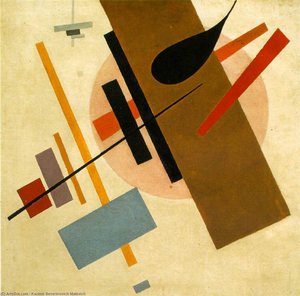
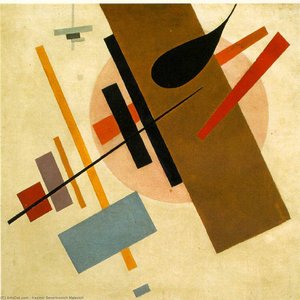
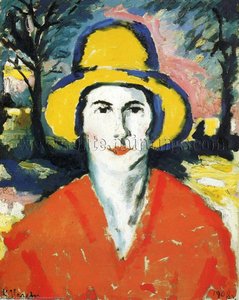
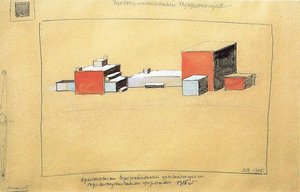
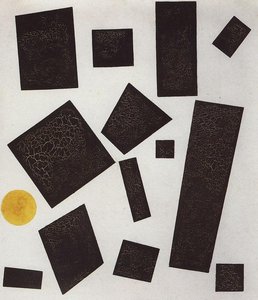
アーティストの略歴
カジミール・マレーヴィチ:抽象芸術の先駆者
カジミール・セヴェリーノヴィチ・マレーヴィチは、1878年にウクライナのキエフ地方で生まれ、20世紀美術に革命をもたらした画家であり理論家です。彼の作品は、具象表現を完全に放棄し、純粋な感情と幾何学的な形のみを追求することで、抽象芸術の新たな地平を開きました。「至高主義(Suprematism)」という独自の芸術運動を創始し、その思想は美術の世界に深い影響を与え続けています。マレーヴィチの人生は、伝統からの脱却、芸術における精神性の探求、そして政治的な抑圧との闘いによって彩られています。幼少期と初期の影響
ウクライナの農村地帯で育ったマレーヴィチは、その風景や民俗文化に深く影響を受けました。幼少期から芸術への関心を抱き、キエフで美術を学びますが、すぐにモスクワへと進み、ヨーロッパのアバンギャルド運動に触れる機会を得ます。印象派、象徴主義、フォーヴィスム、そしてキュビスムなど、様々なスタイルを試しながらも、彼は常に伝統的な芸術表現からの脱却を目指していました。民俗芸術への愛着と、現代美術への渇望が、彼の独自の芸術的探求の原動力となりました。至高主義の誕生と展開
1915年、マレーヴィチは「至高主義」という画期的な芸術運動を宣言します。これは、対象物の描写を超越し、純粋な感情を表現することを目的としたものでした。彼は、色彩、線、形といった要素が、人間の精神に直接働きかけ、超越的な感覚をもたらすと信じていました。その象徴として生まれたのが、「黒方」です。この作品は、絵画における具象表現の終焉を宣言するものであり、美術史において非常に重要な転換点となりました。「白の中に白」シリーズに見られるように、マレーヴィチは純粋な形と色彩の組み合わせによって、抽象芸術の可能性を極限まで追求しました。主要作品とその意味
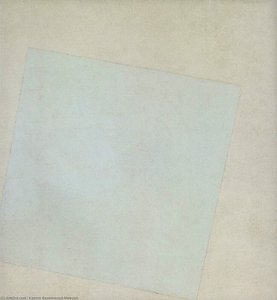
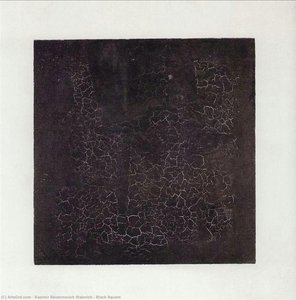
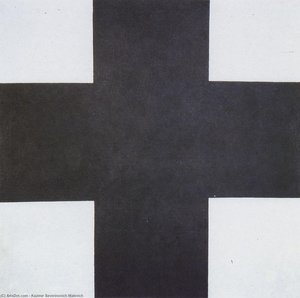
「黒方」は、マレーヴィチの至高主義を象徴する最も有名な作品です。真っ黒な四角形が白い背景に浮かび上がり、見る者に強烈な印象を与えます。これは単なる幾何学的な図形ではなく、宇宙の深淵や人間の精神における絶対性を表現しようとした試みでした。「白の中に白」は、さらに抽象化を推し進めた作品群であり、純粋な白色の四角形が白い背景に浮かび上がり、見る者の意識を静寂へと誘います。また、「家づくりの図」は、初期の至高主義作品であり、建築的な要素と幾何学的な形を組み合わせることで、新たな空間認識を提示しています。これらの作品を通して、マレーヴィチは絵画における表現の可能性を拡大し、抽象芸術の概念を再定義しました。美術史上の意義と遺産
マレーヴィチの至高主義は、20世紀の美術に多大な影響を与えました。ミニマリズムや構成主義といった後続の芸術運動にインスピレーションを与え、非客観的芸術の発展に大きく貢献しました。彼の理論的な著作もまた、美術家たちに大きな影響を与え、抽象芸術の概念を深く理解するための基盤となりました。政治的な抑圧の中で、彼の作品は一時的に忘れ去られてしまいましたが、20世紀後半には再評価され、現代美術における重要な存在として確固たる地位を確立しました。マレーヴィチの遺産は、今なお多くのアーティストに影響を与え続け、抽象芸術の可能性を追求する人々にインスピレーションを与えています。
カジミール・マレーヴィチ
1878 - 1935 , ウクライナ
基本情報
- フルネーム: カジミール・マレーヴィチ
- 主な作品:
- 黒い正方形
- 白と白
- 建設中の家
- 出生地: キーウ、ウクライナ
- 国籍: ウクライナ/ロシア
- 影響を与えたアーティスト:
- ミニマリズム
- 構成主義
- エル・リシツキー
- 影響を受けたアーティスト:
- キュビスム
- フォーヴィスム
- 印象派
- 死亡年月日: 1935年5月15日
- 生年月日: 1878年2月23日
- 芸術運動またはスタイル: 構成主義、抽象芸術
関連記事
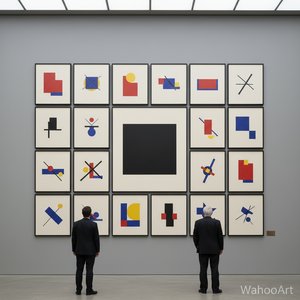
カジミール・マレーヴィチ:至高の25選 - 抽象芸術の革命とホームデコレーション
カジミール・マレーヴィチの至高の25選。シュプレマティズムを代表する「ブラックスクエア」をはじめ、抽象芸術の革命的作品群を紐解きます。ロシア構成主義からミニマリズムまで、美術史に輝く傑作をArtsDot.comで。高品質なアートプリントとホームデコレーションの世界へ。今すぐコレクションをご覧ください。

White on Canvas: 10 Masterpieces & Timeless Elegance for Your Home Decor
Explore 10 iconic white paintings by Monet, Whistler & Rothko! Discover the stories behind these serene masterpieces and their impact on art history. Find museum-quality reproductions for your home decor at .
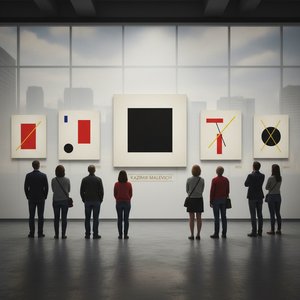
Kazimir Malevich: Pioneering Suprematism & the Quest for Non-Objective Art
Explore the revolutionary art of Kazimir Malevich & his groundbreaking Suprematism movement. Discover the origins, core principles, and lasting impact of this pivotal force in modern abstract painting.
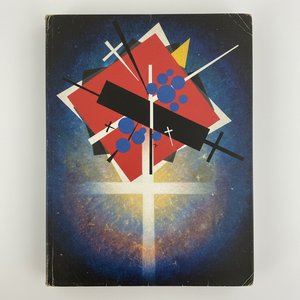
Beyond Representation: Exploring the Radical Geometry of Suprematism & Its Spiritual Foundations
Explore the revolutionary world of Suprematism with our expert guide. Discover Kazimir Malevich's groundbreaking art, its spiritual foundations & lasting influence on modern design. Learn about collecting this iconic movement.

Crimson Threads of Narrative: Exploring Symbolism & Representation in Artworks Featuring the Red Dress
Explore the rich symbolism of the red dress in art history! From ancient power displays to iconic portraits like Cézanne’s 'Madame Cezanne', discover the cultural and artistic significance behind this captivating color. Expert analysis & insights.