 プレビュー
プレビュー
 プリントを購入
 シェアする
シェアする シェアする
シェアする
 詳細を見る
詳細を見る

 ダウンロード
 似ている作品
 X線調査
X線調査 スライドショー
To Harvest (Martha and Vanka)


 詳細を見る
詳細を見る




P118B $10

P118H $10

P118W $10

P438Z $10

P508JH $12

P508YH $12

P805H $10

P805Z $10

P919BZ $10

P919G $10

P919XJ $10

P959ZH $10

P968JZ $12

W106C $8

W218G $10

W218JH $8

W218Y $10

W307PJ $10

W316G $10

W316PJ $8

W316Y $10

W398PJ $8

W4111J $10

W500HY $15

W500JH $15

W692G $12

W849H $8

W940BG $15

W953PJ $8




作品のオリジナル比率に合わせた、当店の規定サイズからお選びください。

特定のフレームやスペースに合わせて、ご希望のサイズをご入力いただけます。選択されたサイズが元の画像の比率と異なる場合、アートワークをトリミングするか、手描きで要素を追加して絵画を拡張いたします。デジタルモックアップ を制作し、制作開始前にご確認(承認)をいただきます。
画面上のプレビューは、実際のトリミングや拡張を正確に反映しているものではありません。最終的な構図は、モックアップによってのみ正確にご確認いただけます。
カスタムサイズもご利用いただけますが、元の比率を維持するためには、あらかじめ用意されたリストからサイズを選択することをお勧めいたします。
ご注文後、ArtsDot.com チームより詳細な指示をお送りするとともに、仕上がりイメージ(モックアップ)をご提供いたします。


 ガラスオプションは、110cm未満のサイズでのみご利用いただけます。

To Harvest (Martha and Vanka)
複製技法
複製画のサイズ
-


合計金額
$ 263
A Moment Frozen in Cubist Time
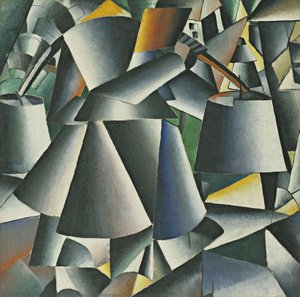
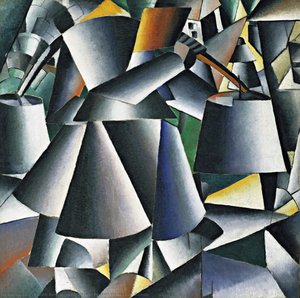
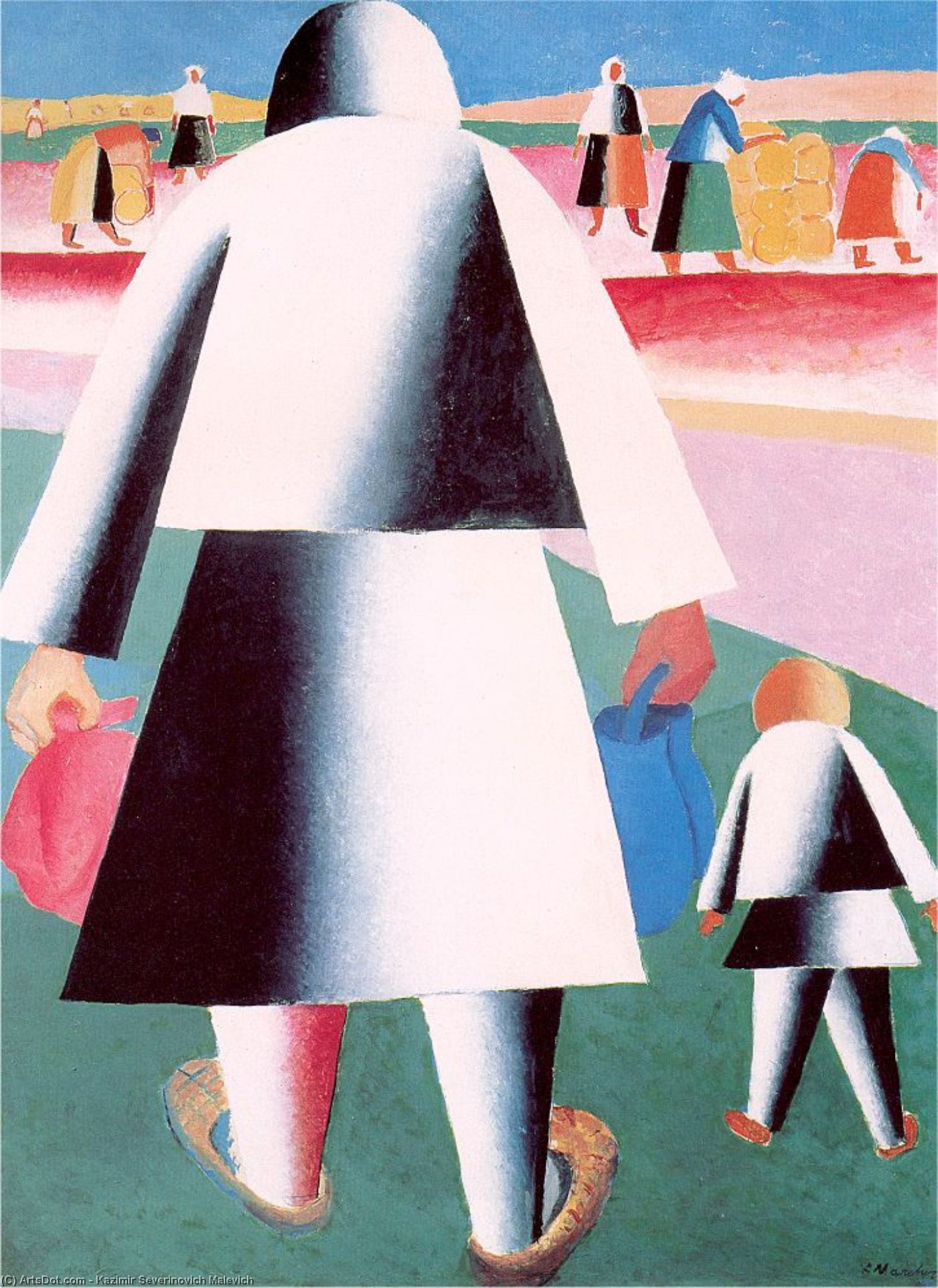
In the early years of the twentieth century, as the world stood on the precipice of unprecedented social and technological upheaval, Kazimir Malevich captured a fragment of existence that would forever alter the trajectory of modern art. "To Harvest (Martha and Vanka)", painted between 1913 and 1914, is far more than a mere depiction of rural life; it is a profound exploration of geometric disruption and psychological depth. At first glance, the viewer encounters a scene of quiet movement—a woman and a child traversing a dusty road—yet beneath this surface lies a radical dismantling of reality. Malevich, deeply immersed in the revolutionary spirit of the Russian avant-garde, uses this composition to bridge the gap between the recognizable world and the burgeoning abstraction that would soon define his legacy.
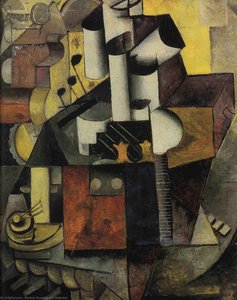
The artwork serves as a masterful testament to the Cubist principles that Malevich so brilliantly pushed to their limits. Rather than relying on traditional perspective or the soft illusions of light and shadow, the artist fragments his subjects into a rhythmic dance of interlocking planes. Rectangular and trapezoidal shapes collide and overlap, creating a sense of movement that feels both mechanical and organic. This deliberate distortion does not merely serve an aesthetic purpose; it acts as a visual metaphor for the anxieties and uncertainties of a period marked by rapid change. To gaze upon these fractured forms is to witness the very act of deconstructing established norms, mirroring Male precisely as he sought to liberate art from the heavy constraints of imitation.
The Power of Monochrome and Precision
One of the most striking elements for any collector or admirer of fine art is Malevich’s masterful use of a restricted palette. By employing a bold monochrome scheme—primarily sophisticated shades of gray—the artist strips away the distractions of color to reveal the skeletal truth of the composition. This technique forces the eye to engage intimately with the underlying structure, focusing on the tension between shapes and the precise construction of each plane. There is an undeniable solidity to the work; despite the fragmentation, each element feels meticulously placed, providing a sense of stability amidst the apparent chaos of the Cubist style.
For those looking to integrate such a piece into a contemporary interior, "To Harvest" offers a unique blend of historical gravity and modern elegance. The grayscale tones allow it to function as a sophisticated anchor in a minimalist setting, while its complex geometry provides a stimulating focal point that invites long periods of contemplation. It is an artwork that does not merely decorate a space but transforms it, bringing with it the intellectual energy of the Suprematist movement. Owning a high-quality reproduction of this masterpiece means possessing a piece of the very moment when art stopped trying to mimic life and began its courageous journey toward becoming something entirely new.
関連作品

アーティストの略歴
カジミール・マレーヴィチ:抽象芸術の先駆者
カジミール・セヴェリーノヴィチ・マレーヴィチは、1878年にウクライナのキエフ地方で生まれ、20世紀美術に革命をもたらした画家であり理論家です。彼の作品は、具象表現を完全に放棄し、純粋な感情と幾何学的な形のみを追求することで、抽象芸術の新たな地平を開きました。「至高主義(Suprematism)」という独自の芸術運動を創始し、その思想は美術の世界に深い影響を与え続けています。マレーヴィチの人生は、伝統からの脱却、芸術における精神性の探求、そして政治的な抑圧との闘いによって彩られています。幼少期と初期の影響
ウクライナの農村地帯で育ったマレーヴィチは、その風景や民俗文化に深く影響を受けました。幼少期から芸術への関心を抱き、キエフで美術を学びますが、すぐにモスクワへと進み、ヨーロッパのアバンギャルド運動に触れる機会を得ます。印象派、象徴主義、フォーヴィスム、そしてキュビスムなど、様々なスタイルを試しながらも、彼は常に伝統的な芸術表現からの脱却を目指していました。民俗芸術への愛着と、現代美術への渇望が、彼の独自の芸術的探求の原動力となりました。至高主義の誕生と展開
1915年、マレーヴィチは「至高主義」という画期的な芸術運動を宣言します。これは、対象物の描写を超越し、純粋な感情を表現することを目的としたものでした。彼は、色彩、線、形といった要素が、人間の精神に直接働きかけ、超越的な感覚をもたらすと信じていました。その象徴として生まれたのが、「黒方」です。この作品は、絵画における具象表現の終焉を宣言するものであり、美術史において非常に重要な転換点となりました。「白の中に白」シリーズに見られるように、マレーヴィチは純粋な形と色彩の組み合わせによって、抽象芸術の可能性を極限まで追求しました。主要作品とその意味
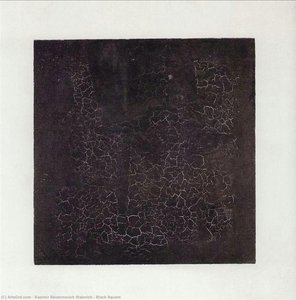
「黒方」は、マレーヴィチの至高主義を象徴する最も有名な作品です。真っ黒な四角形が白い背景に浮かび上がり、見る者に強烈な印象を与えます。これは単なる幾何学的な図形ではなく、宇宙の深淵や人間の精神における絶対性を表現しようとした試みでした。「白の中に白」は、さらに抽象化を推し進めた作品群であり、純粋な白色の四角形が白い背景に浮かび上がり、見る者の意識を静寂へと誘います。また、「家づくりの図」は、初期の至高主義作品であり、建築的な要素と幾何学的な形を組み合わせることで、新たな空間認識を提示しています。これらの作品を通して、マレーヴィチは絵画における表現の可能性を拡大し、抽象芸術の概念を再定義しました。美術史上の意義と遺産
マレーヴィチの至高主義は、20世紀の美術に多大な影響を与えました。ミニマリズムや構成主義といった後続の芸術運動にインスピレーションを与え、非客観的芸術の発展に大きく貢献しました。彼の理論的な著作もまた、美術家たちに大きな影響を与え、抽象芸術の概念を深く理解するための基盤となりました。政治的な抑圧の中で、彼の作品は一時的に忘れ去られてしまいましたが、20世紀後半には再評価され、現代美術における重要な存在として確固たる地位を確立しました。マレーヴィチの遺産は、今なお多くのアーティストに影響を与え続け、抽象芸術の可能性を追求する人々にインスピレーションを与えています。
カジミール・マレーヴィチ
1878 - 1935 , ウクライナ
基本情報
- フルネーム: カジミール・マレーヴィチ
- 主な作品:
- 黒い正方形
- 白と白
- 建設中の家
- 出生地: キーウ、ウクライナ
- 国籍: ウクライナ/ロシア
- 影響を与えたアーティスト:
- ミニマリズム
- 構成主義
- エル・リシツキー
- 影響を受けたアーティスト:
- キュビスム
- フォーヴィスム
- 印象派
- 死亡年月日: 1935年5月15日
- 生年月日: 1878年2月23日
- 芸術運動またはスタイル: 構成主義、抽象芸術
関連記事
カジミール・マレーヴィチ:至高の25選 - 抽象芸術の革命とホームデコレーション
カジミール・マレーヴィチの至高の25選。シュプレマティズムを代表する「ブラックスクエア」をはじめ、抽象芸術の革命的作品群を紐解きます。ロシア構成主義からミニマリズムまで、美術史に輝く傑作をArtsDot.comで。高品質なアートプリントとホームデコレーションの世界へ。今すぐコレクションをご覧ください。

ジョン・コンスタブルの傑作25選:英国風景画の巨匠が描く自然と光の詩 | ArtsDot
ジョン・コンスタブルの傑作25選。英国風景画の巨匠が描く自然と光の詩の世界へ。ロマン主義を代表する絵画、デダム・ヴェールやヘイ・ウェインなど、ArtsDotで高品質なアートプリントをお楽しみください。インテリアに深みと感動を。コレクションはこちら。

幾何学的抽象絵画を定義した傑作10選|アート、アーティスト、インテリア装飾
モンドリアン、マレーヴィチ…幾何学的抽象絵画を代表する傑作10選。各作品の背景や色彩構成、アーティストの情熱に迫ります。美術館品質の複製画はArtsDot.comで。オンラインでアートコレクションをご覧ください。

Kandinsky's Masterpieces: 25 Paintings That Define Abstract Art | ArtsDot
Journey through Wassily Kandinsky's 25 most iconic abstract paintings. Explore his revolutionary use of color, form & spiritual expressionism. Find museum-quality Kandinsky reproductions and elevate your home decor with ArtsDot.com. Discover all masterpieces on ArtsDot.com!

Dark Masterpieces: 10 Iconic Paintings Dominated by Black Tones |
Explore 10 iconic paintings dominated by black tones, from Rembrandt’s chiaroscuro to Goya's dark expressions. Discover the stories behind these masterpieces & find museum-quality art reproductions for your home at .