

 プレビュー
プレビュー
 シェアする
シェアする シェアする
シェアする
 詳細を見る
詳細を見る

 ダウンロード
 似ている作品
 X線調査
X線調査 スライドショー
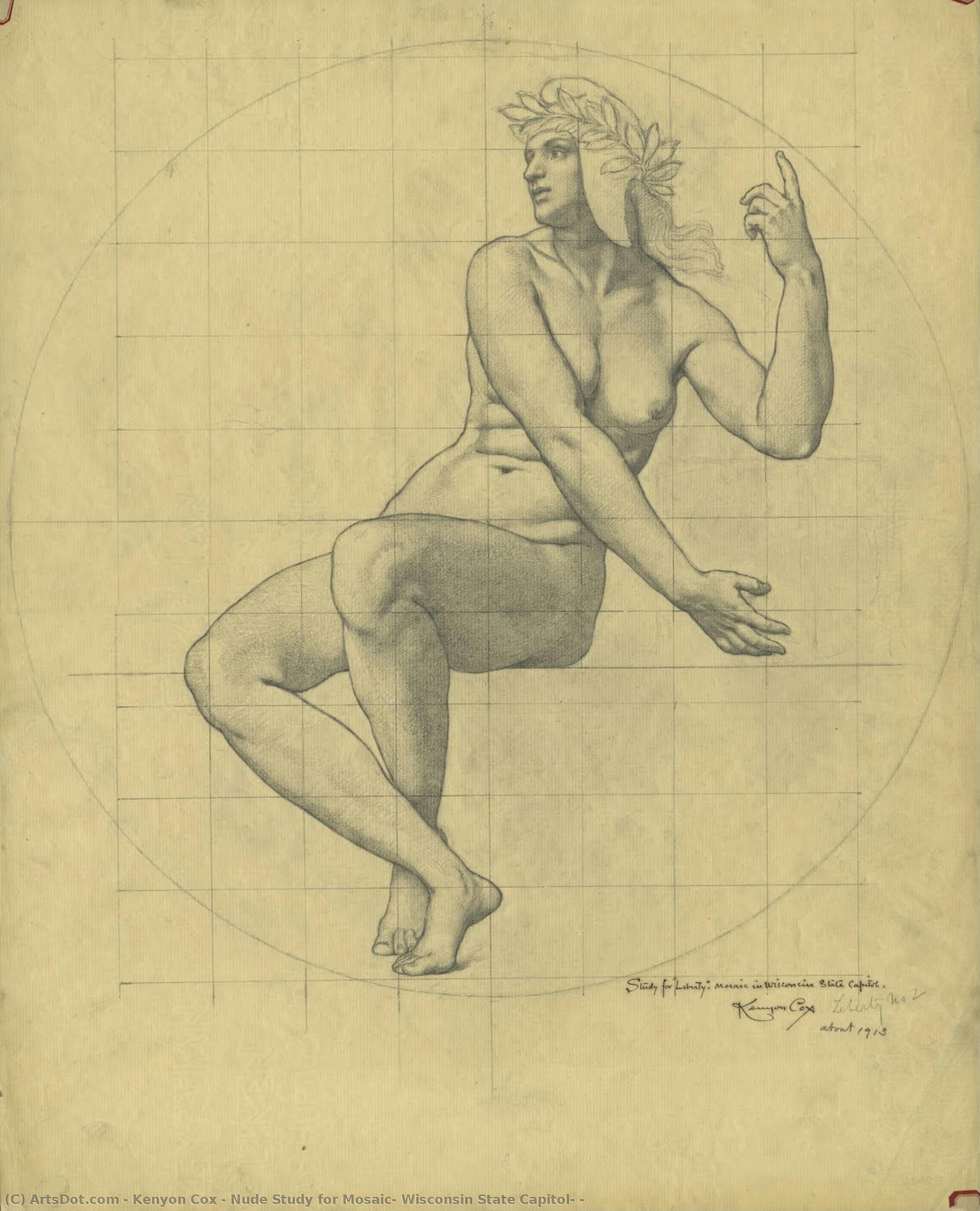
Nude Study for Mosaic, Wisconsin State Capitol,
 Pencil
- Classical Realism
 1912
1912- 19th Century
 50.0 x 40.0 cm
 Oklahoma City Museum of Art
 詳細を見る
詳細を見る
ジークレー/アートプリント
迅速な制作と多彩な仕上げオプションを備えた、ミュージアムクオリティのジークレーまたはキャンバスプリント。 ( 手描きの絵画を購入 画像を購入)




































作品のオリジナル比率に合わせた、当店の規定サイズからお選びください。

特定のフレームやスペースに合わせて、ご自身でサイズを指定することも可能です。選択されたサイズが元の画像の比率と一致しない場合、作品をトリミングするか、鏡面反射または単色での塗りつぶしによって画像を拡張いたします。制作を開始する前に、ご確認用のデジタルモックアップをお送りいたします。
画面上のプレビューには、実際のトリミングや拡張は反映されませんのでご注意ください。最終的な構図を正確に確認できるのは、モックアップのみとなります。
カスタムサイズも承っておりますが、元の比率を維持するためには、あらかじめ用意されたリストからサイズを選択することをお勧めいたします。


 ガラスオプションは、110cm未満のサイズでのみご利用いただけます。

Nude Study for Mosaic, Wisconsin State Capitol,
ジークレー/アートプリント
複製画のサイズ
-


合計金額
$ 62
A Vision of Classical Grace
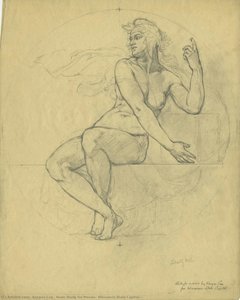
In the quiet, focused strokes of Kenyon Cox’s 1912 masterpiece, Nude Study for Mosaic, Wisconsin State Capitol, we find a profound intersection of anatomical precision and poetic stillness. This exquisite pencil sketch serves as a preparatory window into a larger architectural triumph, capturing a moment of contemplative repose that transcends its original purpose. The subject, a nude figure poised with delicate grace, sits in a state of timelessness, her hands resting softly behind her back while her gaze drifts upward toward an unseen light. There is an undeniable sense of weight and presence in the way the artist renders the form, inviting the viewer to linger on the subtle curves and the rhythmic balance of the composition.
The artwork breathes with the spirit of the Beaux-Arts tradition, a movement that sought to marry the rigorous discipline of classical antiquity with the refined elegance of the modern era. Through his masterful use of grayscale tones, Cox achieves a sculptural depth that makes the figure appear almost tactile. The play of light and shadow across the skin creates a soft luminosity, reminiscent of the great Renaissance masters, yet it is grounded by a scientific accuracy in musculature and bone structure. For the discerning collector or interior designer, this piece offers more than mere decoration; it provides a focal point of sophisticated intellectualism, perfect for spaces that demand an atmosphere of cultured tranquility.
The Legacy of Anatomical Mastery
To understand the emotional resonance of this study, one must look to the lineage of Kenyon Cox himself. Trained in the prestigious ateliers of Paris under masters like Jean-Léon Gérôme, Cox brought a disciplined, academic rigor to American art. This specific work, intended for the monumental mosaic of the Wisconsin State Capitol, carries the weight of civic importance and historical grandeur. The wreath adorning the figure’s hair acts as a subtle symbolic nod to classical triumph and divinity, elevating the study from a simple anatomical exercise to a celebration of idealized beauty.
<Every line in this 1912 drawing serves a dual purpose: to document the physical reality of the human form and to evoke an emotional response of reverence. The circular element in the upper corner suggests a cosmic or framed boundary, enclosing the subject in a private, sacred space of thought. For those seeking to adorn a home or gallery with high-quality reproductions, this piece stands as a testament to the enduring power of classical realism. It is an invitation to experience the quiet strength of the human spirit, captured through the lens of an artist who believed that true beauty lies in the perfect harmony of form and soul.
関連作品
アーティストの略歴
Kenyon Cox: Life and Legacy
Early Life and Education
- Born: October 27, 1856, in Warren, Ohio.
- Parents: Jacob Dolson Cox and Helen Finney Cox.
- Kenyon Cox initially studied at the Art Academy of Cincinnati (formerly the McMicken School of Art). However, he quickly recognized the limited artistic opportunities available in the city.
- Following a visit to the Centennial Exposition in Philadelphia, he decided to pursue further education at the Pennsylvania Academy of Fine Arts, hoping it would lead to studies in Europe.
Parisian Training and Influences
- In 1877, Cox moved to Paris, joining a wave of American artists seeking artistic inspiration. He believed Paris was experiencing a “second renaissance” in art.
- Influential Teachers: Carolus-Duran, Jean-Léon Gérôme, and Alexandre Cabanel at the École des Beaux-Arts.
- He initially studied under Carolus-Duran but became frustrated with what he perceived as a “vulgarity” in Duran’s style.
- Travels throughout France and Italy exposed him to the works of Renaissance masters, profoundly shaping his artistic vision.
Career in New York and Artistic Style
- In 1882, Cox returned to New York City, where he established himself as a painter and illustrator.
- Illustration Work: He became well-known for his magazine illustrations, which reached a wider audience than his paintings.
- Art Criticism: Cox also wrote unsigned art criticisms for the New York Evening Post, supplementing his income.
- His artistic style leaned towards realism, with a focus on landscapes, portraits, and genre studies. He was known for idealized nudes and traditional treatments of classical themes.
Teaching and Institutional Involvement
- Art Students League of New York: Cox became a highly influential instructor at the Art Students League, shaping generations of artists. He designed the League’s logo featuring the motto “Nulla Dies Sine Linea” (No Day Without a Line).
- Elected an Associate Academician of the National Academy of Design in 1900 and a full Academician in 1903.
- Founding Member: He was one of the founders and secretary of the National Free Arts League.
- Leadership Roles: Served as president of the National Society of Mural Painters from 1915 to 1919, and held memberships in various prestigious art organizations.
Major Achievements and Historical Significance
- Cox’s work represented a commitment to classical ideals at a time when modern art movements were emerging. He advocated for careful drawing, modulated color, and the use of allegory and symbolism.
- His writings, such as “Two Ways of Painting,” articulated his views on figurative art versus abstract or representational styles.
- Legacy: Though not a radical innovator, Kenyon Cox played a crucial role in maintaining traditional artistic standards and educating aspiring artists. His influence extended through his teaching and his contributions to the American art establishment.
- Death: March 17, 1919.
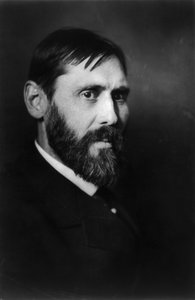
Kenyon Cox
1856 - 1919
基本情報
- Birth Date: 1856
- Birth Place: Warren, Ohio
- Death Date: 1919
- Influenced By:
- Carolus-Duran
- Jean-Léon Gérôme
- Alexandre Cabanel
- Movement: Realism
- Name: Kenyon Cox
- Nationality: American
- Notable Works:
- Louise Howland King (Mrs. Kenyon Cox)
- Fields
- Lengthening Shadows
- Augustus Saint-Gaudens
- An Eclogue
関連記事
The Eloquent Line: Exploring the Artistic Significance of Sketches Across Movements and Media
Explore the profound artistic significance of sketches throughout history. From Renaissance masters to modern innovators like Van Gogh & Guston, discover how these foundational works reveal technique, emotion, and vision. Learn more at ArtsDot.
The Enduring Allure of the Nude: A Historical & Artistic Exploration of the Human Form
Explore the captivating history of nude art! Discover iconic paintings & artists from classical to modern eras. Uncover symbolism, techniques & find museum-quality reproductions at ArtsDot.

Romantic Realism's Finest: 10 Masterpieces for Your Home | ArtsDot
Explore 10 defining masterpieces of Romantic Realism! Discover Courbet, Millet & Daumier's powerful paintings—capturing emotion and social realities. Find museum-quality reproductions for your home at ArtsDot.com.
レオナルド・ダ・ヴィンチ:至高の25選 - 芸術、科学、そして不朽の名作の世界
レオナルド・ダ・ヴィンチの至宝25選。モナリザ、最後の晩餐…ルネサンス美術を代表する名画の世界へ。芸術史、技法、そして感動の物語を紐解き、お部屋に飾る高級複製画で特別な空間を。ArtsDot.comで全コレクションをご覧ください。
Neo-Classicism's Greatest Hits: 10 Masterpieces for Your Home |
Journey through Neo-Classicism's finest! Explore 10 iconic masterpieces by David, Ingres & Canova. Discover art history, techniques & timeless beauty – perfect for inspiring your home decor. Find museum-quality reproductions at