

 プレビュー
プレビュー
 シェアする
シェアする シェアする
シェアする
 詳細を見る
詳細を見る

 ダウンロード
 似ている作品
 X線調査
X線調査 スライドショー
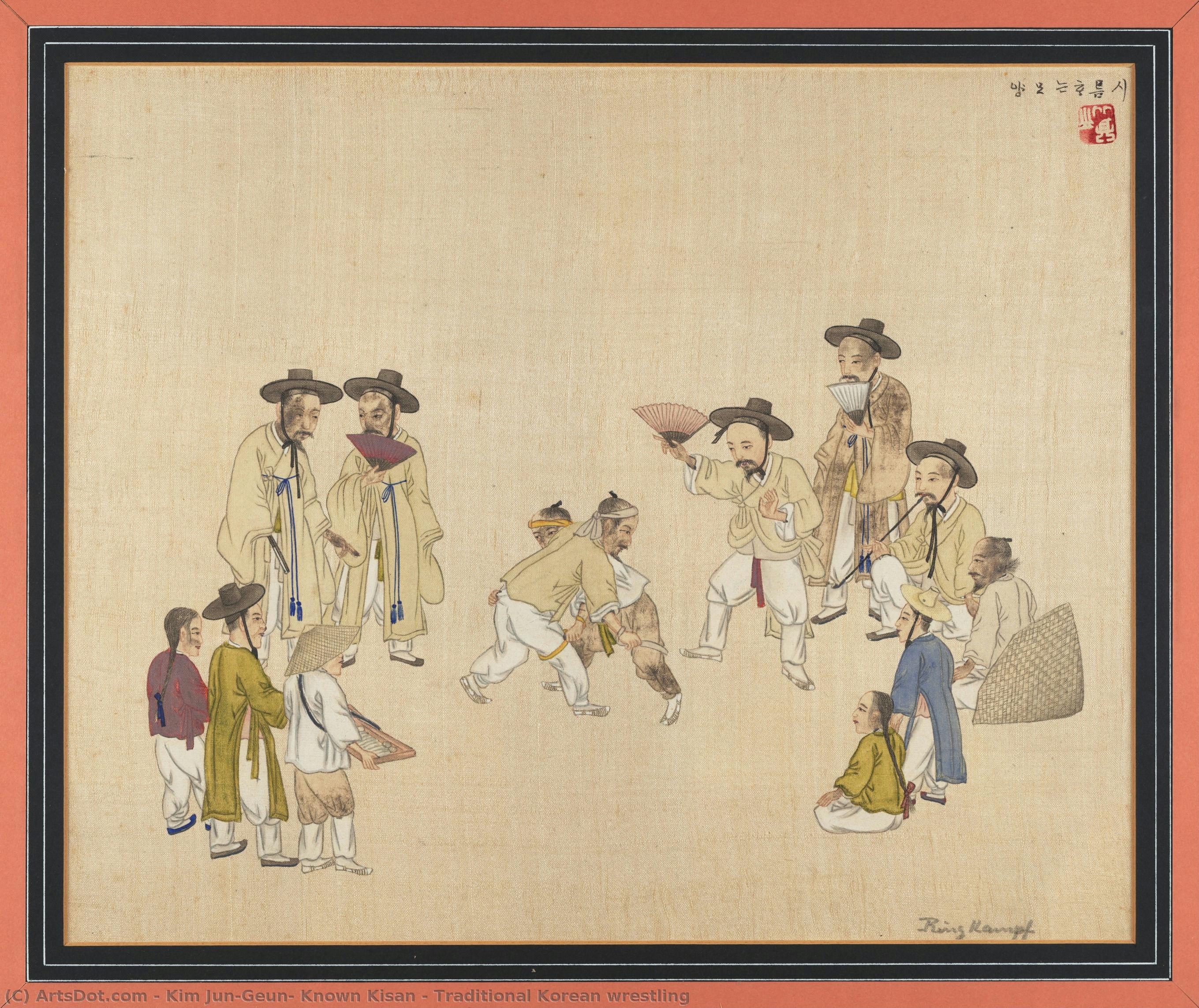
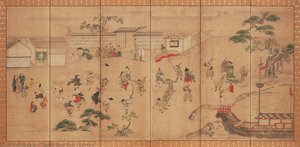
Traditional Korean wrestling
 Watercolor
- WallArt
- Genre Painting
 1800
1800- 19th Century
 5.0 x 56.0 cm
 Museu do Oriente
 詳細を見る
詳細を見る
ジークレー/アートプリント
迅速な制作と多彩な仕上げオプションを備えた、ミュージアムクオリティのジークレーまたはキャンバスプリント。 ( 手描きの絵画を購入 画像を購入)




P118B $10

P118H $10

P118W $10

P438Z $10

P508JH $12

P508YH $12

P805H $10

P805Z $10

P919BZ $10

P919G $10

P919XJ $10

P959ZH $10

P968JZ $12

W106C $8

W218G $10

W218JH $8

W218Y $10

W307PJ $10

W316G $10

W316PJ $8

W316Y $10

W398PJ $8

W4111J $10

W500HY $15

W500JH $15

W692G $12

W849H $8

W940BG $15

W953PJ $8




作品のオリジナル比率に合わせた、当店の規定サイズからお選びください。

特定のフレームやスペースに合わせて、ご自身でサイズを指定することも可能です。選択されたサイズが元の画像の比率と一致しない場合、作品をトリミングするか、鏡面反射または単色での塗りつぶしによって画像を拡張いたします。制作を開始する前に、ご確認用のデジタルモックアップをお送りいたします。
画面上のプレビューには、実際のトリミングや拡張は反映されませんのでご注意ください。最終的な構図を正確に確認できるのは、モックアップのみとなります。
カスタムサイズも承っておりますが、元の比率を維持するためには、あらかじめ用意されたリストからサイズを選択することをお勧めいたします。


 ガラスオプションは、110cm未満のサイズでのみご利用いただけます。

Traditional Korean wrestling
ジークレー/アートプリント
複製画のサイズ
-


合計金額
$ 62
A Window into Vanishing Korea
In the delicate strokes of Kim Jun-geun’s watercolor, Traditional Korean wrestling, we are invited to step through a portal into the late 19th century, witnessing a moment of communal vitality that has long since transitioned into the annals of history. Known by his artistic name, Kisan, the artist possessed a rare, empathetic eye for the rhythms of rural life. This particular work captures the essence of ssireum—the traditional Korean wrestling match—not merely as a sporting event, but as a vibrant social tapestry. The composition breathes with the energy of a crowd gathered in a loose circle, their faces etched with the shared anticipation and boisterous chatter that defines a community at play. Through his mastery of the medium, Kisan transforms a simple folk custom into a profound narrative of human connection and cultural identity.
The technical brilliance of this piece lies in its ability to balance movement with meticulous detail. Using a palette enriched by earthy olives, deep blues, and striking reds, Kisan employs the fluid nature of watercolor to suggest the kinetic struggle of the two central wrestlers. One can almost feel the tension in the dirt field as figures lean into the fray, some caught in the momentum of a fall, others poised in watchful stillness. The artist’s precision is particularly evident in the cultural artifacts scattered throughout the scene: the rhythmic clicking of an abacus held by a jury member, the elegant sweep of a fan, and the distinct silhouettes of traditional headwear. These small, deliberate details serve as anchors of authenticity, grounding the dynamic action in a specific, tangible reality.
Beyond its visual charm, the painting serves as a poignant historical document. Created during an era of profound transformation for Korea—a time when Western influences began to ripple through the peninsula—Kisan’s work acts as a preservation of the "old world." There is a subtle, bittersweet symbolism in the way he captures these customs; it is a celebration of a way of life that was simultaneously being lived and lost. For the discerning collector or interior designer, this artwork offers more than mere decoration. It provides a sophisticated focal point that brings a sense of heritage, storytelling, and soulful tranquility to any space. To possess a reproduction of this masterpiece is to hold a fragment of Korean history, inviting the viewer to contemplate the enduring strength of tradition amidst the tides of change.
関連作品
アーティストの略歴
Kim Jun-geun (Kisan): A Chronicle of Rural Korea
The world of late 19th and early 20th century Korean art is often viewed through the lens of grand imperial narratives or political upheaval. Yet, within this context, a quiet revolution was unfolding – one captured with remarkable sensitivity and detail by Kim Jun-geun, more commonly known as Kisan. Born in a time of increasing Western influence and social change, Kisan’s work offers an intimate glimpse into the daily lives and traditions of rural Korea, revealing a profound connection to the land and its people. His paintings aren't merely depictions; they are windows into a vanishing world, imbued with a poignant beauty that continues to resonate today.
Kisan’s life remains somewhat shrouded in mystery, adding to the allure surrounding his art. He emerged as an artist during a period of significant transformation for Korea, navigating the complexities of modernization and the pressures of foreign intervention. While precise details about his early years are scarce, it's understood that he was a self-taught painter, developing his distinctive style largely independently. He adopted the name Kisan – literally “farmer” – reflecting his subject matter and likely symbolizing a commitment to representing the lives of ordinary Koreans. This deliberate choice underscores the importance of portraying the working class and rural communities, often overlooked in official artistic representations.
The World of Genre Painting
Kisan’s primary focus was on genre painting – a style that meticulously documented everyday scenes from common life. Unlike grand historical or religious paintings, his works centered on the routines, customs, and occupations of rural Koreans. His subjects ranged from humble farmers tending their fields to skilled artisans engaged in traditional crafts, from families sharing meals to children playing games. These weren’t idealized portrayals; Kisan presented a realistic, unvarnished view of Korean life, capturing both its hardships and its joys.
His technique was characterized by a remarkable attention to detail. Employing watercolor on paper – a medium particularly well-suited for capturing the nuances of light and texture – he meticulously rendered every element of his scenes. The brushstrokes are often loose and expressive, conveying a sense of immediacy and spontaneity. He skillfully used color to evoke atmosphere and mood, employing earthy tones to depict the landscapes and clothing worn by his subjects. The compositions are typically balanced and carefully arranged, drawing the viewer’s eye through each scene.
Key Works and Recurring Themes
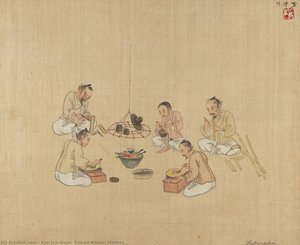
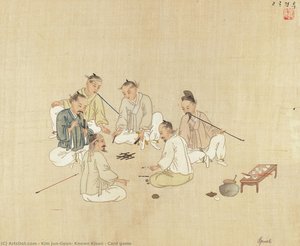
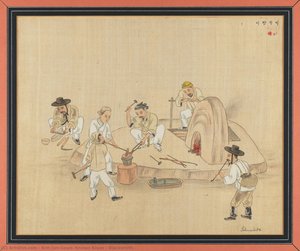
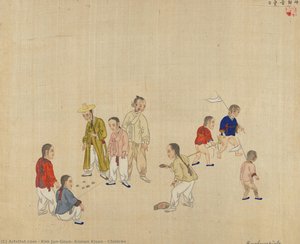
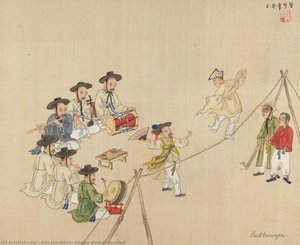
Among Kisan's most celebrated works is “Blacksmith,” a captivating watercolor depicting a Korean metalworker at his forge. The painting vividly portrays the physicality of labor, capturing the intensity of the blacksmith’s movements and the heat radiating from the flames. Similarly, "Game of Dominoes" offers a charming snapshot of domestic life, showcasing a family gathered around a table playing this traditional game. These scenes, alongside depictions of traditional Korean wrestling, noodle making, and other everyday activities, provide a rich tapestry of rural Korean culture.
Recurring themes in Kisan’s work include the importance of family, the connection to the land, and the value of tradition. He consistently portrays Koreans as hardworking, resilient individuals deeply rooted in their community and customs. His paintings also subtly highlight the challenges faced by rural communities – poverty, hardship, and the encroachment of modernization – without resorting to sentimentality or melodrama.
Historical Significance and Legacy
Kisan’s work holds significant historical value as a visual record of late 19th-century Korea. His paintings offer invaluable insights into the lives of ordinary Koreans during a period of profound change, documenting customs and traditions that were rapidly disappearing. They stand as a testament to his commitment to representing the experiences of those often marginalized in official narratives.
While Kisan’s work was largely appreciated by Western travelers and collectors during his lifetime, it wasn't until relatively recently that his art gained wider recognition within Korea. Today, his paintings are celebrated for their artistic merit and historical significance, serving as a powerful reminder of the rich cultural heritage of rural Korea. His legacy continues to inspire artists and scholars alike, ensuring that the stories of ordinary Koreans are preserved and shared through the enduring beauty of his work.
kim jun-geun, known kisan
South Korea
基本情報
- Artistic Movement Or Style: Genre painting
- Full Name: Kim Jun-geun (Kisan)
- Nationality: Korean
- Notable Artworks:
- Blacksmith
- Game of Dominoes
- Traditional wrestling
- Place Of Birth: South Korea
関連記事

Watercolor Wonders: 10 Masterpieces That Redefined Art History | ArtsDot
Journey through 10 legendary watercolor masterpieces by Sargent, Turner & Homer! Explore iconic landscapes, portraits & floral art that redefined history. Find museum-quality reproductions and curated decor ideas at ArtsDot.com.

Ephemeral Visions: Exploring the Artistic Legacy & Contemporary Practice of Watercolor Painting
Explore the captivating world of watercolor painting! Discover its rich history, essential techniques, influential artists & collecting tips. A comprehensive guide for art enthusiasts from ArtsDot.

Ephemeral Visions: Exploring the History & Emotional Resonance of Watercolor Painting
Explore the captivating history of watercolor painting, from ancient techniques to modern masters like Kandinsky & Blake. Discover essential artists, collecting tips & the emotional power of this luminous medium. Expert insights for art enthusiasts.
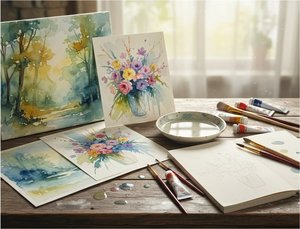
Ephemeral Visions: Exploring the Artistic Legacy & Nuances of Watercolor Painting
Explore the captivating world of watercolor painting! Discover its rich history, essential techniques, influential artists & collecting tips from art experts. A comprehensive guide for enthusiasts.

水彩の永続的な魅力:歴史、技法、そして現代の実践
水彩画の歴史、技法、現代の実践を深く探求。巨匠たちの名画から初心者向けテクニックまで解説。ArtsDot.comでは高品質な複製画やカスタムポートレートをご提供します。アートコンサルテーションも受付中。