

 プレビュー
プレビュー
 シェアする
シェアする シェアする
シェアする
 詳細を見る
詳細を見る

 ダウンロード
 似ている作品
 X線調査
X線調査 スライドショー
 統計情報
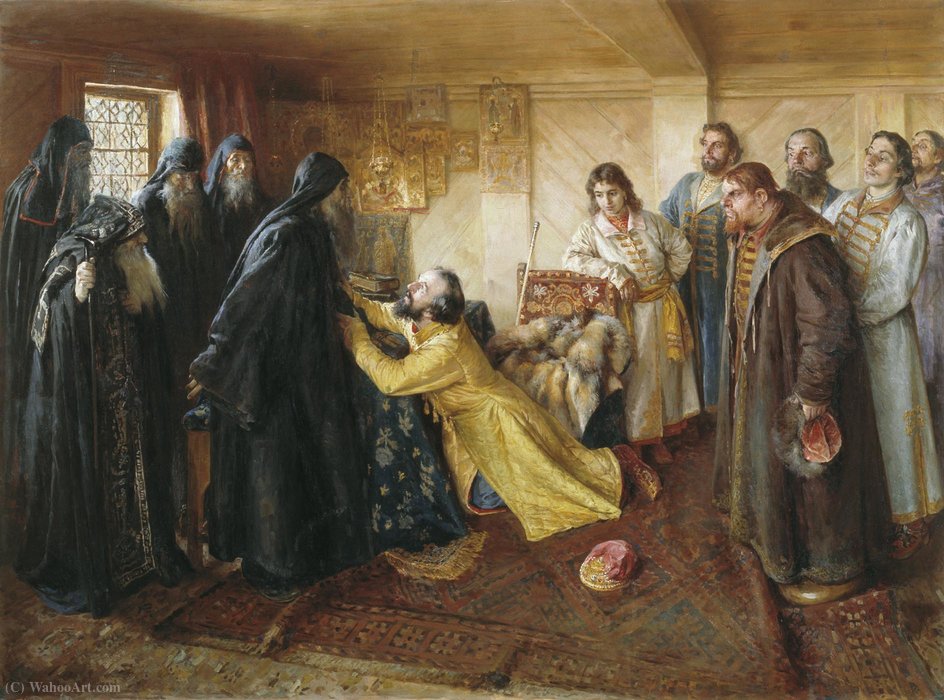
統計情報Tsar Ivan the Terrible asks hiegumen Kornily to admit him into monks
 詳細を見る
詳細を見る
手描き油彩複製画
当社のアーティストが、お客様のご希望のサイズと額縁に合わせて、キャンバスに手描きで制作する油彩画です。 ( プリント版に切り替え デジタル画像販売へ切り替え)




































作品のオリジナル比率に合わせた、当店の規定サイズからお選びください。

特定のフレームやスペースに合わせて、ご希望のサイズをご入力いただけます。選択されたサイズが元の画像の比率と異なる場合、アートワークをトリミングするか、手描きで要素を追加して絵画を拡張いたします。デジタルモックアップ を制作し、制作開始前にご確認(承認)をいただきます。
画面上のプレビューは、実際のトリミングや拡張を正確に反映しているものではありません。最終的な構図は、モックアップによってのみ正確にご確認いただけます。
カスタムサイズもご利用いただけますが、元の比率を維持するためには、あらかじめ用意されたリストからサイズを選択することをお勧めいたします。
ご注文後、ArtsDot.com チームより詳細な指示をお送りするとともに、仕上がりイメージ(モックアップ)をご提供いたします。


 ガラスオプションは、110cm未満のサイズでのみご利用いただけます。

Tsar Ivan the Terrible asks hiegumen Kornily to admit him into monks
複製技法
複製画のサイズ
-


合計金額
$ 263
関連作品








アーティストの略歴
The Soul of a Nation Captured in Color
In the grand, sweeping narrative of Russian art history, few figures capture the poignant intersection of historical grandeur and intimate human emotion as effectively as Klavdiy Vasilievich Lebedev. Born in 1852 to a humble peasant family within the Ryazan Governorate, Lebedev’s journey from the rural landscapes of the Russian Empire to the prestigious halls of Moscow’s artistic elite is a testament to an indomitable creative spirit. His life was a bridge between the traditional roots of the Russian peasantry and the sophisticated academic rigor of the late 19th-century art world. This duality would later become the heartbeat of his work, allowing him to breathe life into the ancient legends and the heavy, storied atmosphere of the boyar era with an authenticity that felt both monumental and deeply personal.
Lebedev’s artistic metamorphosis began at the Stroganov School of Technical Drawing, where he honed a meticulous eye for detail and craftsmanship. However, it was his subsequent enrollment in the Moscow School of Painting, Sculpture, and Architecture (MUZHVZ) that truly ignited his genius. Immersed in an environment of profound intellectual and artistic ferment, he studied under legendary masters such as Evgraf Soriente, Alexei Savrasov, and the formidable Vasily Perov. It was from Perov, a titan of critical realism, that Lebedev inherited his commitment to social relevance and narrative depth. This lineage of influence anchored him firmly within the Peredvizhniki (Wanderers) movement, a group dedicated to bringing art out of the gilded galleries and into the hearts of the people by depicting the true, often unvarnished, essence of Russian life.
A Tapestry of History and Folklore
The brilliance of Lebedev’s oeuvre lies in his ability to act as a visual chronicler of Russia's most evocative eras. He did not merely paint scenes; he reconstructed lost worlds. His canvases often serve as windows into the medieval splendor and the turbulent political shifts of the Russian past, focusing heavily on the lives of the boyars and the legendary figures that haunt the nation’s folklore. Through a vibrant palette and an almost cinematic sense of composition, he brought historical milestones to life, making the distant echoes of the past feel immediate and visceral.
His thematic repertoire is as diverse as it is profound, ranging from the heavy psychological weight of political drama to the quiet, melancholic beauty of genre scenes. Some of his most enduring contributions include:
- Historical Dramas: Masterful depictions of pivotal moments, such as the intense encounter in Svyatoslav's meeting with Emperor John, where he utilizes light and shadow to convey the gravity of diplomatic and personal tension.
- The Weight of Power: Works like Tsar Ivan the Terrible asks hiegumen Kornily to admit him into monks showcase his ability to capture the vulnerability hidden beneath the terrifying veneer of autocratic rule.
- Genre and Folklore: Beyond the grand historical stage, Lebedev excelled in capturing the textures of everyday Russian existence, seen in works like Old Bachelor or the atmospheric Spat on the terrace, where the focus shifts to the subtle nuances of character and setting.
Legacy and Artistic Significance
As the 19th century gave way to the 20th, Lebedev’s importance only deepened. His recognition by the Imperial Academy of Arts—becoming a member in 1897 and achieving full membership in 1906—signified his ascent into the highest echelons of the artistic establishment. Yet, despite this academic prestige, he never lost the "Wanderer" spirit that prioritized narrative truth over mere ornamentation. His work remains a vital touchstone for understanding the Russian identity during a period of immense transition.
Today, the legacy of Klavdiy Lebedev persists through his ability to evoke nostalgia and reverence for a vanished Russia. He remains a master of the Realist tradition, leaving behind a body of work that serves as both a historical record and an emotional landscape. To look upon a Lebedev painting is to witness the meticulous precision of an academician married to the soulful, searching heart of a storyteller, ensuring that the legends of the boyars and the quiet dignity of the Russian people are never truly forgotten.

klavdi vasilievich lebedev
1852 - 1916
基本情報
- Artistic Movement Or Style: Peredvizhniki
- Artists Who Influenced This Artist:
- Vasily Perov
- Evgraf Sorokin
- Date Of Birth: October 16, 1852
- Date Of Death: September 21, 1916
- Full Name: Klavdiy Vasil'evich Lebedev
- Nationality: Russian
- Notable Artworks:
- Baptism of Kiev
- Boyar wedding
- (1889) Martha the Mayoress
- Place Of Birth: Ryazan Governorate, Russia