

 プレビュー
プレビュー
 シェアする
シェアする シェアする
シェアする
 詳細を見る
詳細を見る

 ダウンロード
 似ている作品
 X線調査
X線調査 スライドショー
 統計情報
統計情報Black Grassland
 Acrylic
- WallArt
- Contemporary Realism
 2007
2007- Contemporary
 650.0 x 910.0 cm
 Korean Art Museum Association
 詳細を見る
詳細を見る
手描き油彩複製画
当社のアーティストが、お客様のご希望のサイズと額縁に合わせて、キャンバスに手描きで制作する油彩画です。 ( プリント版に切り替え デジタル画像販売へ切り替え)




P118B $10

P118H $10

P118W $10

P438Z $10

P508JH $12

P508YH $12

P805H $10

P805Z $10

P919BZ $10

P919G $10

P919XJ $10

P959ZH $10

P968JZ $12

W106C $8

W218G $10

W218JH $8

W218Y $10

W307PJ $10

W316G $10

W316PJ $8

W316Y $10

W398PJ $8

W4111J $10

W500HY $15

W500JH $15

W692G $12

W849H $8

W940BG $15

W953PJ $8




作品のオリジナル比率に合わせた、当店の規定サイズからお選びください。

特定のフレームやスペースに合わせて、ご希望のサイズをご入力いただけます。選択されたサイズが元の画像の比率と異なる場合、アートワークをトリミングするか、手描きで要素を追加して絵画を拡張いたします。デジタルモックアップ を制作し、制作開始前にご確認(承認)をいただきます。
画面上のプレビューは、実際のトリミングや拡張を正確に反映しているものではありません。最終的な構図は、モックアップによってのみ正確にご確認いただけます。
カスタムサイズもご利用いただけますが、元の比率を維持するためには、あらかじめ用意されたリストからサイズを選択することをお勧めいたします。
ご注文後、ArtsDot.com チームより詳細な指示をお送りするとともに、仕上がりイメージ(モックアップ)をご提供いたします。


 ガラスオプションは、110cm未満のサイズでのみご利用いただけます。

Black Grassland
複製技法
複製画のサイズ
-


合計金額
$ 263
A Soulful Encounter with the Korean Landscape
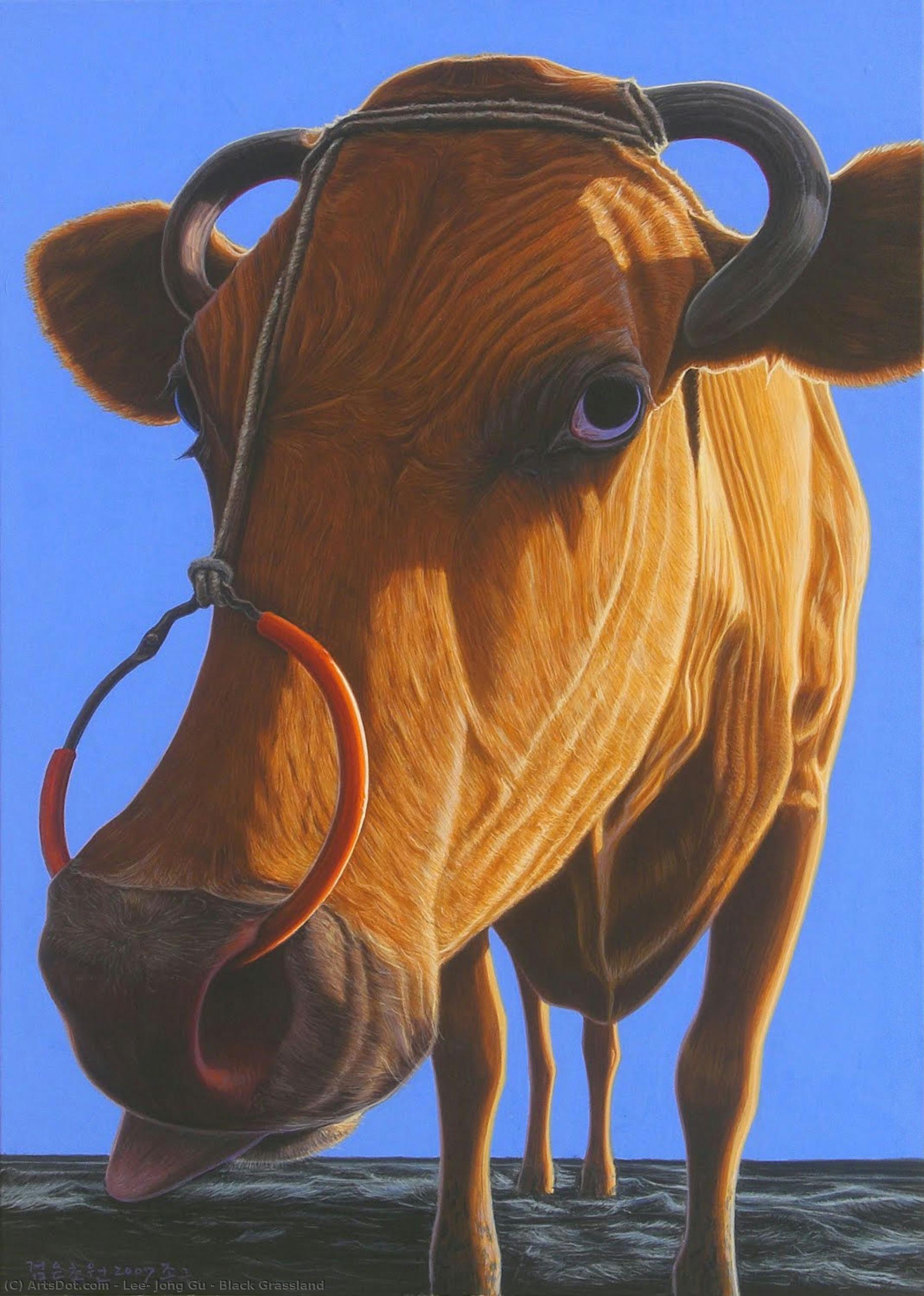
In the vast, sweeping expanse of Lee Jong-gu’s Black Grassland, the viewer is not merely an observer but a participant in a profound moment of stillness. At first glance, the eye is immediately arrested by the monumental presence of a large, horned cow, whose steady, unblinking gaze pierces through the canvas to meet our own. This is not a mere pastoral study; it is a visceral encounter with the enduring spirit of rural Korea. The composition, characterized by its immense scale of 650 x 910 cm, allows the subject to dominate the foreground, creating an intimate tension between the heavy, grounded reality of the animal and the infinite, ethereal blue sky that stretches into the distance.
The artist’s technique reflects a masterful command over texture and atmosphere, drawing subtle inspiration from the traditional Suiboku ga style. Through a sophisticated use of acrylic and collage, Lee Jong-gu breathes life into the rugged features of the cow, capturing the coarse texture of its hide and the weight of the rope around its neck. The "black" in the grassland is not merely a color but a mood—a deep, evocative tone that suggests the fertile, shadowed earth of Seosan, the artist's birthplace. This interplay between the dark, textured ground and the luminous, clear sky creates a rhythmic balance that guides the eye from the intricate details of the animal’s face to the boundless horizon.
Symbolism and the Echo of Tradition
Beyond its striking visual impact, Black Grassland serves as a poignant meditation on the changing landscape of Korean life. The cow, a symbol of strength, patience, and the foundational rhythms of agricultural society, stands as a sentinel of tradition in an era of rapid modernization. There is a quiet dignity in its posture, suggesting a resilience that mirrors the cultural heritage Lee Jong-gu has dedicated his life to documenting. The rope around the neck introduces a subtle layer of complexity, hinting at the relationship between humanity and nature—a bond of both stewardship and restraint.
For the discerning collector or interior designer, this piece offers more than just aesthetic beauty; it provides an emotional anchor. The painting’s ability to command a room through its sheer scale and contemplative depth makes it an ideal centerpiece for spaces that value authenticity and soulful storytelling. Whether placed in a contemporary gallery setting or a sophisticated residential lounge, the work invites quiet reflection, evoking the serene, melancholic beauty of a world where time seems to slow down. To possess a reproduction of this masterpiece is to bring a fragment of Korea’s enduring pastoral soul into one's own environment.
関連作品
アーティストの略歴
A Vision of Korean Rural Landscape
Lee Jong-gu stands as a prominent figure in contemporary Korean painting, recognized for his masterful depictions of the serene beauty and enduring traditions of rural Korea. Born in Seosan, South Korea, in 1954, he embarked on an artistic journey shaped by a profound engagement with the cultural heritage of his homeland—a connection that deeply informs his distinctive style and technique. His formative years were marked by a dedication to scholarly pursuits at Chungang University in Seoul, followed by advanced studies at Inha University in Incheon, where he earned an M.F.A. in Arts Education. This rigorous academic grounding instilled within him a meticulous approach to observation and representation, providing the foundation for a career dedicated to capturing the essence of Korean folk life with unwavering commitment.The Artistry of Texture and Atmosphere
Lee Jong-gu’s artistic signature lies in his innovative use of acrylic paint combined with collage techniques, a dual approach that creates textured surfaces and layered visual narratives. Rather than mere imitation, he strives to convey the spirit and atmosphere of his subjects through a tactile medium. His technique allows for vibrant colors and luminous effects, while the introduction of collage elements—fragments of paper or fabric—enriches the overall composition with a sense of materiality and narrative depth. This method is perhaps most breathtakingly realized in his monumental painting Black Grassland (2008). Measuring an immense 1120 x 1620 cm, this work exemplifies his ability to use scale to capture not just visual details but the profound emotional resonance of the natural world. In this piece, the viewer is invited into a moment of profound stillness, encountering a large, horned cow whose steady gaze meets our own, creating an intimate tension between the grounded reality of the animal and the infinite, ethereal sky.Symbolism and the Echo of Tradition
Beyond the striking visual impact of his works, Lee Jong-gu’s paintings serve as poignant meditations on the changing landscape of Korean life. His imagery often draws upon deep-seated cultural symbols; for instance, the cow frequently appears in his work as a sentinel of tradition, representing strength, patience, and the foundational rhythms of an agricultural society facing rapid modernization. Through his lens, the pastoral scenes are not merely nostalgic retreats but visceral encounters with the enduring spirit of Korea. His work is subtly informed by the Suiboku ga style, reflecting a command over texture and atmosphere that bridges traditional ink wash sensibilities with modern acrylic application. In pieces like Black Grassland, the "black" of the grassland is more than a color; it is a mood—a deep, evocative tone suggesting the fertile, shadowed earth of his birthplace in Seosan.Legacy and Cultural Significance
The historical significance of Lee Jong-gu’s work lies in his ability to document a vanishing way of life with both intimacy and grandeur. As rural existence has faced the pressures of economic and social shifts, Lee’s paintings remain vital records of the Korean countryside's soul. His achievements are marked by his ability to elevate the humble subjects of agrarian life—cattle, bells, and quiet fields—into the realm of high contemporary art. By blending meticulous academic training with an experimental, textured approach, he has created a body of work that resonates both as a personal tribute to his roots and as a universal exploration of the relationship between humanity, memory, and the natural world. His contributions continue to inspire a deep appreciation for the quiet dignity found within the rhythmic, pastoral traditions of the Korean landscape.
lee, jong gu
1954 - , South Korea
基本情報
- Artistic Movement Or Style: Suiboku ga influenced
- Artists Or Movements Influenced By This Artist: ['Chinese ink wash painting']
- Artists Who Influenced This Artist: ['None specified']
- Date Of Birth: 1954
- Full Name: Lee Jong-gu
- Nationality: Korean
- Notable Artworks: ['Black Grassland']
- Place Of Birth: Seosan, South Korea
関連記事
Azure Visions: Exploring Representations of the Blue Dress in Western Art History
Explore the rich history of the blue dress in Western art! Discover its symbolism, from Renaissance masterpieces to modern interpretations by artists like Martin & Schiele. Uncover cultural meanings and artistic techniques.
クロード・モネ傑作25選:光と色彩の印象派を彩る名画の世界 | ArtsDot
クロード・モネの傑作25選。印象派を代表する光の画家、モネの世界を旅しませんか?睡蓮や風景画など、名画の背景にある物語と芸術技法をご紹介。ArtsDotで高品質な複製画とインテリアアートを見つけましょう。全コレクションはこちら。
Frederick Richard Lee: Capturing Victorian Domestic Life on Canvas
Explore the captivating Victorian genre paintings of Frederick Richard Lee. Discover his life, style, influences & legacy. Expert insights for collectors and art enthusiasts at ArtsDot.
The Allure of Azure: Exploring the Symbolic & Aesthetic Depths of Blue in Art History
Explore the rich history of blue in art! Discover its symbolism, from ancient pigments to modern masterpieces by Kandinsky & Seurat. Uncover the psychological impact and cultural meanings behind this captivating hue.
Slate Blue Masterpieces: 10 Iconic Paintings & Timeless Home Decor Ideas
Immerse yourself in the captivating world of slate blue! Explore 10 iconic paintings by Monet, Van Gogh & Renoir. Discover their stories, techniques & find museum-quality art reproductions for your home at .