

 プレビュー
プレビュー
 シェアする
シェアする シェアする
シェアする
 詳細を見る
詳細を見る

 ダウンロード
 似ている作品
 X線調査
X線調査 スライドショー
 Stats
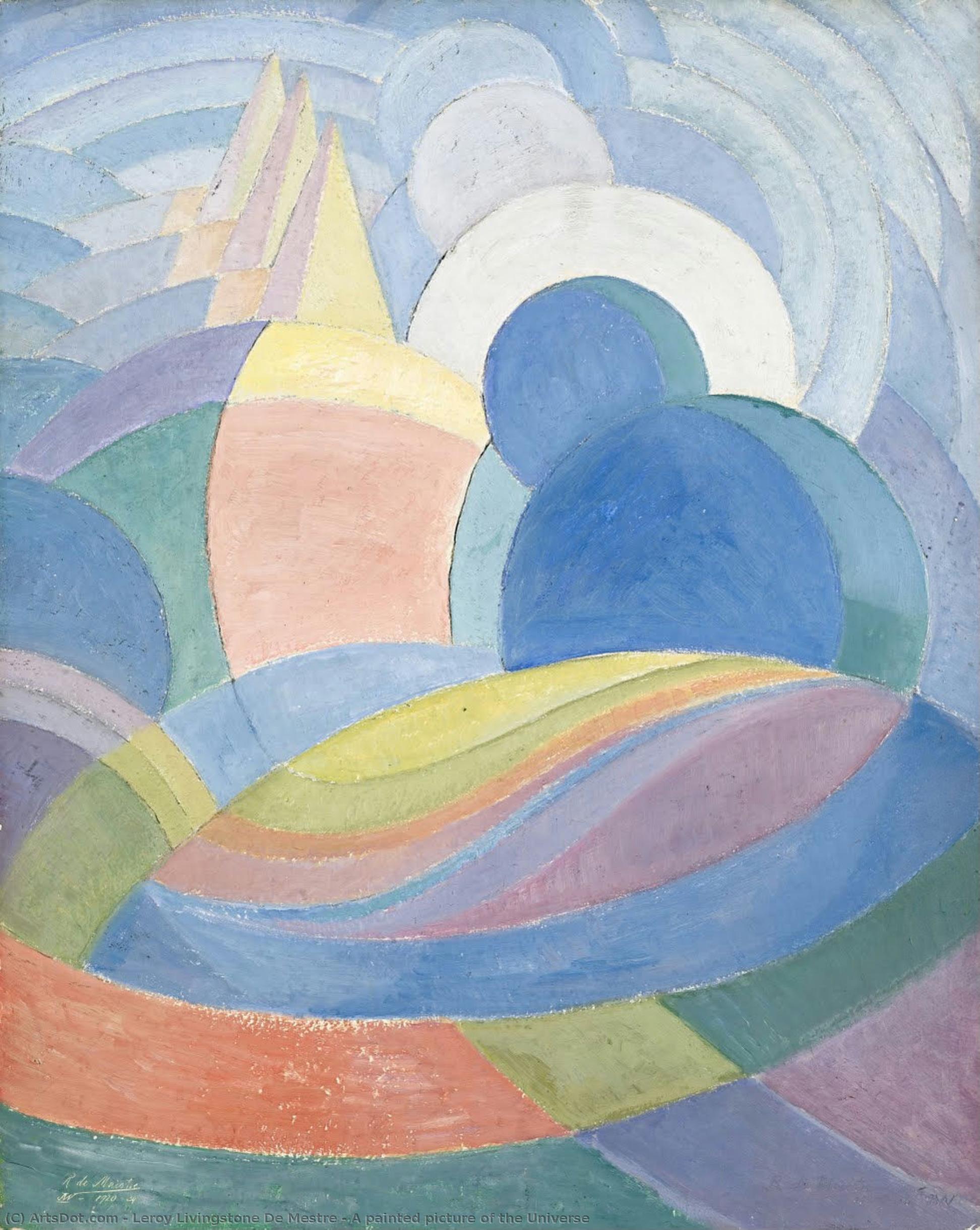
StatsA painted picture of the Universe
 Acrylic On Canvas
- WallArt
- Colour-Music Abstraction
 1934
1934 50.0 x 40.0 cm
 国立ギャラリー・オブ・ビクトリア
 詳細を見る
詳細を見る
手描き油彩複製画
当社のアーティストが、お客様のご希望のサイズと額縁に合わせて、キャンバスに手描きで制作する油彩画です。 ( Switch to Print Switch to Digital Image)




P118B $10

P118H $10

P118W $10

P438Z $10

P508JH $12

P508YH $12

P805H $10

P805Z $10

P919BZ $10

P919G $10

P919XJ $10

P959ZH $10

P968JZ $12

W106C $8

W218G $10

W218JH $8

W218Y $10

W307PJ $10

W316G $10

W316PJ $8

W316Y $10

W398PJ $8

W4111J $10

W500HY $15

W500JH $15

W692G $12

W849H $8

W940BG $15

W953PJ $8




作品のオリジナル比率に合わせた、当店の規定サイズからお選びください。

特定のフレームやスペースに合わせて、ご希望のサイズをご入力いただけます。選択されたサイズが元の画像の比率と異なる場合、アートワークをトリミングするか、手描きで要素を追加して絵画を拡張いたします。デジタルモックアップ を制作し、制作開始前にご確認(承認)をいただきます。
画面上のプレビューは、実際のトリミングや拡張を正確に反映しているものではありません。最終的な構図は、モックアップによってのみ正確にご確認いただけます。
カスタムサイズもご利用いただけますが、元の比率を維持するためには、あらかじめ用意されたリストからサイズを選択することをお勧めいたします。
ご注文後、ArtsDot.com チームより詳細な指示をお送りするとともに、仕上がりイメージ(モックアップ)をご提供いたします。


 ガラスオプションは、110cm未満のサイズでのみご利用いただけます。

A painted picture of the Universe
複製技法
複製画のサイズ
-


合計金額
$ 263
A Universe Captured on Canvas: De Maistre’s ‘A Painted Picture of the Universe’
Roy Livingstone de Maistre's “A Painted Picture of the Universe,” created in 1934, isn’t merely a landscape; it’s an invitation to contemplate the sublime. Born in Bowral, Australia, during a period of burgeoning artistic experimentation, de Maistre was a pioneer of ‘colour-music,’ a radical theory that sought to translate musical scales into visual harmonies. This particular work embodies that philosophy with breathtaking intensity, offering a glimpse into a world where color and form coalesce to evoke profound emotional resonance.
The painting immediately commands attention with its expansive scale – 50 x 40 cm – allowing the viewer to become fully immersed in its swirling depths. Dominated by rich blues and vibrant yellows, it depicts a mountainous terrain bathed in an ethereal light. The peaks rise dramatically against a sky filled with billowing clouds, creating a sense of both grandeur and turbulence. However, it’s not a realistic representation; rather, the landscape is flattened, simplified, almost abstracted, hinting at de Maistre's exploration beyond mere imitation. Notice how the horizon line recedes into an ambiguous distance, blurring the boundaries between foreground and background – a technique reminiscent of early Cubism, yet infused with a distinctly Australian sensibility.
The Genesis of Colour-Music
De Maistre’s artistic journey was deeply intertwined with music. Collaborating with Adrian Verbrugghen, he developed a colour-music scale, meticulously mapping the spectrum of colors to the notes of both major and minor musical scales. This wasn't simply an aesthetic choice; it represented a profound belief that color and sound were fundamentally interconnected – two expressions of the same underlying reality. The influence of this theory is palpable in “A Painted Picture of the Universe,” where the hues seem to vibrate with an almost audible energy. The blues, particularly, evoke a sense of vastness and contemplation, while the yellows suggest warmth, light, and perhaps even spiritual illumination.
Interestingly, de Maistre’s exploration of abstraction wasn't entirely divorced from his earlier influences. His training at the Royal Art Society of New South Wales under Antonio Dattilo-Rubbo exposed him to Post-Impressionism, a movement that emphasized subjective experience and emotional expression over strict representation. This legacy is evident in the painting’s bold use of color and its willingness to distort perspective – hallmarks of both movements.
Symbolic Landscapes and Emotional Resonance
Beyond its technical merits, “A Painted Picture of the Universe” resonates with a powerful sense of symbolism. The mountains themselves can be interpreted as metaphors for human aspiration, reaching towards an unknowable horizon. The clouds, swirling and dynamic, represent change, uncertainty, and perhaps even the chaotic beauty of existence. The presence of two figures in the foreground – seemingly observing this dramatic landscape – adds another layer of meaning. They could symbolize humanity’s place within the cosmos, inviting us to contemplate our own insignificance and yet simultaneously affirming our capacity for wonder.
Created during a period of significant artistic upheaval in Europe—the rise of non-objective art and geometric abstraction—de Maistre's work stands as a testament to Australia’s burgeoning modern art scene. It’s a bold, imaginative piece that transcends the limitations of mere landscape painting, offering instead a profound meditation on color, music, and the human condition. The painting’s enduring appeal lies in its ability to evoke a sense of both awe and introspection, inviting viewers to lose themselves within its vibrant depths.
A Reproduction for Your Space
Reproductions of “A Painted Picture of the Universe” offer a remarkable opportunity to bring this captivating artwork into your home or office. The detailed brushwork and rich color palette are faithfully captured in high-quality prints, allowing you to experience the painting’s emotional impact firsthand. Consider framing it within a simple, elegant frame to allow the artwork's intensity to shine through. This piece is more than just decoration; it’s an investment in beauty, contemplation, and a connection to the visionary art of Roy Livingstone de Maistre.
関連作品
アーティストの略歴
Leroy Livingstone de Maistre: A Pioneer of Australian Modern Art
Early Life and Education
- Born: March 27, 1894, in Bowral, New South Wales, Australia as Leroy Livingstone de Mestre.
- De Maistre came from a prominent family; his father was a renowned racehorse trainer and his grandfather a successful businessman.
- He received a private education through tutors and governesses before pursuing formal studies in art and music in Sydney in 1913.
- He studied violin and viola at the New South Wales State Conservatorium of Music, even playing viola in the Sydney Orchestra.
- His artistic training began at the Royal Art Society of New South Wales under Antonio Dattilo-Rubbo, alongside future notable artists like Grace Cossington Smith and Roland Wakelin. He was encouraged to explore Post-Impressionism.
World War I and Early Artistic Development
- De Maistre attempted to enlist in the First Australian Imperial Force multiple times, facing initial rejections due to health concerns. He eventually served as a medical orderly.
- Tuberculosis, which he had concealed from army doctors, significantly impacted his physical condition and ultimately led to his discharge.
- His illness prompted him to focus solely on painting, abandoning his musical aspirations.
- Early works (1916) reflected Impressionistic influences, focusing on the effects of light.
The Colour-Music Experiments
- De Maistre’s most groundbreaking work began with his exploration of “colour-music” in 1917. He collaborated with Dr. Charles Gordon Moffit on colour therapy for shell-shocked soldiers.
- He developed a theory harmonizing colours and musical notes, believing they shared fundamental relationships.
- Working with Adrian Verbrugghen and later Roland Wakelin, he created a “colour-music” scale where colours corresponded to notes in major and minor scales.
- The 1919 joint exhibition with Wakelin, titled ‘Colour in Art’, showcased this concept – an attempt to orchestrate colour like music.
- Rhythmic composition in yellow green minor (1919) remains a key example of this experimental period.
Artistic Transition and Later Works
- De Maistre is recognized as the first Australian artist to embrace pure abstraction, stemming from his colour-music investigations.
- However, he later shifted towards a figurative style heavily influenced by Cubism. This demonstrates his versatility and evolving artistic vision.
- The Stations of the Cross, commissioned for Westminster Cathedral, is arguably his most celebrated achievement – a significant religious artwork.
- Other notable works include A painted picture of the universe (1960).
Legacy and Historical Significance
- De Maistre’s pioneering work in colour-music and abstraction profoundly impacted Australian art, challenging conventional approaches.
- His innovative ideas influenced generations of artists both within Australia and internationally.
- His works are held in prestigious collections including the Tate Gallery (London), the Art Gallery of New South Wales (Sydney), and the National Gallery of Victoria (Melbourne).
- He died on March 1, 1968, leaving behind a legacy as a visionary artist who bridged the gap between visual art and music.
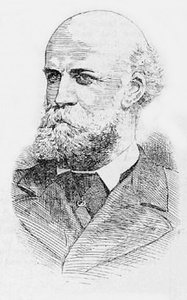
leroy livingstone de mestre
1894 - 1968 , Australia
基本情報
- Birth Date: 1894-03-27
- Birth Place: Bowral, Australia
- Death Date: 1968-03-01
- Influenced By: Post-Impressionism
- Movement:
- Colour-music
- Abstractionism
- Cubism
- Name: Roy De Maistre
- Nationality: Australian
- Notable Works: The Stations of the Cross, A painted picture of the universe
関連記事
幾何学的抽象絵画を定義した傑作10選|アート、アーティスト、インテリア装飾
モンドリアン、マレーヴィチ…幾何学的抽象絵画を代表する傑作10選。各作品の背景や色彩構成、アーティストの情熱に迫ります。美術館品質の複製画はArtsDot.comで。オンラインでアートコレクションをご覧ください。
Kandinsky's Masterpieces: 25 Paintings That Define Abstract Art | ArtsDot
Journey through Wassily Kandinsky's 25 most iconic abstract paintings. Explore his revolutionary use of color, form & spiritual expressionism. Find museum-quality Kandinsky reproductions and elevate your home decor with ArtsDot.com. Discover all masterpieces on ArtsDot.com!
ロイ・リキテンスタイン傑作25選:ポップアートの革新と現代美術への影響 | ArtsDot
ロイ・リキテンスタインの傑作25選。ポップアートを代表する画家、その技法と時代背景を紐解きます。ベンデイ・ドット、コミック表現…ArtsDotで高品質な複製画やインテリアアートを見つけ、空間にモダンアートの息吹を吹き込みましょう。全作品はこちらから: ArtsDot.com
抽象表現主義を定義する十大傑作:芸術と装飾の深遠な旅
抽象表現主義を定義する10の傑作。ポロック、ロスコら巨匠たちの情熱と色彩の世界へ。各作品に込められた物語と技法を紐解き、至高のアート体験を。ArtsDot.comで、ミュージアムクオリティの複製画や洗練されたインテリアアイデアを発見してください。

ゴヤ傑作25選:スペインの魂を揺さぶる、深遠な芸術の世界 | ArtsDot
ゴヤ傑作25選:ロマン主義を代表するスペインの巨匠、フランシスコ・デ・ゴヤの世界へ。黒衣の女からマハまで、魂を揺さぶる絵画の物語と技法を紐解きます。ArtsDotで高品質なアートレプリカを見つけ、インテリアに深みと風格を。今すぐコレクションをご覧ください。