

 プレビュー
プレビュー
 シェアする
シェアする シェアする
シェアする
 詳細を見る
詳細を見る

 ダウンロード
 似ている作品
 X線調査
X線調査 スライドショー
 Stats
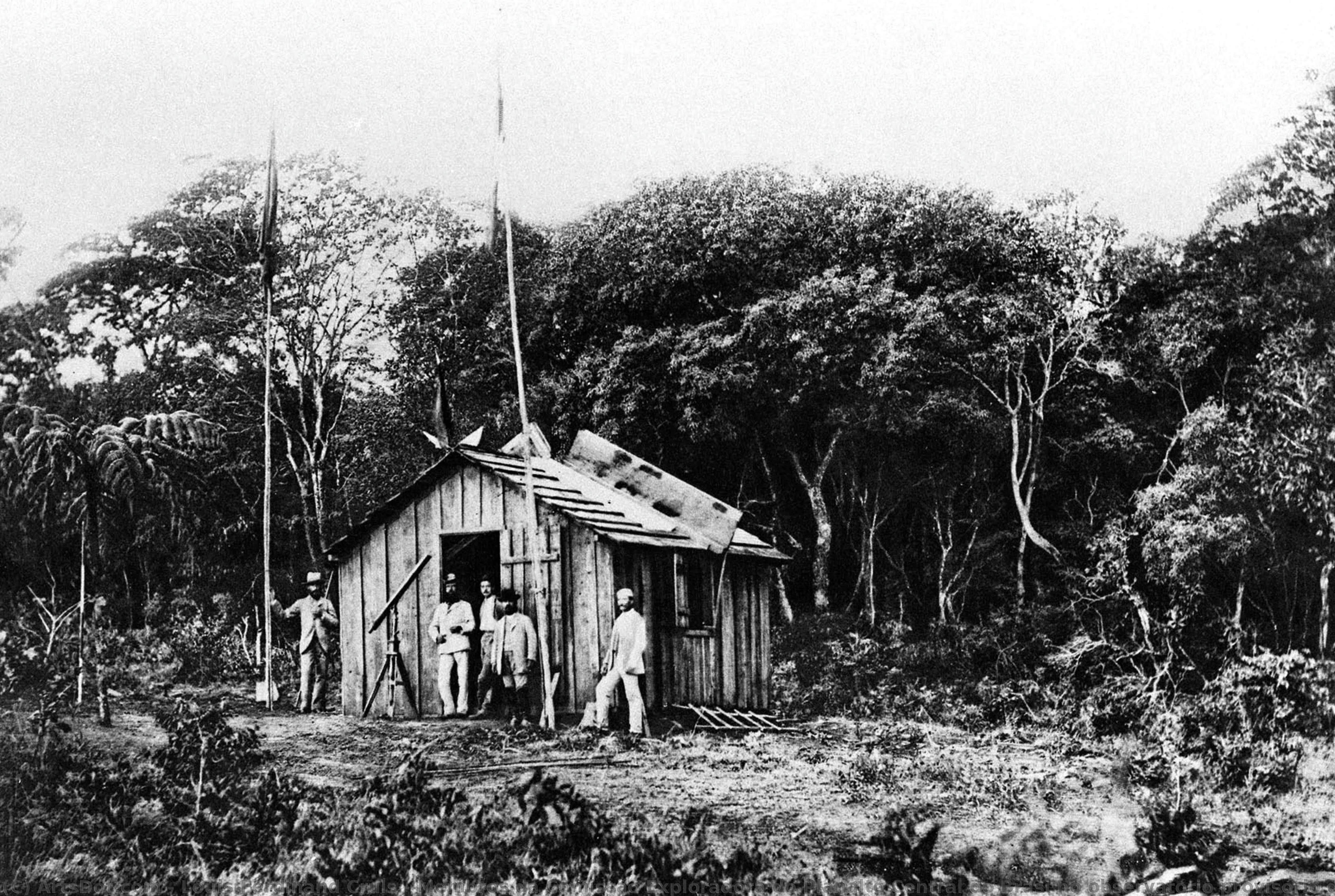
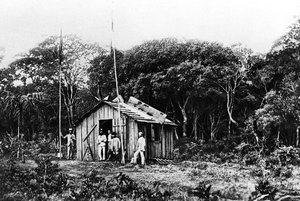
StatsMembros da Comissão Exploradora do Planalto Central do Brasi no observatório provisório do vértice Sudoeste - Goiás, 1892.


 詳細を見る
詳細を見る
ジークレー/アートプリント
迅速な制作と多彩な仕上げオプションを備えた、ミュージアムクオリティのジークレーまたはキャンバスプリント。 ( 手描きの絵画を購入 Switch to Digital Image)




































作品のオリジナル比率に合わせた、当店の規定サイズからお選びください。

特定のフレームやスペースに合わせて、ご自身でサイズを指定することも可能です。選択されたサイズが元の画像の比率と一致しない場合、作品をトリミングするか、鏡面反射または単色での塗りつぶしによって画像を拡張いたします。制作を開始する前に、ご確認用のデジタルモックアップをお送りいたします。
画面上のプレビューには、実際のトリミングや拡張は反映されませんのでご注意ください。最終的な構図を正確に確認できるのは、モックアップのみとなります。
カスタムサイズも承っておりますが、元の比率を維持するためには、あらかじめ用意されたリストからサイズを選択することをお勧めいたします。


 ガラスオプションは、110cm未満のサイズでのみご利用いただけます。

Membros da Comissão Exploradora do Planalto Central do Brasi no observatório provisório do vértice Sudoeste - Goiás, 1892.
ジークレー/アートプリント
複製画のサイズ
-


合計金額
$ 62
関連作品






アーティストの略歴
The Celestial Visionary: The Life and Legacy of Louis Ferdinand Cruls
To gaze upon the works inspired by Louis Ferdinand Cruls is to witness a rare intersection where the cold, precise calculations of science meet the boundless wonder of the human spirit. Born in 1848 in Diest, Belgium, Cruls was a man whose life was defined by the pursuit of the unseen and the mapping of the infinite. While history primarily remembers him as a titan of Brazilian astronomy and a geodesist of immense skill, his true essence lies in his ability to translate the mathematical rhythms of the cosmos into a visual language that resonates with profound beauty. His journey from the rigorous academic halls of Ghent and Saint Petersburg to the heart of the Brazilian Empire is a narrative of intellectual migration and scientific devotion.
Cruls’s early years were steeped in the disciplined traditions of European science. After studying civil engineering at Ghent University, he pursued a doctorate in astronomy at the prestigious Saint Petersburg Imperial University. This period of intense academic rigor provided him with more than just technical expertise; it instilled in him a methodical way of seeing, a way to observe the heavens not merely as a collection of lights, but as a complex, mechanical masterpiece governed by laws of motion and gravity. His early fascination with heliocentric cosmology—the revolutionary ideas of Copernicus and Galileo—served as the foundation for a lifelong quest to understand our place within the solar system.
A Journey to the Southern Cross
The trajectory of Cruls’s life changed irrevocably in 1874 when, driven by connections with Brazilian intellectuals, he resigned his commission in the Belgian army and set sail for South America. This transition from the structured military life of Europe to the burgeoning scientific frontier of Brazil allowed him to merge his engineering precision with astronomical exploration. Upon arrival, his talents were immediately recognized by the highest echel렷s of Brazilian society, leading to his appointment within the Geodesy section of the Empire’s Commission. It was here that Cruls began to bridge the gap between the terrestrial and the celestial, applying his knowledge of the earth's dimensions to the study of the stars above.
His career in Brazil was marked by monumental achievements that left an indelible mark on the scientific community. As the Director of the Brazilian National Observatory from 1881 to 1908, he steered the institution through a golden age of discovery. His name is forever etched in the annals of astronomy as the co-discoverer of the Great Comet of 1882, a celestial event that captured the imagination of the world. Furthermore, his leadership during the 1882 Transit of Venus observations in Chile demonstrated his ability to coordinate international scientific efforts, seeking to measure the solar parallax and refine our understanding of the very scale of our universe.
The Art of Scientific Observation
What distinguishes Cruls from a mere cataloger of stars is the poetic dimension of his work. His contributions were never purely clinical; he possessed an innate ability to use visual documentation as a conduit for complex scientific concepts. In his explorations of the Central Plateau, tasked with surveying the future site of Brazil's capital, his observations blended the topographical accuracy of a surveyor with the evocative detail of a landscape artist. He understood that to truly comprehend the cosmos, one must be able to visualize its majesty.
The legacy of Louis Ferdinand Cruls remains a testament to the harmony between the analytical and the aesthetic. His life’s work reminds us that science and art are not opposing forces, but rather two different lenses through which we view the same magnificent reality. Through his eyes, the movement of a comet or the transit of a planet becomes more than data—it becomes a profound expression of the universe's enduring mystery. Today, his influence persists in every artwork that seeks to capture the breathtaking scale of our solar system, celebrating a man who saw the poetry written in the stars.
louis ferdinand cruls
1848 - 1908 , Belgium
基本情報
- Artistic Movement Or Style: Celestial Art
- Artists Or Movements Influenced By This Artist: ['Romanticism']
- Artists Who Influenced This Artist: ['Johannes Kepler']
- Date Of Birth: January 21, 1848
- Date Of Death: June 21, 1908
- Full Name: Louis Ferdinand Cruls
- Nationality: Belgian
- Notable Artworks:
- The Moon
- Mars
- Place Of Birth: Belgium