

 プレビュー
プレビュー
 プリントを購入
 シェアする
シェアする シェアする
シェアする
 詳細を見る
詳細を見る

 ダウンロード
 似ている作品
 X線調査
X線調査 スライドショー
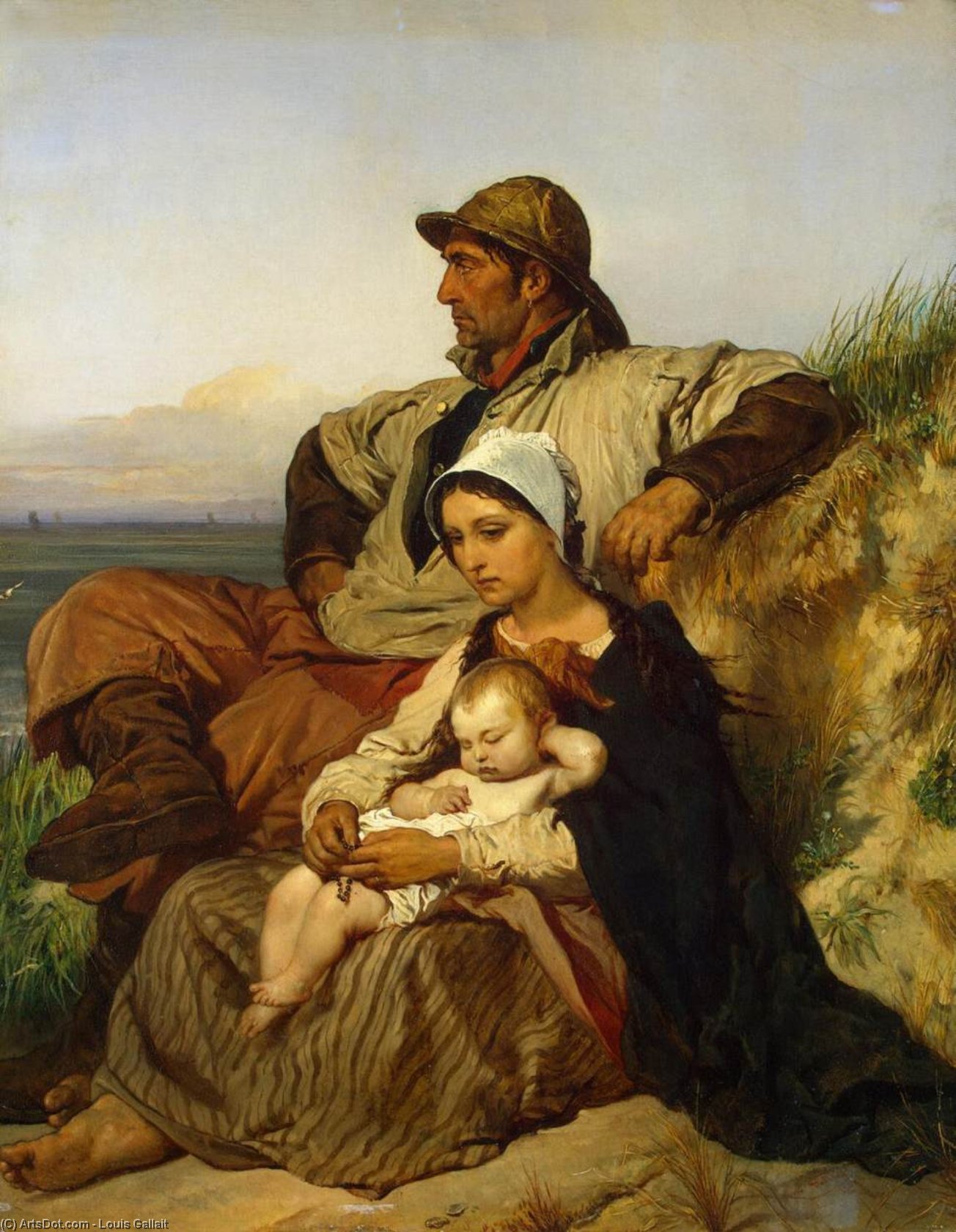
Fisherman's Family
 Oil On Panel
- Historical Painting
 1848
1848 40.0 x 32.0 cm
 エルミタージュ美術館
 詳細を見る
詳細を見る
オンラインプレビューをはるかに凌ぐ、高解像度で鮮明なデジタル画像をご購入いただけます。
各ファイルは、社内の専門家が高度なツールと熟練した手作業によるレタッチを用いて、細心の注意を払って準備されています。すべての画像において、卓越した鮮明度、正確な色彩再現性、そして繊細なディテールを保証いたします。
最終ファイルは、プロフェッショナルな編集・印刷環境ですぐにご利用いただけるよう最適化された状態で、72時間以内にメールにてお届けいたします。これは、一流のデザインスタジオ、出版社、ギャラリーから信頼されているものと同等の品質です。
デジタル画像のご注文に付随する特典
高品質なデジタル画像配信を、確かな品質で。
ArtsDot.com を選ぶことは、単に画像を手に入れることではありません。それは、プロの手によって精密に仕上げられ、満足保証が付いた高品質なデジタルアートワークを受け取ることを意味します。ご注文いただいた際に自動的に付随する内容は、以下の通りです:

メールですぐにお届け
ご注文から72時間以内に、高解像度のデジタル画像ファイルがメールでお手元に届きます。すぐにそのままご利用いただけます。

AI技術で最適化されたデジタルファイル
お客様の作品は、高度なAIツールと専門家による手作業の編集を組み合わせてプロフェッショナルに最適化されており、細部のディテール、鮮明さ、そして正確な色再現性を最大限に引き出しています。

一生涯無料の再送サービス
ファイルを誤って削除したり、紛失してしまったりしましたか?ご安心ください。いつでも無料で再送いたします。

輸入手数料は一切かかりません
関税や手数料、配送料を気にすることなく、お気に入りのアートワークをすぐにお楽しみいただけます。デジタルダウンロードは常に免税です。

色彩再現の保証
プロ仕様のツールとカラーマネジメント技術を用いることで、デジタル画像が元の色を最大限に忠実に再現することを保証いたします。

100日間満足保証
ご購入いただいたデジタル画像にご満足いただけない場合は、100日以内であれば、修正または100%の返金(理由を問う必要はありません)をさせていただきます。

100% 返金保証
ご満足いただけない場合は、デジタルファイルを受け取ってから100日以内であれば、理由を問わず全額返金いたします。

まとめ買い割引
3枚購入で10%OFF - 5枚購入で15%OFF - 10枚以上購入で20%OFF。クリエイティブなプロジェクト、ギャラリー、エージェンシーに最適です。
A Portrait of Domesticity and Rural Harmony
Louis Gallait’s “Fisherman’s Family,” painted in 1848, is more than just a charming depiction of a Flemish family; it's a meticulously crafted tableau that offers a poignant glimpse into the social fabric and artistic sensibilities of mid-19th century Belgium. The painting captures a scene of quiet domesticity – a man, woman, and child seated comfortably on a grassy bank, bathed in the soft light of an afternoon sun. Their relaxed postures, coupled with the simple yet elegant clothing, immediately evoke a sense of warmth and contentment. The composition is carefully balanced, drawing the eye to the central figures while subtly incorporating elements of the surrounding landscape – two small boats resting near the edge of the scene, hinting at the family’s connection to the nearby water and its livelihood.
Gallait's skill lies not merely in his ability to render a realistic image but in his masterful use of light and color. He employs a muted palette – predominantly earthy browns, greens, and blues – creating an atmosphere of tranquility and nostalgia. The dappled sunlight filtering through the trees casts delicate shadows, adding depth and dimension to the scene. Notice how he uses highlights to draw attention to the faces of the family members, emphasizing their expressions of love and connection. This careful manipulation of light is a hallmark of Gallait’s style, contributing significantly to the painting's overall emotional resonance.
The Revival of Historical Painting in Belgium
To fully appreciate “Fisherman’s Family,” it’s crucial to understand the historical context within which it was created. Following the Napoleonic era, Belgian art had largely been dominated by neoclassical styles influenced by France. However, in the decades leading up to 1848, a movement began to emerge advocating for a return to grand historical painting – a genre that had flourished in earlier centuries but had fallen out of favor. Louis Gallait was at the forefront of this revival, and “Fisherman’s Family” exemplifies his commitment to this cause.
Gallait consciously sought to emulate the works of the Old Masters—artists like Peter Paul Rubens and Jan van Eyck—drawing inspiration from their meticulous detail, dramatic compositions, and ability to capture human emotion. He was particularly influenced by the Italian Renaissance tradition of depicting everyday life with dignity and grace. His decision to portray a humble family engaged in a simple activity – fishing – rather than a heroic or royal subject reflects this shift towards realism and social commentary. It’s a deliberate choice that elevates the ordinary to the realm of art, suggesting a profound respect for the lives of common people.
Symbolism and Narrative Depth
Beyond its surface beauty, “Fisherman’s Family” is rich in symbolic meaning. The presence of the boats immediately connects the family to their livelihood – a vital aspect of rural life in Belgium at the time. The children, nestled safely within their parents' embrace, represent the future and continuity of the family line. Their innocent expressions convey a sense of hope and optimism. Even the setting itself—a peaceful riverside scene—holds symbolic weight, suggesting harmony between humanity and nature.
Furthermore, the painting can be interpreted as a commentary on the changing social landscape of Belgium during this period. The rise of industrialization was transforming rural communities, leading to displacement and economic hardship. Gallait’s depiction of a contented family engaged in traditional activities serves as a poignant reminder of the values and customs that were being threatened by these changes. It's a subtle yet powerful statement about the importance of preserving cultural heritage.
A Legacy of Realism and Emotional Resonance
“Fisherman’s Family” remains a captivating work of art, admired for its technical skill, emotional depth, and historical significance. Louis Gallait’s ability to capture the essence of human connection within a carefully constructed scene is truly remarkable. Reproductions of this painting continue to resonate with viewers today, offering a timeless glimpse into the lives of ordinary people in 19th-century Belgium – a testament to the enduring power of art to illuminate our past and connect us to the shared experiences of humanity.
関連作品
作家の略歴
The Architect of Belgian History Painting
Louis Gallait stands as a monumental figure in the annals of nineteenth-century art, a painter whose brush breathed new life into the grand tradition of history painting within Belgium. Born in 1810 in the historic city of Tournai, Gallait’s early years were shaped by a profound connection to his Belgian roots, a foundation that would later allow him to translate national identity into sweeping, dramatic canvases. His artistic journey began under the watchful eyes of masters like Cornelis Cels and Philippe Auguste Henlam at the Académie Royale de Tournai, where he first learned to marry technical precision with emotional depth. This early training provided the essential scaffolding for a career that would eventually bridge the gap between the romanticism of the past and the burgeoning realism of his era.
As his talent matured, Gallait sought the vibrant artistic currents of Antwerp, studying under Mathieu Ignace van Brée to refine his command over light and composition. His ascent was marked by a series of triumphs that captured the imagination of the Belgian public. The 1832 presentation of Tribute to Caesar at Ghent’s Salon served as a definitive breakthrough, earning him prestigious accolades and signaling the arrival of a master. By the time he debuted at the Brussels Salon in 1833 with Christ Healing the Blind, Gallait had already begun to establish his signature style: a poignant, deeply humanistic approach to sacred and historical narratives that resonated with the spiritual and cultural sensibilities of his contemporaries.
A Vision of Grandeur and Realism
The true zenith of Gallait’s career arrived when he turned his gaze toward the epic scale of European history. Moving to Paris in 1841, he immersed himself in the intellectual heart of the art world, yet his heart remained tethered to the grand narratives of his homeland and the broader continent. It was during this period that he produced his most celebrated masterpiece, The Abdication of Charles V. This monumental work, commissioned by the Belgian government, remains a testament to his ability to weave meticulous historical accuracy with theatrical grandeur. Through the use of breathtakingly detailed costumes and a masterful, rich color palette, Gallait did more than merely record an event; he resurrected a moment of profound political and personal gravity, captivating audiences across Europe.
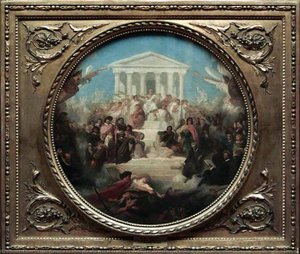
Gallait’s technical prowess was characterized by a unique blend of Romantic drama and a burgeoning sense of Realism. While his themes often leaned toward the epic, his execution possessed a grounded, tactile quality that prevented his work from drifting into mere abstraction. This is evident in works such as Le Triomphe des Arts, where he explores the triumph of good governance through classical allegory, and in more intimate, human-centric pieces like Fisherman's Family. In these later works, one can observe a shift toward a more tender observation of daily life, yet the underlying strength of his composition and his dedication to narrative clarity remain ever-present.
Legacy and Artistic Significance
Beyond the grand historical canvases, Gallait’s repertoire included deeply moving depictions of compassion and social reality. In Monk Feeding the Poor, he utilized a dramatic, almost chiaroscuro-driven technique to highlight the profound dignity found in acts of charity, inviting viewers into a space of intense empathy. His ability to navigate between the monumental and the intimate allowed him to become not just a painter of kings and emperors, but a chronicler of the human condition.
The historical significance of Louis Gallait cannot be overstated. He was the primary catalyst for the revival of history painting in Belgium, providing a visual language for a nation finding its footing in a modern era. His influence can be summarized through several key contributions:
- Revival of National Narrative: He utilized historical themes to foster a sense of Belgian identity and pride during a period of significant political evolution.
- Mastery of Composition: His ability to organize complex, multi-figure scenes with clarity and dramatic tension set a standard for academic painting in the mid-19th century.
- Synthesis of Styles: He successfully bridged the gap between the emotional intensity of Romanticism and the meticulous detail of Realism.
- Cultural Impact: Through his international exhibitions, he brought Belgian artistic excellence to the forefront of the European stage, ensuring that the nation's visual culture was recognized far beyond its borders.
Though the era of grand history painting would eventually give way to new movements, the legacy of Louis Gallait persists in the enduring power of his imagery. He remains a painter of profound substance, whose works continue to invite us into the dramatic, the sacred, and the deeply human.
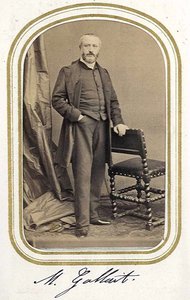
Louis Gallait
1810 - 1887 , Belgium
プロフィール概要
- Artistic Movement Or Style: Romanticism
- Artists Who Influenced This Artist:
- Philippe Auguste Hennequin
- Mathieu Ignace Van Brée
- Date Of Birth: June 9, 1810
- Date Of Death: November 20, 1887
- Full Name: Louis Gallait
- Nationality: Belgian
- Notable Artworks:
- Abdication Details: Charles Quint Married
- Prize d’Antioque.3 Juin 1098
- Portrait Du Peintre Et Graveur Charles Cousin En Costume Arabe
- Place Of Birth: Tournai, Belgium