

 プレビュー
プレビュー
 プリントを購入
 シェアする
シェアする シェアする
シェアする
 詳細を見る
詳細を見る

 ダウンロード
 似ている作品
 X線調査
X線調査 スライドショー
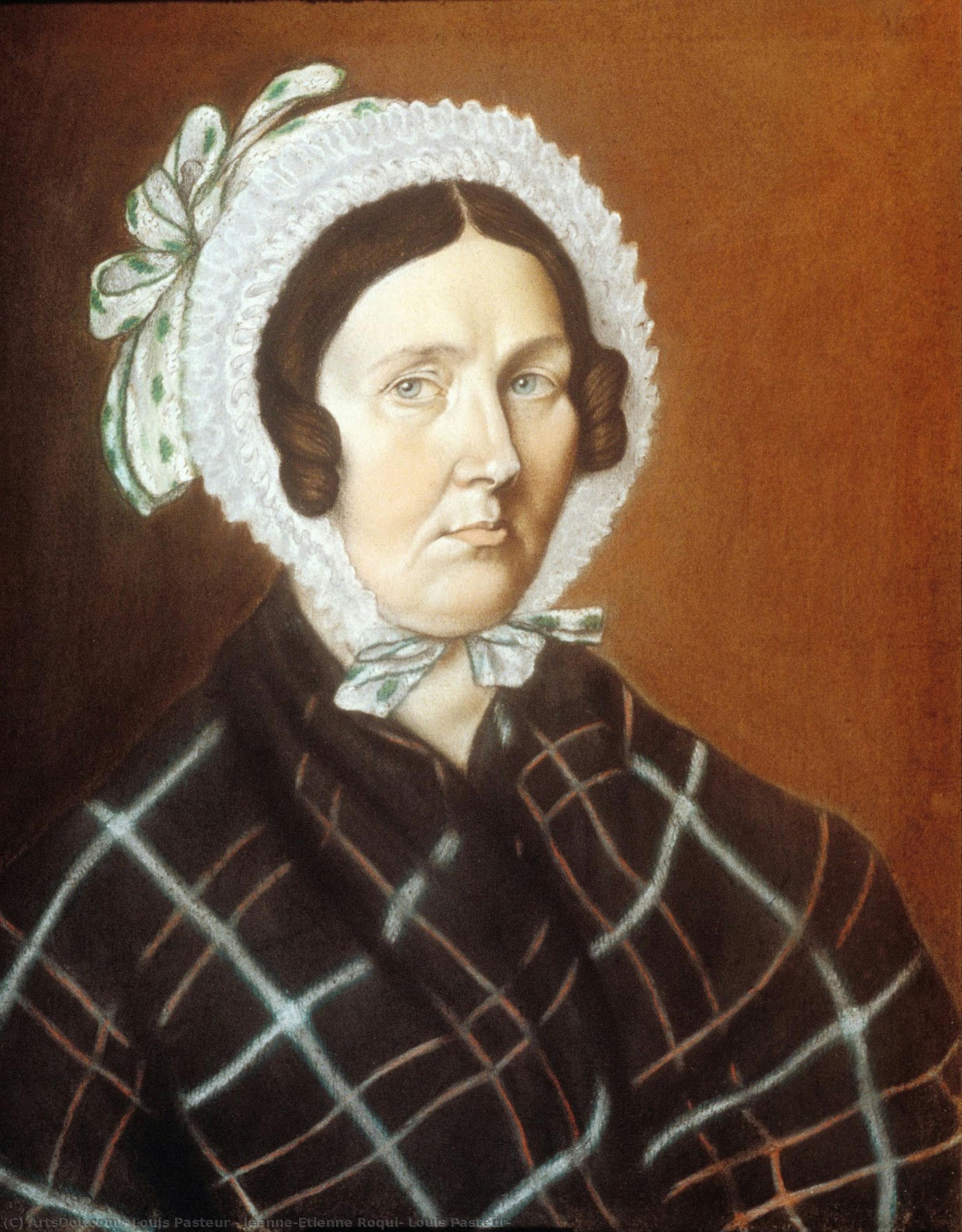
Jeanne-Etienne Roqui, Louis Pasteur


 詳細を見る
詳細を見る




P118B $10

P118H $10

P118W $10

P438Z $10

P508JH $12

P508YH $12

P805H $10

P805Z $10

P919BZ $10

P919G $10

P919XJ $10

P959ZH $10

P968JZ $12

W106C $8

W218G $10

W218JH $8

W218Y $10

W307PJ $10

W316G $10

W316PJ $8

W316Y $10

W398PJ $8

W4111J $10

W500HY $15

W500JH $15

W692G $12

W849H $8

W940BG $15

W953PJ $8




作品のオリジナル比率に合わせた、当店の規定サイズからお選びください。

特定のフレームやスペースに合わせて、ご希望のサイズをご入力いただけます。選択されたサイズが元の画像の比率と異なる場合、アートワークをトリミングするか、手描きで要素を追加して絵画を拡張いたします。デジタルモックアップ を制作し、制作開始前にご確認(承認)をいただきます。
画面上のプレビューは、実際のトリミングや拡張を正確に反映しているものではありません。最終的な構図は、モックアップによってのみ正確にご確認いただけます。
カスタムサイズもご利用いただけますが、元の比率を維持するためには、あらかじめ用意されたリストからサイズを選択することをお勧めいたします。
ご注文後、ArtsDot.com チームより詳細な指示をお送りするとともに、仕上がりイメージ(モックアップ)をご提供いたします。


 ガラスオプションは、110cm未満のサイズでのみご利用いただけます。

Jeanne-Etienne Roqui, Louis Pasteur
複製技法
複製画のサイズ
-


合計金額
$ 263
A Glimpse into the Past: The Soul of a Portrait
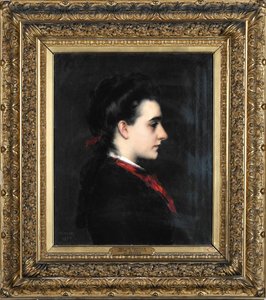
In the quiet intimacy of "Jeanne-Etienne Roqui, Louis Pasteur," we are invited to step back into the year 1836, encountering a moment frozen in time through the eyes of a master. This evocative portrait captures an elderly woman with a profound sense of dignity and grace, presenting a close-up study that draws the viewer into her very essence. The composition is masterfully centered, forcing an immediate and inescapable connection between the subject and the observer. Set against a warm, somber brown background, her features emerge from the shadows with a striking realism that speaks to the fleeting nature of life and the enduring power of memory. It is not merely a depiction of a person, but a window into a bygone era, rendered with a sensitivity that suggests this piece was intended as a cherished family heirloom or a commemorative tribute to a life well-lived.
The artistry of Louis Pasteur—a man whose scientific legacy would later change the world—is revealed here through a delicate balance of texture and light. The technique is a triumph of oil painting, where meticulous brushwork breathes life into the varied surfaces of the subject. One can almost feel the tactile contrast between the heavy, structured geometry of her plaid fabric and the ethereal, fragile lace of her bonnet. Pasteur employs a soft, diffused lighting that avoids harsh contrasts, instead opting for subtle gradations of tone that sculpt the curves of her face and the gentle folds of her clothing. This approach creates a romanticized realism, where the physical details are rendered with scientific precision, yet the emotional atmosphere remains tender and deeply human.
Symbolism and the Art of Presence
Every element within this portrait serves to deepen the narrative of the subject's identity. The choice of attire—the intricate tartan patterns and the delicate bonnet—acts as a silent historical marker, anchoring the woman in the mid-19th century. These textures do more than provide visual interest; they symbolize the layers of time and experience etched into her character. While the symbolic elements are minimal, their impact is profound, suggesting a sense of tradition, stability, and the quiet strength found in aging. The organic shapes of her features, softened by the artist's hand, contrast beautifully with the rigid lines of her clothing, creating a visual metaphor for the softness of the human spirit existing within the structured constraints of society.
For the discerning collector or interior designer, this artwork offers much more than mere decoration. It provides a focal point of profound emotional depth, capable of anchoring a room with its historical weight and quiet elegance. Whether placed in a curated gallery setting or used to add a touch of classical sophistication to a contemporary living space, "Jeanne-Etienne Roqui, Louis Pasteur" serves as a conversation piece that celebrates the beauty of realism and the timeless allure of portraiture. To possess a reproduction of this work is to hold a fragment of history, inviting a sense of contemplative peace and a deep appreciation for the masterful intersection of art and life.
関連作品
アーティストの略歴
Early Life and Education
- Born: December 27, 1822, in Dole, Jura, France
- Died: September 28, 1895
- Louis Pasteur was an average student initially but displayed a keen interest in art, particularly drawing and painting.
- He attended primary school in 1831 and later entered secondary school at the collège d'Arbois.
- In 1839, he enrolled in a boarding school in Paris but returned to Arbois due to homesickness.
- He studied philosophy and earned his Bachelor of Letters degree in 1840 before pursuing science.
Scientific Career and Groundbreaking Discoveries
- Pasteur's research focused on chemistry, leading to significant breakthroughs in understanding diseases and their prevention.
- Fermentation: He disproved the theory of spontaneous generation, demonstrating that fermentation is caused by microorganisms.
- Pasteurization: Developed a process named after him (pasteurization) to kill microbes in liquids like milk and wine, significantly impacting food safety.
- Germ Theory: His experiments strongly supported the germ theory of disease, revolutionizing medical practices.
- Vaccines: He developed successful vaccines for rabies and anthrax, saving countless lives. These were created by weakening pathogens to stimulate an immune response without causing severe illness.
- Optical Isomerism: Early in his career, Pasteur made significant discoveries in chemistry, most notably on the molecular basis for the asymmetry of certain crystals and racemization. This work had a profound effect on structural chemistry.
Artistic Contributions and Portraits
- While not a professional artist, Pasteur's interest in art is evident in his portraits.
- These portraits are now considered valuable historical documents offering insights into the scientist’s appearance and demeanor.
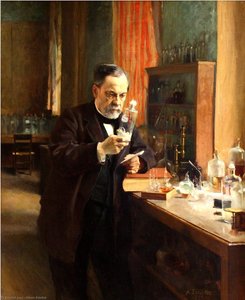
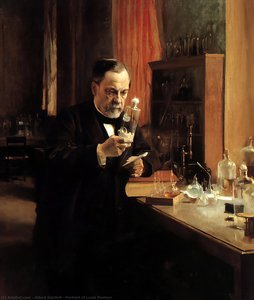
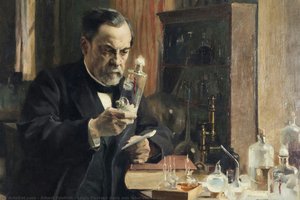
- Notable portraits include those by Albert Edelfelt, which is considered one of the best-known depictions of Pasteur.
- A portrait by Jean-Joseph Pasteur (1842) showcases a dignified figure in formal attire, providing a glimpse into 19th-century art.
Legacy and Institutions
- Pasteur is considered one of the founders of modern bacteriology, often referred to as the "father of bacteriology" and the "father of microbiology."
- The Pasteur Institute, established in 1887, continues to be a leading center for scientific research.
- His work has had a profound impact on public health, hygiene, and medicine worldwide.
- Pasteur's legacy inspires scientists, artists, and scholars globally.
Further Exploration
- ArtsDot: Explore the Louis Pasteur page on ArtsDot to learn more about his life and work.
- Musée Départemental Maurice Denis: Discover the collection at Musée Départemental Maurice Denis, which includes artworks from that era.
- Wikipedia: Read about Louis Pasteur's portrait by Edelfelt on Wikipedia for additional details.
- Musée Pasteur (Paris): Visit the Musée Pasteur in Paris to explore his life and groundbreaking work.
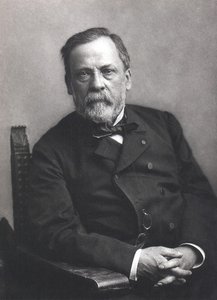
Louis Pasteur
1822 - 1895 , France
基本情報
- Date Of Birth: December 27, 1822
- Date Of Death: 1895
- Full Name: Louis Pasteur
- Nationality: French
- Notable Artworks:
- Louis Pasteur by Albert Edelfelt
- Jean-Joseph Pasteur, Louis Pasteur
- Marie-Louise Pasteur by J.J. Henner
- Place Of Birth: Dole, France
関連記事

The Enduring Legacy of Oil on Canvas: Technique, History & Aesthetic Impact
Explore the rich history & techniques of oil painting – from Renaissance masters to Impressionism. Discover pigments, layering methods, and why this timeless medium endures. Expert insights for artists & art enthusiasts.

Oil on Canvas: A Historical & Technical Exploration of a Timeless Artistic Medium
Explore the rich history & enduring techniques of oil painting on canvas. Discover the science behind its longevity, conservation practices, and contemporary relevance. Expert insights for art enthusiasts.
19th Century Masterpieces: 10 Paintings That Defined an Era | ArtsDot
Journey through 19th century art with ArtsDot! Explore 10 iconic paintings – from Monet & Renoir to Courbet – and discover the stories behind Romanticism, Realism & Impressionism. Find museum-quality reproductions for your home decor. Explore the full collection online!

The Enduring Power of Painting: A Historical & Contemporary Exploration of Form and Emotion
Explore the rich history & enduring techniques of oil painting with ArtsDot. Discover masterpieces, learn about art collecting, and find authentic handmade reproductions crafted by skilled artists.

油彩のキャンバス:技法、歴史、そして現代の実践 - 古典美術愛好家へ
油彩の技法、歴史、巨匠たちの秘密を徹底解説。古典美術愛好家向けに、初期フランドル絵画から現代の実践まで深く掘り下げます。ArtsDotで高品質な複製画やカスタムオーダーも承ります。

