

 プレビュー
プレビュー
 シェアする
シェアする シェアする
シェアする
 詳細を見る
詳細を見る

 ダウンロード
 似ている作品
 X線調査
X線調査 スライドショー
 統計情報
統計情報Monks Buying Fish before the Portal of the Madonna della Misericordia
 Acrylic On Canvas
- WallArt
- Genre Painting
 1855
1855 47.0 x 33.0 cm
 ナショナル・ギャラリー・オブ・アート
 詳細を見る
詳細を見る
オンラインプレビューをはるかに凌ぐ、高解像度で鮮明なデジタル画像をご購入いただけます。
各ファイルは、社内の専門家が高度なツールと熟練した手作業によるレタッチを用いて、細心の注意を払って準備されています。すべての画像において、卓越した鮮明度、正確な色彩再現性、そして繊細なディテールを保証いたします。
最終ファイルは、プロフェッショナルな編集・印刷環境ですぐにご利用いただけるよう最適化された状態で、72時間以内にメールにてお届けいたします。これは、一流のデザインスタジオ、出版社、ギャラリーから信頼されているものと同等の品質です。
デジタルアート
個人での鑑賞、印刷、クリエイティブなプロジェクト用に、高解像度ファイルをダウンロードできます。 ( プリント版に切り替え 手描きの絵画を購入)
デジタル画像のご注文に付随する特典
高品質なデジタル画像配信を、確かな品質で。
ArtsDot.com を選ぶことは、単に画像を手に入れることではありません。それは、プロの手によって精密に仕上げられ、満足保証が付いた高品質なデジタルアートワークを受け取ることを意味します。ご注文いただいた際に自動的に付随する内容は、以下の通りです:

メールですぐにお届け
ご注文から72時間以内に、高解像度のデジタル画像ファイルがメールでお手元に届きます。すぐにそのままご利用いただけます。

AI技術で最適化されたデジタルファイル
お客様の作品は、高度なAIツールと専門家による手作業の編集を組み合わせてプロフェッショナルに最適化されており、細部のディテール、鮮明さ、そして正確な色再現性を最大限に引き出しています。

一生涯無料の再送サービス
ファイルを誤って削除したり、紛失してしまったりしましたか?ご安心ください。いつでも無料で再送いたします。

輸入手数料は一切かかりません
関税や手数料、配送料を気にすることなく、お気に入りのアートワークをすぐにお楽しみいただけます。デジタルダウンロードは常に免税です。

色彩再現の保証
プロ仕様のツールとカラーマネジメント技術を用いることで、デジタル画像が元の色を最大限に忠実に再現することを保証いたします。

100日間満足保証
ご購入いただいたデジタル画像にご満足いただけない場合は、100日以内であれば、理由を問わず修正または100%の返金対応をさせていただきます。

100% 返金保証
ご満足いただけない場合は、デジタルファイルを受け取ってから100日以内であれば、理由を問わず全額返金いたします。

まとめ買い割引
3枚購入で10%OFF - 5枚購入で15%OFF - 10枚以上購入で20%OFF。クリエイティブなプロジェクト、ギャラリー、エージェンシーに最適です。
A Moment of Grace: Ludwig Passini’s Venetian Chronicle
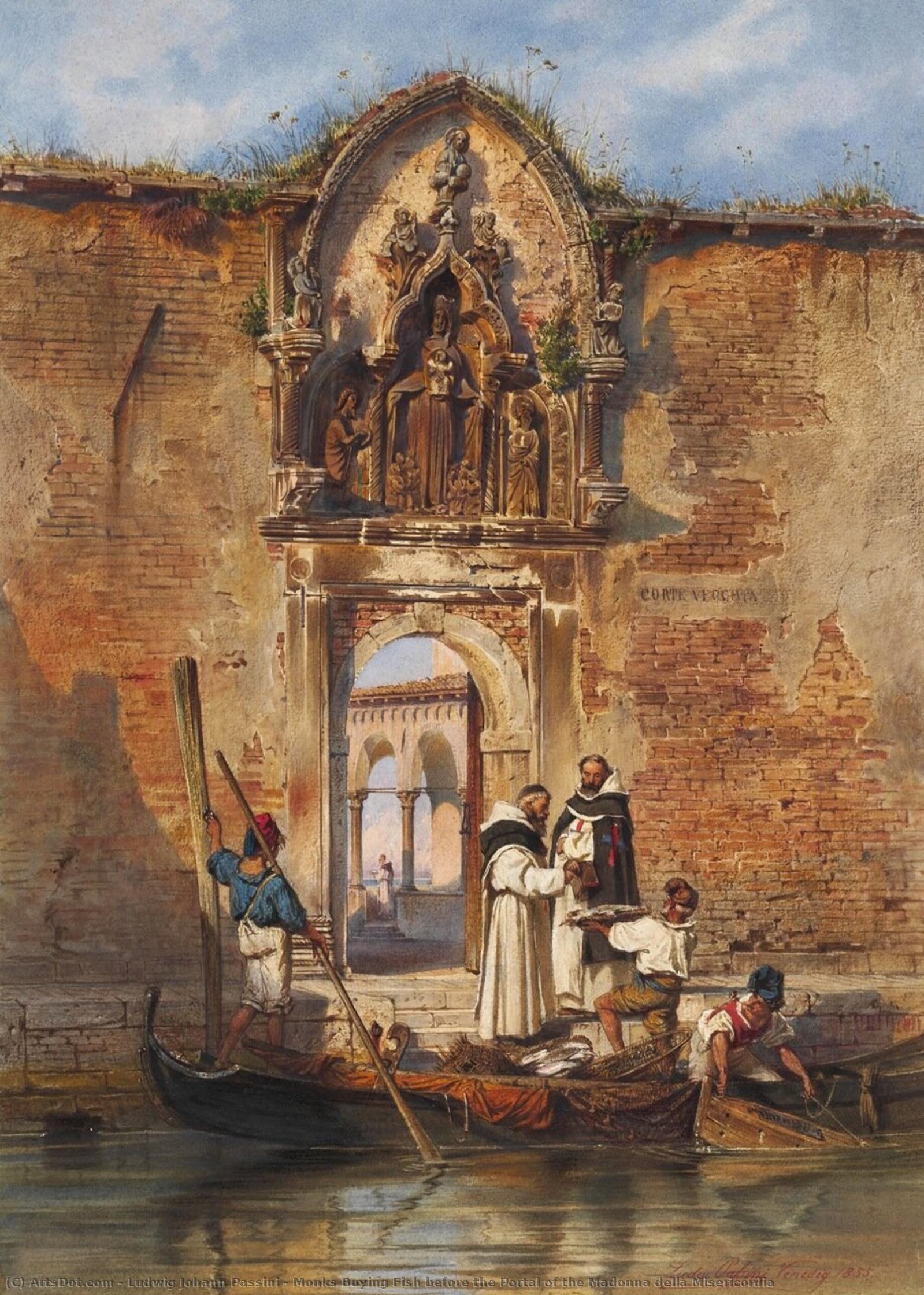
Ludwig Johann Passini's “Monks Buying Fish before the Portal of the Madonna della Misericordia,” painted in 1855, isn’t merely a depiction of a marketplace scene; it’s a carefully constructed tableau brimming with quiet spirituality and the everyday rhythms of Venetian life. The painting transports us to a sun-drenched corner of the city, where the mundane act of purchasing fish becomes imbued with a profound sense of reverence. Passini, a master of genre painting, skillfully captures not just the visual details – the worn brickwork of the church façade, the vibrant colors of the fish, the simple robes of the monks – but also the palpable atmosphere of community and faith.
The composition is remarkably balanced, drawing our eye to the central figures engaged in their transaction. Two men, likely merchants and monks respectively, stand close together, their gestures suggesting a comfortable familiarity. Around them, other individuals bustle about, creating a sense of lively activity that contrasts subtly with the solemnity of the religious portal looming behind. Notice how Passini uses light – dappled sunlight filtering through the buildings – to create depth and highlight key elements within the scene. The artist’s meticulous attention to detail, from the texture of the fish scales to the folds in the monks' garments, speaks volumes about his dedication to realism and his ability to capture the essence of a particular moment in time.
The Madonna della Misericordia: A Focal Point of Devotion
Understanding the context surrounding this painting is crucial to appreciating its deeper meaning. The “Madonna della Misericordia” (Our Lady of Mercy) was a significant devotional image within Venice, and Passini’s choice to depict monks purchasing fish before its portal immediately connects the scene to religious practice. The Madonna della Misericordia was associated with charity and compassion – themes central to Venetian society at the time. The act of buying fish, therefore, isn't simply about acquiring sustenance; it represents a contribution to the community, an embodiment of mercy and generosity.
Furthermore, the portal itself acts as a visual anchor, framing the scene with its architectural grandeur. The weathered brickwork and arched doorway suggest centuries of devotion, grounding the contemporary transaction in a rich historical tradition. The painting subtly invites us to contemplate the intersection between faith, commerce, and daily life – a theme that resonated deeply within the Venetian culture of the 19th century.
Technique and Style: A Masterful Blend
Passini’s technique is characterized by a remarkable blend of realism and sensitivity. He employed watercolor and gouache on paper, creating a luminous quality that perfectly captures the light and atmosphere of Venice. The artist's use of layering and glazing techniques allows him to build up color gradually, achieving subtle variations in tone and texture. Observe how he renders the reflections on the wet fish – a testament to his keen eye for detail and his ability to capture fleeting moments of beauty.
The painting’s style is firmly rooted in the academic tradition, yet it possesses a distinctly Venetian sensibility. Passini was influenced by artists like Carlo Watts, but he developed a unique voice through his focus on everyday subjects and his masterful use of light and color. His work reflects a deep appreciation for the beauty of ordinary life – a quality that makes “Monks Buying Fish” such a compelling and enduring image.
A Legacy of Venetian Charm
Ludwig Passini’s “Monks Buying Fish before the Portal of the Madonna della Misericordia” is more than just a painting; it's a window into the soul of Venice. It offers a glimpse into the daily lives, beliefs, and artistic sensibilities of a vibrant city at the cusp of modernity. Reproductions of this captivating work continue to resonate with viewers today, evoking a sense of nostalgia for a bygone era and reminding us of the enduring power of art to capture the essence of human experience.
関連作品


作家の略歴
The Venetian Soul: The Life and Art of Ludwig Johann Passini
In the golden light of the nineteenth century, few artists captured the rhythmic pulse of Mediterranean life with as much tenderness and precision as Ludwig Johann Passini. Born in Vienna on July 9, 1832, Passini was a man of dual heritage, an Austrian by birth whose artistic soul became irrevocably entwined with the canals and cobblestones of Italy. His journey began under the watchful eye of his father, Johann Nepomuk Passini, a skilled engraver who provided the young artist with a foundational mastery of line and visual craftsmanship. This early exposure to the meticulous world of printmaking would later manifest in the exquisite detail and narrative clarity that define his most celebrated works.
The trajectory of Passini’s life was shaped by movement and cosmopolitan discovery. Following his family's relocation to Trieste in 1850, he was exposed to a melting pot of cultures that would broaden his artistic horizons far beyond the borders of his native Austria. His formal training at the prestigious Vienna Academy of Art brought him into the orbit of masters such as Joseph von Führich and Leopold Kupelwieser, where he refined a classical sensibility. Yet, it was the encouragement of Führich that propelled him toward Leipzig and eventually to the heart of Italy, setting the stage for a career defined by the pursuit of light, atmosphere, and the human condition.
A Mastery of Genre and the Venetian Spirit
Passini’s artistic evolution is a testament to his ability to adapt his technique to the spirit of his surroundings. During his years in Rome between 1853 and 1870, his work took on a profound narrative quality. He focused intensely on the human figure, placing characters within rich architectural settings and interior spaces that whispered stories of daily existence. It was during this period that he mastered the art of the genre scene—paintings that do not merely depict a moment, but breathe life into the social fabric of the era.
< p>However, it was his permanent move to Venice in 1873 that unlocked his most enduring creative period. Settling for three decades in the magnificent Palazzo Vendramin Calergi, Passini became a cornerstone of an illustrious artist colony. Alongside contemporaries such as Henry Woods and August von Pettenkofen, he participated in a vibrant intellectual exchange that pushed the boundaries of realism. His Venetian oeuvre is a breathtaking collection of watercolors and oils that serve as a visual chronicle of the city. Whether capturing the bustling activity on a bridge or the quiet, spiritual reverence of monks purchasing fish near a cathedral portal, Passini possessed a rare ability to find the extraordinary within the ordinary.Technique, Legacy, and Artistic Significance
The brilliance of Passini’s work lies in his seamless blend of realism and poetic atmosphere. His technique was characterized by a meticulous attention to detail—the texture of sun-drenched brickwork, the subtle shimmer of water, and the intricate folds of period clothing—all rendered with a sensitivity that avoids the coldness of mere documentation. In his watercolors, he achieved a luminous quality that captured the fleeting effects of light, while his oil paintings, such as the evocative A Bridge in Venice, utilized masterful composition to draw the viewer into the heart of the scene.
Beyond his technical prowess, Passini’s historical significance rests in his role as a bridge between classical tradition and the burgeoning interest in modern, everyday life. He did not seek the grandiosity of historical epics; instead, he sought the truth in a child's play or a merchant's trade. His legacy is preserved in the way he immortalized a vanishing way of life, providing future generations with a window into the vibrant, social tapestry of 19th-century Italy. Today, his works remain cherished for their ability to evoke nostalgia and a profound sense of human connection, ensuring that the name Ludwig Johann Passini remains synonymous with the timeless beauty of the Venetian spirit.

ludwig johann passini
1832 - 1903
プロフィール概要
- Artistic Movement Or Style: Realist
- Artists Or Movements Influenced By This Artist: ['Henry Woods']
- Artists Who Influenced This Artist:
- Joseph von Führich
- Leopold Kupelwieser
- Date Of Birth: 1832
- Date Of Death: 1903
- Full Name: Ludwig Johann Passini
- Nationality: Austrian
- Notable Artworks:
- A Shared Confidence
- Roman Children at Play
- Princess Rospigliosi and Baroness Baude
- Place Of Birth: Vienna, Austria