

 プレビュー
プレビュー
 プリントを購入
 シェアする
シェアする シェアする
シェアする
 詳細を見る
詳細を見る

 ダウンロード
 似ている作品
 X線調査
X線調査 スライドショー
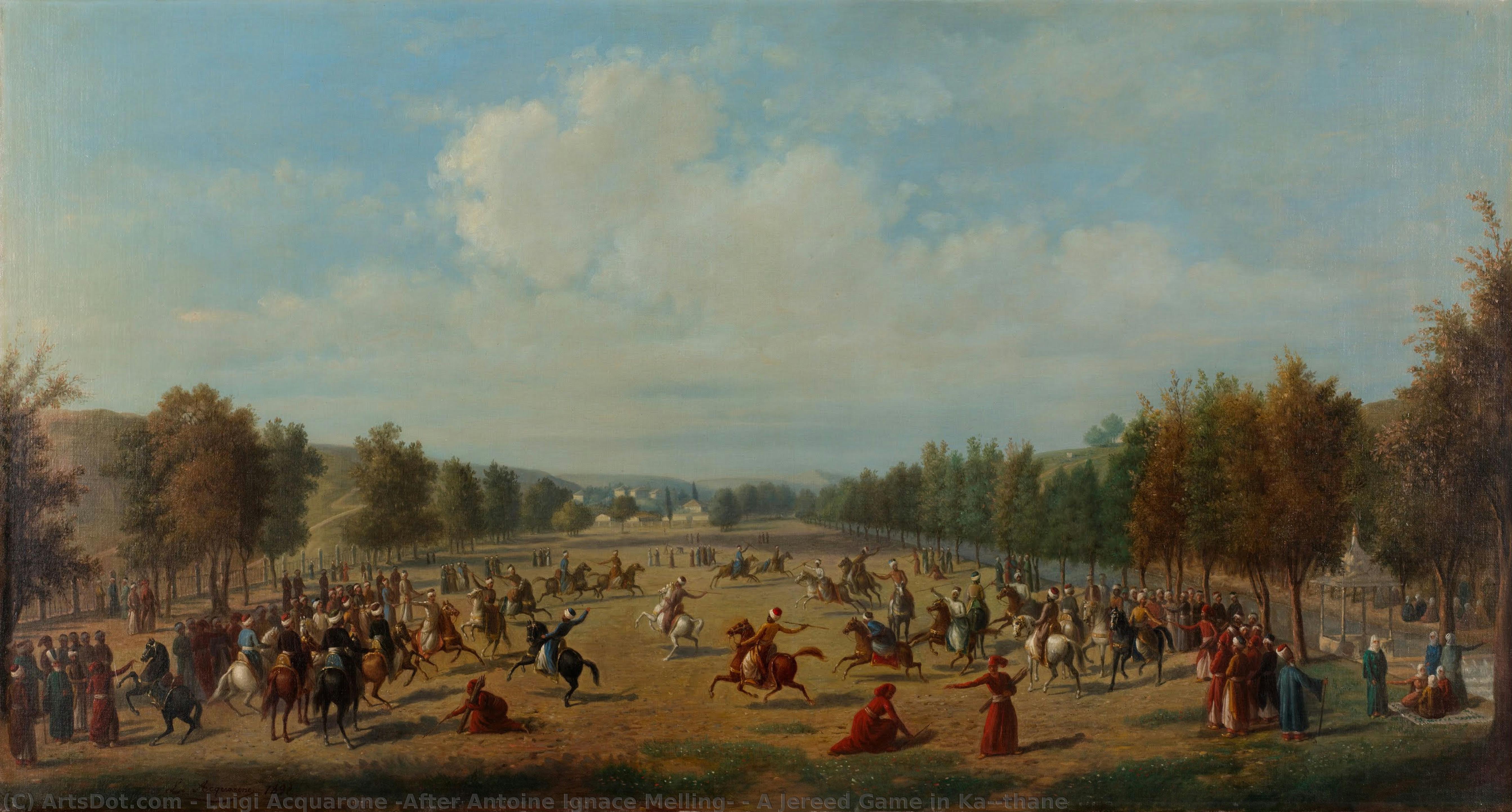
A Jereed Game in Kağıthane
 200.0 x 655.0 cm
 ペラ美術館
ペラ美術館
 詳細を見る
詳細を見る




































作品のオリジナル比率に合わせた、当店の規定サイズからお選びください。

特定のフレームやスペースに合わせて、ご希望のサイズをご入力いただけます。選択されたサイズが元の画像の比率と異なる場合、アートワークをトリミングするか、手描きで要素を追加して絵画を拡張いたします。デジタルモックアップ を制作し、制作開始前にご確認(承認)をいただきます。
画面上のプレビューは、実際のトリミングや拡張を正確に反映しているものではありません。最終的な構図は、モックアップによってのみ正確にご確認いただけます。
カスタムサイズもご利用いただけますが、元の比率を維持するためには、あらかじめ用意されたリストからサイズを選択することをお勧めいたします。
ご注文後、ArtsDot.com チームより詳細な指示をお送りするとともに、仕上がりイメージ(モックアップ)をご提供いたします。


 ガラスオプションは、110cm未満のサイズでのみご利用いただけます。

A Jereed Game in Kağıthane
複製技法
複製画のサイズ
-


合計金額
$ 263
関連作品









アーティストの略歴
Luigi Acquarone (After Antoine Ignace Melling): A Master of Evocative Genre Scenes
Luigi Acquarone, a name perhaps less familiar than his influential predecessor Antoine-Ignace Melling, nevertheless stands as a significant figure in 19th-century Italian art. Born in Geneo, Italy, around 1800, and tragically passing away in Istanbul in 1896, Acquarone’s artistic journey is inextricably linked to the legacy of Melling, a celebrated French painter known for his dramatic genre scenes depicting Venetian life. While often considered an “after” artist – meaning he produced works inspired by or imitating Melling's style – Acquarone developed a distinct voice and technique, imbuing these familiar subjects with a uniquely Italian sensibility.
Acquarone’s early training undoubtedly benefited from the proximity to Melling’s studio in Venice. The French artist had established himself as a leading interpreter of Venetian life, capturing the bustling markets, vibrant festivals, and intimate moments of everyday existence with remarkable realism and theatrical flair. Acquarone absorbed these lessons, mastering Melling's meticulous observation skills and his ability to infuse scenes with narrative tension. However, it wasn’t simply imitation; Acquarone gradually began to introduce subtle shifts in composition, color palette, and psychological depth, establishing a recognizable artistic identity.
The Influence of Melling and the Venetian Tradition
Melling's influence is undeniably pervasive throughout Acquarone’s oeuvre. The artist frequently depicted scenes mirroring those favored by his mentor: lively gatherings in taverns (as evidenced by “A Jereed Game in Kağıthane,” a particularly striking example showcasing a group of men engaged in a traditional Turkish game), bustling marketplaces overflowing with produce and merchants, and portraits of Venetian citizens immersed in their daily routines. Acquarone meticulously rendered the details – the textures of fabrics, the expressions on faces, the glimmering reflections in glassware – reflecting Melling’s commitment to realism. Yet, Acquarone's work possesses a warmer, more Italianate quality than its French counterpart. The lighting is often richer and more golden, and the figures seem imbued with a greater sense of warmth and humanity.
Furthermore, Acquarone was deeply rooted in the rich artistic traditions of Venice itself. He drew inspiration from the works of Venetian masters like Titian and Canaletto, incorporating their use of color, composition, and perspective into his own paintings. The city’s vibrant atmosphere, its complex social dynamics, and its unique cultural heritage provided a constant source of creative stimulation.
Developing a Distinct Style: Narrative Depth and Psychological Insight
While initially adhering closely to Melling's style, Acquarone gradually developed a more sophisticated approach. He began to prioritize narrative depth and psychological insight within his genre scenes. Rather than simply documenting events, he sought to capture the emotions and motivations of his subjects. His figures are not merely static representations; they are imbued with personality, vulnerability, and even a hint of melancholy. This shift is particularly evident in works like “A Jereed Game in Kağıthane,” where the expressions on the faces of the players reveal a complex interplay of camaraderie, competition, and perhaps even underlying tensions.
Acquarone’s use of color also evolved over time. Initially influenced by Melling's preference for muted tones, he gradually embraced brighter hues and bolder contrasts, creating paintings that are both visually arresting and emotionally resonant. He skillfully employed light and shadow to create a sense of drama and atmosphere, drawing the viewer into the heart of each scene.
Major Works and Historical Significance
Among Acquarone’s most notable works is “A Jereed Game in Kağıthane,” a captivating depiction of a traditional Turkish game played in Istanbul. This painting exemplifies his mastery of genre scenes, showcasing his meticulous observation skills, narrative depth, and psychological insight. Other significant paintings include portraits of Venetian citizens, lively tavern scenes, and depictions of religious festivals. His work provides valuable insights into the social and cultural life of 19th-century Venice and Istanbul.
Despite being often overshadowed by his mentor, Luigi Acquarone deserves recognition as a talented and accomplished artist in his own right. His paintings offer a unique window into the world of 19th-century Italy, blending the influence of Melling with his own distinctive artistic vision. His legacy continues to be appreciated for his evocative genre scenes, his masterful technique, and his ability to capture the essence of human experience.
luigi acquarone (after antoine ignace melling)
1800 - 1896 , Italy
基本情報
- Artistic Movement Or Style: Genre scenes, Historical paintings
- Artists Who Influenced This Artist: ['Antoine Igne Melling']
- Date Of Birth: 1800
- Date Of Death: 1896
- Full Name: Luigi Acquarone (after Melling)
- Nationality: Italian
- Notable Artworks: ['A Jereed Game in Kağıthane']
- Place Of Birth: Geneo, Italy