

 プレビュー
プレビュー
 シェアする
シェアする シェアする
シェアする
 詳細を見る
詳細を見る

 ダウンロード
 似ている作品
 X線調査
X線調査 スライドショー
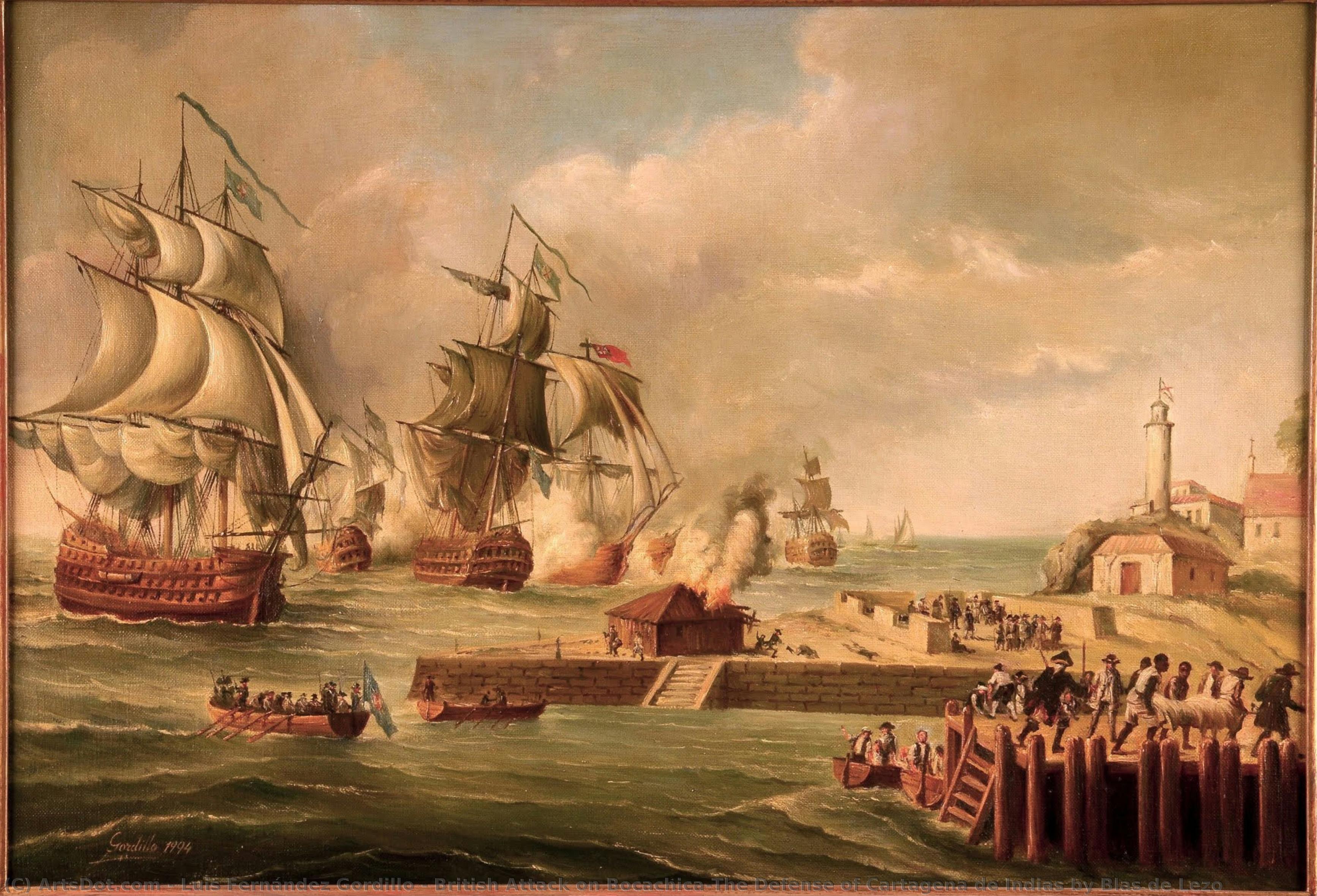
British Attack on Bocachica—The Defense of Cartagena de Indias by Blas de Lezo


 詳細を見る
詳細を見る
ジークレー/アートプリント
迅速な制作と多彩な仕上げオプションを備えた、ミュージアムクオリティのジークレーまたはキャンバスプリント。 ( 手描きの絵画を購入 画像を購入)




P118B $10

P118H $10

P118W $10

P438Z $10

P508JH $12

P508YH $12

P805H $10

P805Z $10

P919BZ $10

P919G $10

P919XJ $10

P959ZH $10

P968JZ $12

W106C $8

W218G $10

W218JH $8

W218Y $10

W307PJ $10

W316G $10

W316PJ $8

W316Y $10

W398PJ $8

W4111J $10

W500HY $15

W500JH $15

W692G $12

W849H $8

W940BG $15

W953PJ $8




作品のオリジナル比率に合わせた、当店の規定サイズからお選びください。

特定のフレームやスペースに合わせて、ご自身でサイズを指定することも可能です。選択されたサイズが元の画像の比率と一致しない場合、作品をトリミングするか、鏡面反射または単色での塗りつぶしによって画像を拡張いたします。制作を開始する前に、ご確認用のデジタルモックアップをお送りいたします。
画面上のプレビューには、実際のトリミングや拡張は反映されませんのでご注意ください。最終的な構図を正確に確認できるのは、モックアップのみとなります。
カスタムサイズも承っておりますが、元の比率を維持するためには、あらかじめ用意されたリストからサイズを選択することをお勧めいたします。


 ガラスオプションは、110cm未満のサイズでのみご利用いただけます。

British Attack on Bocachica—The Defense of Cartagena de Indias by Blas de Lezo
ジークレー/アートプリント
複製画のサイズ
-


合計金額
$ 62
A Maritime Epic Captured in Oil
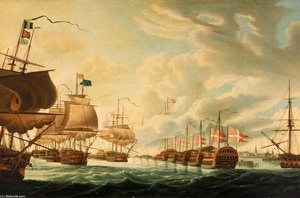
In the grand tradition of historical maritime painting, Luis Fernández Gordillo’s "British Attack on Bocachica—The Defense of Cartagena de Indias by Blas de Lezo" serves as a breathtaking window into one of the most pivotal naval confrontations of the 18th century. This masterful work transports the viewer to the year 1741, capturing the precise moment of tension when the English fleet, commanded by Admiral Edward Vernon, attempted to breach the formidable defenses of the Spanish stronghold. The canvas is alive with the chaos of war; through meticulous brushwork, Gordillo recreates the sight of British warships forcing their way into the Bocachica passage, pushing against the resolute Spanish lines. It is not merely a depiction of a battle, but a cinematic frozen moment that captures the sheer scale of imperial conflict and the raw power of the sea.
The composition is a complex tapestry of movement and light, designed to draw the eye through a labyrinth of naval maneuvers. At the heart of the piece, a large warship engages in a thunderous exchange of cannon fire, its silhouette framed by billowing sails and the smoke of gunpowder. Surrounding this central drama, the artist skillfully layers secondary narratives: smaller boats navigate the turbulent waters near the shore, while figures on the pier observe the unfolding carnage with a mixture of awe and trepidation. The use of perspective creates an immersive depth, where ships recede into a misty, atmospheric background, suggesting the vastness of the Caribbean seascape and the overwhelming nature of the engagement.
Technique and the Mastery of Light
Gordillo employs a technique that leans toward Neoclassicism, characterized by a profound commitment to historical accuracy and realistic detail. The artist utilizes oil on canvas to achieve a rich, luminous texture, building up layers of glaze to capture the translucent quality of light filtering through a heavy, clouded sky. There is a deliberate use of dramatic chiaroscuro; strong contrasts between deep shadows and brilliant highlights emphasize the structural geometry of the ships—the rectangular hulls, the square sails, and the rugged stone of the coastal fortifications. This interplay of light does more than define shape; it heightens the emotional stakes, casting the turbulent waves in a way that suggests both the unpredictability of nature and the ferocity of the combat.
The color palette is masterfully curated to evoke a sense of historical gravity. A foundation of warm ochres, deep browns, and burnt reds provides a grounded, earthy weight to the scene, reminiscent of classical maritime lithographs. These tones are brilliantly punctuated by the cool blues and greens of the churning ocean and the slate grays of the sky, creating a visual tension that mirrors the conflict itself. For the discerning collector or interior designer, this balanced palette offers a sophisticated way to introduce historical drama into a space, providing a focal point that is both intellectually stimulating and aesthetically harmonious.
A Legacy of Strength and Symbolism
Beyond its surface-level action, the painting functions as a powerful symbol of maritime dominance and military resilience. The defense of Cartagena de Indias, led by the legendary Blas de Lezo, remains a cornerstone of Spanish naval identity, and Gordillo’s work honors this legacy of endurance. Every element, from the steadfast lighthouse to the determined figures on the shore, contributes to a narrative of protection and struggle against overwhelming odds. The artwork transcends simple documentation, becoming an evocative meditation on the clash of empires and the indomitable human spirit.
For those seeking to adorn a collection or a curated interior, this reproduction offers more than just decoration; it offers a piece of history. It is an ideal acquisition for lovers of maritime art, historians, and anyone who appreciates the ability of fine art to tell stories of courage and complexity. To hang such a work is to invite a sense of grandeur and narrative depth into a room, turning a wall into a gateway to the golden age of sail.
関連作品


アーティストの略歴
Luis Fernández Gordillo: Weaver of Memories and Social Commentary
Born in the vibrant cultural landscape of Seville in 1934, Luis Fernández Gordillo emerged as a restless and profoundly aware figure within the tapestry of Spanish contemporary art. His journey began in earnest during the 1950s, a period marked by his travels to Paris, where he immersed himself in the pulse of the European avant-garde. It was here that he encountered the raw, emotive power of French Informalist masters such as Wols, Fautrier, Dubuffet, and Michaux. These encounters planted the seeds for a lifelong exploration of texture and materiality, deeply influenced by the gestural freedom of Surrealism and the tactile, earth-bound language of Antoni Tàpies. Gordillo did not merely observe these movements; he absorbed their essence, translating the tension between abstraction and reality into a highly personal and non-transferable subjectivity.
As his career progressed through the 1960s and 1970s, Gordillo demonstrated an extraordinary capacity for stylistic evolution. While his early works leaned toward the abstract and conceptual, he became a key figure in reintroducing figuration and iconographic elements reminiscent of Pop Art into the Spanish dialogue. This period saw him developing a unique methodology of "fragmentarism," where photographic images were integrated into his creative process. By superimposing layers and arranging fragments as if they existed on different planes of reality, he created works that felt like superimposed memories—a continuous construction of accumulation that challenged the viewer to find cohesion within chaos. His technique often blended meticulous collage with bold, expressive brushstrokes, creating a visual language that was both intellectually rigorous and emotionally resonant.
A Legacy of Innovation and Recognition
The significance of Gordillo’s contribution to art history is cemented by his ability to bridge the gap between the personal and the political. His work often serves as a social commentary, utilizing geometric shapes and organic elements to explore the interconnectedness of human consciousness and the natural world. This mastery of form and concept earned him some of the highest honors in the Spanish art world, including:
- Premio Nacional de las Artes Plásticas (1981): A prestigious recognition of his profound impact on plastic arts.
- Gold Medal of the Círculo de Bellas Artes de Madrid (2004): Honoring his lifelong dedication to artistic excellence.
- Premio Velázquez a las Bellas Artes (2007): Further validating his status as a benchmark in contemporary Spanish painting.
Beyond the accolades, Gordillo’s historical importance is reflected in the permanence of his presence in the world's most esteemed institutions. His works are not merely objects of beauty but vital components of the global art canon, held in collections such as the Museo Nacional Centro de Arte Reina Sofía in Madrid, the MACBA in Barcelona, and the IVAM in Valencia. Through his roles as both a creator and an educator, he has nurtured generations of artists, ensuring that his spirit of critical engagement and formal experimentation continues to influence the trajectory of contemporary expression.
The Poetics of Fragmentation
To encounter a work by Luis Fernández Gordillo is to enter a space where history and memory are physically layered. One might find himself captivated by the neoclassical maritime grandeur of British Attack on Bocachica, or lost in the delicate, ethereal textures of Entretejiendo esperanzas (Weaving Hope). In the latter, the use of pink and purple paper fragments creates a poignant metaphor for the fragility of hope and the way memory itself is often composed of disparate, broken pieces. Whether through the heavy application of acrylic on cardboard or the complex layering of collage, Gordillo’s art remains a testament to the power of continuous construction—a lifelong effort to weave together the fragments of a changing world into a singular, profound vision.
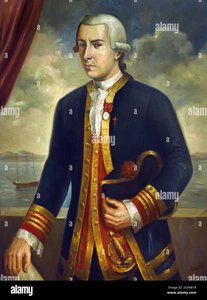
luis fernández gordillo
1952 - , Spain
基本情報
- Artistic Movement Or Style: Abstract Expressionism
- Date Of Birth: 1952
- Full Name: Luis Fernández Gordillo
- Nationality: Spanish
- Notable Artworks:
- Entretejiendo esperanzas
- British Attack on Bocachica—The Defense of Cartagena de Indias
- Place Of Birth: Seville, Spain
関連記事

The Golden Age Reforged: Dramatic Realism & Religious Zeal in Spanish Baroque Art
Explore the dramatic world of Spanish Baroque art! Discover masters like Zurbarán & the powerful influence of religious zeal on painting techniques – a guide for collectors and enthusiasts.
Thomas Butterworth (1768–1842): Navigating the Aesthetics of British Marine Painting
Explore the captivating maritime art of Thomas Butterworth (1768–1842). Discover his stunning depictions of Napoleonic naval battles and life at sea, commissioned works for the East India Company, and enduring legacy. Learn more today!
大英博物館の至宝25選:歴史と芸術が織りなす感動の旅 | ArtsDot
大英博物館の至宝25選:歴史を彩る絵画、彫刻の世界へ。印象派から古代美術まで、名作の背景と芸術家の情熱に迫ります。ArtsDotで高品質なアート複製やインテリアをお楽しみください。オンラインで全コレクションをご覧ください。
Rafael de Penagos: A Study in Spanish Portraiture & Artistic Identity
Explore the life & art of Rafael de Penagos, a leading Spanish Art Deco illustrator. Discover his iconic 'Penagos Woman', commercial work, and lasting legacy. Learn about this pivotal figure in 20th-century Spanish art history.
Philip James de Loutherbourg: Romantic Visions of Maritime Life & the Sublime
Explore the dramatic naval scenes & landscapes of Philip James de Loutherbourg (1740-1812), a key figure in Romantic painting. Discover his legacy, theatrical innovations & iconic works like 'The Battle of the Nile' at ArtsDot.

