

 シェアする
シェアする シェアする
シェアする
 詳細を見る
詳細を見る

 ダウンロード
 似ている作品
 スライドショー
 統計情報
統計情報80 mm f. 5.6 1/30 sec


 詳細を見る
詳細を見る
手描き油彩複製画
当社のアーティストが、お客様のご希望のサイズと額縁に合わせて、キャンバスに手描きで制作する油彩画です。 ( プリント版に切り替え デジタル画像販売へ切り替え)




































作品のオリジナル比率に合わせた、当店の規定サイズからお選びください。

特定のフレームやスペースに合わせて、ご希望のサイズをご入力いただけます。選択されたサイズが元の画像の比率と異なる場合、アートワークをトリミングするか、手描きで要素を追加して絵画を拡張いたします。デジタルモックアップ を制作し、制作開始前にご確認(承認)をいただきます。
画面上のプレビューは、実際のトリミングや拡張を正確に反映しているものではありません。最終的な構図は、モックアップによってのみ正確にご確認いただけます。
カスタムサイズもご利用いただけますが、元の比率を維持するためには、あらかじめ用意されたリストからサイズを選択することをお勧めいたします。
ご注文後、ArtsDot.com チームより詳細な指示をお送りするとともに、仕上がりイメージ(モックアップ)をご提供いたします。


 ガラスオプションは、110cm未満のサイズでのみご利用いただけます。

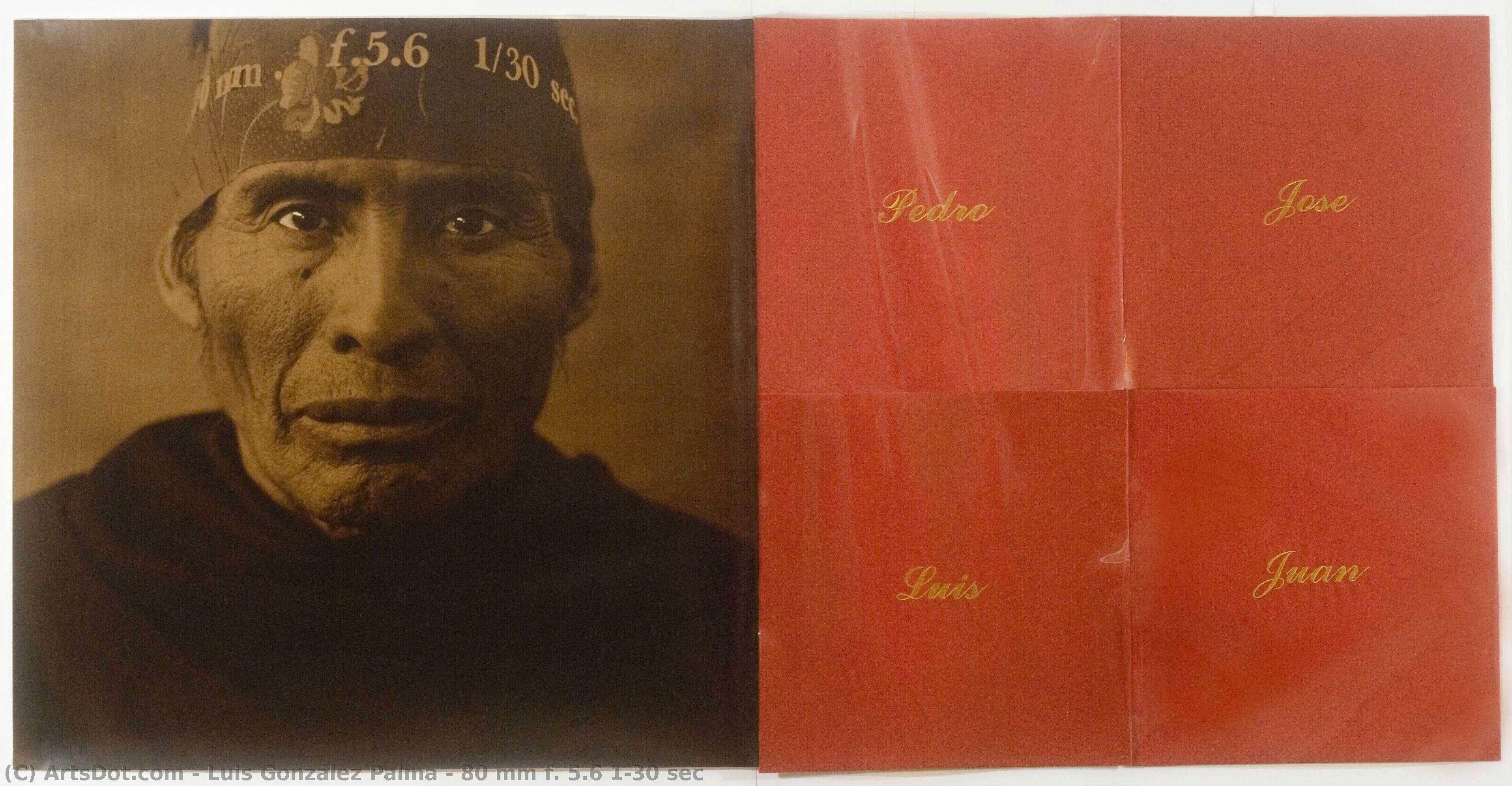
80 mm f. 5.6 1/30 sec
複製技法
複製画のサイズ
-


合計金額
$ 263
A Cinematic Encounter with Identity
In the evocative photograph 80 mm f. 5.6 1/30 sec, the Guatemalan artist Luis González Palma invites viewers into a profound meditation on the layers of cultural memory and the weight of history. The work presents a striking visual dialogue, where the starkness of black and white photography meets a deliberate, saturated red background, creating an immediate and visceral emotional impact. At the center of this composition stands a figure whose presence is both confrontational and dignified, wearing a headband marked with the number 66. This singular detail acts as a cryptic signifier, pulling the observer into a space where the boundaries between documentary evidence and conceptual art begin to blur.
The artist’s technique utilizes the language of photography not merely to capture a moment, but to construct a complex narrative about the hybrid nature of Guatemalan identity. By employing a sepia-toned aesthetic that recalls nineteenth-century ethnographic studies, González Palma references the historical gaze that once categorized indigenous peoples as subjects of scientific interest. However, he subverts this colonial tradition through his masterful use of juxtaposition. The presence of modern elements and the layered arrangement of secondary images suggest a fragmented reality, where the past is never truly gone but is instead constantly being re-interrogated through the lens of contemporary struggle and spiritual resilience.
Symbolism and the Architecture of Memory
Every element within this piece serves as a symbolic node in a larger web of meaning. The subject's stern expression and the deliberate composition evoke the tension between the legacy of colonization and the enduring strength of pre-Columbian spirituality. The photograph functions as an encounter point—a place where European visual culture and Mayan iconography collide. For the discerning collector, this work offers more than just a striking image; it provides a deep, intellectual engagement with the concept of the "hybrid" identity, making it a profound addition to any collection focused on social commentary or contemporary Latin American art.
The interplay between the monochrome subject and the vibrant red backdrop creates a rhythmic tension that is both visually arresting and psychologically demanding. This contrast serves to isolate the subject, forcing a direct confrontation with his gaze, while the surrounding photographic fragments suggest a broader, more chaotic historical context. It is an artwork that demands slow looking, rewarding the viewer with a deeper understanding of how power structures are reflected in the very way we choose to see and document the "other."
A Timeless Addition to Sophisticated Interiors
For interior designers and art enthusiasts seeking to infuse a space with intellectual depth and dramatic flair, 80 mm f. 5.6 1/30 sec offers an unparalleled opportunity. The high-contrast palette of black, white, and red provides a sophisticated anchor for modern, minimalist, or even eclectic decor. As a hand-painted reproduction, this piece brings the textured, soulful essence of González Palma’s vision into the home, serving as a powerful conversation starter that bridges the gap between historical reflection and contemporary aesthetic luxury.
Whether placed in a curated gallery setting or as a focal point in a private study, this work commands attention through its sheer emotional gravity. It is an investment in a piece of visual poetry—a work that does not merely decorate a wall but transforms the atmosphere of a room into one of contemplation, strength, and historical awareness.
関連作品
アーティストの略歴
George Condo: Architect of the Unconscious
Born in Concord, New Hampshire, in 1957, George Condo’s artistic journey began not within the hallowed halls of traditional art academies but amidst a vibrant, experimental scene fueled by punk rock and avant-garde music. His early life was marked by a dual pursuit – a deep engagement with musical composition alongside an intense fascination with painting and drawing. This confluence of influences would prove pivotal in shaping his uniquely unsettling and profoundly captivating visual language.
Condo’s formative years were spent navigating the burgeoning art world of Boston, working as a silkscreen printer before joining the band The Girls, a collective that included future luminaries like Jean-Michel Basquiat. It was during this period, in 1979, that he encountered Basquiat at New York City’s Tier 3 nightclub, an encounter that would irrevocably alter the trajectory of his career. This initial connection sparked a move to New York and a dedicated commitment to pursuing art as his primary vocation.
The Birth of Artificial Realism
Emerging in the East Village art scene of the early 1980s, Condo quickly established himself with a concept he termed “Artificial Realism.” This wasn’t simply about replicating reality; rather, it was a deliberate exploration of its distortions and anxieties. He masterfully blended the techniques and sensibilities of Old Master painting – referencing figures like Rembrandt and Velázquez – with a distinctly American pop sensibility, creating images that were simultaneously familiar and deeply unsettling.
Condo’s work is characterized by a complex interplay of recognizable forms rendered in fragmented, distorted ways. Figures appear to be caught in moments of intense emotional turmoil, their faces contorted in expressions of fear, confusion, or even ecstatic joy. The use of vibrant color palettes – often jarring and unexpected – further amplifies the sense of unease and psychological depth. This approach wasn’t merely stylistic; it reflected Condo's interest in exploring the subconscious mind and the hidden anxieties that lie beneath the surface of everyday experience.
Collaborations and Influences
Condo’s artistic practice has been profoundly shaped by a series of significant collaborations. His partnership with William S. Burroughs, beginning in 1988, resulted in a remarkable body of work – paintings, sculptures, etchings, and writings – that explored themes of paranoia, identity, and the fragmented nature of reality. These collaborative pieces, notably the *Ghost of Chance* series, are considered cornerstones of Condo’s oeuvre, demonstrating his ability to synthesize disparate influences into a cohesive and intellectually stimulating artistic vision.
Furthermore, his association with Keith Haring during the 1980s proved instrumental in shaping his approach to public art. The two artists frequently engaged in collaborative projects, creating works that reflected their shared interest in social commentary and visual communication. Condo’s work also benefited from his time spent assisting Andy Warhol at his factory, absorbing a crucial understanding of pop art techniques and the dynamics of celebrity culture.
Legacy and Recognition
George Condo's influence extends far beyond the confines of the contemporary art world. His distinctive visual style has resonated with artists across diverse disciplines, from graphic design to illustration. He is recognized as a key figure in the revival of painting during the 1980s, alongside Basquiat and Haring, and his work continues to be exhibited internationally at prestigious institutions such as the Guggenheim Museum, the Solomon R. Guggenheim Museum, and the Albright-Knox Museum.
Condo’s art speaks to a fundamental human experience – the awareness of our own vulnerability and the inherent instability of reality. Through his unsettling yet captivating imagery, he invites viewers to confront their own anxieties and explore the hidden depths of the unconscious mind. He remains an artist whose work continues to challenge, provoke, and ultimately reward those willing to engage with its complex and layered meanings.

luis gonzález palma
1957 - , Guatemala
基本情報
- Artistic Movement Or Style: Artificial Realism
- Artists Or Movements Influenced By This Artist:
- Keith Haring
- Andy Warhol
- Artists Who Influenced This Artist:
- Jean-Michel Basquiat
- Mark Dagley
- Date Of Birth: 1957
- Full Name: George Condo
- Nationality: American
- Notable Artworks:
- The Cloudmaker
- Dancing to Miles
- Place Of Birth: Concord, New Hampshire, USA
関連記事
Witnessing History Through Lens & Light: Documentary Photography's Enduring Legacy
Explore the powerful history of documentary photography – from its origins to contemporary masters like Gordon Parks & W. Eugene Smith. Discover how this art form shapes our understanding of society and witness pivotal moments in time.
Beyond the Lens: Photography's Enduring Influence on Modern & Contemporary Art
Explore photography's pivotal role in shaping modern & contemporary art. Discover key movements, influential artists like Stieglitz, and expert collecting advice from ArtsDot.

Monochrome Visions: Exploring the Aesthetic & Historical Significance of Black & White Photography
Explore the rich history & artistic power of black and white photography. From early techniques to iconic masters like Ansel Adams, discover why monochrome continues to captivate art lovers today. Expert insights for collectors.
Documentary Photography's Defining Moments: 10 Masterpieces for Your Home |
Explore 10 defining documentary photography masterpieces – from Dorothea Lange to Robert Capa. Discover powerful stories, iconic images & timeless art for your home. Museum-quality prints at .

Pictorialism: A Search for Artistic Photography's Soul – Aesthetics, Techniques & Legacy
Explore the captivating world of Pictorialism – a pivotal movement that transformed photography into fine art. Discover key artists like Stieglitz & Käsebier, techniques, and collecting tips from experts.