

 プレビュー
プレビュー
 プリントを購入
 シェアする
シェアする シェアする
シェアする
 詳細を見る
詳細を見る

 ダウンロード
 似ている作品
 X線調査
X線調査 スライドショー
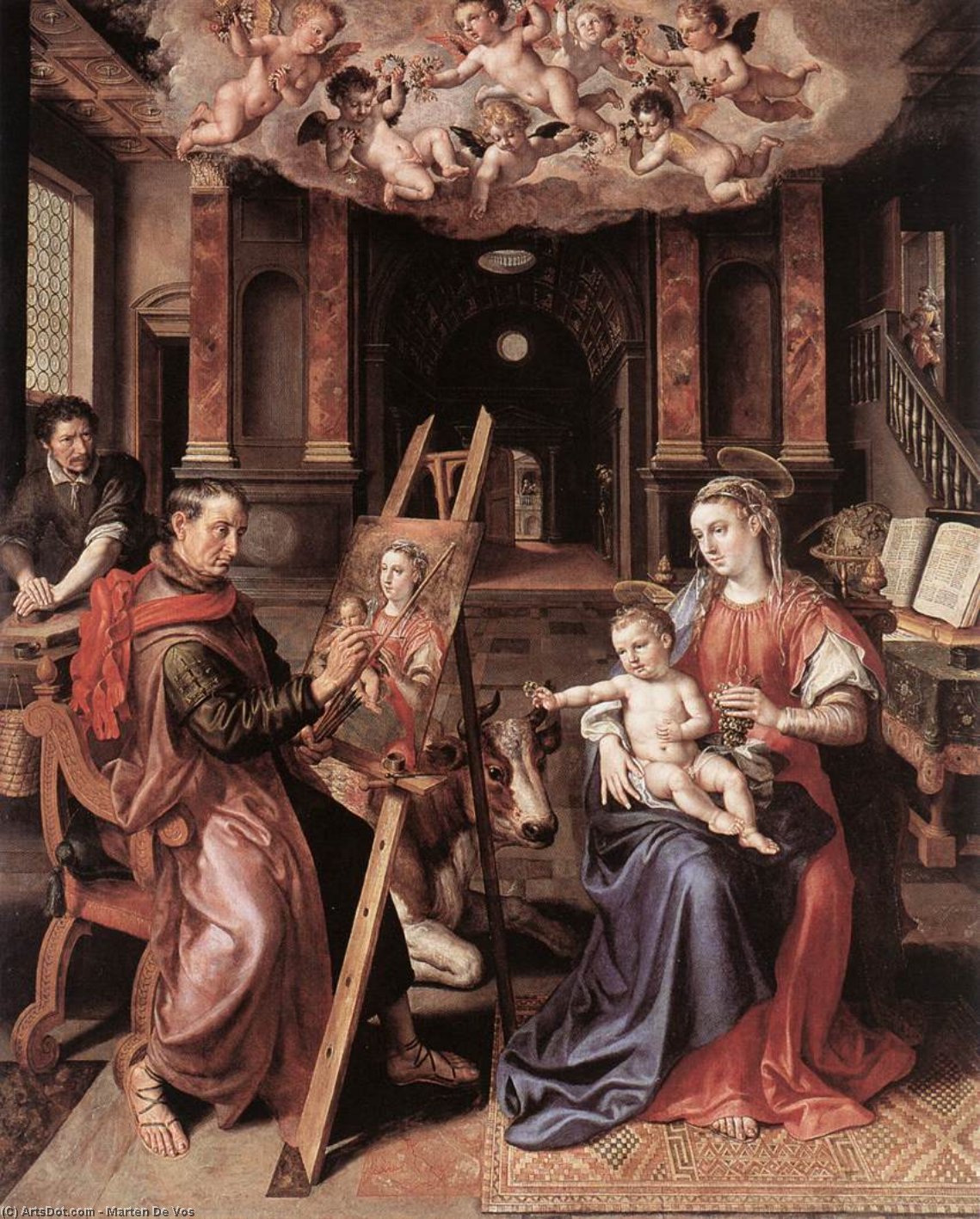
St Luke Painting the Virgin Mary
 Oil
Oil- WallArt
- Flemish Mannerism
 1602
1602- Early Modern
 270.0 x 217.0 cm
 コンクイリク ムーゼウ フール スホーン クンステン アントワープ
 詳細を見る
詳細を見る




P118B $10

P118H $10

P118W $10

P438Z $10

P508JH $12

P508YH $12

P805H $10

P805Z $10

P919BZ $10

P919G $10

P919XJ $10

P959ZH $10

P968JZ $12

W106C $8

W218G $10

W218JH $8

W218Y $10

W307PJ $10

W316G $10

W316PJ $8

W316Y $10

W398PJ $8

W4111J $10

W500HY $15

W500JH $15

W692G $12

W849H $8

W940BG $15

W953PJ $8




作品のオリジナル比率に合わせた、当店の規定サイズからお選びください。

特定のフレームやスペースに合わせて、ご希望のサイズをご入力いただけます。選択されたサイズが元の画像の比率と異なる場合、アートワークをトリミングするか、手描きで要素を追加して絵画を拡張いたします。デジタルモックアップ を制作し、制作開始前にご確認(承認)をいただきます。
画面上のプレビューは、実際のトリミングや拡張を正確に反映しているものではありません。最終的な構図は、モックアップによってのみ正確にご確認いただけます。
カスタムサイズもご利用いただけますが、元の比率を維持するためには、あらかじめ用意されたリストからサイズを選択することをお勧めいたします。
ご注文後、ArtsDot.com チームより詳細な指示をお送りするとともに、仕上がりイメージ(モックアップ)をご提供いたします。


 ガラスオプションは、110cm未満のサイズでのみご利用いただけます。

St Luke Painting the Virgin Mary
複製技法
複製画のサイズ
-


合計金額
$ 263
A Divine Encounter Captured in Flemish Mannerism
In the grand tapestry of the Northern Renaissance, few moments possess the quiet sanctity found in Maerten de Vos’s St Luke Painting the Virgin Mary. This monumental work, dating from 1602, serves as a profound meditation on the intersection of the divine and the earthly. The scene unfolds with an intimate yet theatrical grace, presenting the Virgin Mary cradling the infant Jesus amidst a gathering that feels both celestial and grounded. As the viewer’s eye wanders through the composition, one is struck by the delicate balance of light and shadow that defines the Flemish Mannerist style, where every brushstroke seems to breathe life into the sacred figures.
The painting captures a pivotal moment of artistic and spiritual creation. St. Luke, traditionally revered as both an evangelist and a patron of painters, is depicted in the act of immortalizing the Madonna. This meta-narrative—a painting within a painting—invites us to contemplate the power of art to preserve the holy. The presence of other figures, standing in quiet reverence or watchful observation, adds layers of communal devotion to the scene. Even the unexpected inclusion of horses near the periphery suggests a world that is bustling and alive, yet momentarily stilled by the profound weight of the miracle occurring at the center of the canvas.
Symbolism and the Language of Light
Every element within de Vos’s masterpiece serves as a silent messenger. The placement of the book nearby hints at the scriptural foundations of the scene, while the clock positioned above the Virgin Mary acts as a memento mori, a subtle reminder of the passage of time even amidst the eternal nature of the divine. The interplay of textures—the soft skin of the Christ child, the heavy drapery of the Virgin’s robes, and the sturdy presence of the horses—demonstrates de Vos's technical mastery in rendering depth and materiality.
For the discerning collector or interior designer, this piece offers more than mere decoration; it provides a focal point of intellectual and emotional depth. The composition, characterized by its large-scale 270 x 217 cm presence, commands attention in any grand setting. Whether placed in a formal library, a sophisticated gallery, or a curated living space, the painting’s rich palette and complex storytelling evoke a sense of timelessness. It is an invitation to slow down, to observe the intricate details of the Flemish tradition, and to find beauty in the sacred narratives that have shaped Western art history.
Owning a high-quality reproduction of such a significant work allows one to bring the prestige of the 17th-century Antwerp school into a contemporary environment. It is an opportunity to surround oneself with the elegance of Maerten de Vos, whose ability to blend Italianate influence with Northern precision continues to inspire awe and contemplation centuries after his passing.
関連作品

アーティストの略歴
Early Life and Training in Antwerp
Maerten de Vos, born in the bustling artistic hub of Antwerp in 1532, emerged from a family deeply rooted in the city’s painting tradition. His father, Pieter de Vos, originally hailing from Leiden, had established himself as a respected painter after an apprenticeship with Jeroom Scuelens. Young Maerten, alongside his brother Pieter, initially received his foundational training within their father's workshop, absorbing the techniques and sensibilities of the mid-16th century Flemish school. While speculation suggests a possible tutelage under the prominent Frans Floris—the leading history painter of the time—documentary evidence remains elusive. This early period undoubtedly instilled in him a solid understanding of composition, draftsmanship, and the prevailing artistic currents of Antwerp.
The Italian Sojourn and Venetian Influences
As was common for ambitious Flemish artists seeking to broaden their horizons, Maerten de Vos embarked on an extended journey to Italy between 1550 and 1558. This transformative experience proved pivotal in shaping his artistic style. He likely sojourned in major centers like Rome, Florence, and Venice, immersing himself in the masterpieces of the Italian Renaissance and Mannerism. The vibrant colors and dynamic compositions of Venetian painters—particularly Paolo Veronese and Jacopo Tintoretto—left an indelible mark on his work. Carlo Ridolfi, a 17th-century art biographer, even claimed that de Vos studied directly under Tintoretto in Venice, though this assertion requires careful consideration. Regardless, the influence is palpable: a newfound richness of hue, a heightened sense of drama, and a more fluid approach to form characterize his paintings following his return to Antwerp.
A Prolific Draftsman and Rise to Prominence
Upon his return to Antwerp in 1558, de Vos quickly integrated into the city’s artistic community, joining the Guild of Saint Luke. He married Joanna le Boucq, a woman from Valenciennes, and together they raised a large family. The art world of Antwerp was competitive; Frans Floris dominated the scene with his expansive workshop. De Vos initially faced challenges securing commissions but proved fortunate in 1564 when he received patronage from Gillis Hooftman, a wealthy merchant who commissioned several significant works. However, it was the tumultuous period following the Beeldenstorm of the 1560s—the wave of iconoclasm that swept through the Netherlands—that truly propelled de Vos to prominence. Floris, deeply shaken by the destruction of his art, retreated from active painting, creating a void in the market for history paintings. De Vos skillfully stepped into this breach, becoming one of the leading figures in the Spanish Netherlands.
History Paintings and Religious Commissions
De Vos distinguished himself as a prolific painter of history and allegorical scenes, often imbued with moral or religious themes. His work reflects both his earlier Flemish training and the Italian influences he absorbed during his travels. He was particularly adept at depicting complex narratives filled with numerous figures, showcasing his mastery of composition and anatomical detail. In 1570, he received a prestigious commission to decorate the palatine chapel of William, Duke of Brunswick-Lüneburg in Celle, Germany—a project that involved creating a Lutheran scheme of decoration. This demonstrates his adaptability and willingness to cater to diverse religious patrons. Later in his career, as Antwerp experienced a resurgence of Catholic fervor, de Vos became a leading producer of altarpieces, effectively paving the way for the rise of Peter Paul Rubens.
Legacy and Historical Significance
Maerten de Vos’s impact extended beyond his own paintings. He was an exceptionally prolific draftsman, creating hundreds of designs that were widely circulated through Antwerp printing workshops. These prints served as models for tapestries, stained glass windows, and other decorative arts, disseminating his style throughout Europe and the Spanish colonies. His influence can be seen in the works of numerous artists who followed him. He left a lasting legacy not only as a skilled painter but also as an important innovator in printmaking and a key figure in the transition from Mannerism to Baroque art in the Netherlands. He died in Antwerp on December 4, 1603, leaving behind a rich artistic heritage that continues to captivate and inspire.
maarten de vos
1532 - 1603
基本情報
- Artistic Movement Or Style: History painting, Portraiture
- Artists Or Movements Influenced By This Artist: ['Peter Paul Rubens']
- Artists Who Influenced This Artist:
- Frans Floris
- Paolo Veronese
- Date Of Birth: 1532
- Date Of Death: 1603
- Full Name: Maerten de Vos
- Nationality: Flemish
- Place Of Birth: Antwerp, Belgium
関連記事

エル・グレコの傑作25選:魂を揺さぶる宗教画と芸術の深淵 | ArtsDot
エル・グレコの傑作25選:魂を揺さぶる宗教画の世界へ。スペイン絵画の巨匠、マニエリスム様式と Toledo の光彩を紐解きます。ArtsDot.com で名画のアートプリントや複製画をお楽しみください。コレクションはこちら →
フラ・アンジェリコの傑作25選:ルネサンス美術の神髄と至高の装飾 | ArtsDot
フラ・アンジェリコの傑作25選。ルネサンス美術の神髄を紐解き、天使のような静謐な色彩と宗教画の世界へ誘います。壁画やフレスコ画の技法、修道院に息づく祈りの絵…ArtsDotで至高のアートプリントをお手軽に。コレクションを探索する。
Jacob Henricus Maris: A Master of Dutch Atmospheric Realism & the Intimate Landscape
Explore the captivating world of Jacob Henricus Maris, a leading figure of the Dutch Hague School. Discover his atmospheric landscapes, signature brushstrokes & lasting influence on 19th-century art. Learn more at ArtsDot.

ジョット・ディ・ボンドーネ:至高の25選 - ルネサンスの夜明けを彩る傑作たち | ArtsDot
ジョット・ディ・ボンドーネの至高の25選。ルネサンス美術を牽引した巨匠の傑作と、その感動的な物語を紐解きます。高品質な絵画複製やインテリアアートで、名画の世界をあなたの空間に。ArtsDot.com でコレクションをご覧ください。
Mannerism: Bridging Renaissance Harmony & Baroque Drama – A Study of Style & Affectation
Explore the fascinating world of Mannerism! Discover its key characteristics, pioneering artists like Pontormo & Bronzino, and its pivotal role in bridging Renaissance harmony to Baroque drama. A comprehensive guide for art enthusiasts.

