

 プレビュー
プレビュー
 プリントを購入
 シェアする
シェアする シェアする
シェアする
 詳細を見る
詳細を見る

 ダウンロード
 似ている作品
 X線調査
X線調査 スライドショー
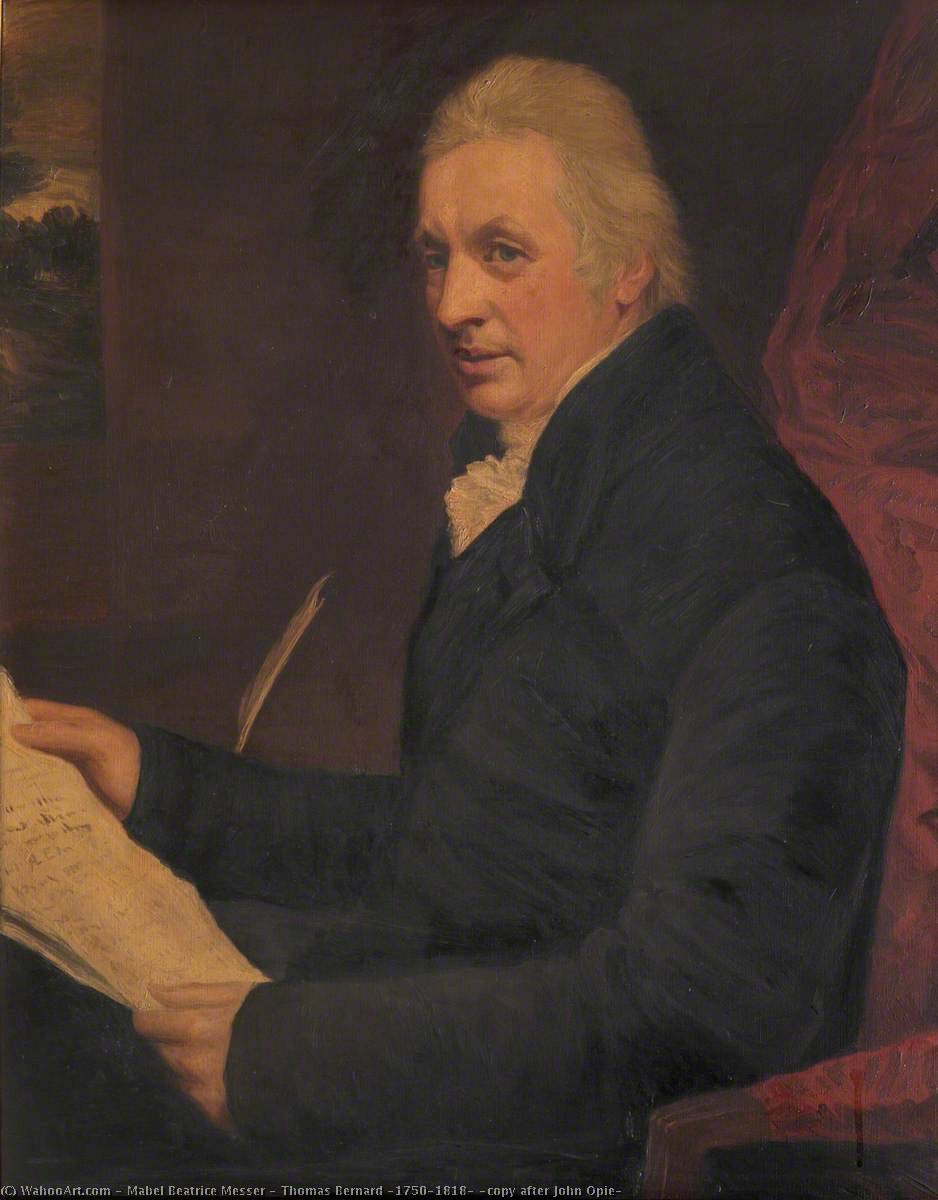
Thomas Bernard (1750–1818) (copy after John Opie)
 1920
1920 88.0 x 75.0 cm
 ロイヤル・インスティテューション
 詳細を見る
詳細を見る




































作品のオリジナル比率に合わせた、当店の規定サイズからお選びください。

特定のフレームやスペースに合わせて、ご希望のサイズをご入力いただけます。選択されたサイズが元の画像の比率と異なる場合、アートワークをトリミングするか、手描きで要素を追加して絵画を拡張いたします。デジタルモックアップ を制作し、制作開始前にご確認(承認)をいただきます。
画面上のプレビューは、実際のトリミングや拡張を正確に反映しているものではありません。最終的な構図は、モックアップによってのみ正確にご確認いただけます。
カスタムサイズもご利用いただけますが、元の比率を維持するためには、あらかじめ用意されたリストからサイズを選択することをお勧めいたします。
ご注文後、ArtsDot.com チームより詳細な指示をお送りするとともに、仕上がりイメージ(モックアップ)をご提供いたします。


 ガラスオプションは、110cm未満のサイズでのみご利用いただけます。

Thomas Bernard (1750–1818) (copy after John Opie)
複製技法
複製画のサイズ
-


合計金額
$ 263
関連作品








アーティストの略歴
A Quiet Chronicler of Scientific Minds
Mabel Beatrice Messer (1874–1950) occupies a fascinating, and often overlooked, niche in British portraiture. While not a name immediately recognizable alongside the Reynolds or Gainsboroughs of history, her work provides a compelling window into the intellectual landscape of the late Victorian and early 20th centuries. Messer wasn’t concerned with capturing grand societal figures or aristocratic splendor; instead, she dedicated herself to portraying the leading scientists of her time – men who were reshaping our understanding of the natural world. Her portraits, often copies after more established artists like John Collier, are not exercises in mere replication but thoughtful interpretations imbued with a quiet dignity and respect for their subjects.
Born in Blackheath, Kent, Messer’s early life remains somewhat shrouded in mystery. We know she was the daughter of a mechanical engineer, a background that perhaps fostered an appreciation for precision and detail – qualities evident in her meticulous brushwork. While formal artistic training details are scarce, it's clear she possessed considerable skill as a painter, particularly in oils. Her focus quickly gravitated towards portraiture, but with a distinct emphasis: the luminaries of science. This wasn’t simply about painting faces; it was about capturing intellect, dedication, and the weight of discovery.
The Royal Society Commissions & A Focus on Legacy
Messer's most significant work came through commissions from the Royal Society Picture Library. In an era before widespread photography, painted portraits were crucial for establishing a lasting visual record of Fellows – those elected to Britain’s prestigious scientific institution. She undertook several projects copying existing works, notably creating reproductions after John Collier’s original portrait of Charles Darwin in 1912. This wasn't simply duplication; Messer brought her own sensibility to the task, refining details and ensuring a faithful representation of the iconic naturalist. Similarly, she produced copies of portraits of John Tyndall (after J. McLure Hamilton) and John William Strutt, 3rd Baron Rayleigh (after Philip Burne Jones). These weren’t commissions for private collectors seeking status symbols; they were about preserving the image of scientific achievement for posterity.
The choice to work primarily through copying existing compositions is noteworthy. It suggests Messer may have lacked the connections or opportunities to secure original portrait sittings with these prominent figures directly. However, it also speaks to a deep respect for established artistic techniques and a desire to contribute to the ongoing visual narrative of scientific history. She wasn’t striving for radical innovation but rather for accurate and dignified representation.
Technique & Artistic Style
Messer's technique is characterized by its meticulous realism and subtle use of light and shadow. Her portraits aren’t flamboyant or overtly expressive; they are restrained, focusing on capturing the likeness and character of her subjects. The oil paintings demonstrate a mastery of texture, particularly in rendering facial features, hair, and clothing. She paid close attention to detail, ensuring that every button, fold of fabric, and strand of beard was accurately depicted. This dedication to precision lends her work a sense of authenticity and gravitas.
While she didn’t develop a highly distinctive or avant-garde style, Messer's portraits possess a quiet power. They are not about sensationalism but about conveying the intellectual weight and human dignity of the scientists they depict. The compositions often adhere to traditional portrait conventions – three-quarter length views, formal poses, and subdued backgrounds – further emphasizing her focus on faithful representation rather than artistic experimentation.
Historical Significance & A Lasting Record
Mabel Beatrice Messer’s historical significance lies in her role as a chronicler of the scientific community. Her portraits, though often reproductions, provide valuable visual documentation of leading figures at a pivotal moment in history. They offer insights into how these scientists were perceived and remembered by their contemporaries. In an age where the public understanding of science was growing, Messer’s work helped to solidify the image of the scientist as a figure of authority, intellect, and dedication.
Her legacy is one of quiet competence and unwavering commitment to her chosen subject matter. While she may not be celebrated as a groundbreaking innovator, Mabel Beatrice Messer deserves recognition for her contribution to preserving the visual history of science – a lasting record of the minds that shaped our world. Her work continues to offer a glimpse into the lives and legacies of these remarkable individuals, reminding us of the enduring power of portraiture to capture not just likeness but also character and intellectual spirit.
基本情報
- Artistic Movement Or Style: Pop artist
- Date Of Death: Living
- Full Name: Mabel Beatrice Messer
- Notable Artworks:
- Don’t Call Me Up
- Mad Love

