

 プレビュー
プレビュー
 シェアする
シェアする シェアする
シェアする
 詳細を見る
詳細を見る

 ダウンロード
 似ている作品
 X線調査
X線調査 スライドショー
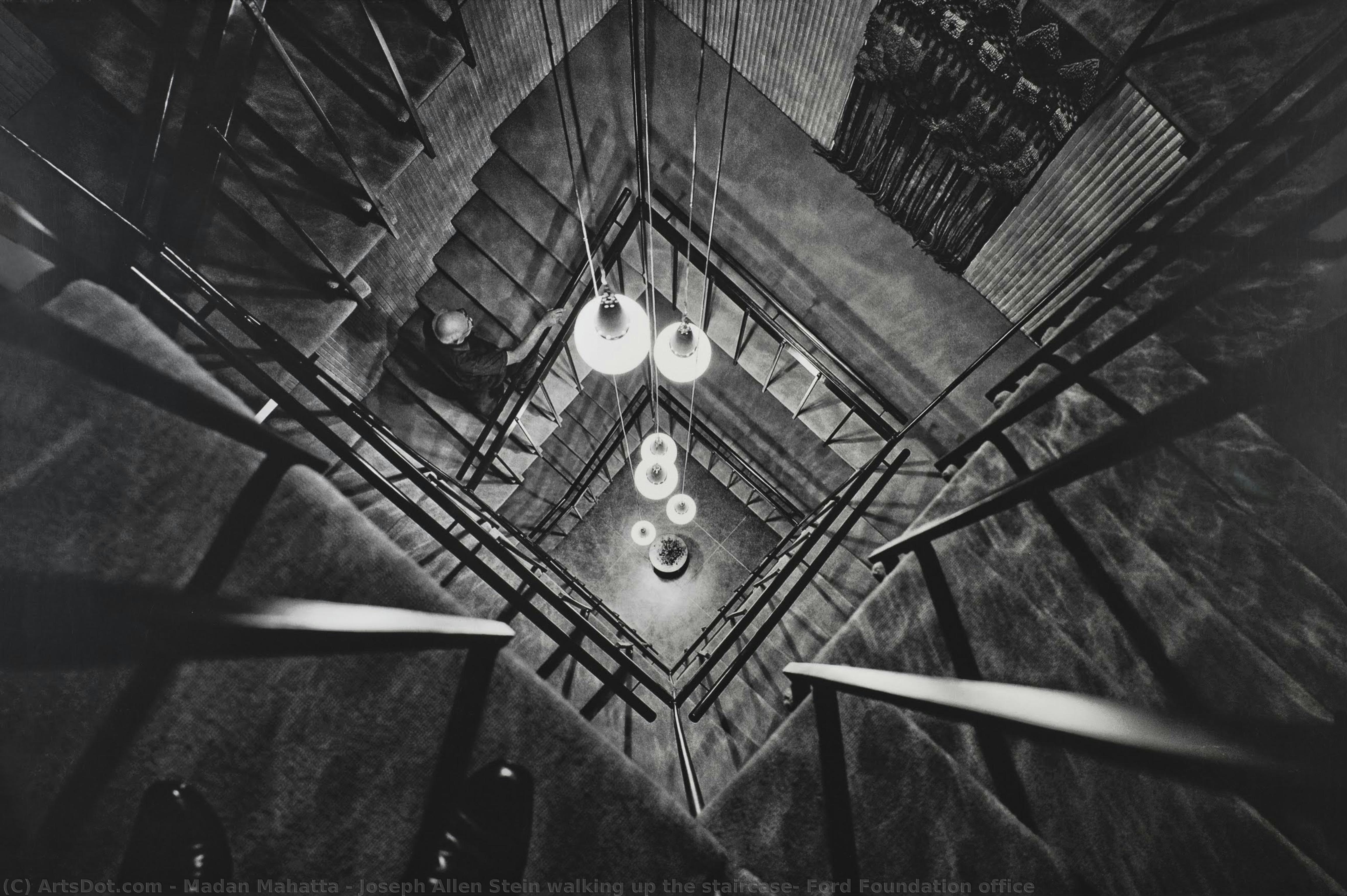
Joseph Allen Stein walking up the staircase, Ford Foundation office

 詳細を見る
詳細を見る
ジークレー/アートプリント
迅速な制作と多彩な仕上げオプションを備えた、ミュージアムクオリティのジークレーまたはキャンバスプリント。 ( 手描きの絵画を購入 画像を購入)




































作品のオリジナル比率に合わせた、当店の規定サイズからお選びください。

特定のフレームやスペースに合わせて、ご自身でサイズを指定することも可能です。選択されたサイズが元の画像の比率と一致しない場合、作品をトリミングするか、鏡面反射または単色での塗りつぶしによって画像を拡張いたします。制作を開始する前に、ご確認用のデジタルモックアップをお送りいたします。
画面上のプレビューには、実際のトリミングや拡張は反映されませんのでご注意ください。最終的な構図を正確に確認できるのは、モックアップのみとなります。
カスタムサイズも承っておりますが、元の比率を維持するためには、あらかじめ用意されたリストからサイズを選択することをお勧めいたします。


 ガラスオプションは、110cm未満のサイズでのみご利用いただけます。

Joseph Allen Stein walking up the staircase, Ford Foundation office
ジークレー/アートプリント
複製画のサイズ
-


合計金額
$ 62
関連作品








アーティストの略歴
The Lens of a Nation: The Visionary Eye of Madan Mahatta
In the sweeping narrative of India’s post-independence identity, few visual chroniclers have captured the pulse of transformation as poignantly as Madan Mahatta. Born in 1932 in the serene landscapes of Srinagar, Kashmir, Mahatta’s journey was one of profound movement and technical mastery. His early life, shaped by a heritage of photographic excellence within the esteemed Mahatta & Co. studios, provided him with a unique vantage point from which to observe a nation in flux. Seeking to refine his craft beyond the borders of his homeland, he traveled to England, studying at the Guildford School of Arts and Crafts and apprenticing at the Ilford Lab in London. This period of formal training in the United Kingdom was transformative; it equipped him with an advanced understanding of light, space, and the burgeoning science of colour photography—a skill he would later bring back to India, introducing negative-to-positive colour printing to his family’s Delhi studio for the very first time.
Upon his return to New Delhi in 1954, Mahatta found himself at the epicenter of a monumental historical moment. The young, newly free nation was embarking on an ambitious project of self-definition, led by the visionary Prime Minister Jawaharlal Nehru, whose commitment to modernism sought to forge a secular and progressive Indian identity. As the city began to expand and reshape itself through concrete, steel, and glass, Mahatta stood ready with his camera. His work became much more than mere documentation; it was an artistic dialogue with the very fabric of urban evolution. Through his lens, the construction of monumental structures like the Hall of Nations and the Asian Games Village were not just building projects, but symbols of a collective aspiration toward progress and modernity.
Architectural Symbiosis and the Art of Light
What distinguishes Mahatta’s oeuvre from standard architectural photography is his profound ability to transcend the static nature of buildings. He did not merely photograph structures; he captured the soul of modernism. His practice was defined by deep, collaborative relationships with the architects who were literally reshaping the Indian skyline. By working closely with masters such as Raj Rewal, Charles Correa, Achyut Kanvinde, and Joseph Allen Stein, Mahatta gained an intimate understanding of their design philosophies. This intimacy allowed him to compose images that played with triangular planes, reflecting pools, and the interplay of sunlight and shadow, much like the architecture itself. His photographs often utilized unusual angles to evoke the geometric precision and material honesty of the modernist movement.
His technical approach was characterized by a masterful use of black-and-white film, which lent a timeless, sculptural quality to his subjects. In these monochrome compositions, the textures of pebble walls, the starkness of concrete, and the rhythmic patterns of urban planning were elevated to high art. Yet, even within this rigorous formal structure, there remained a deeply humanist undertone. Mahatta possessed a sensitive eye for the way human life intersected with these new environments. Whether capturing a quiet moment of an architect in a sparsely furnished room or the grand scale of a public institution, his work always maintained a sense of empathy and a reverence for the lived experience within the built form.
A Lasting Legacy of Modernist Memory
The historical significance of Madan Mahatta’s archive cannot be overstated. He leaves behind a visual legacy that serves as an indispensable record of the Nehruvian era—a period of intense optimism and rapid urbanization. His photographs act as a bridge between the traditional past and the modernist future, documenting a unique moment in international modernism where Indian architects were asserting their place on the global stage. Through his meticulous documentation, the ephemeral stages of construction and the fleeting light of a specific historical epoch have been preserved for eternity.
Today, Mahatta’s work continues to resonate within the global art community, featured in prestigious exhibitions such as Illuminating India at the Science Museum in London and Stretched Terrains at the Kiran Nadar Museum of Art. His contribution to photography extends beyond the architectural; he was a prolific artist who explored portraiture, dance, and theatre, always maintaining that extraordinary sense of light and space that defined his generation. As we look back upon the transformation of New Delhi, it is through Mahatta’s eyes that we truly witness the birth of a modern metropolis, seeing not just the stone and mortar, but the very spirit of a nation rising.
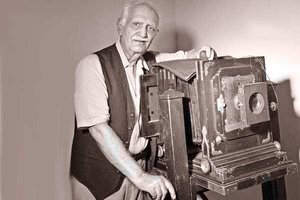
Madan Mahatta
1932 - 2014 , India
基本情報
- Artistic Movement Or Style: Architectural Photography
- Artists Or Movements Influenced By This Artist: ['Raj Rewal']
- Date Of Birth: 1932
- Full Name: madan mahatta
- Nationality: Indian
- Notable Artworks:
- Asian Games Village
- The Hall of Nations
- DCM Pavilion
- Place Of Birth: श्रीनगर, India

