

 プレビュー
プレビュー
 シェアする
シェアする シェアする
シェアする
 詳細を見る
詳細を見る

 ダウンロード
 似ている作品
 X線調査
X線調査 スライドショー
 統計情報
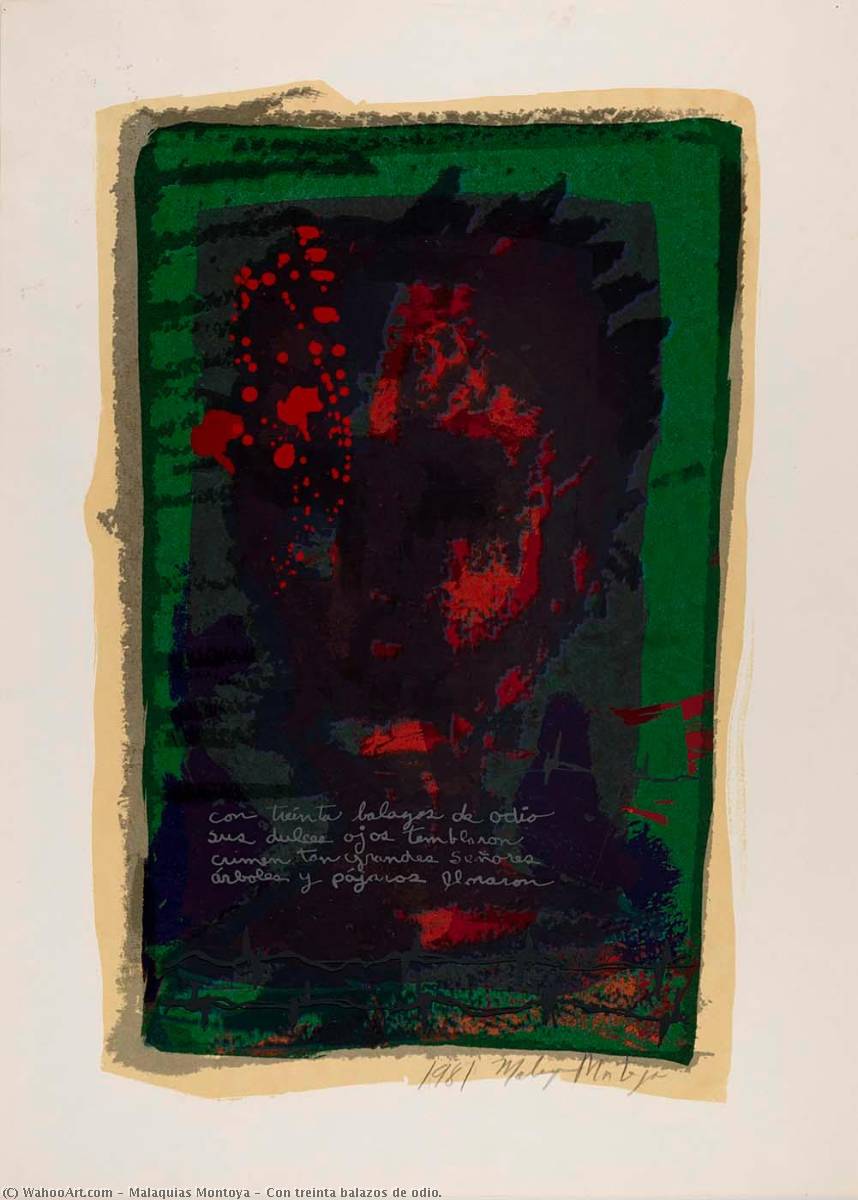
統計情報Con treinta balazos de odio.
 1981
1981 59.0 x 43.0 cm
 詳細を見る
詳細を見る
ジークレー/アートプリント
迅速な制作と多彩な仕上げオプションを備えた、ミュージアムクオリティのジークレーまたはキャンバスプリント。 ( 手描きの絵画を購入 デジタル画像販売へ切り替え)




































作品のオリジナル比率に合わせた、当店の規定サイズからお選びください。

特定のフレームやスペースに合わせて、ご自身でサイズを指定することも可能です。選択されたサイズが元の画像の比率と一致しない場合、作品をトリミングするか、鏡面反射または単色での塗りつぶしによって画像を拡張いたします。制作を開始する前に、ご確認用のデジタルモックアップをお送りいたします。
画面上のプレビューには、実際のトリミングや拡張は反映されませんのでご注意ください。最終的な構図を正確に確認できるのは、モックアップのみとなります。
カスタムサイズも承っておりますが、元の比率を維持するためには、あらかじめ用意されたリストからサイズを選択することをお勧めいたします。


 ガラスオプションは、110cm未満のサイズでのみご利用いただけます。

Con treinta balazos de odio.
ジークレー/アートプリント
複製画のサイズ
-


合計金額
$ 62
The Artist's Vision
Malaquias Montoya is a renowned artist known for his bold and evocative works that often explore themes of social justice and human rights. In Con treinta balazos de odio, the artist uses a combination of colors and textures to convey a sense of intensity and urgency. The painting's title, which translates to "with thirty shots of hatred," suggests a powerful message about the destructive nature of violence and oppression. Key Features of the Painting:- The use of bold colors and textures to create a sense of tension and conflict
- The incorporation of symbolic imagery, such as the figure with a red face, to convey a message about the dangers of hatred and violence
- The artist's unique style, which blends elements of realism and abstraction to create a distinctive visual language
The Smithsonian American Art Museum is home to a diverse collection of American art, including works by Malaquias Montoya and other notable artists. To learn more about the museum's collections and exhibitions, visit /art/list/?Filter=smithsonian+american+art+museum,smithsonian,american,museum&.
関連作品





アーティストの略歴
The Soul of Resistance: The Life and Legacy of Malaquías Montoya
Malaquías Montoya stands as a monumental figure in the Chicano Art Movement, a creator whose brush and screen have served as both a mirror to social injustice and a shield for the marginalized. Born in 1938 in Albuquerque, New Mexico, Montoya’s early life was deeply rooted in the rhythms of the migrant farm worker experience. Raised in California's Central Valley by a single mother, his childhood was shaped by the labor-intensive landscapes of the San Joaquin Valley. This formative period, marked by the struggles of a family navigating the complexities of agricultural life, instilled in him a profound empathy for the working class and a lifelong commitment to documenting the human condition through visual storytelling.
His artistic evolution was not merely a pursuit of aesthetic beauty but a rigorous intellectual and political awakening. After serving in the U.S. Marines, Montoya utilized the G.I. Bill to attend the University of California, Berkeley, where he began to master the technical intricacies of silkscreening while working for commercial printers. This period of formal training provided him with the tools to transform political sentiment into impactful graphic art. His work would soon become synonymous with the Chicano Art Movement of the 1960s and 1970s, a time when art became a vital instrument for civil rights, identity formation, and community mobilization.
A Visual Language of Symbolism and Struggle
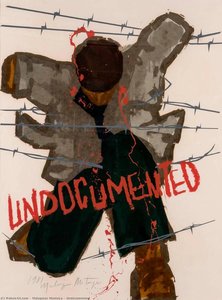
The brilliance of Montoya’s work lies in his ability to weave together the visceral realities of contemporary struggle with deep-seated cultural symbolism. His style is a masterful blend of realism and evocative metaphor, often drawing upon indigenous traditions to lend a sense of timelessness to modern political issues. In his most poignant works, such as Undocumented, Montoya utilizes striking imagery—a faceless, bleeding figure ensnared in barbed wire—to evoke the suffering of the crucified Christ while simultaneously referencing the historical weight of Francisco de Goya’s Third of May 1808. Through this layering of references, he connects the immediate plight of undocumented immigrants to a broader, universal narrative of martyrdom and resistance.
Montoya’s technique often employs bold colors and textures that create an atmosphere of urgency and tension. Whether through the meticulous detail of his paintings or the striking clarity of his posters, he captures the vibrant pulse of Latino neighborhoods in Los Angeles and beyond. His art does not merely observe; it confronts. By utilizing recurring motifs such as indigenous faces and symbolic landscapes, he celebrates the dignity and perseverance of ancestral roots while refusing to look away from the stark realities of poverty, discrimination, and violence. His work serves as a testament to the enduring spirit of those striving for liberation.
Historical Significance and Artistic Triumph
The historical importance of Malaquías Montoya cannot be overstated. As a co-founder of the Royal Chicano Air Force alongside his brother, José Montoya, he played a crucial role in establishing a collective identity for Chicano artists that prioritized community engagement and social activism. His contributions helped shift the focus of American art toward the narratives of those often excluded from the traditional canon, ensuring that the stories of resistance and resilience were etched into the visual history of the United States.
Today, Montoya’s legacy is preserved in prestigious institutions such as the Smithsonian American Art Museum, where his works like Con treinta balazos de odio continue to provoke critical reflection on the destructive nature of hatred and oppression. His career remains a profound example of how art can function as a powerful tool for social change, bridging the gap between personal experience and political movement. Through his unwavering dedication to justice, Montoya has ensured that the voices of the marginalized are not only heard but seen with unmistakable clarity.
malaquias montoya
1938 -
基本情報
- Artistic Movement Or Style: Chicano Art
- Artists Or Movements Influenced By This Artist: ['Mexican Muralism']
- Artists Who Influenced This Artist: ['Roque Dalton']
- Date Of Birth: 1938
- Full Name: Malaquías Montoya
- Nationality: Salvadorian
- Notable Artworks:
- Undocumented
- Con treinta balazos de odio.
- Roque Dalton
- Place Of Birth: El Salvador