 プレビュー
プレビュー
 プリントを購入
 シェアする
シェアする シェアする
シェアする
 詳細を見る
詳細を見る

 ダウンロード
 似ている作品
 X線調査
X線調査 スライドショー
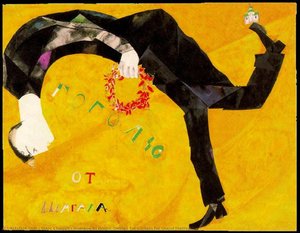
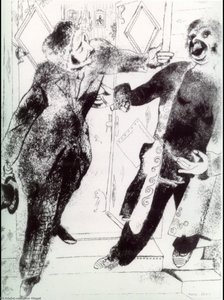
Illustration to Nikolai Gogol's "Dead Souls"


 詳細を見る
詳細を見る




P118B $10

P118H $10

P118W $10

P438Z $10

P508JH $12

P508YH $12

P805H $10

P805Z $10

P919BZ $10

P919G $10

P919XJ $10

P959ZH $10

P968JZ $12

W106C $8

W218G $10

W218JH $8

W218Y $10

W307PJ $10

W316G $10

W316PJ $8

W316Y $10

W398PJ $8

W4111J $10

W500HY $15

W500JH $15

W692G $12

W849H $8

W940BG $15

W953PJ $8




作品のオリジナル比率に合わせた、当店の規定サイズからお選びください。

特定のフレームやスペースに合わせて、ご希望のサイズをご入力いただけます。選択されたサイズが元の画像の比率と異なる場合、アートワークをトリミングするか、手描きで要素を追加して絵画を拡張いたします。デジタルモックアップ を制作し、制作開始前にご確認(承認)をいただきます。
画面上のプレビューは、実際のトリミングや拡張を正確に反映しているものではありません。最終的な構図は、モックアップによってのみ正確にご確認いただけます。
カスタムサイズもご利用いただけますが、元の比率を維持するためには、あらかじめ用意されたリストからサイズを選択することをお勧めいたします。
ご注文後、ArtsDot.com チームより詳細な指示をお送りするとともに、仕上がりイメージ(モックアップ)をご提供いたします。


 ガラスオプションは、110cm未満のサイズでのみご利用いただけます。

Illustration to Nikolai Gogol's "Dead Souls"
複製技法
複製画のサイズ
-


合計金額
$ 313
作品解説
A Window Into Faith: Marc Chagall’s “Illustration to Nikolai Gogol’s ‘Dead Souls’”
Marc Chagall's 1923 etching, "Illustration to Nikolai Gogol’s ‘Dead Souls’," isn’t merely a depiction of a scene; it’s an immersive journey into the heart of human desire and societal decay. Born Moishe Shagal in Vitebsk, Belarus—a town that would forever haunt his memory and artistic vision—Chagall channeled the spirit of his homeland, blending its vibrant folklore with the biting satire of Gogol's masterpiece. This work, created during a period of immense personal and political upheaval, stands as a testament to both the artist’s profound empathy and his uniquely surreal approach to storytelling.
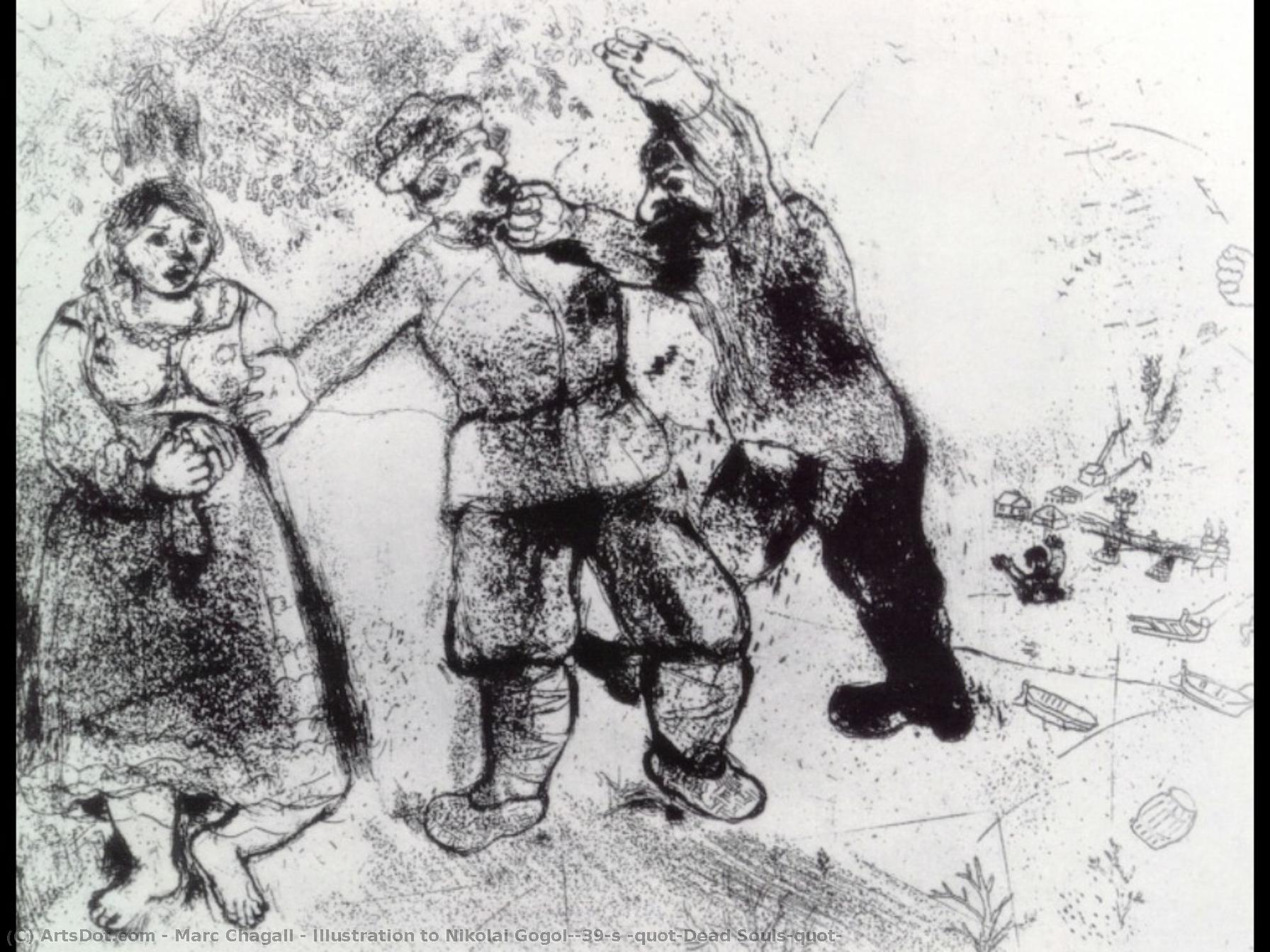
The scene unfolds in a bustling, almost chaotic outdoor setting—a marketplace or perhaps a village square—populated by three figures locked in an intense exchange. At the center, a figure on the left appears to be observing, perhaps judging, while another gestures animatedly, seemingly confronting a third figure positioned on the right. The composition is deliberately asymmetrical, drawing the eye into this tableau of unspoken tension and veiled deceit. Chagall’s signature style—characterized by distorted proportions, loose lines, and an almost dreamlike quality—is immediately apparent. He abandons strict realism in favor of conveying emotion and narrative through a highly stylized lens.
The Language of Line and Tone
Executed entirely in monochrome, the etching relies heavily on subtle shifts in tone to create depth, texture, and mood. Hatching and cross-hatching—the meticulous layering of parallel lines—are employed with masterful precision, building up areas of shadow and highlighting contours. The artist’s hand is visible in every stroke, lending a sense of intimacy and immediacy to the work. The deliberate lack of color forces the viewer to focus on the interplay of light and dark, emphasizing the emotional weight of each gesture and expression.
Notice how Chagall uses these techniques to define the figures’ faces—a subtle furrow in one brow, a slight upturn of the lips suggesting amusement or perhaps veiled menace. The background elements—trees, scattered objects, and indistinct figures—are rendered with equally expressive lines, contributing to the overall sense of movement and dynamism. The flattened perspective, typical of Chagall's style, further enhances the feeling of immediacy, as if we are witnessing this scene unfold before our very eyes.
Gogol’s “Dead Souls” and the Portrait of a Con Artist
“Dead Souls,” Gogol’s darkly comic novel, explores themes of corruption, greed, and social hypocrisy in 19th-century Russia. At its core is Pavel Ivanovich Chichikov, a charming but utterly unscrupulous man who travels from village to village, buying up “dead souls”—deceased peasants whose names still appear on the land registry—in order to fraudulently claim state subsidies. Chagall’s etching captures this essence perfectly, portraying Chichikov as a figure of unsettling charisma and calculated deception.
The central figure's exaggerated expression—a mixture of confidence and slyness—immediately establishes his character. He is not simply a villain; he is a master manipulator, skillfully exploiting the vanity and ignorance of those around him. The other figures in the scene represent the victims of his schemes—individuals caught in a web of deceit and desperation. The etching subtly critiques the corrupting influence of wealth and power, exposing the moral decay at the heart of Russian society.
A Legacy of Dreams and Faith
Created during a period of profound personal and political upheaval, “Illustration to Nikolai Gogol’s ‘Dead Souls’” reflects Chagall's own complex relationship with his homeland. Born in Vitebsk—a city ravaged by war and revolution—Chagall carried the memories of his childhood within him, shaping his artistic vision for decades to come. This etching is a poignant reminder of the enduring power of art to capture both the beauty and the darkness of human experience.
The work’s continued appeal lies in its ability to evoke a sense of mystery and intrigue, inviting viewers to contemplate the timeless themes of greed, deception, and the search for meaning. Reproductions of this iconic image offer a window into Chagall's extraordinary imagination—a testament to his unique artistic voice and his profound understanding of the human condition.
関連作品
アーティストの略歴
夢と色彩の詩人:マルク・シャガールの生涯
マルク・シャガール。その名は、鮮やかな色彩と幻想的なイメージが瞬時に浮かび上がるでしょう。1887年、ベラルーシのヴィテブスク近郊リオーズネ村にモーシェ・シャガルとして生まれた彼は、20世紀を代表する芸術家の一人として、絵画を通して独自の詩の世界を創造しました。彼の作品は、幼少期に育まれたユダヤ教の伝統や民話、そして故郷ヴィテブスクへの深い愛情が色濃く反映されており、現実と夢、記憶と感情が織りなす独特の美学を確立しました。「私は絵を描き終えるとき、自然が作り出したものをそれに当てはめてみます—岩、花、木の枝、あるいは自分の手です。もしその絵が人間の手で作りえないものとならぶことができれば、その絵は本物です。もし二つが衝突すれば、それは悪い芸術です。」シャガール自身の言葉が示すように、彼の作品は、内なる感情と精神性を追求したものであり、単なる現実の模倣を超越した表現を試みたのです。ヴィテブスクとパリ:芸術的探求の旅
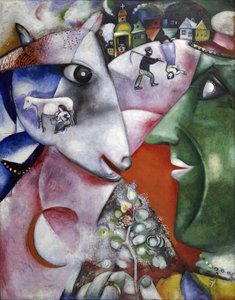
幼少期を故郷ヴィテブスクで過ごしたシャガールにとって、その町は単なる生まれ故郷以上の意味を持ちました。それは彼の芸術的な宇宙の中心であり、空中に浮かぶ人物や奇妙な動物たちが住む、記憶に彩られた風景でした。ロシア正教の教会と賑やかなユダヤ人市場が共存するヴィテブスクの多様な文化は、彼独自の美意識を育み、その後の彼の芸術的探求に大きな影響を与えました。サンクトペテルブルクで地元のサイン画家から絵画を学び、その後レオン・バクストの下で研鑽を積んだシャガールは、パリへと旅立ちます。そこで彼は、キュビスムや象徴主義といった当時の最先端の芸術運動に触発されながらも、自身の内なる世界と故郷への想いを融合させた独自のスタイルを確立していきます。初期作品である『私と村』(1911年)は、場所の描写を超え、自己、記憶、そして個人と共同体の関係を探求する試みとして、彼の芸術的才能を示唆しています。革命と流浪:苦難の中で開花する創造性
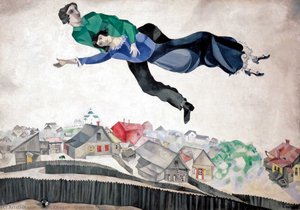
第一次世界大戦が勃発すると、シャガールは一時的にロシアに留まり、ヴィテブスクで芸術学校を設立するなど、文化的な活動に積極的に参加しました。しかし、ロシア革命後の混乱期には、政治的な抑圧と経済的な困難に直面し、その創造性は試練にさらされます。1923年、彼は再びパリへと旅立ち、国際的な評価を得るようになります。『ヴィテブスクの上空』(1920-1922年)は、故郷への想いが色濃く反映された作品であり、彼の芸術的成熟度を示しています。第二次世界大戦の勃発により、ナチス占領下のフランスからアメリカへと逃れ、7年間をニューヨークで過ごすことになります。この時期は、精神的な苦悩と芸術的な実験が交錯するものであり、『白い十字架』(1938年)に見られるように、彼の作品に深い悲しみと不安の色合いが加わりました。戦後、彼はフランスに戻り、生涯をかけて絵筆を握り続けました。遺産:色彩と夢の普遍的なメッセージ
晩年は、パリ歌劇場天井画(1964年)やエルサレムのハダッサ・ヘブライ大学医学部病院のシナゴーグステンドグラスなど、数々の重要なプロジェクトを完成させます。これらの大規模な作品は、彼の芸術的ビジョンを建築空間に具現化し、見る者を魅了する没入型の環境を作り出しました。シャガールの影響は、シュルレアリスムを含む後世の多くの芸術家に及んでいます。彼は、ヨーロッパの近代主義とユダヤ文化のアイデンティティを結びつけ、「20世紀における最も重要なユダヤ人芸術家」として称賛されています。彼の作品は、愛、記憶、そして人間の想像力の無限の可能性を祝福するものであり、世界中の観客に普遍的なメッセージを伝えています。ヴィースバイエルン州のニースにあるマルク・シャガール美術館は、彼の遺産を称え、彼の作品群を展示しています。彼の鮮やかな色彩と夢のようなイメージは、これからも人々の心に深く刻まれ続けるでしょう。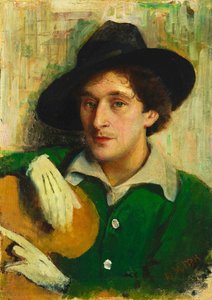
マルク・シャガール
1887 - 1985 , ベラルーシ
基本情報
- フルネーム: マルク・シャガール
- 主な作品:
- 私と村
- 白十字架
- イェルサレムの窓
- 出生地: リヴォナ(ベラルーシ)
- 国籍: ロシア、フランス、ユダヤ系
- 影響を与えたアーティスト:
- パブロ・ピカソ
- ジョアン・ミロ
- 影響を受けたアーティスト:
- レオン・バクスト
- ロベルト・デラunay
- 死亡年月日: 1985年3月28日
- 生年月日: 1887年7月6日
- 芸術運動・スタイル: モダニズム、キュビスム、象徴主義
関連記事
Etching Masters: 10 Legendary Prints That Revolutionized Art | ArtsDot
Journey through 10 legendary etching masterpieces by Rembrandt, Dürer & Goya. Explore the history of printmaking and discover timeless art for your home. Find museum-quality reproductions at ArtsDot.com.
Etching: A Historical Survey of Technique, Aesthetic Qualities & Enduring Artistic Significance
Explore the rich history of etching, from its origins to Rembrandt's masterful innovations. Discover the technique, aesthetic qualities & enduring legacy of this captivating art form. Expert insights for collectors and enthusiasts.
The Intricate World of Etching: A Historical Survey of Technique, Aesthetic Evolution, and Enduring Artistic Impact
Explore the rich history of etching, from its origins to modern practice. Discover techniques, key artists like Rembrandt, and insights for collectors. A comprehensive guide by ArtsDot.
Angelo Chiacchio: A Mid-Century American Illustration Master & the Rise of Commercial Art
Explore the captivating world of Angelo Chiacchio, a master of mid-century American illustration. Discover his evolution, signature style, and lasting impact on commercial art & design. Learn about his legacy at the Museum of American Illustration.
Kay Rasmus Nielsen: A Golden Age Illustrator's Enchanting Legacy of Symbolism & Narrative
Explore the captivating world of Kay Rasmus Nielsen, a celebrated Golden Age illustrator renowned for his Art Nouveau fairy tale art & Disney contributions. Discover his unique style, enduring legacy, and how to collect his enchanting works.