

 プレビュー
プレビュー
 プリントを購入
 シェアする
シェアする シェアする
シェアする
 詳細を見る
詳細を見る

 ダウンロード
 似ている作品
 X線調査
X線調査 スライドショー
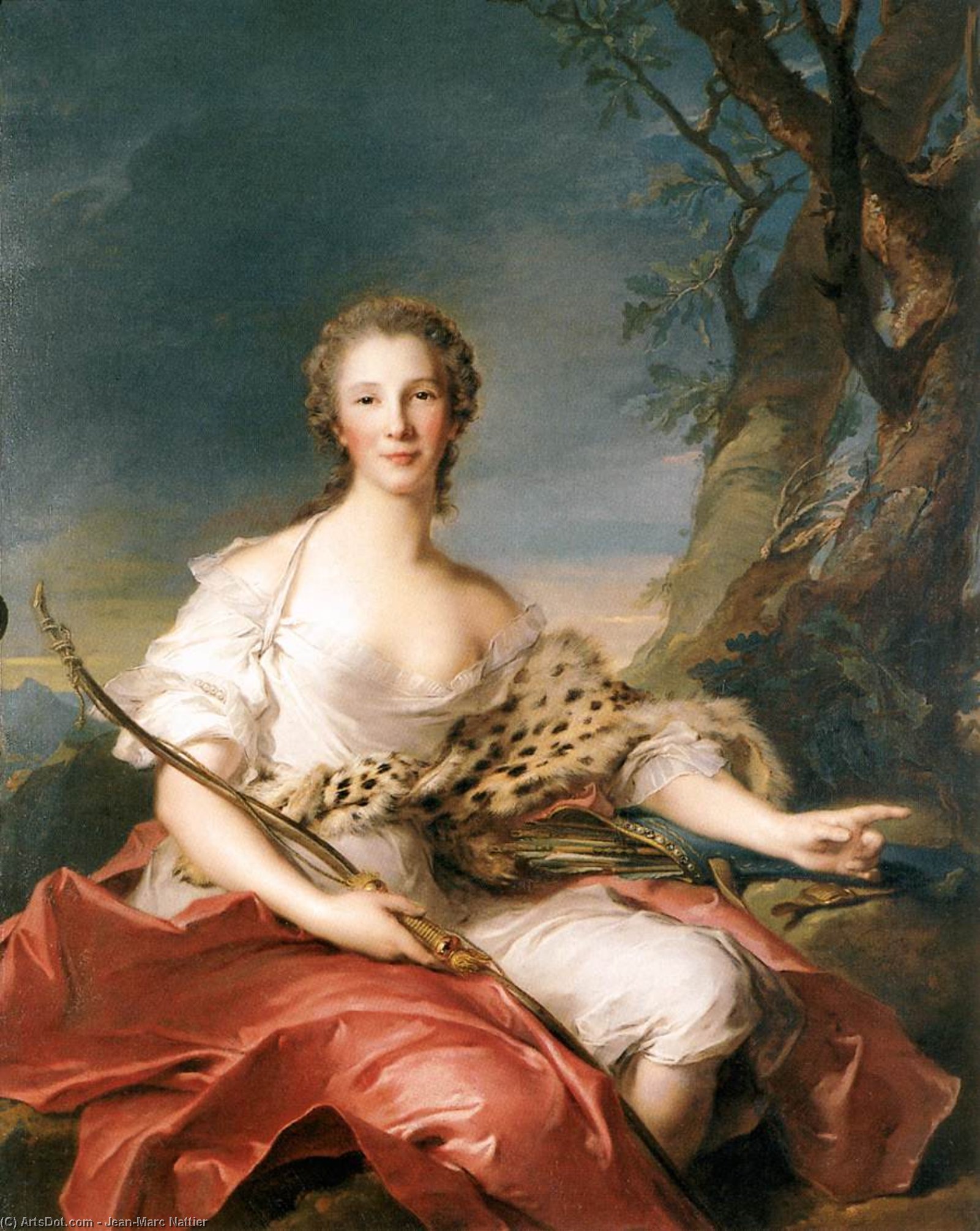
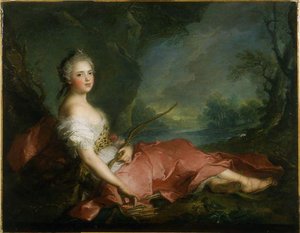
Madame Bouret as Diana
 Acrylic On Canvas
- WallArt
- Rococo Painting
 1745
1745 138.0 x 105.0 cm
 テイスセン・ボルネミスザ美術館
 詳細を見る
詳細を見る




P118B $10

P118H $10

P118W $10

P438Z $10

P508JH $12

P508YH $12

P805H $10

P805Z $10

P919BZ $10

P919G $10

P919XJ $10

P959ZH $10

P968JZ $12

W106C $8

W218G $10

W218JH $8

W218Y $10

W307PJ $10

W316G $10

W316PJ $8

W316Y $10

W398PJ $8

W4111J $10

W500HY $15

W500JH $15

W692G $12

W849H $8

W940BG $15

W953PJ $8




作品のオリジナル比率に合わせた、当店の規定サイズからお選びください。

特定のフレームやスペースに合わせて、ご希望のサイズをご入力いただけます。選択されたサイズが元の画像の比率と異なる場合、アートワークをトリミングするか、手描きで要素を追加して絵画を拡張いたします。デジタルモックアップ を制作し、制作開始前にご確認(承認)をいただきます。
画面上のプレビューは、実際のトリミングや拡張を正確に反映しているものではありません。最終的な構図は、モックアップによってのみ正確にご確認いただけます。
カスタムサイズもご利用いただけますが、元の比率を維持するためには、あらかじめ用意されたリストからサイズを選択することをお勧めいたします。
ご注文後、ArtsDot.com チームより詳細な指示をお送りするとともに、仕上がりイメージ(モックアップ)をご提供いたします。


 ガラスオプションは、110cm未満のサイズでのみご利用いただけます。

Madame Bouret as Diana
複製技法
複製画のサイズ
-


合計金額
$ 263
作品解説
A Glimpse of Roman Grace: Jean-Marc Nattier’s “Madame Bouret as Diana”
Jean-Marc Nattier's "Madame Bouret as Diana," painted in 1745, is more than just a portrait; it’s a meticulously crafted tableau vivant—a staged scene designed to evoke the grandeur and idealized beauty of classical antiquity. This exquisite work, now housed within the Museo Thyssen-Bornemisza in Madrid, offers a captivating window into the Rococo era's fascination with mythology and aristocratic refinement. Nattier, a master of his craft, skillfully blends realism with allegorical representation, transforming a noblewoman into a goddess of the hunt – Diana, Roman equivalent of Artemis – creating an image brimming with elegance, power, and subtle narrative depth.
The painting immediately draws the eye to Madame Bouret herself. Dressed in a flowing white gown that seems to shimmer with light, she embodies a serene grace. Her pose is deliberate, suggesting both confidence and quiet contemplation. The artist’s mastery of chiaroscuro – the dramatic interplay of light and shadow – sculpts her form, highlighting the delicate curves of her body and emphasizing the luminous quality of her skin. Her gaze, direct and engaging, invites the viewer into this carefully constructed world.
The Mythological Echo: Diana and the Hunt
Nattier’s choice to depict Madame Bouret as Diana is laden with symbolic meaning. Diana, the Roman goddess, was associated with the hunt, wilderness, and the moon – representing independence, fertility, and protection. The inclusion of her characteristic attributes—a bow and arrow, a quiver filled with arrows, and a leopard skin draped over her arm—reinforces this association. These elements aren’t merely decorative; they speak to a broader concept of female power and dominion within a society that often sought to confine women to domestic roles. The setting, a stylized landscape reminiscent of the Roman countryside, further anchors the scene in this mythological context.
Notably, Nattier doesn't simply present Diana as a literal representation; he imbues her with an inherent humanity. Madame Bouret’s expression is not one of cold detachment but rather a quiet dignity and a hint of playful allure. This blending of the divine and the human is characteristic of Rococo portraiture—a deliberate strategy to elevate the subject while simultaneously acknowledging their earthly existence.
Technique and Style: The Language of Rococo
Nattier’s technique exemplifies the hallmarks of the Rococo style. His brushwork is fluid and delicate, creating a sense of movement and luminosity. He employs pastel shades—pale blues, greens, and pinks—to evoke a dreamlike atmosphere. The composition itself is carefully balanced, with the figure occupying a central position within a shallow space. The background, rendered in muted tones, serves to enhance the vibrancy of the subject’s attire and complexion.
Furthermore, Nattier's attention to detail is remarkable. From the intricate folds of the gown to the delicate rendering of the arrows on the quiver, every element contributes to the overall sense of realism and sophistication. He was a master of capturing texture—the sheen of silk, the weight of leather—creating an illusion of tangible reality.
A Portrait of an Era: Context and Legacy
"Madame Bouret as Diana" reflects the cultural climate of 18th-century France, a period marked by renewed interest in classical antiquity and a fascination with aristocratic life. Portraits like this one were commissioned by wealthy patrons—often members of the court—as both expressions of personal taste and symbols of social status. Nattier’s success stemmed from his ability to cater to these demands while simultaneously pushing the boundaries of artistic convention.
Today, “Madame Bouret as Diana” stands as a testament to Nattier's skill and artistry—a captivating example of Rococo portraiture that continues to enchant viewers with its elegance, grace, and subtle narrative power. Reproductions offer an accessible way to appreciate this masterpiece, bringing its beauty and symbolism into any space.
関連作品

アーティストの略歴
優雅な筆致:ジャン=マルク・ナティエの生涯と芸術
芸術的な伝統に深く根ざした家庭に生まれ、ジャン=マルク・ナティエは18世紀フランスを代表する肖像画家の一人として頭角を現しました。彼の父であるマルク・ナティエは確固たる肖像画家であり、一方の母マリー・クールトワはミニチュア画家として名を馳せており、この血筋が若きジャン=マルクに芸術表現の基礎をしっかりと築き上げました。1685年3月17日にパリで生まれたナティエの初期の訓練は、父からの直接的な指導だけでなく、ルーヴル美術館での名作の熱心な模写作業も含まれていました。この実践を通じて、彼は似顔絵を捉える技術と構図の原理を理解する力を磨き上げ、ロココ様式美学を決定づけるキャリアの礎を築いたのです。興味深いことに、ローマのフランス・アカデミーで学ぶという名誉ある機会が与えられたにもかかわらず、ナティエはパリに留まることを選びました。彼は自らの独自のスタイルを独立して磨き上げることが最善だと信じていたからです。この決断は極めて重要であり、彼に当時のより慣習的なアカデミックな伝統とは異なる道を切り開くことを可能にしたのです。貴族の夢を描いた画家
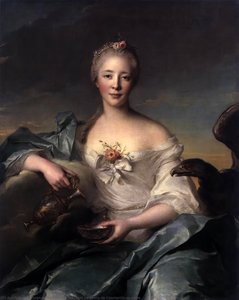
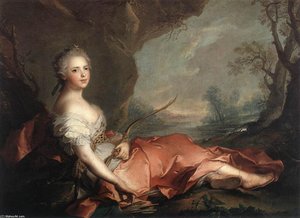
ナティエの名は、ルイ15世の宮廷のエレガンスと洗練そのものと同義となりました。彼はすぐにヴェルサイユの令嬢たちに最も好まれる肖像画家として名声を高め、彼女たちの美しさと地位を独特な筆致で捉えました。しかし、ナティエは単なる肖像画を描いたのではありません。彼は幻想を創り出し、モデルたちを女神や神話上の人物へと変貌させたのです。この革新的なアプローチ――寓意的な肖像画の復活――こそが彼の様式の特徴でした。ある令嬢は狩りの女神ディアナとして、あるいは神々の給仕役ヘベとして描かれ、流れるような古典的なドレープをまとい、情緒豊かな風景の中に配置されました。これらは単なる衣装の模倣ではなく、被写体に洗練さ、優雅さ、そして時代を超越した美しさを吹き込むように丹念に構築された表現でした。光の巧みな使い方は、これらの構図において決定的な役割を果たし、奥行きと立体感を生み出し、鑑賞者をその場へと引き込み、被写体のこの世のものとは思えないほどの質感を高めていました。ナティエの細部へのこだわりは徹底的で、布地の繊細な描写から、モデルたちの表情の微妙な機微に至るまで行き届いていました。現在国立美術館に所蔵されているヘベとしてのマダム・ルフェーブル=ド・コーマルタンのような名作は、このアプローチを象徴しています。それはリアリズムとファンタジーが見事に融合したものであり、同時代の観客を魅了し、今日に至るまで鑑賞者を夢中にさせています。その他にも、ディアナとしてのフランスのマリー・エ Adelaideや家族に囲まれた画家といった傑作群があります。影響と芸術的発展
ナティエの芸術的な道のりは、様々な影響が交錯することで形作られました。彼の父は最初の火花を灯し、彼に肖像画への愛着を植え付けました。さらに指導を与えたのは叔父のジャン・ジュヴネによってであり、彼は尊敬される歴史画家として、ナティエの構図や物語に対する理解を広げました。しかし、特に変革的であったのは、リュクサンブール宮殿でピエール=ポール・ルーベンスの作品を研究する機会でした。このバロックの巨匠のダイナミックな構図、豊かな色彩、そして人間体の官能的な描写は、ナティエのスタイルに消しがたい痕跡を残しました。彼はルーベンスのエネルギッシュさと奔放さを吸収しつつ、それを自らの洗練された美学へと適応させたのです。この影響の融合こそが、ナティエを勃興するロココ運動における中心的な人物たらしめる独自の芸術的声を生み出しました。ロココ様式は、その優雅さ、優美さ、遊び心のあるテーマ、そして装飾への重点によって特徴づけられます。特にリアリズムと神話的な寓意をシームレスに統合する彼の革新的な技術は、彼を同時代人から際立たせ、後世の何世代もの芸術家にインスピレーションを与え続けたのです。遺産と歴史的意義
ジャン=マルク・ナティエの影響力は、彼が生み出した精巧な肖像画を遥かに超えています。ルイ15世の公式肖像画家として、彼は文化面および政治的に大きな変革期にあったフランス貴族のイメージを形成する上で極めて重要な役割を果たしました。彼の絵画は、18世紀フランスのファッション、習慣、そして社会力学について貴重な洞察を与えてくれます。彼は単に外見を記録したのではなく、ある時代――その抱負、価値観、美意識そのもの――を捉えたのです。ナティエの手による寓意的な肖像画の復活は、確立されたジャンルに新たな命を吹き込む彼の能力を示す、重要な芸術的功績でした。彼の作品は今やルーヴル美術館、ウォレス・コレクション、アルテ・ピナコテークなど世界中の権威ある美術館の宝物であり、彼の不朽の遺産を物語っています。彼は1766年11月7日にパリで亡くなり、畏敬と賞賛を呼び起こし続ける作品群を残しました。ナティエの絵画は、優雅さ、洗練さ、そして美への探求によって定義された時代――時の中に凍結された優雅な筆致――についての力強い記念碑であり続けているのです。ナティエの世界をさらに探る
- 代表作: 家族に囲まれた画家 (1730年), マリー・レチンスカ(ディジョン美術館), マドレーヌ(ルーヴル), ティリエーズ伯爵夫人とクレルモン嬢をスルタン姿で(ウォレス・コレクション), ヘベとしてのマダム・ルフェーブル=ド・コーマルタン(国立美術館), 恋人たち(アルテ・ピナコテーク美術館、ミュンヘン)。
- 主な特徴: ロココ様式、寓意的な肖像画、神話的な衣装、光と影の巧みな使用、細部へのこだわり。
- さらなる研究: より深い情報については、Wikipedia (https://en.wikipedia.org/wiki/Jean-Marc_Nattier) やBritannica (https://www.britannica.com/biography/Jean-Marc-Nattier) などの資料を探訪してください。
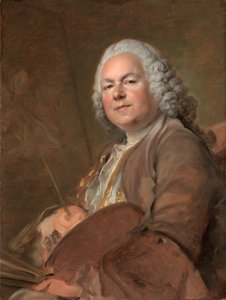
マルク・ナティエ
1685 - 1766 , フランス
基本情報
- Artistic Movement Or Style: ロココ
- Artists Or Movements Influenced By This Artist: 後期のロココ芸術家
- Artists Who Influenced This Artist:
- マルク・ナティエ
- ジャン・ジュヴネ
- ピーテル・パウル・ルーベンス
- Date Of Birth: 1685年3月17日
- Date Of Death: 1766年11月7日
- Full Name: ジャン=マルク・ナティエ
- Nationality: フランス人
- Notable Artworks:
- 家族に囲まれた画家
- マリー・レチンスカ
- マドレーヌ
- ティリエール伯爵夫人...
- ヘベのル・フェーブル夫人
- 恋人たち
- Place Of Birth: フランス、パリ
関連記事
Jean-Marc Nattier: Rococo Portraiture & Aristocratic Patronage
Explore the exquisite Rococo portraits of Jean-Marc Nattier, favored by French aristocracy. Discover his artistic techniques, patronage network, and lasting legacy – a guide for discerning collectors.

The Rococo Aesthetic: Opulence, Rebellion & the Pursuit of Pleasure in 18th-Century Art
Explore the opulent world of Rococo art! Discover its origins, key artists like Watteau & Boucher, and lasting influence on design. Expert insights for collectors & enthusiasts.
Charles-André van Loo: A Study in Rococo Portraiture & the French Court's Artistic Dynamics
Explore the elegant world of Charles-André van Loo, a master of Rococo portraiture at the French court. Discover his life, techniques, and enduring influence on 18th-century art. Hand-painted reproductions available.

華麗なるロココ:芸術史を彩る10大傑作の世界
華麗なるロココ美術の世界へ。バロックから生まれた優雅な芸術、その10大傑作を徹底解説!ブーシェ、フロマンなど巨匠たちの技と物語を紐解き、お部屋を彩るアートを見つけよう。ArtsDot.comで至高の美術館品質レプリカとインテリアアイデアを発見。
Illuminating the Enlightenment: A Comprehensive Exploration of 18th-Century Painting
Explore the captivating world of 18th-century painting! Discover Rococo's playful elegance & Neoclassicism’s Enlightenment ideals with expert insights into Fragonard, David, and more. A comprehensive guide for art enthusiasts.

