

 プレビュー
プレビュー
 プリントを購入
 シェアする
シェアする シェアする
シェアする
 詳細を見る
詳細を見る

 ダウンロード
 似ている作品
 X線調査
X線調査 スライドショー
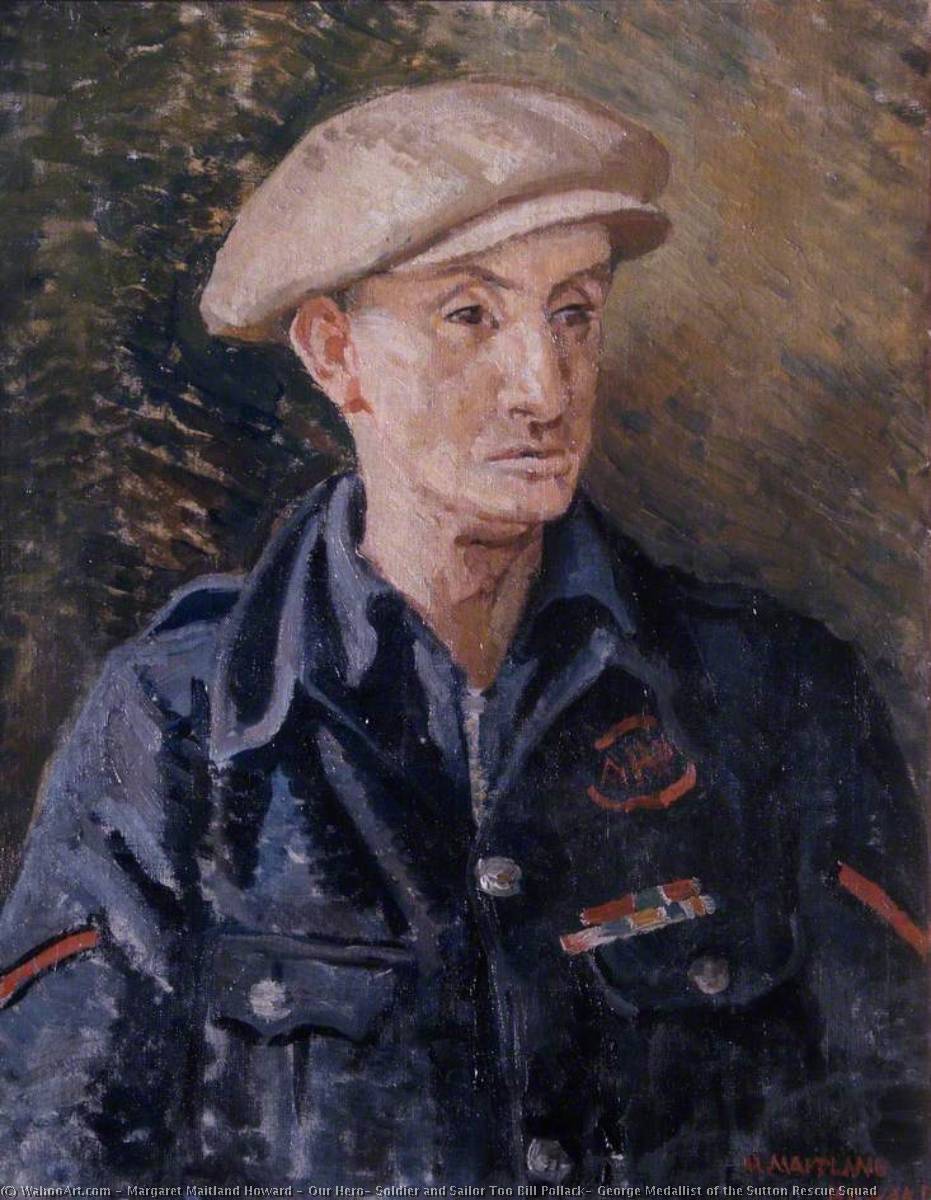
Our Hero, Soldier and Sailor Too Bill Pollack, George Medallist of the Sutton Rescue Squad
 57.0 x 45.0 cm
 Sutton Central Library
 詳細を見る
詳細を見る




































作品のオリジナル比率に合わせた、当店の規定サイズからお選びください。

特定のフレームやスペースに合わせて、ご希望のサイズをご入力いただけます。選択されたサイズが元の画像の比率と異なる場合、アートワークをトリミングするか、手描きで要素を追加して絵画を拡張いたします。デジタルモックアップ を制作し、制作開始前にご確認(承認)をいただきます。
画面上のプレビューは、実際のトリミングや拡張を正確に反映しているものではありません。最終的な構図は、モックアップによってのみ正確にご確認いただけます。
カスタムサイズもご利用いただけますが、元の比率を維持するためには、あらかじめ用意されたリストからサイズを選択することをお勧めいたします。
ご注文後、ArtsDot.com チームより詳細な指示をお送りするとともに、仕上がりイメージ(モックアップ)をご提供いたします。


 ガラスオプションは、110cm未満のサイズでのみご利用いただけます。

Our Hero, Soldier and Sailor Too Bill Pollack, George Medallist of the Sutton Rescue Squad
複製技法
複製画のサイズ
-


合計金額
$ 263








アーティストの略歴
Margaret Maitland Howard: A Pioneer of Prehistoric Worlds
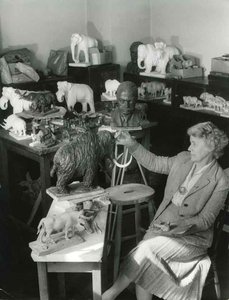
Margaret Maitland Howard (1898-1983) wasn’t merely a modeller and illustrator; she was, in essence, an archaeologist brought to life. Born into a family steeped in artistic tradition – her father, Henry James Howard, was himself a respected artist – Margaret developed a unique skill: the ability to breathe tangible reality into the often-abstract world of prehistoric reconstruction. Her work transcended simple illustration, becoming a vital tool for understanding and communicating the complexities of human history before written records.
Her early life in Sutton, Surrey, provided a grounding in traditional artistic techniques, honed at the Royal Academy School of Art. However, it was her appointment to the Institute of Archaeology in London in 1948 that truly defined her career trajectory. This wasn’t simply a job; it became a lifelong passion. Howard's role shifted from producing illustrations for academic publications to meticulously crafting detailed models – dioramas, busts, and individual components – used by leading archaeologists like Frederick Zeuner and Mortimer Wheeler in their groundbreaking lectures and research. She possessed an extraordinary eye for detail, capturing not just the physical appearance of extinct animals but also a sense of movement, texture, and environment that brought these creatures back to vivid life.
The Pleistocene Dioramas: A Window into Lost Worlds
Howard’s most celebrated work lies in her creation of dioramas depicting Pleistocene fauna – the animals that roamed Europe and North America during the Ice Age. These weren't mere static displays; they were meticulously constructed narratives, designed to illustrate the ecological relationships between species and the challenges faced by prehistoric life. Her understanding of animal anatomy, combined with a keen awareness of archaeological theory, resulted in remarkably accurate and evocative representations of woolly mammoths, giant deer, saber-toothed cats, and other iconic creatures of the Ice Age. The Institute’s collection still showcases these remarkable models, offering visitors a tangible connection to a world long vanished.
Her work on the Balawat Gates in Iraq stands as a testament to her dedication. Howard's detailed drawings and models provided crucial visual aids for researchers studying this significant archaeological site, helping to illuminate the complexities of ancient Mesopotamian civilization. She didn’t just create representations; she actively participated in the process of discovery, translating complex scientific data into accessible and engaging imagery.
Beyond Archaeology: Portraits and Book Illustrations
While her work with Pleistocene fauna is undoubtedly her most famous contribution, Howard's artistic versatility extended far beyond prehistoric reconstructions. She was a prolific book illustrator, notably producing an exquisitely detailed edition of *Aesop’s Fables* for The Bodley Head in 1926. This project demonstrated her mastery of classical illustration techniques and her ability to imbue familiar stories with a timeless quality. Her portraits, too, reveal a remarkable talent for capturing personality and character, showcasing a sensitivity to human expression.
Furthermore, she contributed significantly to the field of paleontology through illustrations for books like Frederick Zeuner’s *Dating the Past*, ensuring that scientific concepts were presented visually in an accessible manner. Her work on this book, published in several editions throughout the 1950s and 60s, highlights her commitment to disseminating knowledge and fostering a deeper understanding of Earth's history.
Legacy and Influence
Margaret Maitland Howard’s legacy extends beyond the tangible models she created. She played a crucial role in shaping how we understand and visualize prehistoric life. Her meticulous attention to detail, combined with her deep respect for archaeological research, established a new standard for scientific illustration. She wasn't simply an artist; she was a translator – bridging the gap between ancient worlds and modern understanding.
Her work at the Institute of Archaeology fostered a collaborative environment where art and science intertwined, leaving an enduring impact on the field of archaeology. Today, her dioramas continue to captivate audiences and inspire a sense of wonder about our planet’s distant past. Margaret Maitland Howard remains a significant figure in British art history – a pioneering artist who brought lost worlds back to life.
margaret maitland howard
1898 - 1983
基本情報
- Artistic Movement Or Style: Archaeological reconstructions, book illustrations, portraits
- Date Of Birth: 1898
- Date Of Death: 1983
- Full Name: Margaret Maitland Howard
- Nationality: British
- Notable Artworks:
- Mr Luscombe
- Adam and Eve
- Our Hero
- Place Of Birth: London, UK

