

 プレビュー
プレビュー
 シェアする
シェアする シェアする
シェアする
 詳細を見る
詳細を見る

 ダウンロード
 似ている作品
 X線調査
X線調査 スライドショー
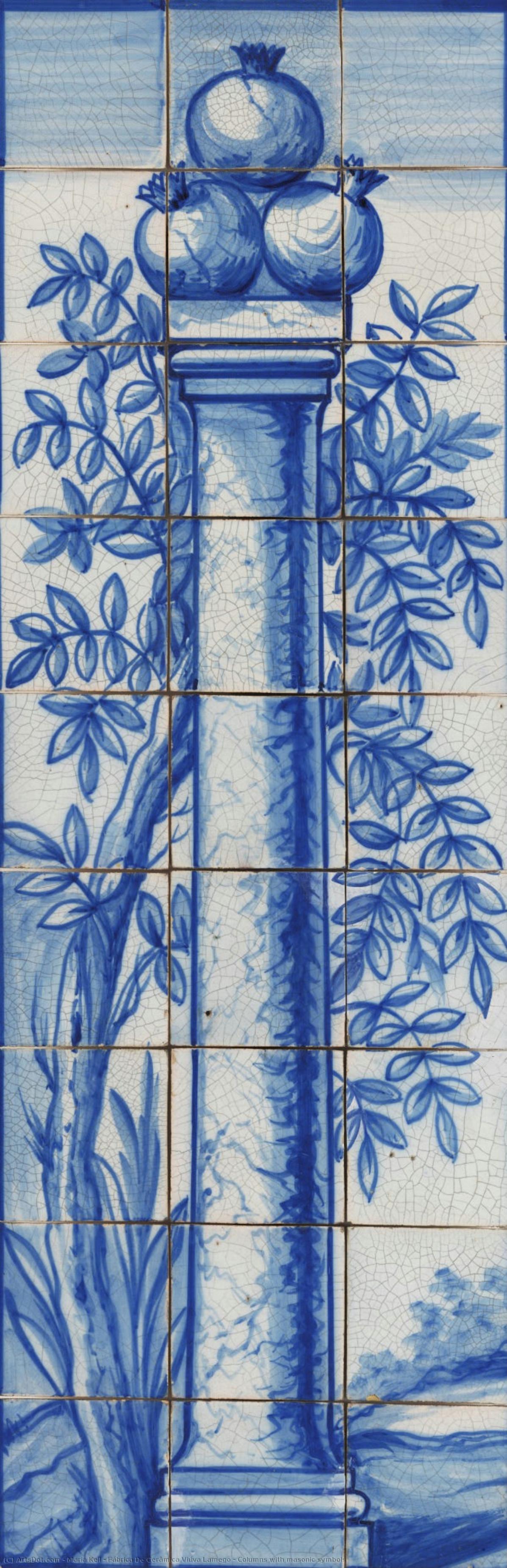
Columns with masonic symbols
 1860
1860 124.0 x 41.0 cm
 National Azulejo Museum
 詳細を見る
詳細を見る
ジークレー/アートプリント
迅速な制作と多彩な仕上げオプションを備えた、ミュージアムクオリティのジークレーまたはキャンバスプリント。 ( 手描きの絵画を購入 画像を購入)




































作品のオリジナル比率に合わせた、当店の規定サイズからお選びください。

特定のフレームやスペースに合わせて、ご自身でサイズを指定することも可能です。選択されたサイズが元の画像の比率と一致しない場合、作品をトリミングするか、鏡面反射または単色での塗りつぶしによって画像を拡張いたします。制作を開始する前に、ご確認用のデジタルモックアップをお送りいたします。
画面上のプレビューには、実際のトリミングや拡張は反映されませんのでご注意ください。最終的な構図を正確に確認できるのは、モックアップのみとなります。
カスタムサイズも承っておりますが、元の比率を維持するためには、あらかじめ用意されたリストからサイズを選択することをお勧めいたします。


 ガラスオプションは、110cm未満のサイズでのみご利用いただけます。

Columns with masonic symbols
ジークレー/アートプリント
複製画のサイズ
-


合計金額
$ 62
関連作品









アーティストの略歴
The Geometric Soul of Lisbon: The Legacy of Maria Keil
In the heart of Lisbon, where history is etched into stone and sunlight dances upon glazed surfaces, the legacy of Maria Keil breathes through the very walls of the city. Born in 1914, Keil emerged as a transformative force in Portuguese modernism, bridging the gap between ancient tradition and contemporary abstraction. Her life’s work was not merely about decoration, but about redefining the architectural identity of Portugal through the medium of azulejos—the iconic tin-glazed ceramic tiles that define the Iberian landscape. Through her profound collaboration with the legendary Fábrica de Cerâmica Viúva Lamego, she elevated a traditional craft into a sophisticated language of modern design.
Keil’s artistic journey was characterized by a seamless integration of pattern and space. While many viewed tiles as mere ornamentation, Keil perceived them as structural elements capable of altering the perception of light and movement within an environment. Her work with the Viúva Lamego factory allowed her to experiment with color and geometry in ways that honored the historical weight of Portuguese ceramic traditions while pushing toward a bold, mid-century aesthetic. This period of her career was marked by a rhythmic precision, where every tile served as a single note in a larger, much more complex visual symphony.
A Master of Pattern and Public Space
The true genius of Maria Keil lies in her ability to democratize art, bringing high-concept design into the daily lives of the public. Her most enduring achievement remains her monumental contribution to the Lisboa Metro during the 1960s. In this subterranean labyrinth, Keil transformed cold, transit spaces into galleries of abstract beauty. By utilizing repetitive geometric motifs and a carefully curated palette, she created environments that felt both expansive and intimate, guiding commuters through a rhythmic landscape of ceramic art. This project stands as a testament to her ability to marry functional urban infrastructure with profound aesthetic intention.
Beyond the metro stations, Keil’s versatility extended into various realms of creative expression:
- Architectural Integration: Her ability to work alongside architects ensured that her tilework was never an afterthought, but a fundamental component of the building's soul.
- Symbolic Depth: In works such as her columns featuring Masonic symbols, she demonstrated a capacity for deep, layered meaning, using geometry to communicate complex cultural and philosophical ideas.
- Theatricality and Costume: Her creative reach even touched the stage, where her skill in costume design for theater and dance showcased her understanding of movement, texture, and visual storytelling.
A Lasting Impression on Portuguese Identity
As we reflect on the life of Maria Keil, which concluded in 1994, we see an artist who refused to let tradition become stagnant. Through her partnership with master carvers like Manuel Magalhães and the technical excellence of the Viúva Lamego factory, she ensured that the art of the azulejo remained a living, breathing medium. Her work does not merely sit on walls; it interacts with the atmosphere, capturing the shifting Portuguese light and reflecting the pulse of the city.
Today, her masterpieces are preserved in prestigious institutions such as the National Azulejo Museum in Lisbon, serving as a permanent reminder of her role as a pioneer. Keill’s influence continues to resonate through generations of ceramicists and designers who look to her work as the gold standard for how modern art can inhabit public space. She remains an architect of memory, leaving behind a city that is infinitely more beautiful because of her vision.
maria keil / fábrica de cerâmica viúva lamego
1914 - 1994 , Portugal
基本情報
- Artistic Movement Or Style: Modern Ceramics and Azulejos
- Artists Or Movements Influenced By This Artist: ['Generations of Portuguese artists']
- Date Of Birth: 1914
- Date Of Death: 1994
- Full Name: Maria Keil
- Nationality: Portuguese
- Notable Artworks:
- Lisbon Metro tilework
- Columns with Masonic symbols
- Place Of Birth: Lisbon, Portugal

