 プレビュー
プレビュー
 プリントを購入
 シェアする
シェアする シェアする
シェアする
 詳細を見る
詳細を見る

 ダウンロード
 似ている作品
 X線調査
X線調査 スライドショー
サマー


 詳細を見る
詳細を見る




P118B $10

P118H $10

P118W $10

P438Z $10

P508JH $12

P508YH $12

P805H $10

P805Z $10

P919BZ $10

P919G $10

P919XJ $10

P959ZH $10

P968JZ $12

W106C $8

W218G $10

W218JH $8

W218Y $10

W307PJ $10

W316G $10

W316PJ $8

W316Y $10

W398PJ $8

W4111J $10

W500HY $15

W500JH $15

W692G $12

W849H $8

W940BG $15

W953PJ $8




作品のオリジナル比率に合わせた、当店の規定サイズからお選びください。

特定のフレームやスペースに合わせて、ご希望のサイズをご入力いただけます。選択されたサイズが元の画像の比率と異なる場合、アートワークをトリミングするか、手描きで要素を追加して絵画を拡張いたします。デジタルモックアップ を制作し、制作開始前にご確認(承認)をいただきます。
画面上のプレビューは、実際のトリミングや拡張を正確に反映しているものではありません。最終的な構図は、モックアップによってのみ正確にご確認いただけます。
カスタムサイズもご利用いただけますが、元の比率を維持するためには、あらかじめ用意されたリストからサイズを選択することをお勧めいたします。
ご注文後、ArtsDot.com チームより詳細な指示をお送りするとともに、仕上がりイメージ(モックアップ)をご提供いたします。


 ガラスオプションは、110cm未満のサイズでのみご利用いただけます。

サマー
複製技法
複製画のサイズ
-


合計金額
$ 263
作品解説
フランスのロココ絵画における繊細なタッチ:マリー・ジャンヌ・ルナール・ドゥボスの「夏」について
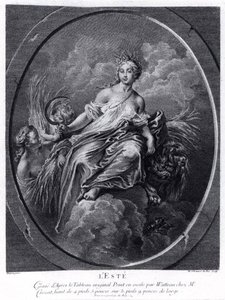
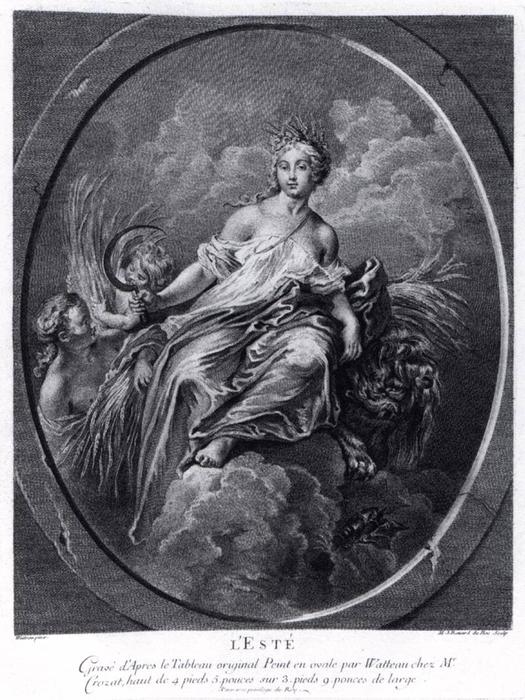
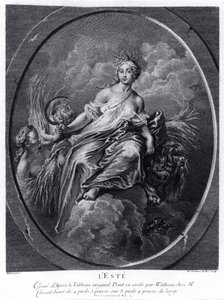
フランスの美術史において、マリー・ジャンヌ・ルナール・ドゥボスはあまり知られる画家ではありません。しかしながら、彼女の作品、「夏」(英語タイトル:「Summer」)は、特にその繊細な技術とロココ様式における美意識が多くの人々を魅了しています。この絵画は、フランス王室時代の芸術家ジャン=アンヴォワヌ・ワットウによって描かれたオリジナル作品に基づき、ドゥボス自身が制作したエングレービングです。ナショナルギャラリーに所蔵されているこの作品は、美術愛好家やコレクターだけでなく、インテリアデザイナーにもインスピレーションを与える魅力的な芸術作品と言えるでしょう。- 絵画の概要: ドゥボスの「夏」は、白い背景に女性像が描かれたシンプルな構成ながらも、ロココ様式の特徴である優雅さと装飾性が凝縮されています。この女性像は、自由または暁を象徴すると考えられています。彼女は雲のような構造の上に座り、周囲には緑豊かな植物が広がり、全体的に静謐で荘厳な雰囲気を醸し出しています。
- スタイルと技術: ドゥボスの絵画は、ロココ様式に分類されます。この様式は、優美な人物描写や華やかな装飾要素を特徴とし、理想化された美意識を追求します。「夏」の制作にあたっては、ドゥボスはワットウの絵画をモチーフに、エングレービング技法を用いて繊細な表現を実現しました。特に、ハッチングとクロスハッチングという技法は、絵画のような質感を生み出すために用いられ、線が丁寧に描き込まれています。
- 歴史的背景: ドゥボスの活動時期はルイ14世の時代であり、この時代のフランス美術はバロック様式からロココ様式へと移行期を迎えていました。ドゥボスは、バロック絵画の影響を受けつつも、ワットウなどの芸術家の作品を参考に独自のスタイルを確立しました。エングレービング技法は、当時の美術家にとって重要な表現手段であり、「夏」の制作にもその技術が反映されています。
- 象徴性と感情的効果: ドゥボスの絵画には、勝利と栄光を意味する laurel wreath(ラウレル冠)や、中央に立つ女性像を囲うピュッティと呼ばれる小さな翼を持つ人物など、様々な象徴的な要素が含まれています。これらの要素は、ドゥボスが表現したいメッセージをより深く伝えるための工夫と言えるでしょう。「夏」は見る人に安らぎと美しさを呼び起こし、ロココ様式における優雅さと理想化された美意識を体現しています。
関連作品

アーティストの略歴
A Parisian Engraver’s Delicate Touch
The life of Marie-Jeanne Renard Dubos remains a captivating mystery, partially veiled by the passage of time and the scarcity of historical records from the early eighteenth century. Born in Paris around 1685, she emerged during a period of profound artistic transformation in France, navigating a landscape defined by the grandeur of the late Baroque and the burgeoning elegance of the Rococo. While her biographical details are shrouded in relative obscurity, scholars often trace her lineage to the Parisian nobility, suggesting an upbringing that provided access to the finest intellectual and artistic circles of the era. Her journey into the world of printmaking was guided by the esteemed Charles Dupuis, a mentorship that instilled in her a rigorous foundation in classical principles, emphasizing meticulous observation and the pursuit of idealized beauty.
Dubos’s artistry was characterized by an extraordinary sensitivity to tonal nuances and textural subtleties, qualities that allowed her to translate the vibrant energy of oil paintings into the precise, monochrome language of engraving. She found particular inspiration in the works of Jean-Antoine Watteau, a master of the Rococo style. Through her skillful hands, the theatricality and ethereal lightness of Watteau’s canvases were distilled into prints that captured the very essence of his vision. Her ability to replicate the soft gradations of light and the delicate movement of fabric demonstrated a technical mastery that resonated with the aesthetic sensibilities of her time, bridging the gap between the painterly brushstroke and the etched line.
Mastery of Technique and Symbolic Depth
The significance of Dubos’s work lies not merely in its technical precision but in its profound ability to evoke emotion through symbolic storytelling. Her engravings often served as windows into the allegorical themes prevalent in French art, where nature and classical mythology intertwined. In her celebrated depictions, such as those inspired by Watteau, one can observe a remarkable command of etching—a process she utilized to achieve luminous effects that mimaged the glow of sunlight filtering through foliage. This mastery allowed her to imbue even a simple landscape with a sense of spiritual or mythological weight.
One of her most evocative contributions to the art historical canon is found in works like Summer, where she explores themes of renewal and vitality. In such pieces, the interplay of swirling clouds and verdant greenery serves as more than mere decoration; it acts as a classical allegory for figures like Liberty or Aurora, representing the dawn of a new era. Her work reflects a period of intense intellectual ferment in France, where the boundaries of landscape painting were being pushed toward a more naturalistic yet idealized representation. This dedication to capturing the ephemeral beauty of the natural world suggests an early, subtle connection to the sensibilities that would later define the Barbizon School.
Legacy and Historical Significance
Though her total output remains modest due to the fragmented nature of her surviving oeuvre, the impact of Marie-Jeanne Renard Dubos is felt in the enduring quality of her craftsmanship. She stands as a testament to the skilled women artists who flourished within the professional structures of eighteenth-century France, contributing significantly to the dissemination of high art through the medium of print. Her ability to interpret and refine the works of her contemporaries ensured that the elegance of the Rococo could be shared more widely, reaching collectors beyond the immediate reach of the royal court.
Her historical importance is further cemented by the presence of her work in prestigious collections worldwide. Notable achievements include:
- Technical Innovation: Her sophisticated use of etching to achieve luminous, painterly textures within a monochrome medium.
- Cultural Contribution: The successful translation of Watteau’s Rococo aesthetics into the accessible and highly collectible format of fine engravings.
- Artistic Preservation: Her role in documenting and immortalizing the stylistic trends of the reign of Louis XIV and the subsequent era of French refinement.
Today, as we look back upon her career, Dubos is remembered not just as a pupil of great masters, but as an artist of independent vision whose delicate touch helped define the visual language of an age.
marie jeanne renard dubos
1685 - 1742 , France
基本情報
- Artistic Movement Or Style: Baroque
- Artists Or Movements Influenced By This Artist: ['Nicolas Poussin']
- Artists Who Influenced This Artist: ['Jean-Antoine Watteau']
- Date Of Birth: Paris, France (1685)
- Date Of Death: Between 1730 and 1750
- Full Name: Marie-Jeanne Renard Dubos
- Nationality: French
- Notable Artworks: ['The Holy Family']
- Place Of Birth: Paris
関連記事
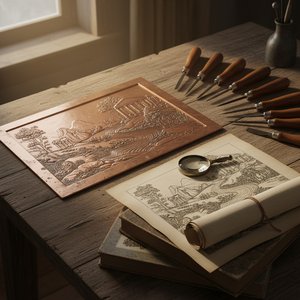
Engraving: A Historical Survey of Technique, Artistic Expression & Enduring Legacy
Explore the rich history of engraving with ArtsDot. Discover techniques, iconic artists like Dürer & Callot, collecting tips, and expert guidance for preserving your art investment. Learn about intaglio printing & more!
Engraving's Golden Age: 10 Masterpieces That Redefined Art | ArtsDot
Journey through art history with our Top 10 Legendary Engravings! Explore masterpieces by Dürer, Rembrandt & Goya. Discover the stories behind these iconic prints and find museum-quality reproductions for your home at ArtsDot.com.
Giclée Prints: Archival Quality & Aesthetic Nuances for the Discerning Collector
Explore the world of giclée prints with ArtsDot. Learn about archival quality, aesthetic nuances & investment potential. Expert guidance for discerning art collectors seeking museum-quality reproductions and lasting value.
The Intricate World of Engraving: A Historical Survey of Technique, Artistic Expression & Enduring Legacy
Explore the rich history of engraving with ArtsDot. Discover techniques, iconic artists like Dürer & Callot, collecting tips, and expert guidance for preserving your art investment. Learn about intaglio printing & more!

The Enduring Legacy of Fine Art Prints: Technique, History & Aesthetic Impact
Explore the rich history & techniques of fine art prints. Discover investment potential, assess authenticity, and learn how to preserve your collection with expert guidance. Trusted insights for discerning collectors.