

 プレビュー
プレビュー
 プリントを購入
 シェアする
シェアする シェアする
シェアする
 詳細を見る
詳細を見る

 ダウンロード
 似ている作品
 X線調査
X線調査 スライドショー
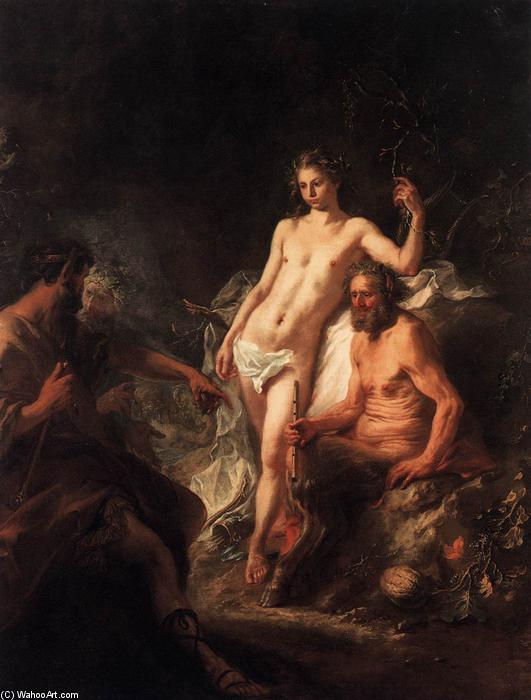
The Judgment of King Midas between Apollo and Marsyas
 1768
1768 154.0 x 120.0 cm
 オーストリア美術館ベルヴェデレ
 詳細を見る
詳細を見る




































作品のオリジナル比率に合わせた、当店の規定サイズからお選びください。

特定のフレームやスペースに合わせて、ご希望のサイズをご入力いただけます。選択されたサイズが元の画像の比率と異なる場合、アートワークをトリミングするか、手描きで要素を追加して絵画を拡張いたします。デジタルモックアップ を制作し、制作開始前にご確認(承認)をいただきます。
画面上のプレビューは、実際のトリミングや拡張を正確に反映しているものではありません。最終的な構図は、モックアップによってのみ正確にご確認いただけます。
カスタムサイズもご利用いただけますが、元の比率を維持するためには、あらかじめ用意されたリストからサイズを選択することをお勧めいたします。
ご注文後、ArtsDot.com チームより詳細な指示をお送りするとともに、仕上がりイメージ(モックアップ)をご提供いたします。


 ガラスオプションは、110cm未満のサイズでのみご利用いただけます。

The Judgment of King Midas between Apollo and Marsyas
複製技法
複製画のサイズ
-


合計金額
$ 263
関連作品




アーティストの略歴
The Visionary of the Austrian Baroque
In the heart of Lower Austria, amidst the rolling landscapes of Grafenwörth, a talent was born that would eventually illuminate the altars of Europe. Martin Johann Schmidt, often affectionately remembered as Kremser Schmidt, emerged in 1718 not merely as a painter, but as a profound storyteller of the divine. As the son of a sculptor, Johannes Schmidt, his early life was steeped in the tactile beauty of form and substance, yet he would transcend the physical weight of stone to master the ethereal lightness of light and color. Unlike many of his contemporaries who climbed the rigid hierarchies of formal academies through strict apprenticeship, Schmidt’s ascent was fueled by an undeniable, raw brilliance that commanded attention across the continent.
His journey into the upper echelons of the art world reached a definitive milestone in 1768 when he was admitted to the prestigious Imperial Academy in Vienna. This achievement was no mere formality; it was a recognition of a singular vision that stood alongside the giants of his era, such as Franz Anton Maulbertsch and Daniel Gran. Schmidt possessed a rare ability to bridge the gap between the high-minded complexity of the Baroque and the emotional accessibility required for private devotion. His works were not merely decorations for the elite; they were windows into the spiritual realm, designed to captivate the hearts of both the pious aristocrat and the humble parishioner.
A Tapestry of Devotion and Myth
The breadth of Schmidt’s oeuvre is nothing short of monumental. His career was defined by an astonishing output of large-scale altar paintings that transformed ecclesiastical spaces into theaters of light. While his primary mission remained the creation of devotional imagery, his artistic evolution revealed a fascinating duality. During the period following 1780, one can observe a captivating shift where mythological themes began to intertwine with biblical narratives. This expansion of subject matter allowed him to explore the human condition through the lens of classical antiquity, even as he remained anchored to his spiritual roots.
The technical mastery behind these works lies in his unique approach to color and atmosphere. His palette was famously vibrant, utilizing a lively spectrum that breathed life into sacred figures. This brilliance was often tempered by a sophisticated use of shadow, a technique that suggests a deep, perhaps even subconscious, connection to the masters of the North. Through his brush, the heavy drama of the Baroque era began to soften, hinting at a more luminous, emotive style that would resonate through the centuries.
Influences and the Legacy of Light
While Schmidt was firmly rooted in the Viennese Baroque tradition under the early guidance of Gottlieb Starmayr, his aesthetic soul was shaped by much broader horizons. There is a palpable sense of the Mediterranean in his work, likely born from an intimate encounter with the art of Northern Italy. This infusion of Italianate warmth provided the necessary counterpoint to the more structured Germanic traditions, allowing him to develop a style that felt both grounded and transcendent.
Perhaps the most intriguing aspect of his technical development is the shadow of Rembrandt that lingers within his draughtsmanship. In his meticulous etchings, one finds a profound mastery of chiaroscuro—the dramatic interplay of light and dark. This attention to tonal value and detail reveals an artist who understood that true emotion is often found in the transition from shadow to glow. It is this very quality—this precursor to the atmospheric sensitivity seen in later movements—that leads many historians to view Schmidt as a bridge between the heavy drama of the 18th century and the burgeoning light-focused sensibilities of the eras to follow.
When Martin Johann Schmidt passed away in 1801 in Stein/Danube, he left behind a legacy that far outlasted his lifetime. His life’s work remains a testament to the power of an independent spirit:
- A Master of Emotion: Creating art that spoke directly to the spiritual needs of all social classes.
- Technical Innovation: Blending the dramatic chiaroscuro of Rembrandt with the vibrant colors of the Italian Baroque.
- Historical Significance: Serving as a pivotal figure who transitioned the heavy Baroque style toward a more luminous, proto-Impressionistic sensibility.
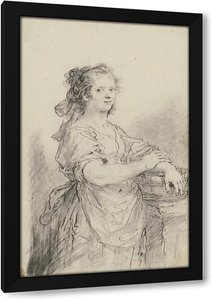
Martin Johann Schmidt
1718 - 1801 , Austria
基本情報
- Artistic Movement Or Style: Baroque/Rococo
- Artists Or Movements Influenced By This Artist: ['Impressionism']
- Artists Who Influenced This Artist: ['Rembrandt']
- Date Of Birth: 25 September 1718
- Date Of Death: 28 June 1801
- Full Name: Martin Johann Schmidt
- Nationality: Austrian
- Notable Artworks:
- Saint Elizabeth Distributing Alms
- Venus and Cupid in Vulcan's Forge
- Place Of Birth: Grafenwörth, Austria

