

 プレビュー
プレビュー
 プリントを購入
 シェアする
シェアする シェアする
シェアする
 詳細を見る
詳細を見る

 ダウンロード
 似ている作品
 X線調査
X線調査 スライドショー
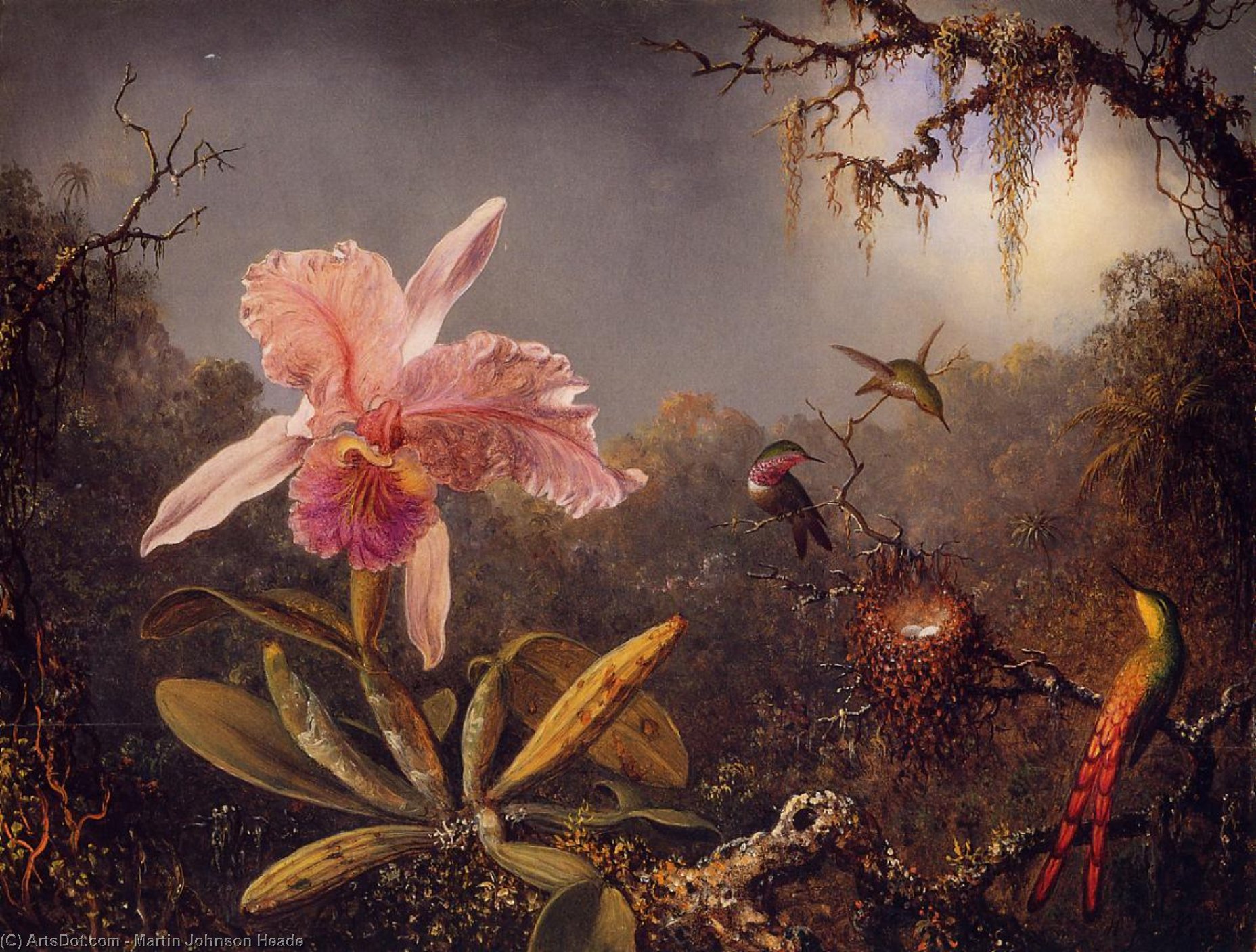
Cattleya Orchid and Three Brazilian Hummingbirds


 詳細を見る
詳細を見る




P118B $10

P118H $10

P118W $10

P438Z $10

P508JH $12

P508YH $12

P805H $10

P805Z $10

P919BZ $10

P919G $10

P919XJ $10

P959ZH $10

P968JZ $12

W106C $8

W218G $10

W218JH $8

W218Y $10

W307PJ $10

W316G $10

W316PJ $8

W316Y $10

W398PJ $8

W4111J $10

W500HY $15

W500JH $15

W692G $12

W849H $8

W940BG $15

W953PJ $8




作品のオリジナル比率に合わせた、当店の規定サイズからお選びください。

特定のフレームやスペースに合わせて、ご希望のサイズをご入力いただけます。選択されたサイズが元の画像の比率と異なる場合、アートワークをトリミングするか、手描きで要素を追加して絵画を拡張いたします。デジタルモックアップ を制作し、制作開始前にご確認(承認)をいただきます。
画面上のプレビューは、実際のトリミングや拡張を正確に反映しているものではありません。最終的な構図は、モックアップによってのみ正確にご確認いただけます。
カスタムサイズもご利用いただけますが、元の比率を維持するためには、あらかじめ用意されたリストからサイズを選択することをお勧めいたします。
ご注文後、ArtsDot.com チームより詳細な指示をお送りするとともに、仕上がりイメージ(モックアップ)をご提供いたします。


 ガラスオプションは、110cm未満のサイズでのみご利用いただけます。

Cattleya Orchid and Three Brazilian Hummingbirds
複製技法
複製画のサイズ
-


合計金額
$ 263
作品解説
A Tranquil Vision of Tropical Paradise: Cattleya Orchid and Three Hummingbirds by Martin Johnson Heade
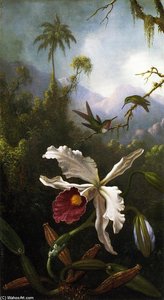
Martin Johnson Heade’s “Cattleya Orchid and Three Hummingbirds,” completed in 1871, stands as a quintessential example of Luminism—a movement that championed serene landscapes imbued with spiritual resonance. More than just a depiction of flora and fauna, it embodies the ethos of its time: an earnest fascination with the natural world alongside a burgeoning belief in scientific observation and artistic expression as pathways to understanding God’s creation. ## The Quintessence of Luminist Tranquility Martin Johnson Heade's *Cattleya Orchid and Three Hummingbirds*, completed in 1871, embodies the very spirit of Luminism—a movement that championed serene landscapes imbued with subtle tonal gradations and an almost meditative stillness. Unlike Impressionists who sought to capture fleeting moments of light and color, Luminist painters like Heade prioritized conveying a profound sense of atmosphere and tranquility, mirroring the contemplative gaze of the Romantic era.
A Vision of Tropical Serenity: Cattleya Orchid and Three Hummingbirds
Martin Johnson Heade’s *Cattleya Orchid and Three Hummingbirds*, completed in 1871, stands as a quintessential example of Luminism—a movement that championed serene landscapes bathed in diffused light, prioritizing atmospheric perspective and capturing the subtle beauty of nature. This painting resides within the esteemed National Gallery of Art collection, offering visitors an unparalleled opportunity to experience firsthand the artistic vision of Martin Johnson Heade.A Vision of Tropical Tranquility
The artwork depicts a lush Brazilian rainforest scene dominated by a magnificent pink Cattleya orchid—a flower renowned for its exquisite beauty and fragrance. Three hummingbirds flit around the orchid blossoms, adding dynamism and vibrancy to the composition. The painting’s serene atmosphere is enhanced by misty foliage and distant trees, creating an immersive experience for the viewer.A Tranquil Vision of Tropical Paradise: Cattleya Orchid and Three Hummingbirds
Martin Johnson Heade's *Cattleya Orchid and Three Hummingbirds*, painted in 1871, stands as a quintessential example of Luminism—a movement that championed serene landscapes imbued with spiritual resonance rather than dramatic narratives. This exquisite oil-on mahogany panel captures the humid stillness of Brazil’s tropical rainforest, transporting viewers to an environment teeming with vibrant flora and fauna. At its heart lies “Cattleya Orchid and Three Hummingbirds,” a masterpiece executed in 1871 by Martin Johnson Heade, a pivotal figure in Luminist painting—a movement characterized by serene landscapes bathed in diffused light and prioritizing atmospheric perspective above detailed representation. This remarkable artwork, "Cattleya Orchid and Three Hummingbirds," exemplifies the Luminist aesthetic's profound connection to nature’s beauty and its subtle exploration of scientific observation interwoven with poetic contemplation.A Vision of Tropical Elegance
“Cattleya Orchid and Three Hummingbirds” by Martin Johnson Heade is a masterpiece of Luminism, an artistic movement that flourished in America during the mid-1860s and 1870s. It captures a serene tropical landscape—specifically, a dense Brazilian rainforest—with remarkable precision and luminosity, embodying the core principles of Luminist painting.A Vision of Tropical Tranquility
Martin Johnson Heade’s *Cattleya Orchid and Three Hummingbirds*, completed in 1871, stands as a quintessential example of Luminism – an artistic movement that championed serene landscapes imbued with spiritual resonance. Painted on mahogany panel, the artwork captures a breathtaking glimpse into Brazil's tropical rainforest, specifically focusing on the exquisite beauty of Cattleya orchids intertwined with hummingbirds—a motif deeply rooted in Victorian scientific fascination and Romantic idealism. ## The Vision of Tranquility: Luminism and Heade’s Landscape Philosophy Martin Johnson Heade (1819-1904) stands as a pivotal figure in American art, embodying the ethos of Luminism – a movement that championed serene landscapes imbued with subtle tonal gradations and atmospheric perspective. Unlike Romantic painters who sought dramatic emotion, Luminists like Martin Johnson Heade prioritized capturing the quiet beauty of nature, reflecting a philosophical shift toward observation and scientific inquiry.A Moment Frozen in Tropical Reverie: Cattleya Orchid and Three Hummingbirds
Martin Johnson Heade’s *Cattleya Orchid and Three Hummingbirds*, completed in 1871, stands as a quintessential example of Luminist painting—a movement that championed serene landscapes imbued with subtle tonal gradations to convey mood and atmosphere. More than just a depiction of flora and fauna, it embodies the Romantic spirit's fascination with the sublime – confronting viewers with the grandeur and beauty of nature while simultaneously hinting at its untamed power. ## The Quintessence of Luminism: Cattleya Orchid and Three Hummingbirds Martin Johnson Heade’s *Cattleya Orchid and Three Hummingbirds*, completed in 1871, stands as a quintessential exemplar of Luminist painting—a movement that championed serene landscapes imbued with subtle tonal gradations and atmospheric haze to convey an idealized vision of nature. This remarkable artwork, “Cattleya Orchid and Three Hummingbirds,” by Martin Johnson Heade, resides within the esteemed collection of the National Gallery of Art in Washington D.C., a testament to its enduring beauty and artistic merit.A Luminist’s Quiet Vision: The Essence of Cattleya Orchid and Three Hummingbirds
Martin Johnson Heade's *Cattleya Orchid and Three Hummingbirds*, completed in 1871, stands as a quintessential example of Luminism—a movement that championed serene landscapes imbued with subtle tonal gradations and atmospheric perspective. Painted on mahogany panel, the artwork depicts a lush Brazilian marsh bathed in diffused sunlight, dominated by an exquisite Cattleya orchid and attended by three hummingbirds – a striking combination reflecting Heade’s fascination with capturing the ephemeral beauty of tropical flora and fauna. ## The Scene: A Lush Tropical Reverie Martin Johnson Heade's *Cattleya Orchid and Three Hummingbirds*, completed in 1871, transports viewers to the humid depths of Brazil’s rainforest—a realm meticulously rendered by the Luminist painter. More than just a botanical depiction, it embodies a profound philosophical stance on nature’s beauty and humanity’s place within its grandeur. The painting captures a moment frozen in time, bathed in diffused sunlight that illuminates a lush tropical landscape dominated by a magnificent Cattleya orchid and three Brazilian hummingbirds. ## A Vision of Luminism: Heade's Tranquil Tropical Dreamscape Martin Johnson Heade (1819-1904), a pivotal figure in American Luminist painting, achieved renown for his masterful depictions of the natural world—particularly coastal marshes and tropical landscapes—characterized by an almost ethereal stillness. “Cattleya Orchid and Three Hummingbirds,” completed in 1871, exemplifies this distinctive aesthetic and offers a profound glimpse into Heade’s artistic vision during the Luminist movement.A Moment Frozen in Tropical Splendor
The painting depicts a lush Brazilian jungle scene bathed in diffused sunlight—a hallmark of Luminism, an American art style that prioritizes atmospheric perspective and tranquil landscapes over dramatic narratives. Martin Johnson Heade meticulously rendered this serene marsh scene with remarkable precision, capturing the subtle nuances of light and color to convey a profound sense of stillness and beauty. The painting’s composition draws the eye upward towards the dominant pink Cattleya orchid, its petals unfurling gracefully against the muted tones of the surrounding foliage. Three Brazilian hummingbirds hover around the flower, their iridescent plumage shimmering in the dappled sunlight—a testament to Heade's masterful observation of nature and his ability to capture fleeting moments of beauty.A Luminist’s Quiet Vision: Exploring Cattleya Orchid and Three Hummingbirds
Martin Johnson Heade (1819-1904) stands as a cornerstone of American Luminism, an artistic movement characterized by its serene landscapes bathed in diffused light—a deliberate rejection of Romantic melodrama in favor of contemplative observation. His paintings aren’t merely depictions of nature; they are expressions of a profound connection to the natural world and a subtle exploration of spiritual themes. Consider “Cattleya Orchid and Three Hummingbirds,” completed in 1871, as an exemplary illustration of Heade's Luminist aesthetic.A Moment Frozen in Tropical Brilliance
Martin Johnson Heade’s *Cattleya Orchid and Three Hummingbirds* isn’t merely a depiction of flora; it’s a distillation of the Luminist movement’s core ethos—a profound reverence for the quiet majesty of the natural world rendered with breathtaking precision. Completed in 1871, “Cattleya Orchid and Three Hummingbirds” stands as one of Martin Johnson Heade's most celebrated works, capturing not merely a visual representation but an essence of Luminist philosophy – a dedication to portraying the sublime beauty of nature without embellishment or sentimentality.The Scene: Tropical Tranquility
“Cattleya Orchid and Three Hummingbirds,” painted in 1871 by Martin Johnson Heade, captures a breathtaking glimpse into the vibrant heart of Brazil’s rainforest ecosystem. The canvas depicts a dense jungle landscape bathed in diffused sunlight—a characteristic feature of Luminist painting—where lichen-covered branches dominate the upper portion of the scene. Beneath this canopy, moss drips from trees, creating an atmosphere of quiet contemplation and immersion in nature's beauty. ## Cattleya Orchid and Three Hummingbirds: A Symphony of Color and Detail Martin Johnson Heade’s *Cattleya Orchid and Three Hummingbirds*, completed in 1関連作品
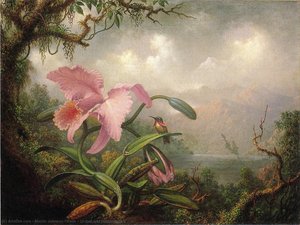
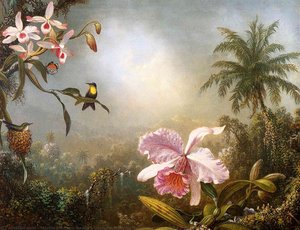
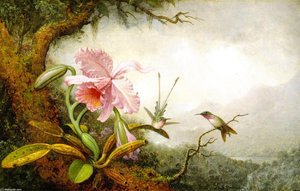
アーティストの略歴
マーティン・ジョンソン・ヒーデの静謐なビジョン:生涯と芸術
マーティン・ジョンソン・ヒーデは、1819年にペンシルベニア州の穏やかな田園地帯に生まれ、アメリカ美術史において魅惑的な人物として残っています。彼の光り輝く風景画と自然への親密な描写は、比較的無名から徐々に抜け出し、国の最も重要な芸術的業績の一つとしての正当な地位を確立しました。デラウェア川沿いのランバービルでの幼少時代は、彼の中に自然界への深い感謝の念を植え付けました。これは、地元のアーティストであるエドワード・ヒックス、そしておそらくトーマス・ヒックスによる初期の研究によって育まれました。これらの基礎的なレッスンは、後に彼の独特なスタイルへと開花する技術を提供しましたが、名声への道は決して直接的ではありませんでした。当初は肖像画に焦点を当てていましたが、初期の作品は有能さを示していましたが、成熟した作風を定義する独自のビジョンには欠けていました。ヨーロッパ旅行の一時期は、彼の芸術的な視野を広げ、多様な影響に触れさせ、最終的に風景画への傾倒の舞台を設定しました。肖像画からパノラマのような光へ
ヒーデの芸術的指向における重要な転換点は、ハドソン・リバー派のメンバーとの出会いを通じて起こりました。ジョン・フレデリック・ケンセットやベンジャミン・チャンプニーといったアーティストたちは、彼の中にアメリカの風景の壮大さと繊細な美しさを捉える情熱を目覚めさせました。この影響と、光と大気への彼の生まれつきの感受性が組み合わさり、穏やかな構成と細部への細心の注意を特徴とするスタイルが確立されました。ヒーデの作品は、同時代の他のアーティストが好んだ劇的な物語を避け、湿地帯、海景、そして最終的には熱帯の動植物の研究に焦点を当てることで、静かな強烈さによって区別されるようになりました。1863年から1864年のブラジルへの旅行は、彼の芸術的アウトプットに深く影響を与えた決定的な瞬間となりました。ブラジルの熱帯雨林の鮮やかな色彩とエキゾチックな形に浸ったヒーデは、ユリの花の中のハチドリを描いた一連の小規模な絵画に取り組みました。これらの作品は、彼の技術的熟練度と生命と環境の間の繊細な相互作用への魅力を示しています。彼はこれらを「ブラジルの宝石」と呼びましたが、当初は出版のために意図されていましたが、彼の生涯中はほとんど実現しませんでした。しかし、今日では彼の最も祝われた作品の一つとして立っています。中央アメリカやジャマイカへのその後の旅行は、熱帯の主題を探求することをさらに促進し、彼のパレットを豊かにし、芸術的語彙を拡大しました。湿地帯、マグノリア、そして巨匠の再発見
晩年、ヒーデはフロリダ州セントオーガスティンに定住し、静物画、特に豊かなベルベットの背景に配置された美しいマグノリアの花を描くことに焦点を当てました。これらの絵画は、彼の色彩と形の習熟度を例証しています。しかし、キャリアを通じてかなりの量の作品を制作したにもかかわらず、ヒーデは生涯を通してほとんど知られていませんでした。1940年代になって初めて、学者が彼の貢献のアメリカ美術における重要性を認識し始めました。ガレージセールやフリーマーケットのような予期しない場所で絵画が発見されるという注目すべき一連の再発見により、彼の作品への関心が高まり、これまで見過ごされてきたルミニズムの巨匠が明らかになりました。ヒーデとフィッツ・ヘンリー・レーンなどのアーティストによって共有されたスタイルを説明するために造語された「ルミニズム」という用語は、彼のアートビジョンの本質をとらえています。それは、大気効果、光の微妙なグラデーション、静けさ、そして穏やかさへの強調です。静かな熟考の遺産
マーティン・ジョンソン・ヒーデの遺産は、彼の技術的なスキルと美的感性にとどまりません。彼の絵画は、視聴者に静かな熟考のための空間を提供します。それは、自然界の美しさと穏やかさに浸るための招待です。彼は生涯を通じて広範な名声を得たわけではありませんが、彼の作品は再発見されて以来、聴衆に深く共鳴し、19世紀のアメリカで最も愛され影響力のある画家の一人としての地位を確固たるものにしました。今日、彼の絵画は世界中の著名な美術館のコレクションに収められており、光と大気の質をとらえ、平凡なシーンを超越的な美しさの瞬間に変える能力に対する畏敬の念と賞賛を引き続けています。ヒーデのアートは、自然界を保護し感謝することの重要性、そしてその静かな壮厳さの中で慰めを見つけることの重要性を痛切に思い出させてくれます。ヒーデのスタイルの主な特徴
- ルミニズム: 大気効果と微妙な光のグラデーションを強調する定義的な特徴です。
- 穏やかな構成: 平和なシーンを好んで劇的な物語を避けます。
- 細心の注意を払った詳細: 自然な形とテクスチャの正確なレンダリング。
- 主題: 塩沼、海景、熱帯鳥(特にハチドリ)、マグノリア、静物画。
- ロマンチックなアプローチ: 自然の感情的な影響と美しさに焦点を当てます。
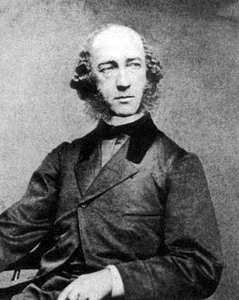
マーティン・ジョンソン・ヒーデ
1819 - 1904 , アメリカ合衆国
基本情報
- Artistic Movement Or Style: ルミナリズム
- Artists Who Influenced This Artist:
- エドワード・ヒックス
- ジョン・フレデリック・ケンセット
- Date Of Birth: 1819年8月11日
- Date Of Death: 1904年9月4日
- Full Name: マーティン・ジョンソン・ヒーデ
- Nationality: アメリカ人
- Notable Artworks:
- オーキッドとハミングバード
- ソルトマーシュ風景
- ハミングバードブロッサム
- Place Of Birth (City And Country): ペンシルベニア州ランバービル
関連記事
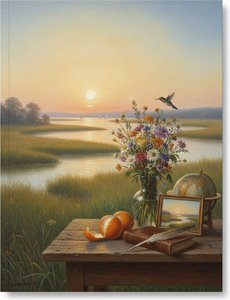
Martin Johnson Heade: Luminism, American Identity & the Poetic Still Life
Explore the captivating world of Martin Johnson Heade, a master of Luminism. Discover his serene landscapes, vibrant still lifes & profound connection to American identity. Learn about his techniques and legacy.

ロマン派ランドスケープ:時代を彩る巨匠の10選|アートとインテリアの世界
ロマン派絵画の時代を彩る10選。巨匠たちの風景が織りなす感動の世界へ。ターナー、ルーベンスなど、名作の裏話と高精細複製でアートをお部屋に。ArtsDot.comで至福のアート体験を。
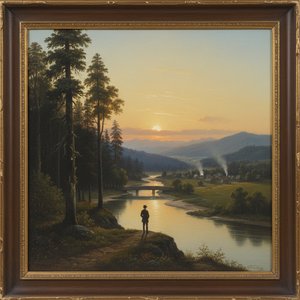
Robert Spencer: Luminism, Narrative & the American Landscape Tradition
Explore the captivating world of Luminism & the Hudson River School with our expert analysis. Discover the history, artists, and enduring beauty of 19th-century American landscape painting. Find museum-quality reproductions at ArtsDot.
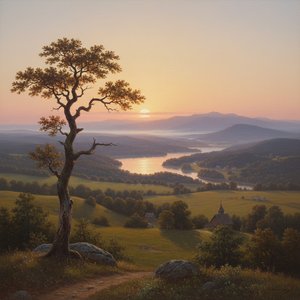
Asher Brown Durand: Luminism, Landscape & the American Ideal – A Comprehensive Exploration
Explore the life & art of Asher Brown Durand, a founding member of the Hudson River School. Discover his masterful landscapes, Luminist techniques, and lasting impact on American painting. Learn about key works like 'Kindred Spirits' & collecting Durand today.
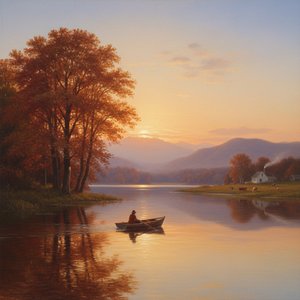
Jasper Francis Cropsey: Luminism, Landscape & the American Pastoral Ideal
Explore the captivating landscapes of Jasper Francis Cropsey, a leading figure of the Hudson River School & Luminism movement. Discover his signature style and idyllic American scenes. Own a hand-painted reproduction today!

