 プレビュー
プレビュー
 シェアする
シェアする シェアする
シェアする
 詳細を見る
詳細を見る

 ダウンロード
 似ている作品
 X線調査
X線調査 スライドショー
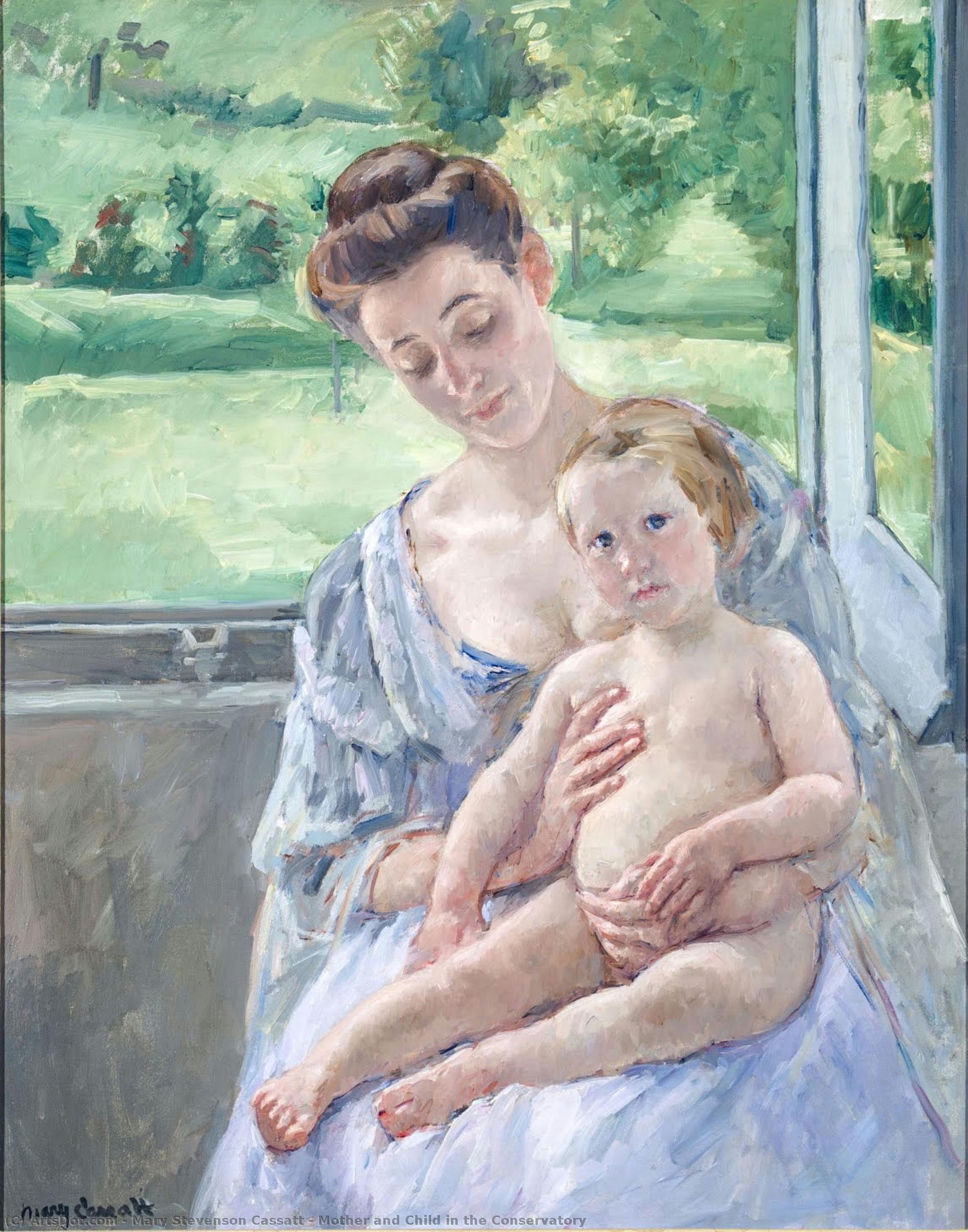
Mother and Child in the Conservatory


 詳細を見る
詳細を見る
ジークレー/アートプリント
迅速な制作と多彩な仕上げオプションを備えた、ミュージアムクオリティのジークレーまたはキャンバスプリント。 ( 手描きの絵画を購入 画像を購入)




P118B $10

P118H $10

P118W $10

P438Z $10

P508JH $12

P508YH $12

P805H $10

P805Z $10

P919BZ $10

P919G $10

P919XJ $10

P959ZH $10

P968JZ $12

W106C $8

W218G $10

W218JH $8

W218Y $10

W307PJ $10

W316G $10

W316PJ $8

W316Y $10

W398PJ $8

W4111J $10

W500HY $15

W500JH $15

W692G $12

W849H $8

W940BG $15

W953PJ $8




作品のオリジナル比率に合わせた、当店の規定サイズからお選びください。

特定のフレームやスペースに合わせて、ご自身でサイズを指定することも可能です。選択されたサイズが元の画像の比率と一致しない場合、作品をトリミングするか、鏡面反射または単色での塗りつぶしによって画像を拡張いたします。制作を開始する前に、ご確認用のデジタルモックアップをお送りいたします。
画面上のプレビューには、実際のトリミングや拡張は反映されませんのでご注意ください。最終的な構図を正確に確認できるのは、モックアップのみとなります。
カスタムサイズも承っておりますが、元の比率を維持するためには、あらかじめ用意されたリストからサイズを選択することをお勧めいたします。


 ガラスオプションは、110cm未満のサイズでのみご利用いただけます。

Mother and Child in the Conservatory
ジークレー/アートプリント
複製画のサイズ
-


合計金額
$ 62
作品詳細説明
A Moment of Intimacy: Exploring Mary Cassatt’s “Mother and Child in the Conservatory”
Mary Stevenson Cassatt's "Mother and Child in the Conservatory," painted in 1906, is more than just a portrait; it’s a tender distillation of maternal love and quiet domesticity—a cornerstone of American Impressionism. Within the dappled light filtering through the glass panes of a Victorian conservatory, Cassatt captures a fleeting, deeply personal scene: a woman, likely her sister Julia, cradling her infant daughter, nestled securely in her lap. The painting immediately draws the viewer into this intimate tableau, offering a rare glimpse into the private world of women and motherhood during a period often dominated by grand narratives of history and public life.
Cassatt’s artistic approach is distinctly Impressionistic, yet uniquely hers. She eschews the overtly dramatic poses and theatrical lighting favored by some of her contemporaries, opting instead for a subtle realism imbued with an atmospheric quality. The brushstrokes are loose and visible, creating a sense of movement and capturing the diffused light that streams through the conservatory’s windows. Notice how she employs broken color—small, distinct strokes of paint layered upon one another—to build up the forms and create a shimmering effect, particularly in the glass and foliage. This technique not only mimics the way light interacts with surfaces but also contributes to the painting's overall sense of luminosity and warmth.
The Conservatory as Symbol: A Sanctuary of Domesticity
The conservatory itself is crucial to understanding the work’s significance. It represents a carefully cultivated space—a refuge from the outside world, a microcosm of domestic tranquility. In the late 19th century, conservatories were symbols of wealth and refinement, offering a controlled environment for cultivating exotic plants and creating a miniature Eden within the home. Cassatt cleverly uses this architectural element to frame her subject, suggesting that motherhood itself is a kind of cultivation—a nurturing process that requires patience, care, and a deep connection to life’s most precious growth.
Furthermore, the conservatory's glass walls subtly reflect the figures within, creating an almost ethereal quality. This mirroring effect reinforces the sense of intimacy and highlights the bond between mother and child. The background, though slightly blurred, hints at other figures enjoying the space, suggesting a broader social context—a scene of domestic life unfolding amidst a backdrop of leisure and refinement.
Cassatt’s Focus on Women's Lives: A Revolutionary Perspective
Mary Cassatt was a pioneer in depicting women and children within the realm of fine art. At a time when artists primarily focused on historical events, mythological scenes, or portraits of wealthy men, she bravely turned her attention to the everyday lives of ordinary women—their relationships, their domestic routines, and their emotional experiences. “Mother and Child in the Conservatory” exemplifies this shift in perspective. It’s not a grand statement about heroism or national identity; it's simply a quiet observation of a mother’s love for her child – a subject rarely explored with such tenderness and honesty in art at the time.
Her work was often met with criticism, particularly from those who felt that depicting domestic scenes was beneath the dignity of fine art. However, Cassatt persisted, driven by a deep conviction that women’s experiences were worthy of artistic representation. She became an outspoken advocate for women's rights and used her art as a means of challenging societal norms and promoting greater understanding.
Emotional Resonance: A Timeless Portrait of Maternal Love
Despite its quiet simplicity, “Mother and Child in the Conservatory” possesses a profound emotional resonance. The woman’s gaze is directed slightly downward, suggesting a moment of absorption—a deep connection with her child. The baby's posture, nestled securely against her chest, conveys a sense of comfort, security, and complete trust. There’s no overt drama or sentimentality; instead, the painting communicates a feeling of serene contentment – a testament to the enduring power of maternal love.
Today, “Mother and Child in the Conservatory” continues to captivate viewers with its intimate portrayal of family life and its masterful use of light and color. It remains a poignant reminder of the beauty and significance of everyday moments—and a powerful symbol of Cassatt’s groundbreaking contribution to American art.
関連作品
アーティストの略歴
アメリカ印象派を代表する女性画家、メアリー・カサット
1844年、ペンシルベニア州ピッツバーグ近郊で生まれたメアリー・カサットは、その生涯をフランスで過ごし、アメリカ人として印象派の世界に深く根を下ろした画家です。裕福な家庭に育ち、幼い頃から芸術への才能を示しましたが、当時の社会通念では女性がプロの画家になることは容易ではありませんでした。しかし、彼女は強い意志と才能によって、その壁を打ち破り、独自の芸術世界を築き上げました。初期にはフィラデルフィア美術アカデミーで学びましたが、伝統的な教育に不満を感じ、1866年にパリへと渡ります。そこで彼女は、ジャン=レオン・ジェロームなどの画家から私淑し、ルーブル美術館の作品を模写することで技術を磨きました。しかし、カサットが真に開花したのは、印象派との出会いでした。印象派の影響と独自の表現
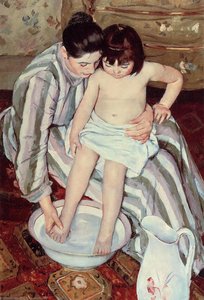
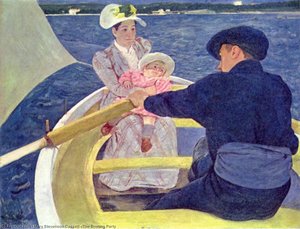
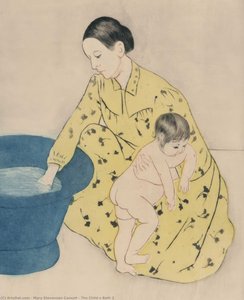
1870年代後半、エドガー・ドガとの出会いが彼女の芸術人生における転換点となりました。ドガはカサットの才能を見抜き、印象派グループへの参加を促しました。こうして、カサットはモネ、ルノワールらと共に展覧会に出品するようになります。しかし、彼女は単なる印象派の一員ではありませんでした。印象派の技法を取り入れながらも、独自の表現を追求し、特に母親と子供の姿を描くことに情熱を注ぎました。その作品には、母子の間の愛情や絆が繊細に描かれており、従来の絵画では見られなかった女性の内面世界への深い洞察が見て取れます。「ボートトリップ」や「入浴」といった作品群は、その代表的な例と言えるでしょう。彼女の描く母親たちは、単なる理想化された姿ではなく、現実の生活の中で喜びや苦悩を抱えながら子育てに奮闘する女性として生き生きと表現されています。ジャポニスムの影響と版画への傾倒
カサットの芸術的探求は、日本の浮世絵からも大きな影響を受けました。1860年代からヨーロッパで流行していたジャポニスムは、彼女の構図や色彩感覚に新たな視点をもたらしました。特に、画面全体を大胆な配置で構成する手法や、鮮やかな色彩による装飾性は、浮世絵の影響を強く受けています。また、カサットは版画にも積極的に取り組みました。ドガの勧めで、木口(クロッキー)やドライポイントといった技法を習得し、独自の版画作品を生み出しました。これらの版画作品は、彼女の描線美と色彩感覚が際立ち、絵画とは異なる魅力を持っています。特に、母親と子供の姿を描いた版画シリーズは、その繊細な表現力で高く評価されています。芸術家としての功績と後世への影響
メアリー・カサットは、印象派を代表する画家の一人として、美術史に大きな足跡を残しました。彼女は、女性の視点から日常生活を描き出すことで、絵画の世界に新たな可能性をもたらしました。また、アメリカ人としてヨーロッパで活躍したことは、その後のアメリカ美術の発展にも大きく貢献しました。彼女の作品は、今日でも世界中の美術館に収蔵されており、多くの人々を魅了し続けています。特に、母親と子供の姿を描いた作品群は、普遍的な母性と家族愛のテーマを表現しており、時代を超えて共感を呼んでいます。カサットの芸術的功績は、後世の女性芸術家たちにも大きな影響を与え、彼女は現代においても尊敬される美術史上の重要な人物として位置づけられています。カサット作品を探求する
- オンラインリソース:ウィキペディア(https://en.wikipedia.org/wiki/Mary_Cassatt)などのオンラインリソースで、メアリー・カサットの生涯と作品をさらに深く探求できます。
- 美術館コレクション:シカゴ美術館やロンドンのナショナル・ポートレート・ギャラリーなど、世界中の著名な美術館に彼女の傑作が収蔵されています。
- 関連する芸術家:ベルタ・モリゾやマリー・ブラケモンといった、印象派を代表する女性画家たちの作品にも目を向けてみましょう。
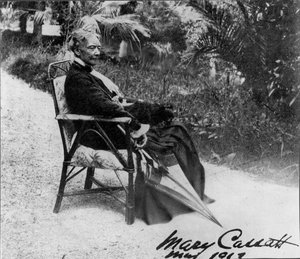
メアリー・カサット
1843 - 1926 , アメリカ合衆国
基本情報
- フルネーム: メアリー・スティーブンソン・カサット
- 主な作品:
- ボートトリップ
- 子供の入浴
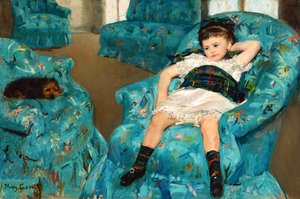
- 青い椅子にいる少女
- 国籍: アメリカ合衆国
- 影響を与えたアーティストまたは運動: ['アメリカ印象派']
- 影響を受けたアーティスト:
- ジャン=レオン・ジェローム
- エドガー・ドガ
- 生年月日: 1844年5月22日
- 芸術運動またはスタイル: 印象派
関連記事
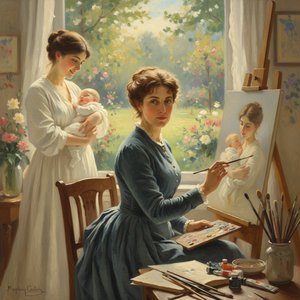
Mary Cassatt: Modernity, Motherhood & the Impressionist Gaze – A Timeless Legacy
Explore the life & art of Mary Cassatt, a pivotal American Impressionist renowned for intimate portrayals of women & children. Discover her unique style, legacy, and groundbreaking techniques at ArtsDot.
印象派を定義する至宝:時代を超えた10傑 – 美術、画家、そして洗練された空間演出
印象派を代表する10傑の世界へ。モネ、ルノワールら巨匠の技と色彩が織りなす至高の名作を紐解きます。美術、インテリアに新たなインスピレーションを。ArtsDot.comで、博物館品質のアート複製と洗練された空間演出を見つけましょう。

19th Century Masterpieces: 10 Paintings That Defined an Era | ArtsDot
Journey through 19th century art with ArtsDot! Explore 10 iconic paintings – from Monet & Renoir to Courbet – and discover the stories behind Romanticism, Realism & Impressionism. Find museum-quality reproductions for your home decor. Explore the full collection online!

印象派を定義した傑作10選:名画の物語と、空間を彩るアート | ArtsDot
モネ、ルノワール…印象派を代表する傑作10選。🎨 色彩と光の魔法、芸術家の物語を紐解き、空間に深みを与える絵画の世界へ。ArtsDotで複製画やキャンバスアートを見つけ、あなただけのインテリアを実現しましょう。🖼️ 詳細はこちら

ルノワール傑作25選:光と色彩が織りなす印象派の華麗なる世界 | ArtsDot
ルノワールの傑作25選🎨 印象派の光と色彩が輝く世界へ。絵画の背景、技法、そして時代を超えて愛される理由を紐解きます。ArtsDotで高品質な複製画やインテリアアートを見つけ、お部屋に芸術的な彩りを✨ Explore the full collection online!