 プレビュー
プレビュー
 プリントを購入
 シェアする
シェアする シェアする
シェアする
 詳細を見る
詳細を見る

 ダウンロード
 似ている作品
 X線調査
X線調査 スライドショー
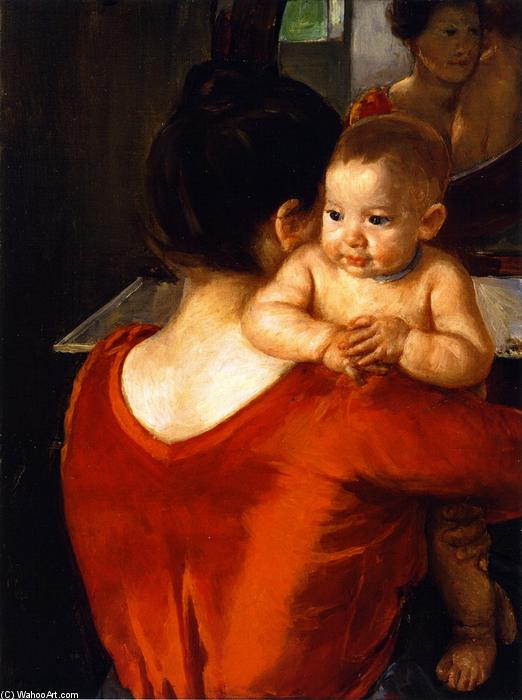
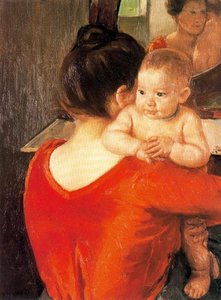
Woman in a Red Bodice and Her Child


 詳細を見る
詳細を見る




































作品のオリジナル比率に合わせた、当店の規定サイズからお選びください。

特定のフレームやスペースに合わせて、ご希望のサイズをご入力いただけます。選択されたサイズが元の画像の比率と異なる場合、アートワークをトリミングするか、手描きで要素を追加して絵画を拡張いたします。デジタルモックアップ を制作し、制作開始前にご確認(承認)をいただきます。
画面上のプレビューは、実際のトリミングや拡張を正確に反映しているものではありません。最終的な構図は、モックアップによってのみ正確にご確認いただけます。
カスタムサイズもご利用いただけますが、元の比率を維持するためには、あらかじめ用意されたリストからサイズを選択することをお勧めいたします。
ご注文後、ArtsDot.com チームより詳細な指示をお送りするとともに、仕上がりイメージ(モックアップ)をご提供いたします。


 ガラスオプションは、110cm未満のサイズでのみご利用いただけます。

Woman in a Red Bodice and Her Child
複製技法
複製画のサイズ
-


合計金額
$ 263
A Window Into Feminine Intimacy: Exploring Mary Stevenson Cassatt’s “Woman in a Red Bodice and Her Child”
The painting "Woman in a Red Bodice and Her Child," created by Mary Stevenson Cassatt in 1901, stands as a cornerstone of Impressionist art—a testament to the movement's fascination with capturing fleeting moments of everyday life and conveying profound emotional resonance. More than just a depiction of motherhood, this artwork delves into themes of self-reflection, vulnerability, and the quiet dignity inherent in domestic tranquility, offering viewers an enduring glimpse into the inner world of women during the early 20th century.The Artist's Vision: Cassatt’s Impressionistic Style
Mary Stevenson Cassatt (1844 – 1926) emerged from a privileged American upbringing—one that prioritized artistic education and fostered a cosmopolitan outlook—to become one of the most celebrated figures in Impressionism. Unlike many male artists of her era who favored grand landscapes or historical narratives, Cassatt consistently focused on portraying women and children with remarkable sensitivity and psychological depth. Her distinctive style eschewed academic conventions, prioritizing loose brushstrokes and vibrant color palettes to convey atmosphere and emotion rather than precise representation. This approach aligns perfectly with the Impressionist ethos—a deliberate rejection of meticulous detail in favor of capturing the ephemeral beauty of a scene as perceived by the eye. Cassatt’s canvases shimmer with light and color, mirroring the dappled sunlight filtering through Parisian windows during her artistic explorations.Technical Mastery: Oil on Canvas – A Delicate Balance
Cassatt skillfully employed oil paints on canvas—a technique favored by Impressionists—to achieve a remarkable level of textural nuance. The artist meticulously blended pigments to create soft gradations of color, capturing the subtle nuances of light and shadow that define the scene. Notice the delicate brushstrokes used to render the woman’s dress and the child's skin; these strokes are deliberately applied to suggest movement and texture without resorting to harsh lines or heavy shading. This technique allows for a luminous quality—a characteristic hallmark of Impressionism—that elevates the painting beyond mere visual observation, inviting contemplation on its emotional core. The canvas itself is primed with gesso, providing a smooth surface upon which Cassatt could execute her vision with precision and grace.Historical Context: Parisian Life and Feminine Idealization
“Woman in a Red Bodice and Her Child” emerged during a period of significant social change in Paris—a city brimming with artistic innovation and intellectual ferment. The Impressionist movement challenged prevailing societal norms regarding gender roles, portraying women not merely as decorative objects but as active participants in the domestic sphere—a realm increasingly recognized for its importance in shaping human experience. Cassatt’s depiction aligns with this broader cultural shift, subtly idealizing motherhood while simultaneously acknowledging the complexities of female identity. The mirror reflects a woman's gaze back upon herself – an act of introspection that speaks to the anxieties and aspirations inherent in navigating societal expectations during this transformative era.Symbolism: Color and Reflection—Layers of Meaning
The bold crimson hue of the woman’s dress serves as more than just a visual element; it symbolizes passion, vitality, and maternal devotion. Simultaneously, the mirror acts as a powerful emblem of self-awareness and contemplation—a motif frequently employed by Cassatt to explore themes of femininity and psychological depth. The reflection offers a glimpse into the woman's inner world, suggesting that she is simultaneously observing her child and engaging in an internal dialogue about her role as mother and woman. This duality underscores Cassatt’s artistic intention: to portray not merely what is seen but what is felt—to capture the essence of human emotion within the confines of a seemingly simple domestic tableau.Emotional Resonance: A Moment Frozen in Time
Ultimately, “Woman in a Red Bodice and Her Child” transcends its formal elements to evoke a profound sense of tenderness and quiet dignity. The painting captures a fleeting moment of connection between mother and child—a scene imbued with warmth and vulnerability. Cassatt’s masterful technique—characterized by soft brushstrokes and luminous color palettes—creates an atmosphere that invites viewers into the intimate space of this domestic tableau, fostering empathy and prompting reflection on the enduring beauty of human relationships. It remains a poignant reminder of Cassatt's ability to distill complex emotions into visually arresting compositions—a legacy celebrated for its timeless appeal.関連作品
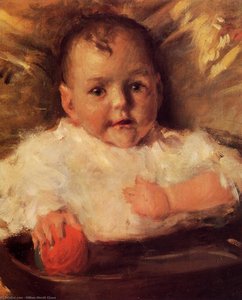
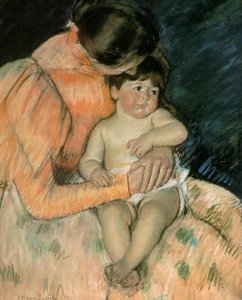
アーティストの略歴
アメリカ印象派を代表する女性画家、メアリー・カサット
1844年、ペンシルベニア州ピッツバーグ近郊で生まれたメアリー・カサットは、その生涯をフランスで過ごし、アメリカ人として印象派の世界に深く根を下ろした画家です。裕福な家庭に育ち、幼い頃から芸術への才能を示しましたが、当時の社会通念では女性がプロの画家になることは容易ではありませんでした。しかし、彼女は強い意志と才能によって、その壁を打ち破り、独自の芸術世界を築き上げました。初期にはフィラデルフィア美術アカデミーで学びましたが、伝統的な教育に不満を感じ、1866年にパリへと渡ります。そこで彼女は、ジャン=レオン・ジェロームなどの画家から私淑し、ルーブル美術館の作品を模写することで技術を磨きました。しかし、カサットが真に開花したのは、印象派との出会いでした。印象派の影響と独自の表現
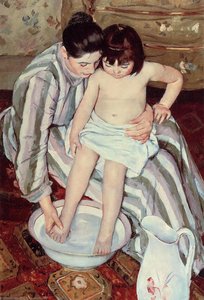
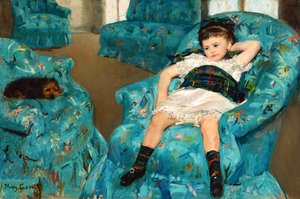
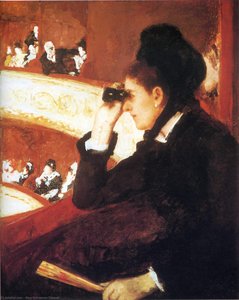
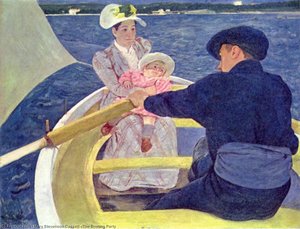
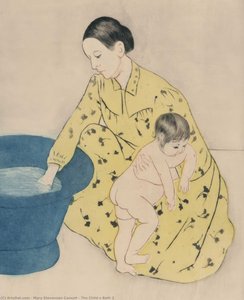
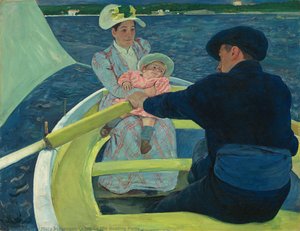
1870年代後半、エドガー・ドガとの出会いが彼女の芸術人生における転換点となりました。ドガはカサットの才能を見抜き、印象派グループへの参加を促しました。こうして、カサットはモネ、ルノワールらと共に展覧会に出品するようになります。しかし、彼女は単なる印象派の一員ではありませんでした。印象派の技法を取り入れながらも、独自の表現を追求し、特に母親と子供の姿を描くことに情熱を注ぎました。その作品には、母子の間の愛情や絆が繊細に描かれており、従来の絵画では見られなかった女性の内面世界への深い洞察が見て取れます。「ボートトリップ」や「入浴」といった作品群は、その代表的な例と言えるでしょう。彼女の描く母親たちは、単なる理想化された姿ではなく、現実の生活の中で喜びや苦悩を抱えながら子育てに奮闘する女性として生き生きと表現されています。ジャポニスムの影響と版画への傾倒
カサットの芸術的探求は、日本の浮世絵からも大きな影響を受けました。1860年代からヨーロッパで流行していたジャポニスムは、彼女の構図や色彩感覚に新たな視点をもたらしました。特に、画面全体を大胆な配置で構成する手法や、鮮やかな色彩による装飾性は、浮世絵の影響を強く受けています。また、カサットは版画にも積極的に取り組みました。ドガの勧めで、木口(クロッキー)やドライポイントといった技法を習得し、独自の版画作品を生み出しました。これらの版画作品は、彼女の描線美と色彩感覚が際立ち、絵画とは異なる魅力を持っています。特に、母親と子供の姿を描いた版画シリーズは、その繊細な表現力で高く評価されています。芸術家としての功績と後世への影響
メアリー・カサットは、印象派を代表する画家の一人として、美術史に大きな足跡を残しました。彼女は、女性の視点から日常生活を描き出すことで、絵画の世界に新たな可能性をもたらしました。また、アメリカ人としてヨーロッパで活躍したことは、その後のアメリカ美術の発展にも大きく貢献しました。彼女の作品は、今日でも世界中の美術館に収蔵されており、多くの人々を魅了し続けています。特に、母親と子供の姿を描いた作品群は、普遍的な母性と家族愛のテーマを表現しており、時代を超えて共感を呼んでいます。カサットの芸術的功績は、後世の女性芸術家たちにも大きな影響を与え、彼女は現代においても尊敬される美術史上の重要な人物として位置づけられています。カサット作品を探求する
- オンラインリソース:ウィキペディア(https://en.wikipedia.org/wiki/Mary_Cassatt)などのオンラインリソースで、メアリー・カサットの生涯と作品をさらに深く探求できます。
- 美術館コレクション:シカゴ美術館やロンドンのナショナル・ポートレート・ギャラリーなど、世界中の著名な美術館に彼女の傑作が収蔵されています。
- 関連する芸術家:ベルタ・モリゾやマリー・ブラケモンといった、印象派を代表する女性画家たちの作品にも目を向けてみましょう。
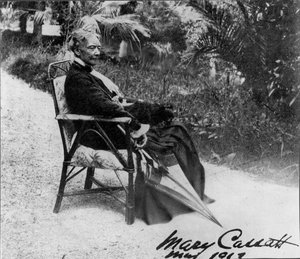
メアリー・カサット
1843 - 1926 , アメリカ合衆国
基本情報
- フルネーム: メアリー・スティーブンソン・カサット
- 主な作品:
- ボートトリップ
- 子供の入浴
- 青い椅子にいる少女
- 国籍: アメリカ合衆国
- 影響を与えたアーティストまたは運動: ['アメリカ印象派']
- 影響を受けたアーティスト:
- ジャン=レオン・ジェローム
- エドガー・ドガ
- 生年月日: 1844年5月22日
- 芸術運動またはスタイル: 印象派
関連記事

Crimson Threads of Narrative: Exploring Symbolism & Representation in Artworks Featuring the Red Dress
Explore the rich symbolism of the red dress in art history! From ancient power displays to iconic portraits like Cézanne’s 'Madame Cezanne', discover the cultural and artistic significance behind this captivating color. Expert analysis & insights.
Mary Cassatt: Modernity, Motherhood & the Impressionist Gaze – A Timeless Legacy
Explore the life & art of Mary Cassatt, a pivotal American Impressionist renowned for intimate portrayals of women & children. Discover her unique style, legacy, and groundbreaking techniques at ArtsDot.
印象派を定義する至宝:時代を超えた10傑 – 美術、画家、そして洗練された空間演出
印象派を代表する10傑の世界へ。モネ、ルノワールら巨匠の技と色彩が織りなす至高の名作を紐解きます。美術、インテリアに新たなインスピレーションを。ArtsDot.comで、博物館品質のアート複製と洗練された空間演出を見つけましょう。

ポール・セザンヌ:至高の25選 - 傑作と革新の軌跡 | ArtsDot
ポール・セザンヌの至高の25選。ポスト印象派を代表する画家、セザンヌの傑作と革新的な技法を紐解きます。ArtsDotで高品質な複製画やインテリアアートを見つけ、芸術の世界をご自宅に。今すぐコレクションをご覧ください。
印象派絵画を定義づけた至宝:トップ10必見の傑作の世界
印象派絵画の歴史を彩る、時代を超越した10選。モネ、ルノワールら巨匠の名作に迫り、その技と物語を紐解きます。色彩豊かなアートで空間を演出!ArtsDot.comで至高のアートレプリカを見つけましょう。